Musikhaus Keks
Welcome!
Our cookies offer you a fast, relaxed and full-featured shopping experience. Some are necessary to operate the website and its functions. Others help us to improve our services. If you agree to this, simply consent to the use of cookies for preferences, statistics and marketing by clicking on "OK". Alternatively, you can deactivate individual cookies under "Customise cookies" or all cookies, except those required for the function of our website, under "Reject all".
Musikhaus Korn Guide

Acoustic or Electric Violin? Which Violin Suits You Better?

An acoustic violin produces its sound directly through the resonating body and is the traditional choice for lessons, chamber music and orchestras. An electric violin uses a pickup and electrical output, opening up headphones, amplification, recording and effects. The better choice therefore depends less on your playing level than on how and where you want to use the instrument.

Natural sound vs. electronics Headphones & stage use explained Hybrid solution with a pickup
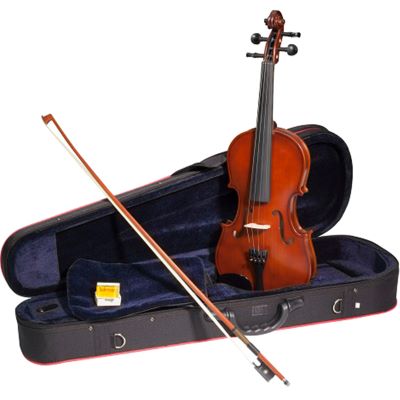
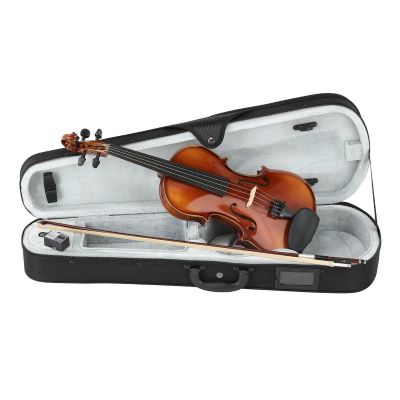
Hidersine Vivente 4/4 acoustic violin outfit with traditional resonating wooden body
Acoustic
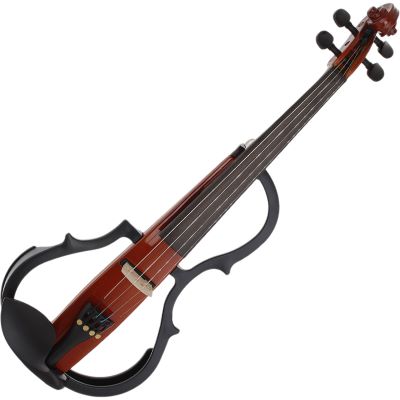
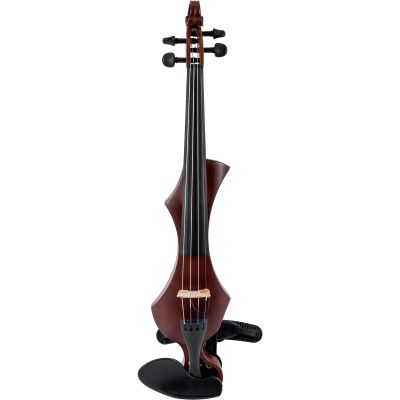
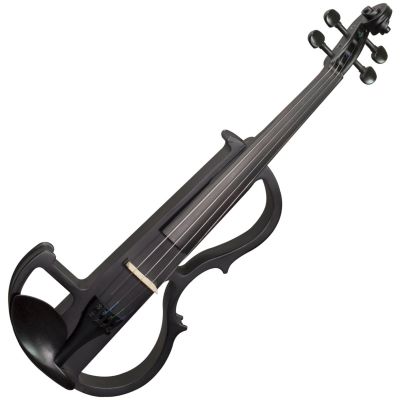
Hidersine HEV1 4/4 electric violin with pickup and electronic outputs
Electric
The Decision in One Minute

When Does Acoustic Fit – and When Does Electric?

Acoustic Violin

Choose Acoustic for Natural Violin Sound

For classical lessons, orchestras, chamber music and a traditional introduction, an acoustic violin is generally the most straightforward choice. It needs neither a battery nor an amplifier and responds immediately through its bridge and resonating body.

  • Classical violin lessons are the main priority.
  • You plan to play in an orchestra or ensemble.
  • You want to play immediately without electronics.
  • Natural resonance is particularly important.
  • You need a children's size below 4/4.
Electric Violin

Choose Electric for Headphones, Stage and Effects

An electric violin is particularly suitable for pop, rock, crossover and modern stage applications. Its pickup provides a signal for headphones, an amplifier, audio interface or effects.

  • You want to practise at a much lower acoustic volume.
  • Headphones are an important buying criterion.
  • You regularly play on amplified stages.
  • You are interested in effects and sound design.
  • You want to record directly into a recording setup.

A particularly flexible option for many players: a good acoustic violin can later be fitted with a suitable violin pickup. This preserves the instrument's natural acoustic sound while providing an electrical signal whenever amplification is required.

Two Designs Compared Directly

Acoustic Violin vs. Electric Violin

Feature Acoustic Violin Electric Violin
Sound without electronics Full natural resonant sound Much quieter mechanical basic sound
Headphones Only with additional equipment Directly possible depending on the model
Lessons Traditional classical standard Supplement or modern main instrument
Stage Microphone or pickup required Direct electrical output
Effects Possible with a pickup Very easy to integrate
Recording A microphone can capture the instrument and room naturally Direct recording through an interface is possible
Power supply Not required Battery or external electronics depending on model
Children's sizes Large selection Selection is mainly concentrated on 4/4
Resonating Body Instead of Electronics

What Are the Advantages of an Acoustic Violin?

Direct Feedback

Feel and Hear the Resonance

Bow contact and intonation are immediately audible and physically noticeable through the vibrations of the instrument. For many students, this direct resonance is useful when developing bowing technique.

Simple Setup

No Additional Technology

Tune the instrument, tighten the bow, check the rosin and play. No cable, rechargeable battery or amplifier is required.

Sizes

Large Choice of Sizes

Acoustic violins are available from very small student sizes to full-size 4/4 instruments. This is a major advantage for children.

Classical Music

Ideal for Classical Ensembles

Orchestras and chamber ensembles are based on the unamplified interaction of acoustic string instruments.

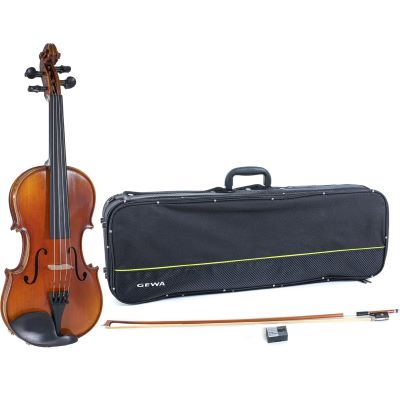
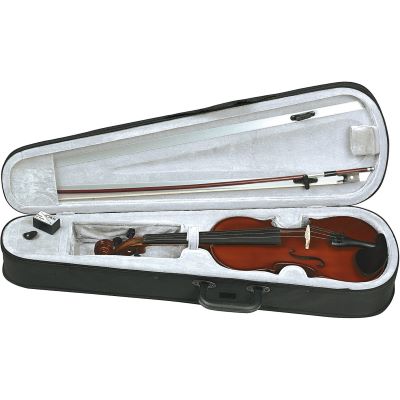
GEWA Maestro 1 full-size acoustic violin with bow and case
Traditional construction creates the sound through strings, bridge and resonating body.
Piezo, Output and Amplification

What Can an Electric Violin Do?

An electric violin captures string or bridge vibration through a pickup. The electrical signal can then be sent to headphones, an amplifier, mixing console or audio interface .

Some models have an active preamp with volume and tone controls directly on the instrument. Others provide a comparatively direct pickup signal for the electronics that follow.

The major advantage is sound design. Reverb, delay, chorus and further effects can transform the violin sound substantially, making the electric violin particularly interesting for pop, rock, electronic music and crossover.

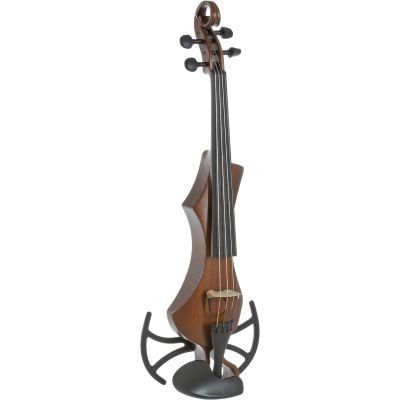
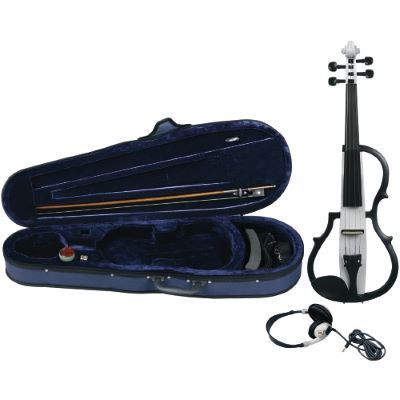
White GEWA Line electric violin with active piezo electronics
An electric violin converts bridge vibration into an electrical signal for monitoring, amplification and effects.
Apartment & Late Practice Sessions

Is an Electric Violin Really Silent?

No. The strings, bridge and physical structure still produce a mechanical sound even when the violin is not amplified. It is, however, considerably quieter than a fully resonating acoustic violin.

Headphone Practice

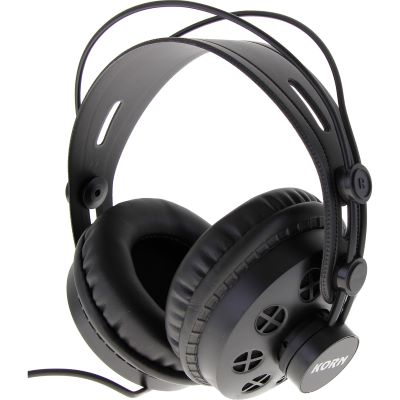
Headphones Control Your Monitoring Level

With compatible electric violins, headphones allow the player to hear the amplified electrical signal at a personal listening volume. The headphones do not make the physical instrument itself silent.

Alternative for Acoustic Players

Can a Normal Violin Be Made Quieter?

A practice mute can reduce the acoustic volume of a traditional violin, although it also changes the sound and playing response.

Players who regularly practise late at night or in particularly sound-sensitive surroundings may benefit more from an additional electric violin.

A useful two-instrument approach: the acoustic violin can remain the main instrument for lessons, while an electric violin is used for particular practice times, stage applications or modern sounds.

Size Before Electronics

Acoustic or Electric Violin for Children?

For children, the correct instrument size takes priority. The current acoustic selection includes 1/8, 1/4, 1/2, 3/4 and 4/4 instruments, while the electric violin range is strongly focused on full-size 4/4 models.

Small Children

Choose the Correct Acoustic Size

A properly sized acoustic student violin is usually the more sensible option because arm reach, finger spacing and bow length can be matched accurately to the child's body size.

Older Teenagers

Electric Becomes an Option at 4/4

As soon as a 4/4 violin fits ergonomically, an electric violin can become an interesting alternative or second instrument – particularly for pop, bands and recording.

Lessons

Coordinate with the Teacher First

The teacher and music school should know which instrument is being used at home. For classical lessons, an acoustic violin generally remains the most direct common reference.

Natural Sound Plus an Output

The Third Option: Acoustic Violin with a Pickup

Players who want to keep the unamplified sound of an acoustic violin while also having an electrical signal for stage or studio can add a suitable pickup.

Piezo systems can, for example, be mounted on or around the bridge and transmit its vibrations. Depending on the system, installation is possible without making a permanent modification to the instrument.

The violin therefore remains fully acoustic for everyday playing at home. For a performance, the pickup can be connected to an amplifier, mixing console or audio interface.

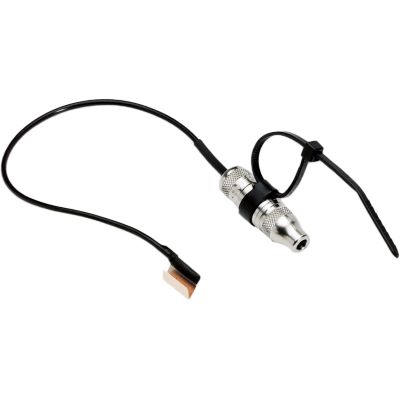
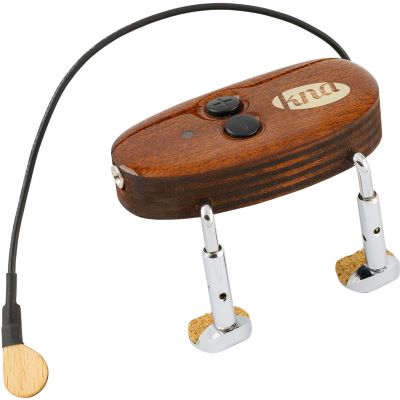
Fishman V-100 piezo pickup for acoustic violin and viola bridge
A removable pickup can add an electrical signal while retaining the acoustic violin as the main instrument.
Plan the Signal Path Before Buying

Which Violin Is Better for Stage and Recording?

Live Band

Controlled Direct Signal

An electric violin or acoustic violin with a pickup provides a controlled signal directly to an amplifier or mixing console. This is especially practical on loud stages.

Natural Studio Recording

Record the Resonating Body with a Microphone

For classical and natural-sounding recordings, a suitable microphone can capture both the resonating body and some of the room sound.

Direct Home Recording

Record the Electric Signal through an Interface

The output signal of an electric violin can be transferred to a computer via a suitable USB audio interface and then processed in recording software.

Three Routes to the Right Setup

21 Suitable Products for Acoustic Violin, Electric Violin and Amplification

The current source selection contains seven acoustic violins, seven electric violins and seven products for amplification, monitoring, recording and essential accessories.

Acoustic Violins

Natural Resonance for Lessons, Ensemble and Orchestra

Electric Violins

Headphones, Stage, Recording and Effects

Pickup, Monitoring & Recording

Build the Complete Electric Signal Chain

Instruments and Technology by Brand

Manufacturer Worlds for Acoustic and Electric Violins

A Shared Foundation Plus an Electronics Check

Does an Electric Violin Need Different Care?

Both Types

Care for Acoustic and Electric Violins

  • Remove rosin dust after playing.
  • Loosen the bow after the practice session.
  • Check the strings regularly.
  • Keep an eye on the bridge and tuning pegs.
  • Transport the instrument safely in a case.
Electric Violin

Additional Electronics Care

  • Check the battery or power supply.
  • Do not mechanically stress sockets and cables.
  • Keep the electronics dry.
  • Reduce amplifier volume before switching equipment on.
  • Follow battery instructions during extended storage.
Avoid These Mistakes Before Buying

Common Mistakes When Choosing Between the Two

Volume

Assuming an Electric Violin Is Completely Silent

An electric violin still produces mechanical string and bridge noise. It is much quieter than an acoustic violin, but it is not completely silent.

Children

Ignoring Size in Favour of Electronics

A correctly fitting acoustic 1/2 or 3/4 violin is more ergonomically sensible than an oversized 4/4 electric violin.

Signal Chain

Buying the Violin but Not the Required Signal Path

An electric violin reaches its full potential only with compatible headphones, amplifier or audio interface and the correct cable connections.

Frequently Asked Questions Before Buying

Answers About Acoustic and Electric Violins

Which is better for beginners: acoustic or electric violin?

For classical lessons, an acoustic violin is generally the simpler starting point. Players who mainly want quieter practice or modern stage sounds can also begin directly with an electric violin.

Can you learn on an electric violin in the same way?

Fundamental fingering and bowing techniques can also be learned on a correctly fitting electric violin. The feeling of resonance and acoustic feedback differs, however, from a traditional acoustic instrument.

Can you play an electric violin without an amplifier?

Mechanically, yes, but only at a relatively low volume. For its intended amplified sound, headphones, an amplifier or another suitable audio solution are required.

Is an electric violin really quiet enough for an apartment?

It is considerably quieter than a resonating acoustic violin, but it still creates audible mechanical sound.

Which violin is better for children?

Usually an acoustic violin in the exact size required. The current electric violin selection is concentrated mainly on full-size 4/4 instruments.

Which violin is better for pop and rock?

An electric violin is particularly straightforward because it can be connected directly to amplification and effects equipment.

Can I amplify my acoustic violin electrically?

Yes. Violin pickups or suitable microphones allow an acoustic violin to be amplified without permanently giving up its natural unamplified sound.

Which violin is better for recording?

For a natural classical sound, a miked acoustic violin is particularly interesting. For direct clean recording and effects processing, an electric violin is very practical.

Does an electric violin need special strings?

That depends on the model. Many electric violins use regular violin strings. Always follow the manufacturer's specifications when replacing strings.

Can I use a normal shoulder rest on an electric violin?

With some models, yes; others use a dedicated support. The construction and attachment system of the specific instrument therefore need to be checked.

Is an acoustic violin with a pickup the best combination?

For players who mainly play acoustically and only occasionally require amplification, it can be an especially flexible solution.

The Application Determines the Choice

Acoustic or Electric Violin? | Musikhaus Korn

Players whose main priorities are classical lessons, orchestral playing and an unamplified natural sound are generally best served by an acoustic violin. For children in particular, acoustic instruments also offer the important choice of sizes from 1/8 through to 4/4.

An electric violin adds headphone monitoring, amplification, recording and effects. It is particularly suitable for modern bands, stage use, home studios and situations in which acoustic volume should be reduced.

Players who want both do not necessarily need two instruments. An acoustic violin with a suitable pickup combines genuine resonant acoustic sound for normal unamplified playing with an electrical signal for performances or recordings.

More Buying Advice and Practical Knowledge

Choose Instruments and Equipment That Fit Together

Find further guidance on string instruments, wind instruments, drums, keyboard instruments, studio equipment and more in the central Musikhaus Korn guide.