Acoustic Drum Set
If volume is not a problem, real drumheads and cymbals provide an immediate way to learn dynamics and touch. A complete kit with hardware and cymbals makes getting started easier.

Your first drum kit should motivate you, fit your body ergonomically and suit the place where you practise. An acoustic drum set provides an immediate playing feel and natural dynamics. An electronic drum kit allows headphone practice, different drum sounds and usually a more compact setup. This guide explains which kit size makes sense, what to look for in a drum throne, bass drum pedal, cymbals, mesh heads and drumsticks and which equipment beginners actually need.
The best beginner drum kit is the one you can practise on regularly. Your living situation, permitted volume, available space and body size are therefore at least as important as your preferred music style and equipment.
If volume is not a problem, real drumheads and cymbals provide an immediate way to learn dynamics and touch. A complete kit with hardware and cymbals makes getting started easier.
Adjustable electronic volume, headphones, a metronome and several kit sounds make an electronic drum set especially practical for regular practice at home.
A smaller bass drum, lower setup height and suitable throne position help young players reach the snare, toms and pedals without unnatural stretching.
A practice pad cannot replace a complete drum kit, but it is excellent for grip, rudiments, consistency and metronome training.
The snare supplies the characteristic backbeat, while the bass drum is played with the foot. Together with a hi-hat, these instruments are already enough to learn countless basic grooves.
Many traditional kits have one or two rack toms plus a floor tom. A typical five-piece shell setup consists of bass drum, snare and three toms. This is versatile without making the setup unnecessarily complicated.
The hi-hat handles many eighth- and sixteenth-note patterns. A crash provides accents and the ride is suitable for continuous patterns. A cymbal set is a practical addition if one is not included with the kit.
The bass drum pedal, hi-hat stand, snare stand and cymbal stands must remain stable and be adjustable to suit the player's body size. Check every complete kit carefully to see which hardware, cymbals and drum throne are actually included.
Bass Drum + Snare + Toms + Hi-Hat + Cymbals
| Feature | Acoustic Drums | E-Drums |
|---|---|---|
| Playing Feel | Real drumheads and cymbals | Pads, depending on model with mesh heads |
| Volume | High | Electronically adjustable |
| Headphones | Not for the acoustic kit sound | Typical practice solution |
| Sounds | Determined by drums, heads and tuning | Several drum kits stored in the module |
| Space | Depends on shell sizes | Often uses a more compact rack |
| Recording | Microphones and room acoustics are important | Audio/MIDI depending on the module |
| Maintenance | Tune and replace drumheads | Check triggers, cables and module |
A more compact bass drum can require less floor space and allows the rack toms to be positioned lower. This can be useful for smaller players, lessons and compact rehearsal rooms.
This size is common in many rock and pop kits and provides a powerful fundamental character. For adult beginners, it is a very versatile starting point.
Significantly smaller shells help children reach all components ergonomically. Body size, leg length and comfortable pedal access matter more than the age printed on a product recommendation.
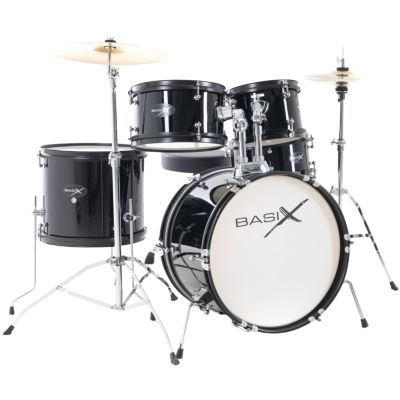
The compact drum sizes, reduced setup height and included hardware make this type of junior kit easier for smaller players to reach than a full-size adult drum set.
Depending on the pad, mesh-head tension can be adjusted. Many players find the rebound more natural than that of simple rubber pads.
A real bass drum pedal used with a kick pad is closer to the movement of an acoustic drum kit. Particularly compact entry-level systems may use alternative kick solutions.
Depending on the equipment, the edge, bow and bell can trigger different sounds. This provides more expressive possibilities as your playing develops.
Sounds, metronome, training functions and connections are controlled by the module. USB and MIDI options are particularly useful for recording and software instruments.
The sitting height should allow the bass drum and hi-hat pedals to be operated freely without supporting yourself on the throne or lifting your legs excessively.
The snare should sit between your legs and be reachable without lifting your shoulders. The toms and cymbals can then be positioned around this central point.
A compact setup reduces excessive movement. Especially at the beginning, this makes it easier to concentrate on timing and accurate strokes.
Stability, comfort and height adjustment directly influence control over both pedals. A suitable drum throne is therefore part of the basic equipment.
Build the first coordination steps one after another instead of trying to play complete songs at full speed immediately.
Learn a relaxed grip first. The sticks should be controlled without excessive tension in the hands or shoulders.
Practise even alternating strokes slowly and listen for consistent timing and volume.
Combine hand and foot movements before adding more components to the groove.
Add an even eighth-note pulse and build your first complete basic groove.
5A is a widely used all-round drumstick size. Lighter 7A sticks may suit smaller hands, while 5B sticks are generally heavier and more substantial.
Start slowly and evenly. A practice pad or e-drum module with a metronome is ideal for building clean singles, doubles and simple rudiments.
Acoustic drums and cymbals can produce high sound levels. Suitable musician hearing protection therefore belongs in the beginner setup as well as in the rehearsal room.
Acoustic fusion-size drum set with cymbals for a traditional introduction to drumming.
More compact bass drum with hardware and cymbals, suitable for lessons and starting in a band.
Compact junior drum kit designed to make the drums and pedals easier for smaller players to reach.
Comprehensive electronic kit for home practice, learning and recording.
Compact mesh-head electronic drum kit for apartments and regular practice.
Five-piece acoustic shell setup with room to develop as your playing becomes more advanced.
The selection is grouped by purpose. With acoustic kits, pay particular attention to whether cymbals, drum throne and hardware are included. With e-drums, check the rack, pedals, headphones and module equipment.
Some offers contain the drum shells but no cymbals or drum throne. Always check the complete list of included equipment before buying.
Long distances between snare, toms and cymbals make learning harder. A compact and ergonomic setup is generally better than making the kit look as large as possible.
Acoustic drums and cymbals generate high sound levels. Hearing protection should not become an issue only when the first band rehearsal arrives.
With an e-drum, playing feel, rack stability, pad sizes and pedal solution are often more important for everyday practice than having an extremely long list of drum sounds.






Acoustic drum sets, hardware and drum thrones from beginner level to stage use.
Nitro, Crimson and other electronic drum systems for home practice and studio use.
V-Drums, modules, pads and accessories for electronic drum setups.
Rydeen acoustic drum sets and DTX electronic drums for lessons and band practice.
DM-series e-drum kits with different pad, module and rack concepts.
Acoustic drum sets and shells for lessons, rehearsals and stage applications.
Adjust the drum throne, place both feet on the pedals and play a simple groove.
The snare, toms and cymbals should be reachable without lifting your shoulders or constantly leaning forwards. With an electronic drum kit, also test pad rebound, the kick-pad solution and operation of the drum module.
Compare complete sets by shell sizes, included hardware, cymbals and intended application.
Discover mesh heads, pads, drum modules, rack systems and connection possibilities.
Add a hi-hat, crash, ride or complete starter cymbal set to an acoustic drum kit.
Choose essential consumable and protective equipment for lessons, regular practice and band rehearsals.
For beginners, a complete and ergonomically arranged drum kit is more important than having as many drums and cymbals as possible. An acoustic drum set teaches the immediate relationship between stroke, dynamics and sound. An e-drum makes home practice easier and adds headphones, a metronome, several kit sounds and digital connection options to everyday learning.
When choosing your first drum kit, always check kit size, included equipment, drum-throne position and pedals. With an acoustic drum set, cymbals, hardware and hearing protection are also important. With an electronic kit, concentrate particularly on pad feel, the kick solution and drum module.
If every component can be reached comfortably and the kit can be played regularly in its intended location, the most important requirement for a successful start is already fulfilled.
From musical instruments and home-studio equipment to DJ gear and event technology, you can find further buying advice in the central Musikhaus Korn shopping guide overview.