Musikhaus Keks
Welcome!
Our cookies offer you a fast, relaxed and full-featured shopping experience. Some are necessary to operate the website and its functions. Others help us to improve our services. If you agree to this, simply consent to the use of cookies for preferences, statistics and marketing by clicking on "OK". Alternatively, you can deactivate individual cookies under "Customise cookies" or all cookies, except those required for the function of our website, under "Reject all".
Musikhaus Korn Buying Guide

E-Drums for Apartments: Practise Quietly Without Sacrificing Playing Feel

For many apartments, an electronic drum kit is the most practical way to play drums regularly. Headphones reduce audible playback, mesh pads operate comparatively quietly and compact racks require relatively little space. However, an e-drum is not completely silent: kick and hi-hat pedals in particular can transmit vibrations into the floor. This guide explains what really matters when planning an apartment-friendly setup.

Personal Expert Advice 3-Year Warranty E-Drums & Accessories
The Most Important Answer First

Is an E-Drum Really Suitable for an Apartment?

In many cases, yes. Compared with an acoustic drum kit , the overall level can be controlled much more effectively. The important point is to distinguish between sound travelling through the air and vibrations transmitted through floors, walls and other structural components.

Noise Source 1

Stick Impacts on Pads

Even without a speaker, the direct impact of the drumstick remains audible. E-drum sets with mesh heads are particularly interesting for apartment-friendly practice because the playing surfaces combine controlled rebound with comparatively low mechanical impact noise.

Noise Source 2

Kick and Hi-Hat Pedals

This is often the more important issue. Every foot movement transfers energy into the pedal, rack and floor. On hard floors, this structure-borne sound can travel into adjoining rooms or the apartment below.

Noise Source 3

Monitor or Loudspeaker

As soon as a drum monitor or speaker is used, normal airborne sound is produced again. For quiet practice, closed or well-isolating studio headphones are therefore usually the simpler solution.

Apartment tip: when choosing an e-drum, look first at the pad construction, kick system, pedals and mechanical isolation. A very large sound library is of little use if the set transfers too much vibration into the floor.
The Decisive Apartment Factor

Why Impact Noise Can Matter More Than Pad Volume

Headphones solve only part of the problem. Mechanical movements from the bass drum pedal, kick pad and hi-hat also need to be considered.

Structure-Borne Sound

Vibrations Take a Different Route from Music

Airborne sound spreads through the air in the room. Structure-borne sound, by contrast, is produced when movement is transmitted directly into the floor, ceiling or other parts of the building.

An e-drum can therefore sound very quiet in your own room while repetitive impacts may still be clearly noticeable on the floor below.

Bass Drum

The Kick Deserves Particular Attention

A traditional bass drum pedal drives a beater into a kick pad. Many drummers prefer the natural playing feel of this design, but it also creates mechanical impulses.

Special low-noise hardware or effective mechanical isolation beneath the pedal and kick pad can therefore be particularly useful in an apartment.

Hi-Hat

The Hi-Hat Moves Too

A separate controller pedal or traditional hi-hat stand is moved continuously by the foot. When planning isolation, do not concentrate solely on the bass drum. The complete pedal area should stand on a stable and suitably isolated surface.

Practical Test

Test Before Your First Long Practice Session

Set the kit up securely, avoid direct contact between the rack and sensitive building components and deliberately test the pedals at different playing intensities.

Feedback from another room or, ideally, the floor below can be particularly helpful.

Apartment Checklist

How to Reduce Unnecessary Vibration Transmission

  • Prefer mesh pads or other comparatively quiet playing surfaces.
  • Isolate the kick and hi-hat area specifically.
  • Do not lean the set against radiators, walls or furniture.
  • Set the rack up securely so that it does not move or rattle.
  • Use headphones for normal practice sessions.
  • Secure cables so that they do not strike rack components.
  • Test mechanical noises during stronger playing.
  • Respect quiet periods and the immediate residential situation.
Drum rug or isolation? A drum rug protects the floor, prevents the set from moving and can reduce minor mechanical noise. If significant impact noise is transmitted into the building, a simple rug may not be enough. In that case, targeted mechanical isolation of the pedals or complete playing area becomes the more important measure.
Choose the Right Concept

Which E-Drum Equipment Suits Which Apartment Setup?

Not everyone needs the largest set. In an apartment, ergonomics, mechanical noise and the actual available floor space are often more important.

Feature Compact Beginner Kit Mesh Mid-Range Kit Advanced Home Kit
Footprint Usually particularly compact Medium Larger, with more generous spacing
Pad Size Generally compact Good middle ground Larger playing surfaces possible
Mesh Heads Depends on the model Frequently standard Usually used extensively
Kick Compact pedal solution or small pad Often a separate kick pad Larger kick pad for a more natural pedal feel
Hi-Hat Controller pedal Controller or separate construction Sometimes mounted on a traditional hi-hat stand
Recording Often USB-MIDI USB-MIDI and additional functions depending on module More extensive audio and MIDI integration possible
Ideal For Children, beginners and small rooms Regular practice at home Advanced drummers, recording and intensive training
Choose According to Your Everyday Routine

Which Type of E-Drum Suits You?

Small Room

Keep It as Compact as Possible

Look for a narrow rack, compact pads and whether the set can be folded or pushed together slightly when not in use.

Remember to include the space required for the drum throne and full pedal movement.

Beginner

Start Playing Without Unnecessary Complexity

A mesh snare, several toms, hi-hat, crash, ride and an easy-to-understand module provide a solid foundation. A package with headphones and drumsticks can reduce the number of additional purchases.

Advanced Player

More Realistic Spacing

Larger pads and a traditional bass drum pedal make switching between electronic and acoustic drums easier.

At the same time, mechanical isolation of the pedal area should be planned particularly carefully.

Home Studio

Make Use of USB and MIDI

If you produce your own songs, check the USB, MIDI and audio functions of the drum module. The kit can then control software instruments or be integrated directly into a recording environment.

Compact and Apartment-Friendly

E-Drum Sets for Beginners, Practice Rooms and Limited Space

This selection focuses on electronic drum sets that are particularly useful to compare for beginners and regular home practice.

All E-Drum Sets
Mesh

Alesis Turbo Mesh Kit

Compact introduction with mesh playing surfaces and USB/MIDI connectivity.

Compact

NUX DM-110

Space-saving mesh set for practice rooms and home recording.

Home Practice

NUX DM-210

Mesh heads, headphone output and useful practice functions for playing at home.

Starter Package

NUX DM-210 + Headphones & Sticks

Practical package for starting to practise without several separate purchases.

Mesh

Alesis Nitro Max Kit

Mesh kit with Bluetooth and USB-MIDI for practice and production.

Complete

Alesis Nitro Max + Headphones & Sticks

Apartment-friendly package for players without existing accessories.

Larger Snare

Alesis Nitro Pro Drum Kit

Larger mesh snare and kick tower for a more mature playing feel.

Expanded

Alesis Nitro Pro XL

Extended configuration for players with a little more available floor space.

Versatile

NUX DM-7X

Versatile mesh set with a larger snare and digital practice functions.

9-Piece

NUX DM-310H

Nine-piece set with 10-inch snare and USB interface.

More Playing Surface and Equipment

E-Drums for Ambitious Practice and Home Recording

Drummers who practise regularly or come from an acoustic drum kit often benefit from larger pads, more sophisticated hi-hat control and a more extensive drum module.

V-Drums

Roland TD-07DMK

Compact V-Drum with mesh pads, Bluetooth and USB functions.

Roland

Roland TD-313

Larger mesh snare and components designed for serious home practice.

Noise Eater

Roland TD-313 + RDH-100A

Interesting combination for players with a particular focus on reducing pedal vibration.

Advanced

Roland TD-316

Ambitious V-Drum for intensive training and recording at home.

DTX

Yamaha DTX6K3-X

DTX system for dynamic practice, recording and expressive playing.

Real Wood

Yamaha DTX8K-M Real Wood

Generously sized electronic set for demanding home and studio applications.

Large Mesh Pads

NUX DM-8

Larger mesh playing surfaces together with audio and MIDI functions.

Extensive Mesh Setup

Alesis Nitro Ultimate Kit

More extensive mesh configuration for versatile training and production.

Advanced

Alesis Crimson III Kit

Larger mesh pads and comprehensive functions for advanced drummers.

High-End

Alesis Strata Core Kit

Compact high-end concept for demanding playing and recording.

Complete the Apartment Setup

Accessories for Quiet, Stable and Comfortable E-Drumming

Headphones, a stable drum throne and suitable pedals influence everyday use at least as much as additional sounds in the drum module.

Noise Eater

Roland RDH-100A

Bass drum pedal with integrated technology designed to reduce transmitted vibrations.

Basic Equipment

Roland DAP-3X

Accessory package with bass drum pedal, drum throne and drumsticks as a practical foundation.

Headphones

KORN DK-770

Studio headphones for concentrated practice without an additional drum monitor.

Monitoring

KORN DK-880

Semi-open monitoring headphones for longer practice and studio sessions.

Drum Throne

Aroma TDD 10

Stable seating base for an ergonomic playing position in a compact practice area.

Drum Throne

Gewa-Pure DC 2.2

Traditional drum throne for a controlled sitting and pedal position.

From the Box to an Apartment-Friendly Setup

How to Set Up an E-Drum Correctly in an Apartment

Careful setup prevents rattling, improves ergonomics and can significantly reduce unnecessary vibration transmission.

Measure the Complete Playing Area

Do not measure only the rack. Include the drum throne, space behind your back and the complete movement of the kick and hi-hat pedals. Doors and cupboards should remain easy to access.

Isolate the Floor and Pedal Area

A stable base prevents the set from moving. In buildings where vibration transmission is critical, additional effective isolation of the heavily loaded pedal areas should be considered.

Adjust the Rack Ergonomically

Snare, toms and cymbals should be reachable without unnecessary stretching. An ergonomic kit can be played with greater control, and fewer exaggerated movements often mean less unnecessary mechanical noise.

Test the Setup After Assembly

Do not test only quiet single strokes. Play bass drum patterns, hi-hat parts and dynamic grooves. This reveals which components create the strongest vibrations during real practice.

More Than Quiet Practice

Use an E-Drum in Your Apartment as a Recording Instrument

An electronic drum kit can be both a practice instrument and an input device for music production.

Many modules provide USB or MIDI connections and can therefore control software drums on a computer. This is especially practical in a home studio: instead of placing several microphones around an acoustic kit, a performance can be recorded as MIDI data and assigned different drum sounds afterwards.

Depending on the module, direct audio transmission may also be possible.

For simple practice, a headphone output is often enough. Bluetooth or AUX inputs are useful when you want to play along with songs or backing tracks from a smartphone. Always check which connections your preferred model actually supports.

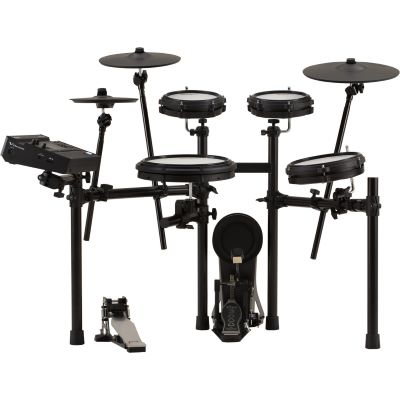
Roland TD-313 electronic drum set for quiet home practice and home recording
Roland TD-313 – an electronic drum setup for intensive home practice and recording integration.
Avoid These Before Buying

Six Common Mistakes with an E-Drum in an Apartment

Mistake 1

“With Headphones Everything Is Silent”

Electronic playback disappears from the room, but mechanical stick impacts and pedal movements remain.

Mistake 2

Looking Only at the Drum Module

In an apartment, pad surfaces, kick construction, rack and pedals are at least as important as the number of stored sounds.

Mistake 3

Overestimating a Normal Rug

A rug protects and stabilises the set. Against significant structure-borne sound, additional mechanical isolation may still be required.

Mistake 4

Measuring the Room Too Tightly

Without enough freedom of movement, the throne and rack will constantly need to be repositioned. Plan the complete playing area, not only the rack width.

Mistake 5

Choosing Very Small Pads Only to Save Space

Extremely compact pads save room but can alter the movement pattern. Drummers who regularly play acoustic kits should consider playing feel as well.

Mistake 6

Ignoring Cable and Rack Noise

Loose cables, poorly tightened mounts or a rack touching furniture can create a surprising amount of additional rattling.

Manufacturer Worlds

Manufacturers with E-Drums for Home, Practice Room and Studio

Compare complete model ranges, accessories and compatible expansions directly through the Musikhaus Korn manufacturer pages.

Alesis

Nitro, Crimson and Strata series for different space, practice and recording requirements.

NUX

Compact and larger DM-series kits for home practice, lessons and recording.

Roland

V-Drums, mesh pads and specialised hardware including Noise Eater pedal solutions.

Yamaha

DTX systems ranging from compact electronic drums to spacious home and studio configurations.

Frequently Asked Questions from Everyday Apartment Use

What Should You Know About Using an E-Drum in an Apartment?

Is an E-Drum Really Quiet in an Apartment?
It is much easier to operate quietly than an acoustic drum kit, but it is not silent. Headphones reduce electronic sound reproduction. Stick impacts, the kick pad and pedal movements remain mechanically audible.
What Can Neighbours Below an E-Drum Hear?
Foot movements in particular can be transmitted through the floor as dull impacts or vibrations. How noticeable this is depends on the building, floor construction, drum set, playing technique and mechanical isolation.
Are Mesh Heads Better for an Apartment Than Rubber Pads?
Mesh heads are attractive to many players because they combine controllable rebound with comparatively quiet stick impacts. Other high-quality pad constructions can also be suitable for apartment use.
Can I Play E-Drums with Headphones in the Evening?
Technically, yes, but mechanical noise remains. At later practice times, particular attention should therefore be paid to pedal vibration, building acoustics, applicable quiet periods and your immediate living situation.
Is a Rug Under the E-Drum Enough?
A rug helps prevent movement and protects the floor. If structure-borne noise remains a problem, targeted isolation of the kick, pedals or complete playing area may be necessary.
Which Bass Drum Solution Is Particularly Apartment-Friendly?
Compact controller pedals can work mechanically differently from a traditional bass drum pedal with a beater. If you prefer the more realistic playing feel of a standard foot pedal, impact-noise isolation should be considered especially carefully.
Which Headphones Are Suitable for an E-Drum?
Closed studio headphones are popular for concentrated practice because they isolate external noise more effectively and reproduce the drum sounds clearly. A comfortable fit and sufficiently long cable are also important.
How Much Space Does an E-Drum Need in a Small Room?
This depends strongly on the rack and pad sizes. In addition to the actual width of the kit, always allow room for the drum throne, pedals, leg movement and comfortable access to the setup.
Can I Record an E-Drum Directly to a Computer?
Many modern modules provide USB-MIDI, while some additionally offer USB audio or further audio outputs. Drum performances can therefore be recorded or used to play virtual instruments in music-production software. The exact functionality depends on the specific module.
What Do I Need in Addition to the E-Drum to Get Started?
Typically, you need drumsticks, a stable drum throne and headphones. Depending on the set, a bass drum pedal or hi-hat stand may also be required. For an apartment, mechanical isolation of the pedal area should be considered from the beginning.
Consider the Complete Setup

Still Unsure About Set Size, Pedals or Impact Noise?

The Musikhaus Korn team can help you choose a suitable e-drum, compatible hardware, headphones and sensible basic equipment for your practice space.

In an apartment in particular, it is worth looking at the complete system rather than concentrating only on the drum module.

Final Apartment Checklist
  • Check pad construction and mechanical impact noise.
  • Pay particular attention to the kick and hi-hat area.
  • Plan suitable mechanical isolation.
  • Measure rack, throne and pedal movement.
  • Select comfortable headphones.
  • Check USB, MIDI and audio functions if recording is planned.
  • Test the complete setup under realistic playing conditions.
Quiet Practice Starts with the Complete Setup

E-Drums for Apartments: Practise Quietly

An e-drum for an apartment should primarily suit your individual living situation. Mesh pads, headphone operation and a compact rack create good conditions for regular practice at home.

Mechanical sound remains the decisive factor: bass drum and hi-hat pedals transfer movement into the floor and therefore deserve particular attention when planning an apartment-friendly setup.

Do not compare only the sounds and display of the drum module. Check pad sizes, kick construction, hi-hat system, footprint, expansion possibilities and required accessories. Beginners often benefit from compact complete kits, while advanced drummers may prefer larger pads and more realistic spacing.

USB and MIDI functions are additional important criteria for home recording. With a carefully positioned set, suitable headphones and well-planned mechanical isolation, electronic drumming can be integrated much more effectively into everyday apartment life.

More Buying Guides

Choose Instruments and Equipment to Match Your Application

Planning your next instrument, home studio, DJ setup or complete stage system? The Musikhaus Korn buying guides provide further comparisons, purchasing advice and practical routes to the right setup.