Safety up to 5–10 kg
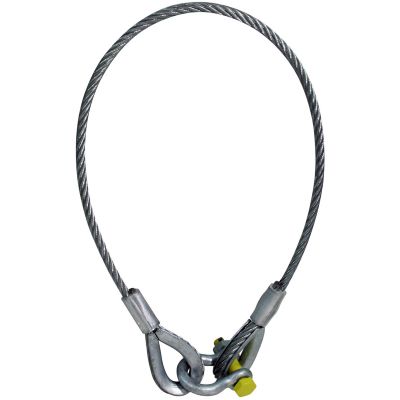
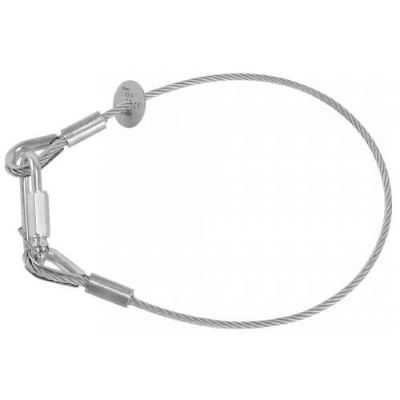
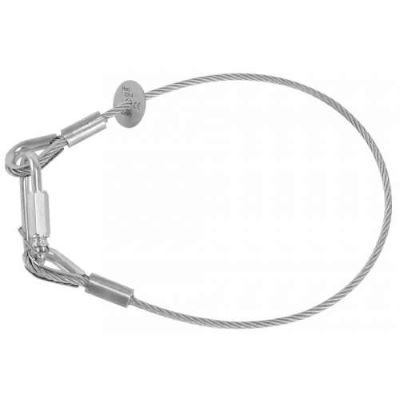
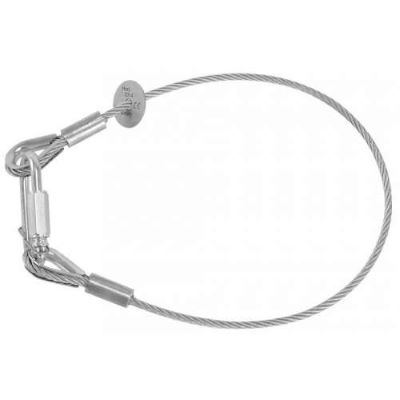
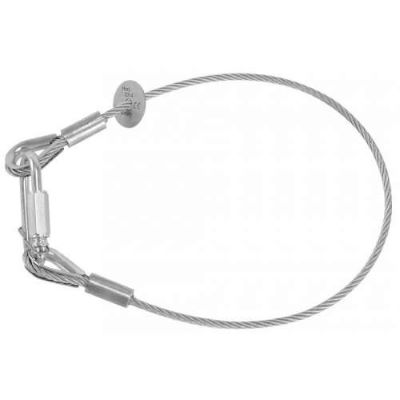
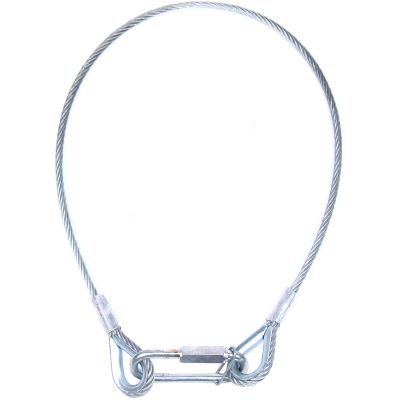
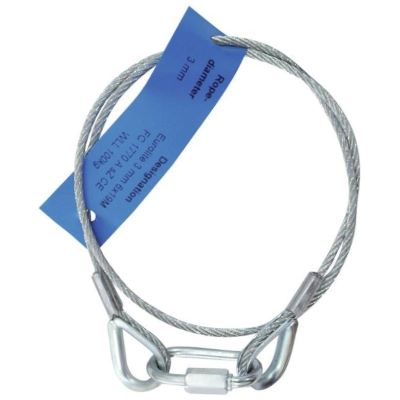
Short safety cables with a diameter of 3 or 4 mm are available for compact PAR fixtures and small effects units. The device weight must explicitly match the permitted securing mass.

If a spotlight, effects unit or other piece of equipment is suspended above people, any possible fall must be reliably prevented. Wherever a second independent safety device is required, a suitable safety cable performs this task. The decisive factors are not only cable diameter and length, but also the maximum device weight to be secured, the permitted fall distance, the intended safety attachment point and the weakest component in the complete safety chain.
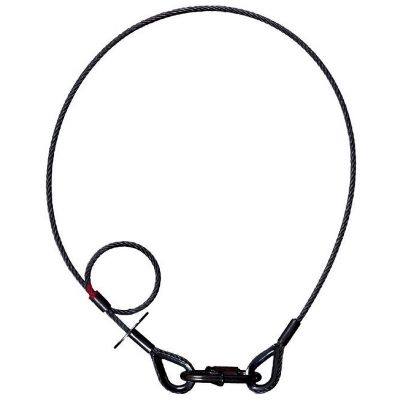
Select the complete safety system according to the actual load, intended application and documented manufacturer specifications.
Always begin with the weight of the object that has to be secured. Then determine the required cable length and check whether the safety-cable manufacturer approves that particular model for the weight and intended application. The quick link and both attachment points must also be suitable.
Short safety cables with a diameter of 3 or 4 mm are available for compact PAR fixtures and small effects units. The device weight must explicitly match the permitted securing mass.
This range is relevant for many larger PAR fixtures, compact moving heads and comparable event-technology equipment.
Heavier loads require larger cable diameters or specifically tested systems. Never derive a permitted fall-arrest load yourself merely from the WLL of one individual component.
Models incorporating a damping element reduce the impulsive load on the cable, device safety eye and supporting structure if the primary suspension fails.
The most important selection principle: a secondary safety system is only as strong as its weakest link. Safety cable, quick link, device attachment eye and structural attachment point must all be suitable for the intended securing case.
The primary attachment supports the device during normal operation, for example a suitable clamp on a spotlight. A secondary safety is intended to provide additional protection against falling if the primary attachment fails and the particular installation requires this second independent safety device.
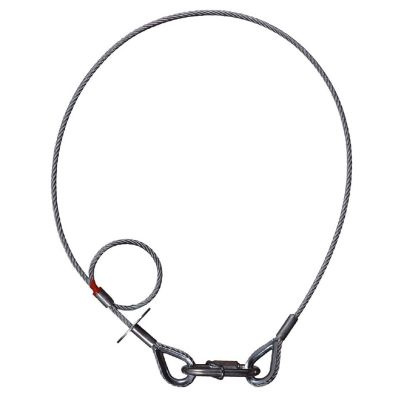
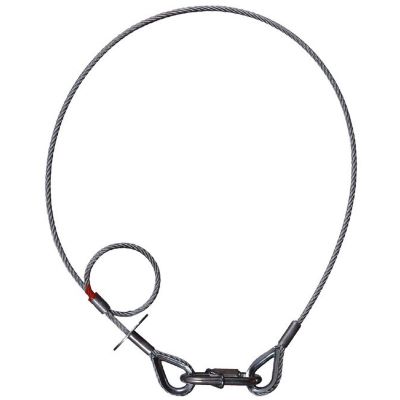
The safety itself normally consists of an appropriately dimensioned steel wire rope with professionally manufactured end connections.
The connector closes the safety loop. It must match the safety, be protected against accidental opening and be completely closed during use.
One side is attached to the device's designated safety point. The other is attached to a suitable independent point on the supporting structure.
DGUV Information 215-313 provides a table for safety cables of specified cable construction based on DIN 56927. The values apply under the conditions described there, including a maximum fall distance of 20 cm and the specified material and connection requirements.
| Cable Diameter | Quick Link | 0.6 m Safety | 1.0 m or Longer |
|---|---|---|---|
| 3 mm | 4 mm | 5 kg | 9 kg |
| 4 mm | 4 mm | 10 kg | 16 kg |
| 5 mm | 5 mm | 15 kg | 25 kg |
| 6 mm | 6 mm | 22 kg | 36 kg |
| 8 mm | 8 mm | 40 kg | 64 kg |
| 10 mm | 10 mm | 62 kg | 100 kg |
This is not a universal conversion table for every cable. The values apply only under the conditions of the underlying rule. Different safety cables, damping systems, chains, larger loads or special constructions must be selected using the relevant manufacturer specifications and test values.
If a device first falls through a larger distance before the safety cable becomes taut, high dynamic forces are generated. A safety should therefore be installed so that as little fall distance as possible can occur.
For equipment that still has to be aligned after installation, such as spotlights, DGUV guidance specifies a maximum fall distance of 20 cm. In practice this means that the safety should not hang as a large loose loop around the truss. Route it as short as the required movement range and the manufacturer's instructions allow.
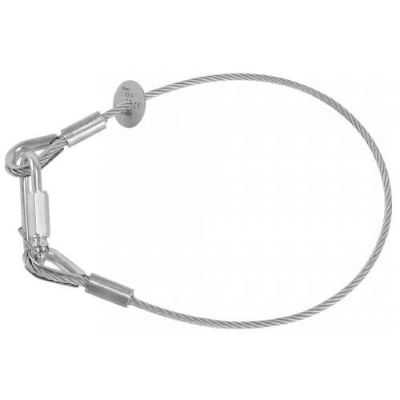
Use the attachment point defined by the equipment manufacturer. It is often designed as a dedicated safety eye or marked accordingly.
Carrying handles, ventilation grilles and arbitrary housing screws are not automatically approved safety attachment points.
The opposite attachment point must also be capable of absorbing the resulting arrest forces. A weak eye or unsuitable structure makes even a strong safety ineffective.
Only when the particular routing method, safety cable and supporting structure are intended for this use. Pay attention to sharp edges, crushing points and unsuitable components.
Not as the classic safety element for this application. DGUV guidance excludes ropes and webbing made from natural or synthetic fibres for this purpose because of temperature effects and their behaviour in the event of fire.
Check the markings and the equipment operating instructions. If no unambiguous point is provided, do not improvise: consult the manufacturer's documentation.
With screw-type quick links, the intended strength is achieved only when the closure is completely closed. DGUV guidance requires the screw connection to be closed fully and tightened hand-tight.
Screw the sleeve into its intended final position and check it before the show or event begins.
Quick links permanently connected to the safety reduce the risk of losing a crucial component during setup.
The WLL rating of an individual connecting element does not automatically state the maximum mass that may be secured in a fall-arrest situation.
If the safety has actually caught a falling device, it must not be used again.
Kinks, broken wires, damaged crimps or deformed connecting links are grounds for removing the component from service.
The maximum permitted securing mass and the identification of the safety component must remain traceable.
For safety cables with a fall-arrest damper, follow the manufacturer's indicator and replace a system that has been activated.
A safety cable is intended as a second safety device that catches a load after failure of the primary suspension. Its sizing therefore takes the dynamic arrest force into account.
Lifting accessories are primarily dimensioned for attaching or supporting a load. According to DGUV guidance, suitable wire-rope slings may also be used as safety cables, but the application and sizing must clearly be suitable for this purpose.
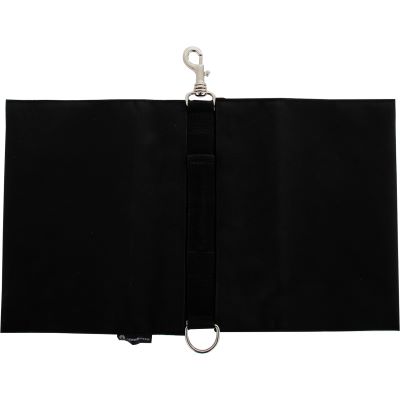
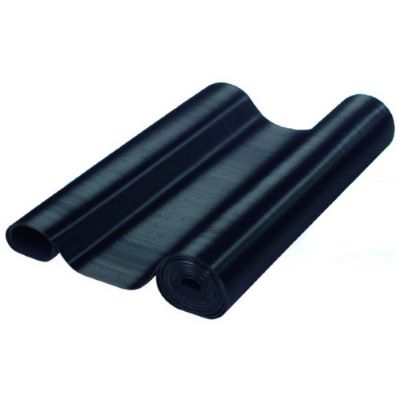
The current Musikhaus Korn range includes safety cables in different lengths and weight classes as well as complementary solutions for fire protection, crowd control, first aid and safer stage operation.
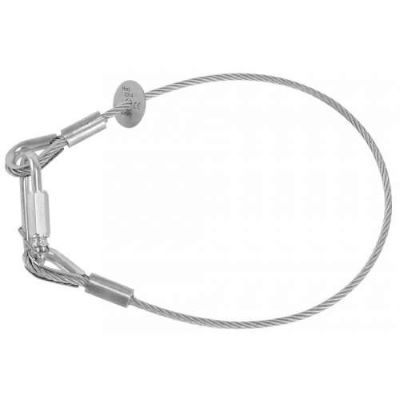
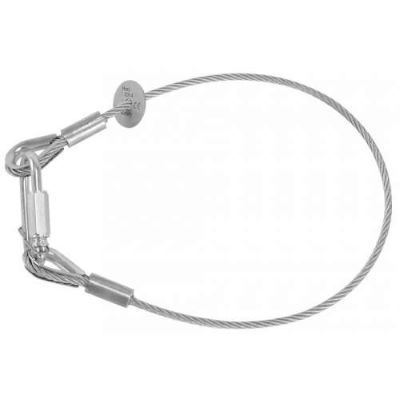
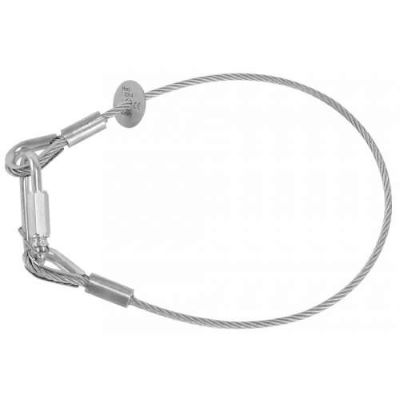


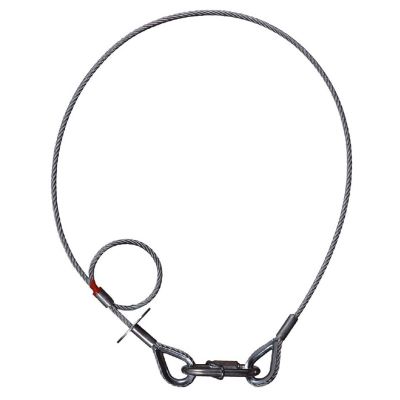
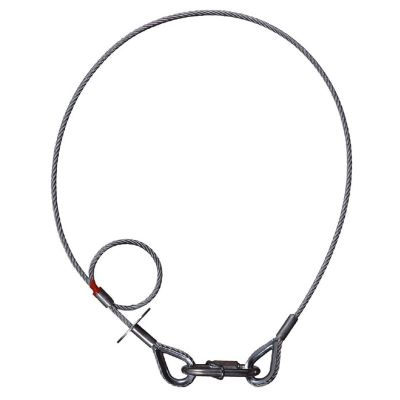
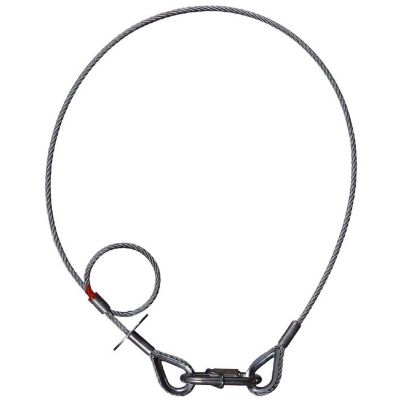




A large fall distance significantly increases the dynamic load if the primary suspension fails.
Use only the device safety point specified by the manufacturer.
Do not confuse the WLL of one component with the permitted securing mass of the complete secondary safety.
Close the screw connection completely and tighten it hand-tight as intended.
Ordinary rope, cable ties or lashing straps are not substitutes for an approved and properly dimensioned safety cable.
A safety component that has already been subjected to a fall load or shows visible damage must be retired.
A safety cable serves as a second independent safety device if the primary attachment of a piece of equipment fails. It typically consists of wire rope, end connections and a suitable quick connecting link.
This depends on the mass to be secured, cable length, construction and product design. Use the specific manufacturer marking. For classic safety cables without damping, DGUV guidance additionally provides tabulated reference values under defined conditions.
It should be installed so that as little fall distance as possible can occur. For equipment that must still be aligned after installation, DGUV guidance states a maximum fall distance of 20 cm.
Attach it to the safety point specified by the manufacturer, often a marked safety eye. A carrying handle or arbitrary housing screw is not a substitute.
No. Cable ties are not a substitute for a properly dimensioned safety cable. Ordinary textile ropes or straps are likewise not intended as a classic safety for this application.
Yes. The safe function of a screw-type connector is achieved only when the connector is fully closed. DGUV guidance calls for complete closing and hand-tight tightening.
WLL means Working Load Limit. The rating of one individual component must not automatically be interpreted as the maximum permitted securing mass during a fall. The marking and approval of the complete safety system are decisive.
An integrated damping element or fall-arrest damper reduces the arrest force if a load actually falls into the safety. Such systems are selected according to their own tested product data.
No. A safety component that has experienced a load event or shows visible damage must not continue to be used.
DGUV guidance notes that secondary safety cables are not lifting accessories merely because of this safety function and therefore do not necessarily carry a CE marking solely on that basis. Correct manufacturer identification and the intended application remain decisive.
The specific suspension and its safety concept are decisive. Where the construction is not inherently or single-fault safe and the applicable rules require a second independent safety, a suitable secondary safety must be used. Manufacturer instructions and applicable event regulations must be observed.
Select primary attachments and couplers according to the device, tube diameter and required load capacity.
Plan the supporting structure, load position and attachment points as one complete system.
For floor-supported systems, consider load capacity, centre of gravity and stability.
When selecting a fixture, check its weight, mounting bracket and intended safety attachment point at the same time.
Choose the safety cable according to the actual mass to be secured and the documented product approval. Keep the potential fall distance as small as possible, attach the safety only to the designated device point and use a suitable, fully closed quick connector. Inspect the cable, crimps, identification and connector before use. If the safety has already caught a load or shows damage, replace it.
Stage construction, truss systems, lighting, PA systems, mixers, microphones, DJ technology, recording and musical instruments: the central Musikhaus Korn guide connects you with further buying advice, comparisons and complete setup solutions.