Musikhaus Keks
Welcome!
Our cookies offer you a fast, relaxed and full-featured shopping experience. Some are necessary to operate the website and its functions. Others help us to improve our services. If you agree to this, simply consent to the use of cookies for preferences, statistics and marketing by clicking on "OK". Alternatively, you can deactivate individual cookies under "Customise cookies" or all cookies, except those required for the function of our website, under "Reject all".
Musikhaus Korn Guide

2-, 3- or 4-Point Truss? The Direct Comparison

A 2-point truss is slim and lightweight, a 3-point truss forms a spatial triangle, and a 4-point truss creates a square lattice structure. These designs lead to different applications – but they do not define a universal load capacity. The exact truss series, span, orientation, load position, connectors and complete construction always remain decisive.

2-point for lightweight tasks 3-point for specialised structures 4-point for extensive stage systems
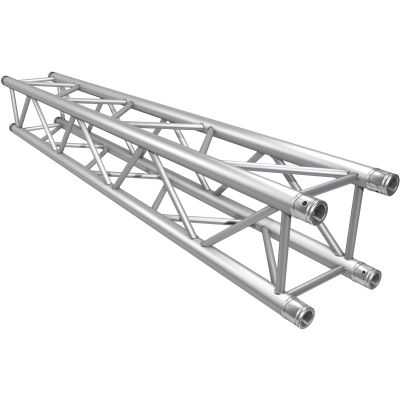
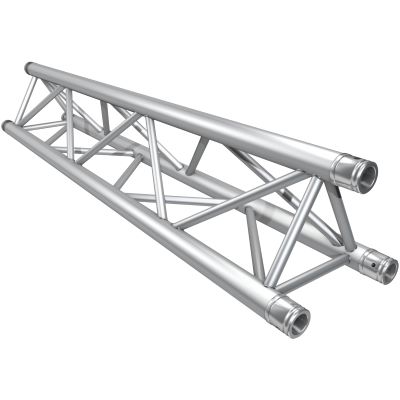
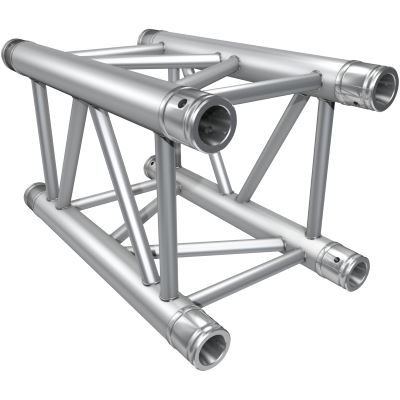
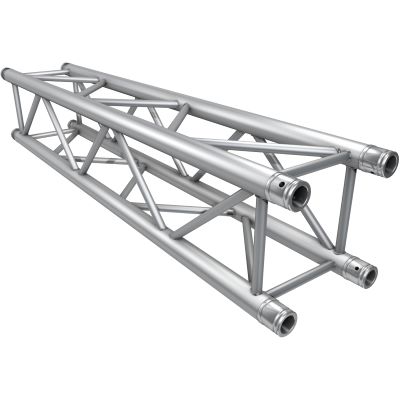
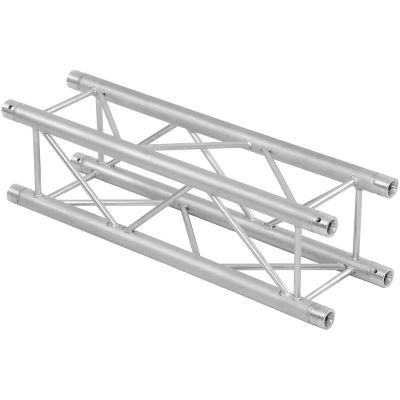
Global Truss F34 2 metre square four-point aluminium truss for professional event and stage construction
2-point = flat · 3-point = triangular · 4-point = square
2-Point Flat, lightweight and space-saving
3-Point Triangular spatial cross-section
4-Point Square and particularly versatile as a system
Load Table Determines the permitted loading
The planned construction decides

Which Truss Type Suits Your Project?

Do not choose the truss simply by deciding which one looks the most substantial. First define whether you need to support curtains and light fixtures, build an exhibition stand, create a lighting beam or construct a larger rectangular stage frame.

Slim Lighting or Drapery Support

Choose 2-Point Truss

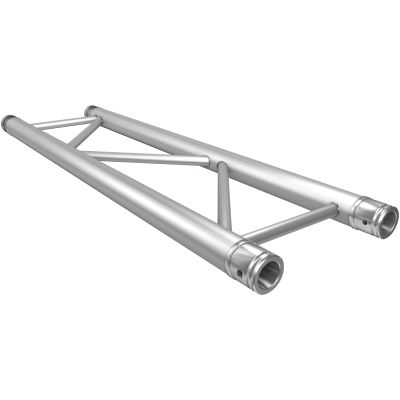
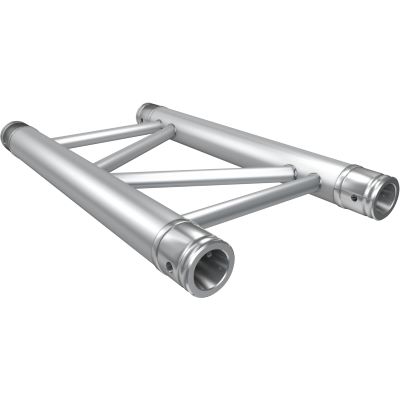
2-point truss forms a flat lattice. Its low construction volume is attractive with low ceilings, exhibition stands and suitable lightweight support applications.

Musikhaus Korn currently offers the Global Truss F32 series in 0.5, 1.0 and 1.5 metre sections.

Exhibition, Design & Special Construction

Choose 3-Point Truss

The triangular cross-section creates a spatial lattice structure while remaining visually slimmer than square box truss.

The current range includes Global Truss F33, ALUTRUSS TRILOCK and Duratruss DT33 systems.

Stage, Frames & Ground Support

Choose 4-Point Truss

The square cross-section is especially common in more extensive constructions. The selection of straight sections, corners, cross pieces and complete systems is significantly larger than with the other two designs.

Think about future expansion: if you only need one straight lighting run today but may later build rectangles, corners, towers or ground-support structures, check the available corner and accessory range of the truss family before buying the first straight section.

The differences at a glance

Compare 2-, 3- and 4-Point Truss Directly

Direct comparison of two-point, three-point and four-point truss systems
Criterion 2-Point 3-Point 4-Point
Cross-Section Flat Triangular Square
Transport Volume Low Medium Larger
Low Ceiling Height Very interesting Good Requires more construction height
Spatial Structure Limited High Very high
Exhibition & Decorative Construction Good Very interesting Very good
Large Frame Structures Not the typical focus System-dependent Typical application
Current Musikhaus Korn Selection 3 products 11 products 99 products

Do not misinterpret this comparison: the table describes typical application priorities. It is not a structural approval or load table. Permitted loads must always be determined from the exact truss series, span and load configuration.

Flat lattice with little construction height

When Is 2-Point Truss Useful?

Two parallel chord tubes are connected by diagonal braces. The result is a flat truss that occupies significantly less space than a triangular or square system.

Musikhaus Korn places 2-point truss particularly in suitable lighter structures, curtain and molton support and lighter lighting tasks. Depending on the intended construction, it can also serve as an additional support element within an appropriate stage system.

  • Low transport volume
  • Interesting when ceiling height is limited
  • Suitable for appropriate light and decorative tasks
  • Installation orientation must be included in load planning
Global Truss F32 1 metre flat two-point aluminium truss
2-point truss: flat, slim and space-saving
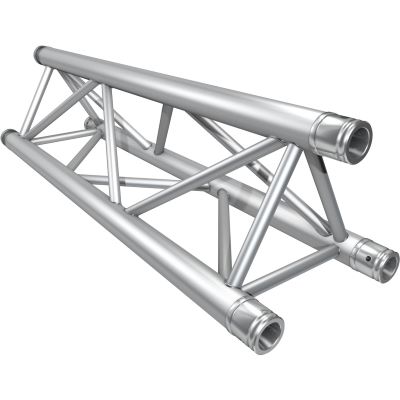
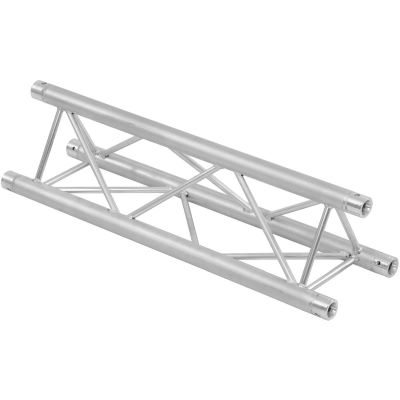
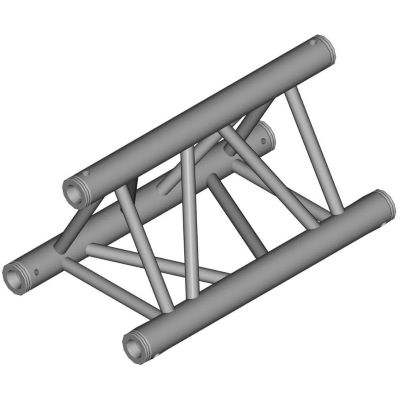
Global Truss 4077 F33 1 metre triangular three-point aluminium truss
3-point truss: triangular, spatial and visually distinctive
Triangular, spatial and visually distinctive

What Are the Advantages of 3-Point Truss?

Three main chord tubes form a triangular cross-section. This creates a spatial lattice structure while maintaining a comparatively manageable transport volume and a characteristic visual appearance.

In the current Musikhaus Korn range, 3-point truss is represented by Global Truss F33, ALUTRUSS TRILOCK and Duratruss DT33 systems. Applications include exhibition structures, decorative construction and professional event systems.

  • Triangle creates a spatial lattice structure
  • Frequently interesting in exhibition and design structures
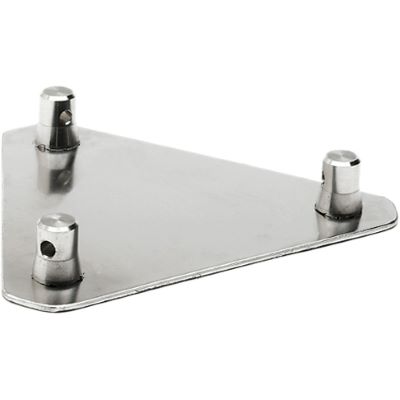
  • Straight elements, corners and base plates are available
  • Orientation of the triangle must be considered during planning
Box truss for extensive system constructions

Why Is 4-Point Truss So Common?

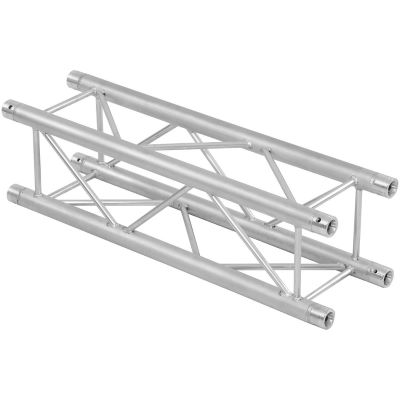
Four main chord tubes form a square cross-section. This provides a spatial lattice structure in several directions and enables suitable systems to be combined into rectangles, U-shapes, towers and many other configurations.

Musikhaus Korn currently lists 99 products in the 4-point category – ranging from Global Truss F34 to extensive ALUTRUSS QUADLOCK sections, corners and complete tower systems. For users planning long-term expansion, this broad system range is a major advantage.

  • Large selection of straight sections
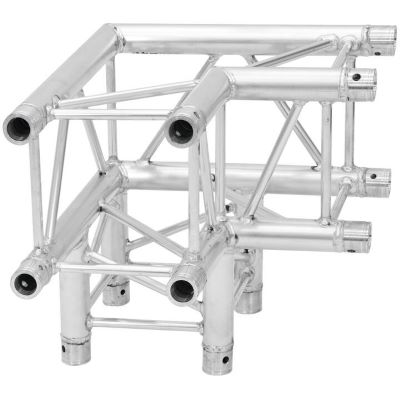
  • Corners, T-pieces and cross pieces available
  • Ground-support and tower systems can be realised
  • Widely used for extensive professional stage structures
Global Truss F34 2 metre square four-point truss section
4-point truss: square cross-section and a large system world
The most important number is not in the product name

Why Span and Load Matter More Than “2, 3 or 4 Point”

Trusses are lattice girders. As a free span becomes longer, bending, deflection and permitted loading change. A single heavy moving head in the centre of the span also creates a different structural situation from several smaller fixtures distributed along the truss.

Concentrated

Point Load

A point load concentrates weight at one position. Its location within the span influences the loading of the structure.

Distributed

Distributed Load

Several smaller devices or weight distributed more evenly along the truss create a different structural situation from one concentrated load.

Manufacturer Data

Load Table

The manufacturer specifies permitted values for defined configurations. Non-standard constructions may require separate structural calculations.

Is 4-Point Automatically Stronger Than 3-Point?

Not as a universal rule for any two products. Profile dimensions, aluminium alloy, wall thickness, bracing and the complete structure jointly determine the permitted loading.

Can Load Capacities Simply Be Added Together?

No. Supports, span, load position and geometry define the structural system. Adding another support changes the construction and must be considered accordingly.

What About Loads Above People?

Professional event technology is subject to additional requirements. Suitable structural documentation or tested configurations must be available where required, and appropriate constructions belong in qualified hands.

Never derive a permissible load from appearance: chord count, tube diameter and truss weight alone do not provide a valid load rating. Use the current technical documentation for the exact system and intended construction.

Do not buy only the first straight section

Choose the Truss Series as a Modular System

Length Grid

Standard Lengths

Sections of 0.5, 1, 1.5, 2 metres and longer determine how precisely the future structure can be adapted to room dimensions.

Frames

Corners

Rectangular and spatial frames require suitable 2- or 3-way corners. Orientation and corner type must match the planned geometry exactly.

System Connection

Cones, Bolts & Pins

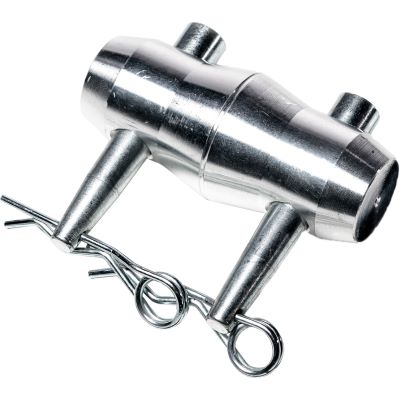
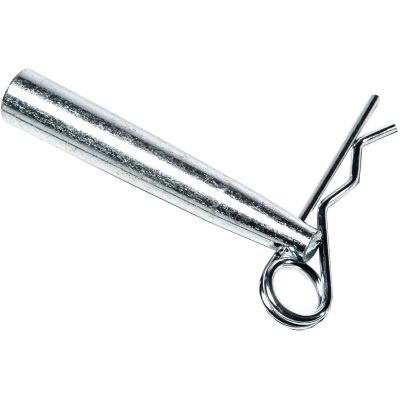
Conical connectors, bolts and retaining pins belong to the relevant system family. Similar external dimensions alone do not demonstrate compatibility.

Future Expansion

Check the Accessories Before Buying

Check whether towers, box corners, cross pieces, base plates and further accessories are available within the same series.

Do not mix systems by eye: even similarly named products or systems can have different construction details. Compatibility must be confirmed from manufacturer documentation.

Ground setup, lifts and rigging are different systems

How Is a Truss Supported?

Mobile

On Stage Lifts

Mobile lighting runs can be erected using stage lifts specifically intended for the application. Lift, adapter and truss must be treated as one approved system combination.

Freestanding

Ground Support

A freestanding frame is carried by towers from the ground. Bases, towers, sleeve blocks and the upper truss form one complete system.

Rigging

Flown Truss

Structures suspended from ceilings or rigging points require competent planning of suspension points, loads and suitable rigging equipment.

Grouped by system family

19 Current Truss Components Compared

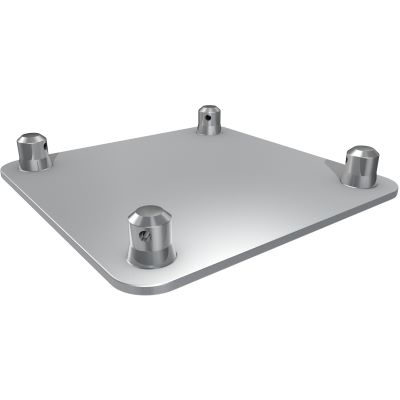
The selection contains straight sections, base plates and connection components. Only work within system combinations documented for the intended construction.

Staying within a system simplifies expansion and documentation

Manufacturers for Truss and Stage Construction

The selected products cover Global Truss F32, F33 and F34, ALUTRUSS TRILOCK and QUADLOCK as well as Duratruss DT33. When expanding a construction, prioritise documented system compatibility over visual similarity.

Avoid the most common purchasing mistakes

What Is Often Misjudged When Buying Truss?

Mistake 1

“Four-Point Always Carries More”

Only the specific load tables of the compared systems allow a meaningful load comparison.

Mistake 2

Buying Only Straight Sections

If frames may be required later, check the available corners and system components before selecting the series.

Mistake 3

Mixing Systems

Similar dimensions do not automatically mean documented compatibility.

Mistake 4

Ignoring the Span

Permitted loading changes with unsupported length, support arrangement and structural situation.

Mistake 5

Using a Brace as an Attachment Point

Attach technical equipment only to areas intended and approved for the particular application.

Mistake 6

Improvising an Outdoor Structure

Freestanding outdoor constructions require qualified overall planning of the complete system.

Common buying decisions

2-, 3- and 4-Point Truss Explained Simply

What does 2-, 3- or 4-point truss mean?

The number describes the longitudinal main chord tubes. Two chord tubes create a flat lattice, three create a triangular cross-section and four create a square cross-section.

Which truss is suitable for a mobile DJ?

For a small and lightweight lighting run, 2-point truss can be interesting. If the system may later expand into larger frames, a suitable 4-point family generally offers significantly more system components.

Which truss is suitable for an exhibition stand?

2- and 3-point systems can be attractive because of their slimmer appearance and lower volume. 4-point truss is frequently used for larger spatial frames. The correct choice still depends on the actual stand design.

When is 3-point truss better than 2-point truss?

When a spatial lattice structure is desired but square box truss is unnecessary or visually too dominant. Three-point systems are also frequently used for specialised exhibition and decorative structures.

Why is 4-point truss so widespread?

The square cross-section is highly versatile and the available system range is extensive. Musikhaus Korn currently lists 99 products in the 4-point category compared with 3 products in 2-point and 11 products in 3-point.

Which truss carries the most weight?

This cannot be determined from the number of chord tubes alone. Compare the load tables of the exact series at the required span, orientation and load configuration.

Can I combine Global Truss and ALUTRUSS?

Only if the specific combination is explicitly documented or approved for the components concerned. Identical external dimensions or tube diameters alone are not sufficient.

Can a truss stand on two lighting stands?

A mobile truss run can be erected using stage lifts or suitable supports specifically designed for that purpose. The permitted loading depends on the complete combination of lift, adapter, truss and construction.

What is a point load?

A point load concentrates weight at a particular location on the truss, for example one moving head. Its position influences the loading of the overall structure.

Which truss should I buy if I want to expand later?

First check which straight lengths, corners, cross pieces, base plates and tower components are available in the series. A broad 4-point system range is often especially flexible for stage structures that will grow over time.

Continue planning the complete stage

Related Areas Around Truss Technology

Mobile Support

Stage Lifts

Professional lifting solutions for truss constructions designed for their use.

Attachment

Clamps & Hooks

Couplers and fastening equipment selected according to tube dimensions and intended application.

Payload

Lighting Technology

Select moving heads, PARs and other fixtures according to the construction and load plan.

The decision summarised

2-Point for Slim Tasks, 3-Point for Special Structures, 4-Point for Maximum System Variety

Choose 2-point truss when low construction height and suitable lightweight support tasks are the priority. 3-point truss is interesting when a spatial but slimmer structure is required for exhibition, design or specialised construction. For extensive stage frames, ground support and long-term expandability, 4-point truss generally provides the largest system selection. The actual permitted load, however, always comes from the technical documentation for the specific manufacturer system and construction.

Continue planning event technology correctly

Open the Musikhaus Korn Guide

Stage construction, lighting, PA systems, mixers, microphones, DJ technology, recording and musical instruments: the central Musikhaus Korn guide leads to further buying advice, comparisons and complete setup solutions.