Four Strings for a Direct Introduction
E–A–D–G covers rock, pop, blues, funk, punk, soul, indie and many other styles. Orientation and string muting remain particularly straightforward.

Four strings are the proven electric-bass standard, while five strings extend the instrument with additional low notes. Compare range, neck width, string spacing, playing feel, music styles and learning effort before deciding which version best supports the bass lines you actually want to play.

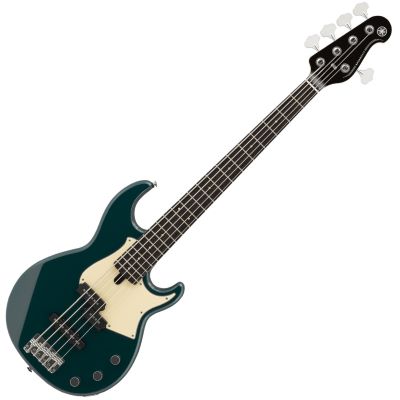
A four-string bass is fully sufficient for most beginners and many professional applications. Choose five strings when you regularly need notes below the low E or want to play bass lines in lower positions with fewer changes of position.
E–A–D–G covers rock, pop, blues, funk, punk, soul, indie and many other styles. Orientation and string muting remain particularly straightforward.
The common B–E–A–D–G tuning adds a low B string. This provides additional low notes and alternative fingering positions without removing the four traditional strings.
When your favourite music regularly requires a five-string bass, you can learn on one immediately. Include the additional string in your orientation and muting technique from the beginning.
The neck is usually wider and one additional string must be controlled. After a period of adjustment, however, the extended range can become very practical.
Practical rule: when you currently have no specific musical reason for a fifth string, a four-string bass is usually the simpler choice. When particular songs require a low B string, there is no reason not to choose five strings directly.
The fifth string expands the instrument by five semitones below the traditional low E. At the same time, it affects visual orientation, neck dimensions, fingering options and the amount of muting required.
This tuning is the classic electric-bass standard. Many teaching methods, songs and bass lines can be followed directly, while four strings make visual orientation on the fingerboard particularly clear.
The common tuning is B–E–A–D–G. It adds five semitones below the low E and also allows some notes to be played further up the neck without moving to another position.
An unused low B string can resonate sympathetically. The fretting hand, plucking hand or a movable thumb position can be used to keep strings that are not being played reliably quiet.
The correct number of strings cannot be determined from the specification sheet alone. A good four-string bass is not less professional than a five-string model.
The deciding factor is musical use: choose five strings when the extra range is regularly useful. Choose four when simplicity, familiar orientation and the traditional range serve your music without compromise.
The values describe common designs rather than universal rules. Neck profile, scale length and string spacing can differ considerably between individual bass models.
| Characteristic | 4-String Bass | 5-String Bass |
|---|---|---|
| Standard tuning | E–A–D–G | B–E–A–D–G |
| Lowest standard note | Low E | Low B |
| Orientation | Particularly straightforward | One additional string to include |
| Neck | Often narrower | Usually wider |
| Muting technique | Four strings must be controlled | An additional low string must be controlled |
| Typical applications | Rock, pop, funk, blues, punk and soul | Modern pop, gospel, metal, fusion and cover music |
| For beginners | Very straightforward | Also entirely possible |
| Main advantage | Simplicity and a very large selection | More depth and more fingering options |
Music style is a useful indication of whether you will regularly use the additional low range. It is not a rigid rule about which instrument is permitted.
Many classic bass lines remain within the traditional range. A four-string bass feels direct and clear and can also be played very comfortably with a pick.
Groove, dynamics and articulation are often more important here than maximum range. Four strings therefore provide a highly versatile starting point.
When guitars use low tunings or arrangements require additional bass range, a five-string provides the corresponding notes without sacrificing the four standard strings.
The B string does more than add depth. Certain bass lines can be played with fewer position changes, which may be convenient during extensive or varied set lists.
There is no genre rule: metal works on four strings and funk works on five. The genre merely indicates whether the additional range could be useful to you on a regular basis.
Two five-string basses can feel very different despite having the same number of strings. Assess the complete neck profile, string spacing, weight and balance rather than looking only at the nominal neck width.
A well-shaped five-string neck can feel comfortable. Nevertheless, compare it with a slim four-string bass and a compact short-scale model before deciding.
A bass amplifier should reproduce low notes in a controlled manner. A suitable combo is sufficient for practice, while clean low-frequency response and adequate power reserves become more important in the rehearsal room.
A four-string bass can be set up for B–E–A–D with a suitable string set. Adjustments to the nut and general setup may be required, and the high G string is no longer available.
Use real songs and practical playing tests instead of deciding from specifications or assumptions about particular genres.
Check the actual bass lines in your favourite songs. When notes below the low E occur regularly, a five-string bass has a clear advantage.
More strings do not automatically create more impact. A well-adjusted four-string bass can easily deliver a powerful rock sound.
Play both versions directly after one another. When the additional width creates tension, compare another neck profile or string spacing.
Play short rests and staccato notes. When unused strings remain quiet, your muting technique is working with the instrument.
The instrument you enjoy playing is the better long-term choice than an option that is theoretically more versatile but remains unused.
Compare traditional P- and J-style concepts with modern basses and models featuring an extended five-string range.


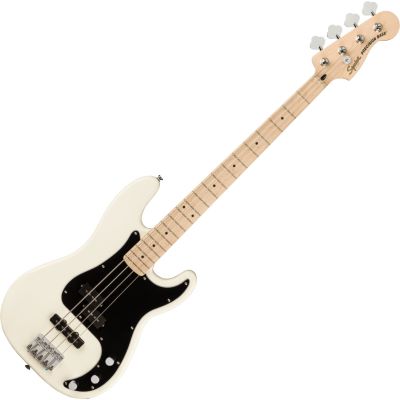
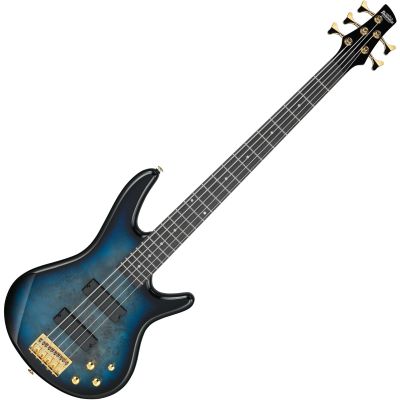


The selection is deliberately divided into two groups. After choosing a preferred number of strings, compare body style, neck, electronics, weight and string spacing within that group.
The selection includes traditional P- and J-style instruments, modern active basses, compact models and travel-oriented designs.
These instruments combine the standard four strings with a low B and include traditional, modern, heavy and compact body concepts.
Both four- and five-string basses need equipment that suits their scale length, tuning, output and intended playing environment.
Use an amplifier designed for bass with either number of strings. With a low B string, clean and controlled low-frequency reproduction is particularly beneficial.
Select a set that matches the number of strings and scale length. Low alternative tunings may require different gauges and a new instrument setup.
Compressors, overdrive, preamps and other effects work with either version. Careful control of the extended low-frequency range remains important.
A reliable instrument cable, comfortable strap and chromatic tuner are useful essentials regardless of the number of strings.
The number of strings is a functional choice rather than a measure of playing level, sound quality or professional status.
The number of strings is not a quality level. Four-string basses are used just as naturally on professional stages and productions.
Anyone who musically needs five strings and feels comfortable with the neck can begin with a five-string bass immediately.
Fullness is created by the instrument, pickups, strings, amplification and playing technique. A fifth string initially expands the available range.
Compare traditional bass specialists and modern instrument concepts on the verified English manufacturer pages.








Compare both instrument types through the same amplifier, both seated and standing. Play the same bass line, several octaves, short rests and a passage on the lowest string. This quickly reveals which neck, string spacing, balance and muting requirements suit your playing style.
No. It simply requires slightly more attention to orientation and muting from the beginning. Anyone who actually needs the low B string can learn directly on a five-string bass.
In the usual B–E–A–D–G tuning, the four traditional strings remain available. Bass lines written for a four-string instrument can therefore generally still be played.
No. The tuning used by the music is decisive. Many metal styles work extremely well with four strings. A five-string becomes useful when additional low notes are regularly required.
Not automatically. The string spacing must suit your technique. Some players prefer more space, while others are entirely comfortable with the closer spacing of a five-string model.
A slim four-string neck often feels easier. However, neck profile, scale length and string spacing are decisive. Compact short-scale basses should also be included in the comparison.
Yes. This is possible with a suitable string set and an appropriate setup. You will, however, no longer have the high G string available.
It does not need a dedicated “five-string amplifier”. What matters is a system designed for bass that reproduces the low B string cleanly and with sufficient control.
A change becomes useful when you regularly miss low notes, frequently have to retune for particular songs or want more fingering options within one position.
No. Pickup design, construction, electronics, strings and playing technique shape the sound. The fifth string primarily expands the available range.
Play the same bass line, several octaves, short rests and a passage on the lowest string. This allows neck feel, orientation, muting and low-bass response to be compared directly.
Continue with instrument selection, amplification, accessories and the complete guitar-and-bass range.
Continue with the central guide to instruments, amplification, accessories and further buying decisions.
Compare P-, J-, heavy-, four-, five-, six-string and additional bass models in the complete range.
Find combos, amplifier heads and speaker systems for practice, rehearsals, recording and live performance.
Discover instruments, amplifiers, effects, strings and additional accessories together in one department.
The classic four-string remains a versatile choice for beginners, experienced bassists and professional musicians. Its E–A–D–G tuning, straightforward string arrangement and large selection of P-, J- and modern designs make it an uncomplicated tool for a wide range of music.
A five-string bass adds a low B string, extending the range and creating additional fingering options. This is worthwhile when your music regularly requires low notes. In return, you should feel comfortable with the usually wider neck and the need for consistent muting. The correct decision is therefore not four versus five, but the number of strings that supports your music with the fewest compromises.