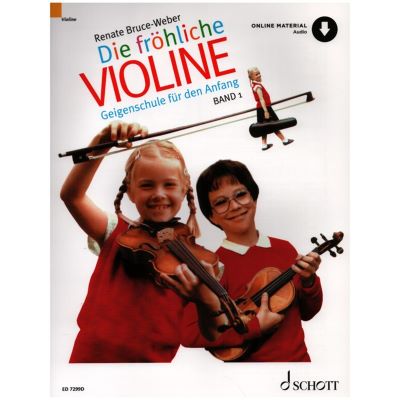
Place the Violin on the Shoulder
The child adopts a natural playing position. The violin should neither slide forwards nor need to be strongly clamped between the shoulder and chin.

1/8, 1/4, 1/2 or 3/4? With a children's violin, the correct size directly affects posture, finger reach and bowing. A violin should therefore not be bought too large in anticipation of future growth. An instrument that fits ergonomically today makes the first notes easier and supports a relaxed playing technique.
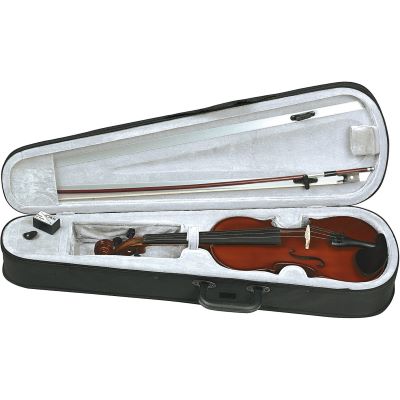
Violins for children are made in several reduced sizes. At Musikhaus Korn you can find children's violins in 1/8, 1/4, 1/2 and 3/4 sizes . The fractional designation describes a size class – a 1/2 violin is therefore not mathematically exactly half the length of a 4/4 violin.
As an initial guide, measure the arm from the base of the neck to approximately the middle of the palm with the arm extended. The real fitting test is even more important: the child should be able to reach the scroll of the violin without completely straightening the elbow or pulling the shoulder forwards.
| Size | Approx. Arm Measurement | Typical Classification | Accessories |
|---|---|---|---|
| 1/8 | approx. 43 cm | Small children | 1/8 bow, small shoulder rest |
| 1/4 | approx. 47 cm | Early years at music school | 1/4 bow, suitable strings |
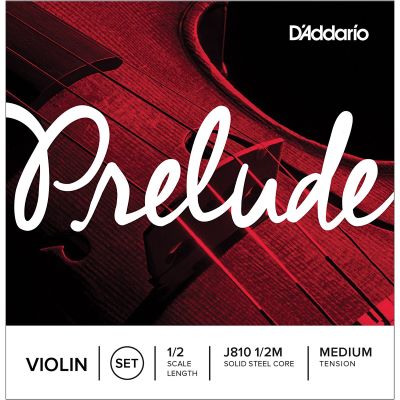
| 1/2 | approx. 52 cm | Medium children's size | 1/2 bow, 1/2 strings |
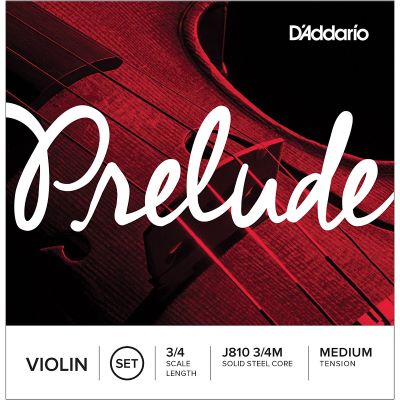
| 3/4 | approx. 56–57 cm | Larger children and teenagers | 3/4 bow, suitable shoulder rest |
| 4/4 | from approx. 60 cm | Larger teenagers and adults | Full-size accessories |
The child adopts a natural playing position. The violin should neither slide forwards nor need to be strongly clamped between the shoulder and chin.
Guide the hand towards the scroll. If it reaches the pegbox comfortably while the elbow remains slightly bent, this indicates a suitable size class.
The child then places the fingers on the fingerboard. Fingers and wrist should be able to move without the shoulder or elbow losing its natural position.
With the correctly sized bow, the child should be able to reach the tip of the bow without pushing the shoulder forwards.
Too large? If the elbow is completely straight or the child has to rotate the shoulder forwards, try the next smaller violin size.
String length and finger spacing need to suit the child. An appropriate scale length makes it easier to learn clean finger positions even though a violin has no frets.
Bridge, pegs, string height and tailpiece should be correctly adjusted. A poorly set-up instrument can make getting started unnecessarily difficult even with good teaching.
Four fine tuners are especially practical for children. Small tuning corrections can be made more controllably than by using the pegs alone.
The bow should be straight, correctly sized and balanced. Stable student bows made from wood or carbon are practical choices for lessons.
Backpack straps and low weight are important for travelling to music school. Reflective elements can also be useful.
The violin should respond well to normal bowing. Children benefit from an instrument that does not require excessive bow pressure before it begins to sound.
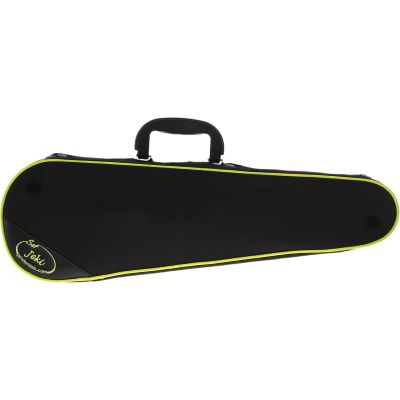
A complete violin outfit is often the most practical choice for getting started. Violin, bow and case are already matched to the same size class. Many outfits also include rosin.
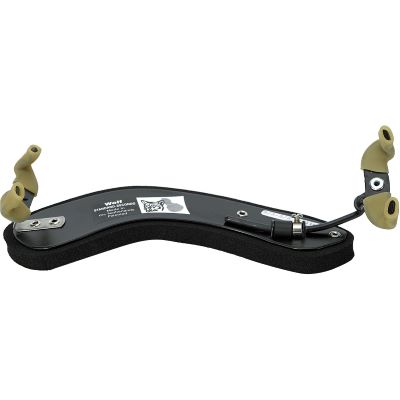
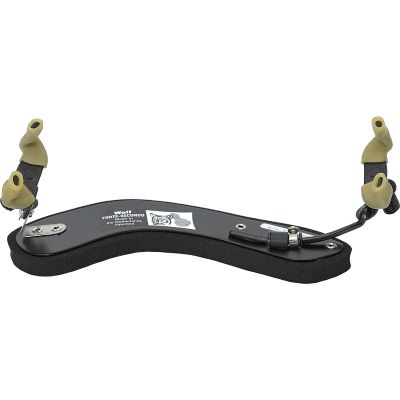
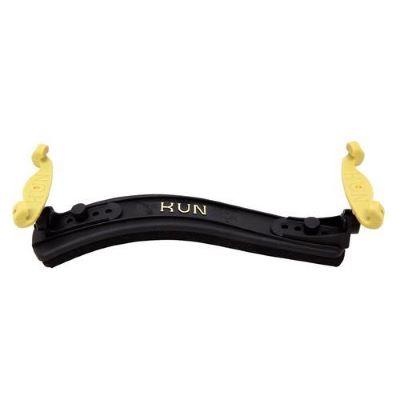
This means that every accessory does not have to be selected separately. A shoulder rest, however, is often chosen separately because its height and shape depend not only on the violin but also on the child's shoulder, neck length and chin rest.
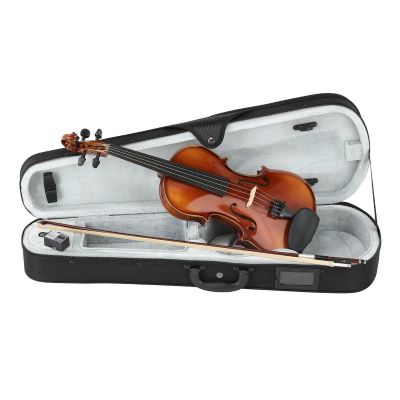
The violin rests between the collarbone and chin area. The head should not be pulled strongly to one side and the left shoulder should remain as relaxed as possible. A suitable shoulder rest can help compensate for the individual distance.
The bow should not be gripped with force either. The right hand should remain flexible so that the fingers, wrist and forearm can develop a controlled bowing motion together.
If the child can now reach clearly beyond the scroll and the elbow is strongly bent, the next size may become appropriate.
Change only when the larger violin can genuinely be played comfortably. The fact that the old violin looks small does not automatically mean that the next size already fits.
When moving from a 1/2 to a 3/4 violin, a corresponding 3/4 bow is normally required too.
Shoulder rest, strings and case can be size-dependent. When changing instruments, therefore check the complete setup.
The bow size must correspond to the violin size. A bow that is too long is particularly difficult to control at the tip.
Models are available, for example, for 1/8–1/16, 1/2–1/4 or 3/4–1/2 violins. The stated size range must match the violin.
Violin strings are also available for different scale lengths. Always buy replacement strings that match the instrument size.
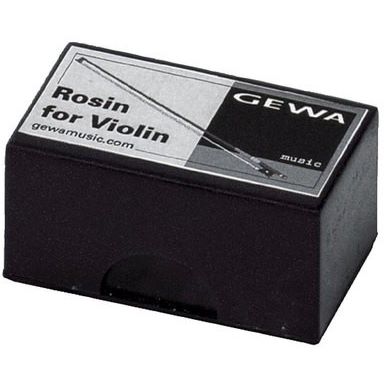
Rosin provides grip between the bow hair and the string. A child-friendly violin method book completes the equipment for lessons and practising at home.
The selection combines children's violins with matching bows, shoulder rests, strings, rosin, a case and learning material.
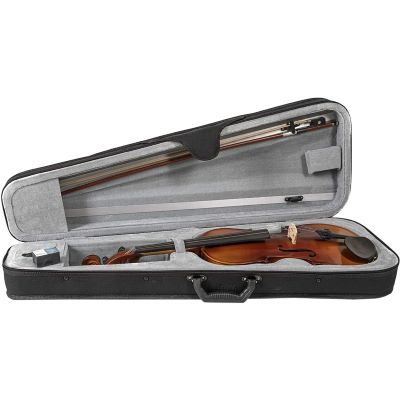
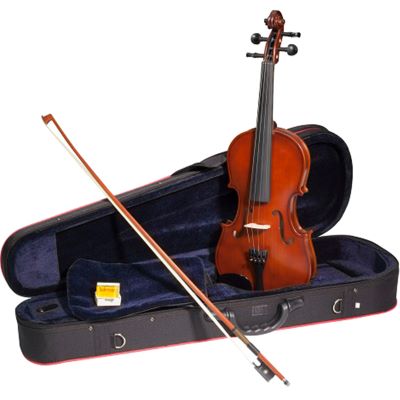
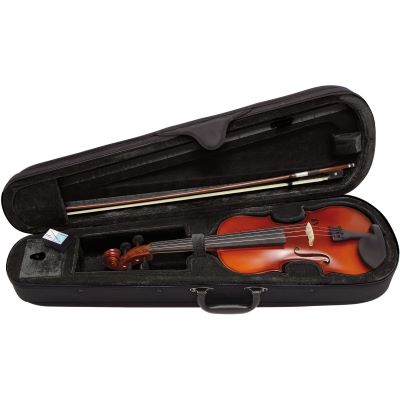
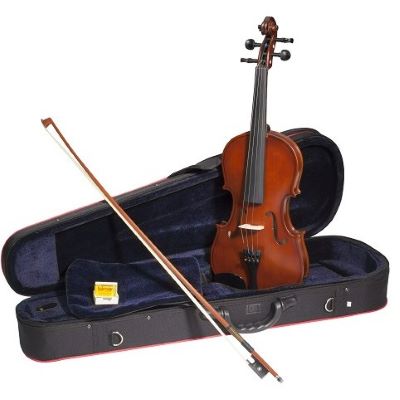
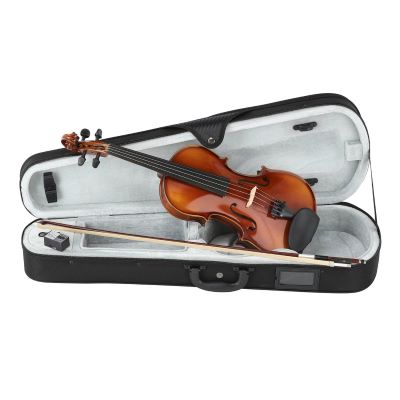
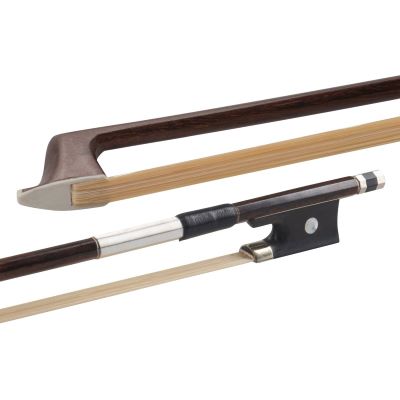
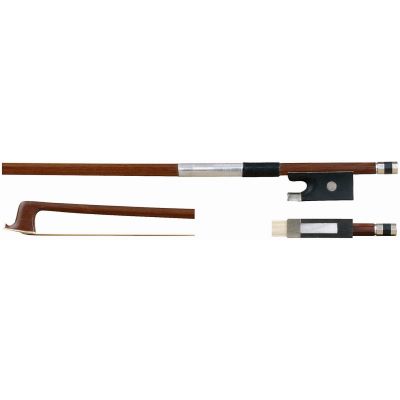
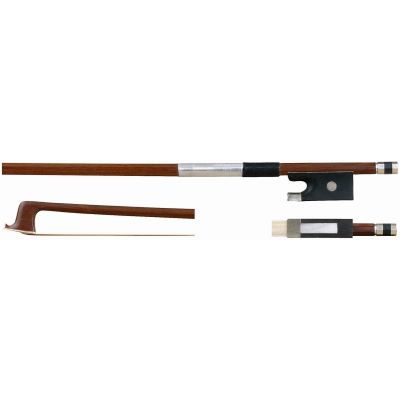
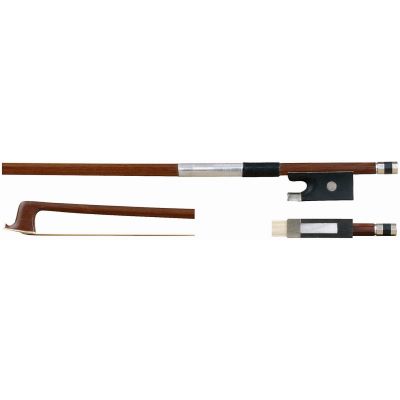




Violin outfits in several children's sizes, bows, cases, rosin and further string-instrument accessories.
Student and training violins as well as matching outfits for different size levels.
Violin strings for different scale lengths and accessories for regular lessons.
Beginner instruments, stands and additional accessories for music school and home.
After playing, remove rosin dust and fingerprints with a dry, soft cloth. Then loosen the bow and store the violin in its case.
An oversized violin makes posture, fingering technique and bowing more difficult. The size that fits now is more important for learning.
Children of the same age can have very different arm and finger lengths. Always check reach and playing posture.
A 1/2 violin normally also needs a 1/2 bow. Shoulder rest and strings must likewise match the instrument's scale length.
A ready-to-play violin in the size that actually fits. The 1/8, 1/4, 1/2 and 3/4 sizes are particularly common for children.
Arm reach and hand size are decisive. During fitting, the hand should comfortably reach the scroll while the elbow remains slightly bent.
There is no fixed age limit. Concentration, motor development and an appropriately small violin are the decisive factors. Correspondingly small sizes are available for very young students.
No. 1/2 is a traditional size designation rather than a mathematical halving of all the dimensions of a 4/4 violin.
When the 1/2 violin has clearly become small and the 3/4 violin can be played comfortably without overextending the arm.
This is not recommended. A violin that is too large can encourage an unfavourable posture and make fingering more difficult.
Many children play with a shoulder rest. Whether one is useful, and which height is suitable, depends on anatomy, the chin rest and the teaching concept.
Yes. As a rule, a 1/4 violin is used with a 1/4 bow and a 3/4 violin with a 3/4 bow.
A set is particularly practical for beginners because the bow and case are already matched to the instrument size.
The string set must match the violin's scale length. When buying, therefore pay explicit attention to designations such as 1/4, 1/2 or 3/4.
Particularly after growth spurts. The teacher will often also recognise quickly when the previous instrument has become too small.
A good children's violin is above all a violin that fits now. The 1/8, 1/4, 1/2 and 3/4 sizes make it possible to adapt arm reach, hand size and bowing to the child's development. Fixed age recommendations serve only as a guide; the actual fitting test is decisive.
Ready-to-play outfits with a matching bow and case are particularly straightforward. Add an ergonomically suitable shoulder rest, rosin and a correctly sized replacement string set to create a complete setup for music school, lessons, ensemble playing and daily practice.
Find further guidance on string instruments, wind instruments, drums, keyboard instruments and other equipment in the central Musikhaus Korn guide.