Musikhaus Keks
Welcome!
Our cookies offer you a fast, relaxed and full-featured shopping experience. Some are necessary to operate the website and its functions. Others help us to improve our services. If you agree to this, simply consent to the use of cookies for preferences, statistics and marketing by clicking on "OK". Alternatively, you can deactivate individual cookies under "Customise cookies" or all cookies, except those required for the function of our website, under "Reject all".
Musikhaus Korn Studio Guide

Reduce Impact Noise & Structure-Borne Sound in Your Home Studio

Footsteps above the microphone, a vibrating desk, a subwoofer standing directly on the floor or the kick pedal of an electronic drum kit: unwanted vibrations can travel through furniture, floors, walls and microphone stands. This guide explains how impact noise and structure-borne sound are created, where mechanical isolation helps and why monitor pads, shock mounts and isolated setups solve different problems from structural soundproofing.

Understand transmission paths Isolate monitors and microphones Assess rental apartments realistically
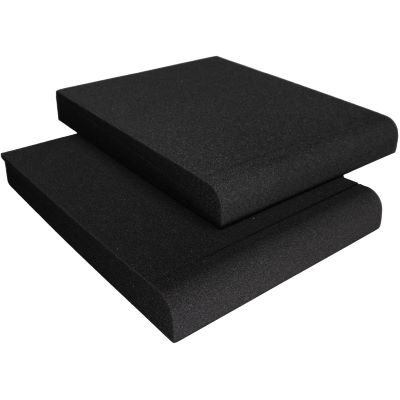
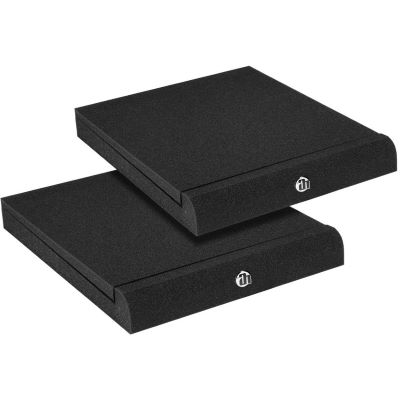
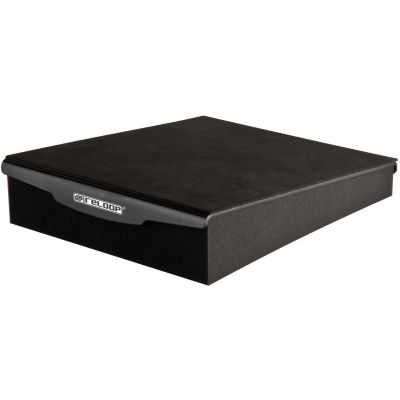
Studio monitor isolation pads used to mechanically isolate loudspeakers from a desk
Practical Home Studio Guide

The most effective approach starts with the source: identify the vibrating component, examine its mechanical connection and isolate it with a solution suited to its weight and application.

The most important distinction

What Are Impact Noise, Structure-Borne Sound and Airborne Sound?

Once you know how an unwanted noise is generated and transmitted, you can choose the right measure. Acoustic foam on a wall, a microphone shock mount and an isolated floor construction address completely different transmission paths.

Structure-Borne Sound

Vibrations Travelling Through Solid Materials

Structure-borne sound occurs when mechanical vibrations travel through solid components. A studio monitor may excite a desk, for example. The vibration can then pass through the desk legs, floor or wall and be radiated as audible sound elsewhere.

Impact Noise

Direct Mechanical Excitation

Impact noise is a typical form of mechanically excited sound transmission. Footsteps, a falling object, a bass-drum pedal or movement of a microphone stand can directly excite the floor or another part of the building structure.

Airborne Sound

Sound Travelling Through the Air

Vocals, guitar amplifiers and studio monitors generate airborne sound. This sound reaches walls, doors and ceilings through the air. Measures against structure-borne transmission therefore do not automatically make a room soundproof.

Room acoustics are not the same as sound insulation. Absorbers reduce reflections inside the room. An elastic monitor pad can reduce mechanical coupling between a loudspeaker and its support. Structural soundproofing, on the other hand, has to control sound transmission between rooms and building components.

Find the source first

Where Does Structure-Borne Sound Commonly Occur in a Home Studio?

Before buying isolation accessories, find out exactly which component is creating the vibration and through which solid connection it is travelling.

Studio Monitors

Monitors placed directly on a desk or shelf can transfer cabinet vibrations into the supporting surface. Lightweight furniture in particular may resonate and amplify the problem.

Subwoofers

Low frequencies, large cone excursions and high energy make subwoofers a particularly relevant source. A rigid connection to the floor can produce clearly noticeable vibrations.

Microphone Stands

Footsteps, cable movement, touches and knocks can travel through a stand into the microphone and appear in the recording as unwanted low-frequency rumble.

E-Drums and Pedals

Headphones reduce airborne drum sound, but the mechanical energy from kick pedals, hi-hat controllers and pad strikes can still enter the floor. This is especially relevant on lightweight upper floors.

Interrupt mechanical transmission paths

How Does Acoustic Decoupling Work?

The objective is not simply to make every device sit on something soft. Effective mechanical isolation must suit the weight, stability requirements and relevant frequency range of the equipment.

Elastic Separation

Separate the Source from the Structure

An elastic element between a vibrating device and its supporting surface can reduce the direct mechanical transmission path. Examples include dense monitor pads, purpose-designed speaker isolators and elastic microphone suspensions.

Correct Loading

Random Foam Does Not Automatically Work

Isolation material should not be completely compressed by the equipment. It still needs to work elastically. A heavy subwoofer and a compact desktop monitor therefore require different solutions. Load capacity and dimensions matter.

Avoid Sound Bridges

Do Not Reconnect Both Sides Rigidly

An elastic layer loses much of its purpose if a rigid screw, metal frame or other fixed element reconnects the isolated parts. Well-designed systems maintain mechanical separation throughout the load path.

Rule of thumb: identify the mechanical source, inspect the direct transmission path and choose an elastic isolation element that is appropriate for the weight, setup and intended application.

Create a calmer monitoring position

Isolate Studio Monitors and Subwoofers from Their Support

Studio monitors placed directly on a resonant desktop can excite the furniture mechanically. That may affect neighbouring rooms and can also make critical listening less reliable.

  • Choose monitor pads that match the dimensions and weight of the loudspeaker.
  • Make sure the monitor is supported completely and remains stable.
  • Mechanical isolation does not mean that the loudspeaker should feel soft or unstable.
  • Desktop monitor stands can improve both height and listening angle.
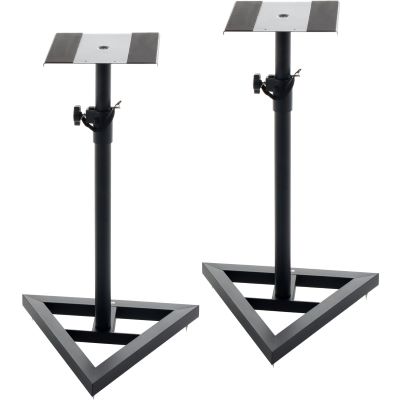
  • Freestanding monitor stands remove the loudspeaker's direct connection to the desk.
  • Use dedicated, sufficiently load-bearing isolation solutions for subwoofers.
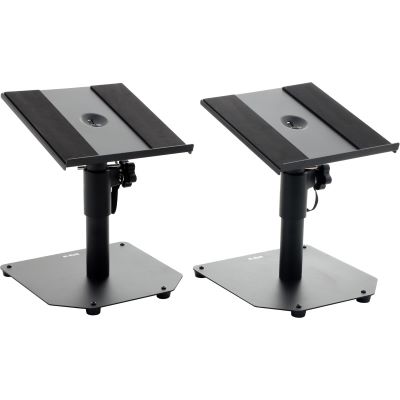
N-RoK TSMS1 desktop studio monitor stands for separating monitors from the desk
A dedicated stand can separate the monitor from the desktop and make positioning easier.

Spikes are not automatically decouplers. On some surfaces, spikes create a very precise mechanical connection. Use them according to the manufacturer's intended application rather than assuming that every spike provides acoustic isolation.

Keep rumble out of the recording

How Does a Microphone Shock Mount Reduce Impact Noise?

An elastic microphone suspension isolates the microphone more effectively from its stand. This partly interrupts the mechanical path between movements in the floor, desk or stand and the sensitive microphone capsule.

Floor Stand

Footsteps and Performer Movement

Footsteps and movement can excite a floor stand mechanically. A suitable shock mount can reduce the amount of vibration reaching the microphone, particularly with sensitive condenser microphones.

Desktop & Podcasting

Keyboard, Mouse and Desk Noise

A keyboard, mouse, cup or hand movement can excite the desktop. If a microphone arm is fixed to that desk, an elastic shock mount can be especially useful.

Compatibility

The Microphone Must Fit Securely

Diameter, weight, thread and model compatibility must match. A good shock mount only helps when the microphone is held safely while remaining mechanically isolated.

Quiet through headphones does not mean silent throughout the building

Reduce Impact Noise from E-Drums, Pedals and Practice Setups

An electronic drum kit played through headphones produces substantially less airborne sound than an acoustic drum kit. Mechanical impulses from the kick pedal, hi-hat controller and pad strikes, however, can still travel into the floor.

Minimise Direct Floor Contact

A properly designed, elastically supported platform can reduce the direct mechanical path into the floor. It must remain stable and safely support the combined weight of the drum kit, player and drum throne.

Do Not Overestimate a Carpet

A carpet protects the floor and prevents the drum kit from sliding. A thin rug, however, is not the same as an engineered impact-noise isolation system.

Locate the Actual Problem

If the kick pedal is mainly audible in the room below, analyse that mechanical path first. Covering the room with acoustic foam will do very little to solve this particular problem.

Choose the measure that matches the problem

Mechanical Isolation, Room Acoustics and Soundproofing Compared

Similar symptoms can have very different causes. This overview helps distinguish local mechanical isolation from acoustic treatment and structural sound insulation.

Problem Suitable Measure Typical Application Do Not Confuse It With
Studio monitor vibrates on the desk Isolation pad or loudspeaker isolator Home studio, desktop setup Wall absorber
Subwoofer excites the floor Load-bearing subwoofer isolation Studio, DJ or Hi-Fi setup Equaliser adjustment alone
Footsteps create rumble in the microphone Compatible microphone shock mount Vocals, podcasting, voice-over Pop filter
E-drum pedal is clearly audible downstairs Elastically isolated practice setup Rental apartment, practice room Headphones alone
Recording room has excessive reverberation Absorbers and room-acoustic treatment Recording and mixing Structure-borne isolation
Sound travels between apartments Structural sound insulation Floor, wall or ceiling construction A single monitor pad
When accessories are no longer enough

When Does Impact-Noise Control Become a Structural Issue?

If footsteps, instruments or loudspeakers are transmitted clearly through floors or into neighbouring rooms, the problem can move beyond ordinary studio accessories and become a matter of structural sound insulation.

Effective constructions may use elastically separated floor layers, sufficient mass and carefully controlled connections that avoid rigid sound bridges. Professional studios may additionally require isolated walls, ceilings and floors.

Such constructions must be designed around load capacity, fire safety, the existing floor structure, the building itself and the required level of insulation. An improvised “floating floor” made from arbitrary foam panels is not equivalent to a properly engineered construction.

Brand worlds at Musikhaus Korn

Brands for Isolation and Low-Vibration Recording Setups

Explore manufacturers offering monitor isolation, microphone suspensions, stands and related studio accessories.

Avoid common misconceptions

Seven Mistakes When Reducing Impact and Structure-Borne Noise

Isolation works best when the measure addresses the actual transmission path instead of simply adding more soft material around the room.

Mistake 1

Putting Acoustic Foam Under Everything

Isolation material has to match the load. Material that is far too soft or completely compressed can lose the elastic behaviour needed for effective mechanical separation.

Mistake 2

Using Wall Absorbers Against Impact Noise

Wall absorbers influence reflected airborne sound inside the room, but they do not directly interrupt a mechanical path through the floor, desk or building structure.

Mistake 3

Checking Only the Level in Your Own Room

Structure-borne sound can radiate in a different room from where it originated. Always check adjacent spaces and, where relevant, the room below.

Mistake 4

Putting the Subwoofer on a Thick Carpet

An ordinary carpet is not an engineered elastic support for a subwoofer and should not automatically be considered sufficient isolation.

Mistake 5

Ignoring Shock-Mount Compatibility

Microphone weight, housing diameter, mounting system and thread must fit the suspension. Compatibility is more important than appearance.

Mistake 6

Assuming an E-Drum with Headphones Is Silent

Headphones reduce airborne playback sound, while the mechanical impulses from pads and pedals remain and can still enter the floor.

Mistake 7

Trying to Solve Structural Problems with Accessories

Strong transmission through a building structure may require professional acoustic or construction planning. Studio accessories have practical limits.

Frequently asked questions

Questions About Impact Noise, Vibrations and Isolation

What is the difference between impact noise and structure-borne sound?

Structure-borne sound is vibration that travels through solid materials. Impact noise describes direct mechanical excitation, such as footsteps or pedal movements, and is therefore a typical form of structure-borne sound transmission.

Can monitor isolation pads help with noise heard by neighbours?

They can reduce the direct mechanical transmission from a loudspeaker into a desk, shelf or stand. Airborne bass remains, however. Strong low-frequency transmission may additionally require reduced playback levels or structural measures.

How should I isolate a subwoofer from the floor?

Use a stable isolation solution designed for the dimensions and weight of the subwoofer. The elastic element should support the unit safely without being completely compressed.

Can a carpet prevent impact noise?

A carpet can reduce some contact noise, protect the floor and prevent equipment from sliding. It is not a complete solution for strong mechanical impulses or problematic floor structures.

Why can footsteps be heard in a vocal recording?

Movement can excite the floor mechanically. A rigid microphone stand then transports part of that vibration towards the microphone capsule. A suitable shock mount can partially interrupt this path.

Is an electronic drum kit really quiet enough for a rental apartment?

Headphones can greatly reduce airborne playback sound, but kick pedals, hi-hat controllers and pad strikes still create mechanical impulses. The room below should therefore be taken into account when evaluating a setup.

Do wall absorbers help against structure-borne sound?

Wall absorbers primarily influence room acoustics and airborne reflections. They do not directly isolate a mechanically excited floor, desk or equipment support.

What is the advantage of a freestanding monitor stand?

A freestanding stand removes the loudspeaker's direct connection to the desk and allows independent positioning. The remaining mechanical transmission still depends on the stand, its contact surfaces and the floor.

When should I involve a soundproofing professional?

Professional advice is sensible when sound is clearly transmitted through floors or walls into several rooms and local isolation is insufficient, especially when planning permanent floating floors, isolated walls, ceilings or complete room-within-a-room systems.

Source – Path – Receiver

Reduce Impact and Structure-Borne Noise at the Source

The most effective strategy begins where the vibration is created: isolate monitors and subwoofers appropriately, elastically suspend sensitive microphones and examine floor contact carefully with pedal-operated instruments. Then follow the transmission path and eliminate unnecessary rigid connections. If the disturbance is still clearly audible in other rooms or apartments, the issue may require structural measures involving the floor, wall or ceiling.

More buying advice and practical knowledge

Discover More Musikhaus Korn Studio Topics

From home-studio equipment and room acoustics to microphones, monitoring, instruments and practice setups, Musikhaus Korn offers the equipment needed to build and expand your recording environment.