Musikhaus Keks
Welcome!
Our cookies offer you a fast, relaxed and full-featured shopping experience. Some are necessary to operate the website and its functions. Others help us to improve our services. If you agree to this, simply consent to the use of cookies for preferences, statistics and marketing by clicking on "OK". Alternatively, you can deactivate individual cookies under "Customise cookies" or all cookies, except those required for the function of our website, under "Reject all".
Musikhaus Korn DJ Guide

Two or Four Decks? How to Choose the Right DJ Controller

Two decks are completely sufficient for classic transitions, beatmatching, hot cues, loops and many professional DJ sets. Four decks become interesting when you want to use additional tracks, acapellas, loops or stems at the same time. The important question is therefore not which number is larger, but which workflow actually matches the way you DJ.

2- and 4-deck workflows explained Understand layers, stems & external sources For beginners through performance DJs
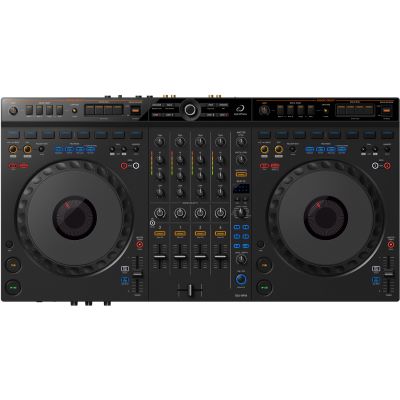
AlphaTheta DDJ-GRV6 four-channel DJ controller illustrating a four-deck layer workflow
2 Decks cover all fundamental DJ techniques
4 Decks add layers and live-remix options
45 2-deck variants currently listed
28 4-deck variants currently listed
The Quick Decision

Are Two or Four Decks Better for DJing?

Two decks are not the beginner version of four decks. Both concepts serve different purposes. Professional DJs can play complete sets using only two decks.

Clear Workflow

Two Decks Are Ideal If You Mainly Mix Two Tracks

One song plays while you prepare the next. Beatmatching, phrasing, EQ mixing, filters, hot cues, loops, effects and samples already work completely within a classic two-deck system.

  • Easier to keep track of.
  • Often more compact.
  • Ideal for learning beatmatching and phrasing.
  • Sufficient for bedroom DJs, mobile DJs and many club DJs.
More Layers

Four Decks Make Sense When You Use Additional Elements

A third or fourth deck can contain an acapella, drum loop, additional track or prepared performance element. This allows more complex mashups and live arrangements.

  • Layer several tracks simultaneously.
  • Combine acapellas and instrumentals.
  • Keep loops running continuously.
  • Manage several external sources within one workflow.

Buying rule: if you cannot yet describe exactly what Deck 3 and Deck 4 would do during your normal sets, a good two-deck controller is often the more sensible choice.

One Track Plays, One Is Prepared

What Can You Do with Two Decks?

Practically every important DJ fundamental is based on two decks. This makes a two-deck system relevant not only for beginners, but for any DJ whose sets mainly consist of controlled transitions between two pieces of music.

  • Preview tracks through headphones.
  • Match BPM with the pitch fader and jog wheel.
  • Synchronise musical phrases.
  • Create EQ and filter transitions.
  • Use hot cues and loops.
  • Add samples and effects.
  • Edit stems within both running tracks.
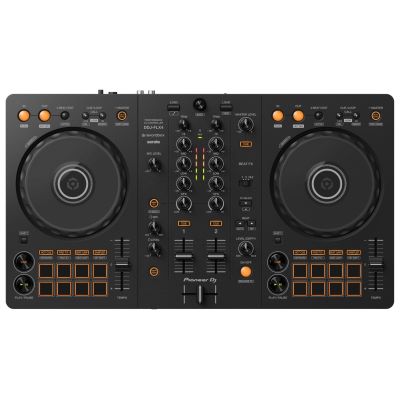
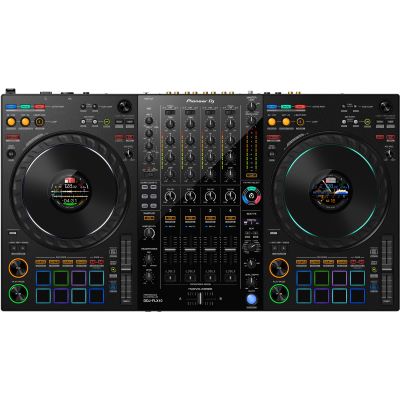
Pioneer DJ DDJ-FLX4 two-deck controller for beatmatching cueing loops and classic transitions
Two decks already provide the complete workflow required for classic DJ transitions.
Control More Music Simultaneously

When Are Four Decks Really Worth It?

Four decks do not automatically improve the quality of a mix. They increase the number of musical layers available at the same time.

Deck 3

A Third Deck Creates Space for Additional Elements

While Decks 1 and 2 handle the normal transition, Deck 3 can play an acapella or percussion loop. This element remains independently controllable instead of having to be built into one of the main tracks beforehand.

Deck 4

The Fourth Deck Enables More Complex Live Arrangements

With four prepared sources you can combine an instrumental, vocals, additional drums and another complete track. Electronic music, open-format sets and performance DJing can particularly benefit from this flexibility.

Overview

More Decks Require More Attention

Every additional channel requires gain, EQ, cueing and attention. If levels and phrases already become difficult to manage with two tracks, adding another two decks will not improve the set. Four-deck mixing should build on secure two-deck fundamentals.

The practical four-deck test: before buying, imagine three specific situations in which you would regularly need Deck 3 or Deck 4 during a normal transition. If useful applications immediately come to mind, a four-deck system may be the right investment.

Two Jog Wheels Can Control Four Decks

What Does Deck Layer Mean on a DJ Controller?

Four decks do not automatically mean four physical platters. Many controllers use two jog-wheel sections together with four mixer channels.

Left Side

Deck 1 and Deck 3 Share One Control Section

A Deck button switches the left control section between two virtual decks. The right-hand side switches between Deck 2 and Deck 4 in the same way.

Mixer

The Mixer Can Still Display Four Channels

On many larger controllers, every virtual deck has its own mixer channel. A track playing on Deck 3 therefore remains visible in the mixer even while the jog wheel is currently controlling Deck 1.

Layer Status

Colour and Displays Help Prevent Mistakes

Displays, illuminated jog-wheel rings or button colours can indicate which layer is currently selected. Switching layers still requires practice and a clear mental overview.

Be careful when changing layers: before moving the pitch fader, jog wheel or triggering a hot cue, make sure you know exactly which virtual deck is currently selected.

More Possibilities Without More Decks

Do You Automatically Need Four Decks for Stems?

No. Stems or Track Separation alter the components inside a single deck. This means a two-deck system can already create very complex live mashups.

Vocals

Isolate the Voice

Isolate the vocal of one track and combine it with the instrumental of the second deck.

Drums

Change the Groove Without Loading Another Deck

Muted or isolated drums can reshape a transition without requiring an additional deck.

Instruments

Control Harmonic Elements Separately

Depending on the software and controller, harmonic elements can be processed or muted independently.

4 Decks + Stems

Maximum Layer Flexibility

Combining several decks with Track Separation creates especially extensive live-remix possibilities.

Choose According to Application

How Many Decks Suit Each Type of DJ?

DJ Beginner

Start with Two Decks

Two decks keep the workflow clear. Focus first on track selection, beatmatching, phrasing, cueing and EQ.

Bedroom DJ

Two Decks Save Space

Four decks become interesting when the same home setup is intended to function as a performance and remix workstation.

Mobile DJ

Reliability Is Often More Important Than Deck Count

Two decks are sufficient for weddings and parties in many situations. Professional outputs, microphone connections and operational reliability are often more important.

Performance DJ

Four Decks Create Additional Layers

Four decks show their strengths particularly clearly with acapellas, stems, live remixes, samples and additional players.

Direct Comparison

Two Decks or Four Decks – the Most Important Differences

Compare workflow, space requirements and performance options rather than assuming that a larger number of decks is automatically better.

Feature 2 Decks 4 Decks
Overview Very straightforward Requires more attention
Classic Transitions Completely sufficient Also possible
Learning Beatmatching Particularly clear No fundamental advantage
Additional Acapella Via stems or sampler Dedicated deck available
Continuous Loops Occupy one main deck Additional decks available
Live Remixes Very powerful with stems Maximum layer flexibility
Space Required Often more compact Controllers are often larger
Mobile Events Ideal for many applications Useful for complex setups
External Sources Model dependent Often more mixer channels
Brand Worlds at Musikhaus Korn

Brands for Two- and Four-Deck DJ Systems

Use Additional Decks Properly

Typical Mistakes When Choosing Between Two and Four Decks

Mistake 1

Assuming Four Decks Are Automatically More Professional

Professional DJing comes from track selection, timing, level control and a secure workflow – not from the number of virtual decks.

Mistake 2

Confusing Deck Count with Mixer Channels

Check exactly how many virtual decks can be controlled and how many physical mixer channels are actually available.

Mistake 3

Ignoring the Active Layer

When four virtual decks share two jog wheels, you need to know at all times which deck is currently being controlled.

Mistake 4

Confusing Stems with Additional Decks

Track Separation can already manipulate vocals, drums and instruments independently on a two-deck system.

Mistake 5

Skipping the Fundamentals

If two tracks cannot yet be matched and mixed reliably, adding another two decks will rarely improve the result.

Mistake 6

Forgetting Transport and Workspace Requirements

Many four-channel controllers are larger. Consider your desk, DJ table, case and vehicle before buying.

Frequently Asked Questions

Answers About Two and Four DJ Decks

Are Two Decks Enough for a Professional DJ?

Yes. Classic transitions, beatmatching, EQ mixing, hot cues, loops, effects and many stem applications work completely with two decks. Additional decks are an extension, not a requirement for professional DJing.

Why Do DJs Use Four Decks?

Decks 3 and 4 can contain additional acapellas, loops, drums, instrumentals or complete tracks. This enables more complex mashups and live arrangements.

Do I Need Four Decks for Stems?

No. Stems divide a single track into musical components. Two decks with good stem control can already create sophisticated live mashups.

Does a Four-Deck Controller Have Four Jog Wheels?

Usually not. Many controllers have two physical jog wheels that can be switched between four virtual decks using deck-layer controls.

Should a Beginner Buy Four Decks Immediately?

You can if you know that you will use the additional functions later. Two decks are completely sufficient for learning and keep the control surface easier to understand.

What Is More Important: Four Decks or Four Mixer Channels?

That depends on your goal. Virtual decks expand the software performance. Four physical mixer channels become additionally important when several internal or external sources need to be controlled simultaneously.

Are Four Decks Useful for Mobile DJs?

They can be useful but are not essential. For weddings and parties, reliable Master outputs, microphone inputs, straightforward operation and backup options are often more important.

Which Music Is Suitable for Practising with Four Decks?

Begin with clearly structured tracks. Then add a simple percussion loop or acapella on Deck 3 before attempting to mix four complete songs simultaneously.

Can I Expand a Two-Deck Controller Later?

Depending on the software and hardware, additional controllers, samplers or other modules may be possible. A basic two-deck controller does not automatically become a complete four-channel mixer, however.

When Is It Worth Moving to Four Decks?

When you regularly miss additional musical layers during normal two-deck sets and can clearly explain what Decks 3 and 4 are intended to do.

Do Not Buy More Decks Than You Musically Need

Two or Four Decks? Choose the Right DJ Controller

Two decks provide the most direct route to a clear and powerful DJ workflow. They teach beatmatching, phrasing, EQ, cueing and controlled transitions between two tracks. Modern stem functions, hot cues and samplers extend this traditional concept considerably.

Four decks become worthwhile once additional musical layers form part of your own style. Acapellas, drum loops, additional tracks and external sources can then be controlled in parallel. The additional freedom also requires more overview and should build on secure two-deck fundamentals. Choose according to your real workflow rather than the supposedly more professional number.

More Buying Advice and Practical Knowledge

Discover More Musikhaus Korn Guides

From DJ controllers and DJ software to club, vinyl and performance setups as well as studio, musical instruments and event technology, the central Musikhaus Korn guide contains further comparisons and decision-making aids.