Musikhaus Keks
Welcome!
Our cookies offer you a fast, relaxed and full-featured shopping experience. Some are necessary to operate the website and its functions. Others help us to improve our services. If you agree to this, simply consent to the use of cookies for preferences, statistics and marketing by clicking on "OK". Alternatively, you can deactivate individual cookies under "Customise cookies" or all cookies, except those required for the function of our website, under "Reject all".
Musikhaus Korn Vinyl & DJ Guide

Direct Drive or Belt Drive? Which Turntable Is Right for You?

With direct drive, the motor drives the platter directly. With belt drive, an elastic belt transfers the motor power to the platter. This fundamental difference influences start-up, operating feel, vibration isolation and typical applications. For classic DJing, beatmatching and scratching, direct drive is usually the first choice. For relaxed HiFi listening, a high-quality belt-drive turntable can be especially attractive.

Distinguish DJ and HiFi applications Understand start-up, pitch & vibration Compare suitable turntables directly
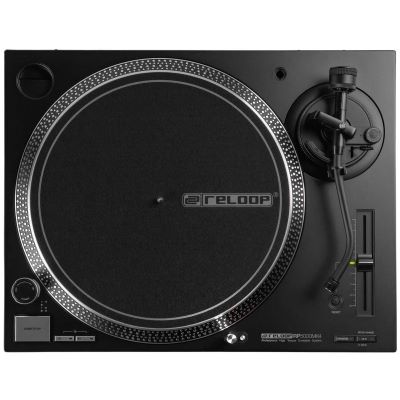
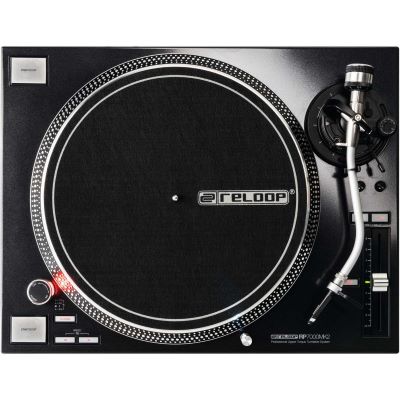
Reloop RP-5000 MK4 professional direct-drive DJ turntable

The application comes first: if you actively control the record by hand, start your comparison with DJ-oriented direct-drive models. If your main goal is listening to complete albums at home, include high-quality belt-drive models in your comparison.

The Quick Orientation

Which Drive System Is Better?

Neither drive system is fundamentally better. The deciding factor is what you want to do with the turntable. Active DJ techniques place different demands on a turntable than focused music listening at home.

DJ & Performance

Direct Drive for Immediate Control

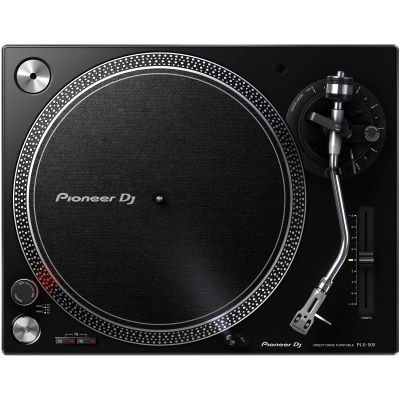
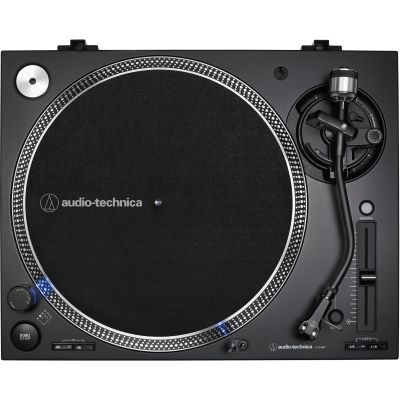
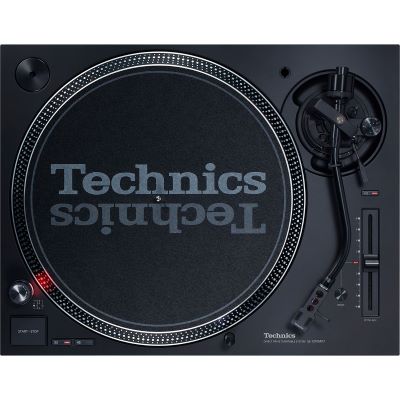
If you want to beatmatch, cue, backspin or scratch, a DJ-oriented direct-drive turntable is usually the appropriate foundation. The platter responds quickly and the motor reliably returns to its target speed after manual intervention.

HiFi & Music Listening

Belt Drive for Mechanical Isolation

With belt drive, the motor and platter are not part of the same direct drive unit. The belt can mechanically decouple motor vibration, which is why many HiFi designs deliberately use this principle.

Simple decision route: if you want to actively control the record by hand during playback, start with direct drive. If you mainly listen to complete albums and rarely touch the record while it is playing, high-quality belt-drive models are also worth considering.

Two Ways to Rotate the Platter

How Do Direct Drive and Belt Drive Work?

Direct Drive

The Motor Acts Directly on the Platter

The platter or its drive assembly is directly coupled to the motor. There is no elastic belt between the motor and platter. For DJs, this creates an immediate relationship between the motor, platter and movements of the hand.

Fast Start-Up Is Especially Important for Cueing

A DJ holds the record at the desired starting point while the system remains ready to rotate. When the vinyl is released, it should reach the intended speed as quickly as possible. This is where a powerful direct drive shows its strength.

Belt Drive

A Belt Separates the Motor from the Platter

The motor sits beside or underneath the platter and transfers its movement through a belt. This can reduce the direct transmission of motor vibration to the platter, record and cartridge.

Why Is Neither Design Automatically Better?

Motor quality, electronic control, bearing, platter, chassis, tonearm and cartridge also influence the final result. A high-quality direct-drive model can be excellent for HiFi, while a specialised belt-drive turntable can include DJ functions.

The complete turntable matters more than one specification. Treat the drive principle as an important first distinction, not as a general statement about sound quality.

Vinyl as an Instrument

Why Is Direct Drive So Common Among DJs?

DJing requires repeated physical interaction with the record. The motor therefore has to respond predictably while maintaining accurate speed.

Beatmatching

Control the Tempo Precisely

A precise pitch fader changes the tempo. Small corrections at the platter or record edge bring two beats back into phase.

Cueing

Release the Track at the Right Moment

The record is held at its start point and released in the correct musical phrase. Fast acceleration helps the record reach the target speed quickly.

Scratch

Predictable Torque Supports Fast Movements

When the vinyl is repeatedly moved forwards and backwards, the motor is constantly being influenced. Strong and predictable torque supports fast scratch movements.

DVS

Timecode Needs the Same Mechanical Control

Timecode vinyl requires the same physical control as conventional records. Direct drive therefore remains highly relevant in digital vinyl systems.

Direct drive alone is not enough: DJs also need a useful pitch fader, suitable start/stop behaviour, a stable tonearm, vibration-resistant feet and an appropriate slipmat.

Track the Groove with as Little Disturbance as Possible

Why Do Many HiFi Turntables Use Belt Drive?

In a HiFi system, the record is normally not held, backspun or manipulated while it is playing. This allows the design to prioritise mechanical calmness, isolation, tonearm quality, cartridge matching and integration into the home audio system.

  • Motor and platter can be mechanically decoupled by the belt.
  • Many models use lightweight and visually reduced constructions.
  • Pre-installed HiFi cartridges can make initial setup easier.
  • A phono preamplifier may already be integrated.
  • Bluetooth or automatic operation is available on selected models.
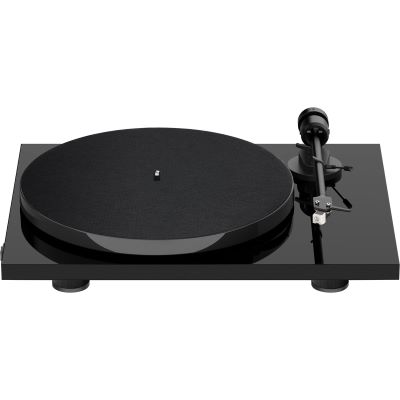
Pro-Ject Debut EVO 2 Satin Black belt-drive HiFi turntable
HiFi turntables often prioritise mechanical isolation, tonearm quality, cartridge matching and unobtrusive integration into the listening room.
The Rule Has Interesting Exceptions

Can You Still DJ and Scratch with Belt Drive?

Yes – if the complete device has explicitly been designed for that task. This is a good example of why the turntable should never be judged by its drive principle alone.

Portablism

Portable Scratch Turntables Have Different Requirements

A mobile scratch turntable should be lightweight, capable of battery or USB-powered operation and may integrate a crossfader, loudspeaker, looper or effects directly into the unit.

In this specialised context, a belt-drive construction can make sense. The Korg handytraxx play is one example: it combines belt drive with digital rotation correction, pitch control, crossfader, looper and effects in a portable scratch-oriented design.

Do not transfer this directly to a traditional club setup. For two full-size turntables with long pitch faders, powerful motors and a familiar club layout, direct drive remains the typical solution.

Korg handytraxx play portable belt-drive scratch turntable with crossfader looper and effects
Specialised portablism hardware shows that the complete construction and intended use are more important than the drive label alone.
Think Long-Term

How Do Maintenance and Wear Differ?

Direct Drive

No Drive Belt to Replace

There is no belt that can age, stretch or require replacement. This makes the basic drive concept particularly practical for DJ turntables that are used and transported regularly.

Belt Drive

The Belt Is a Wear Part

Over time a belt can change its elasticity. When necessary, it should be replaced with a belt designed for the specific turntable.

Both Systems

Tonearm, Stylus and Vinyl Still Need Care

Tracking force, anti-skating, cartridge, stylus condition and record cleaning remain important regardless of the motor principle.

Both Designs at a Glance

Direct Drive vs. Belt Drive

Feature Direct Drive Belt Drive
Power Transmission Motor acts directly on the platter Motor drives the platter via a belt
Start-Up Typically fast and direct Model dependent, usually less DJ-oriented
Beatmatching Typical DJ solution Not a focus of most HiFi models
Scratch Very suitable on DJ models Possible on specialised models
Motor Isolation Through motor control and chassis design Belt can provide mechanical isolation
Belt Wear No drive belt Belt may eventually need replacement
HiFi Listening High-quality solutions also available Very widely used
Club DJing Typical standard Not the typical club solution
Four Questions Lead to the Right Design

Which Drive System Fits Your Application?

Question 1

Do You Want to Mix Actively?

If beatmatching, cueing or scratching are planned, start by comparing DJ-oriented direct-drive turntables.

Question 2

Or Do You Mainly Want to Listen?

For complete album playback in the living room, compare both designs according to overall quality and explicitly include belt-drive models.

Question 3

Which Features Do You Need?

Pitch, Phono/Line switching, USB, automatic operation, Bluetooth and a pre-installed cartridge can be more important than the drive principle itself.

Question 4

How Should the System Grow Later?

For a DJ pair, choose two identical turntables wherever possible. For HiFi, focus more strongly on tonearm, cartridge and integration with the rest of your audio system.

Brand Worlds at Musikhaus Korn

Manufacturers for Direct- and Belt-Drive Turntables

Do Not Judge the Turntable by the Motor Alone

Typical Mistakes When Comparing Drive Systems

Mistake 1

Assuming Direct Drive Automatically Sounds Better

Sound quality results from the complete turntable, including tonearm, cartridge, bearing and chassis.

Mistake 2

Excluding Belt Drive from DJ Use Completely

Belt drive is unusual for classic club decks, but specialised portablism systems can deliberately use a different construction.

Mistake 3

Comparing Only Maximum Torque

For mixing, precise pitch control, speed stability and predictable response are at least as important.

Mistake 4

Ignoring the Cartridge

Even an excellent turntable cannot show its strengths with an unsuitable or incorrectly adjusted cartridge.

Mistake 5

Not Checking Phono and Line

Preamplification and output type need to match the mixer, amplifier or active loudspeakers being used.

Mistake 6

Not Defining the Application First

A club DJ and a HiFi listener place very different demands on operation, construction and equipment.

Frequently Asked Questions

Answers About Direct Drive and Belt Drive

Which Is Better: Direct Drive or Belt Drive?

For classic DJing, direct drive is usually the more suitable choice. For pure HiFi listening, both constructions are possible, with belt drive being particularly widespread.

Why Do DJs Use Direct Drive?

The platter responds directly to the motor and quickly returns to its target speed after manual intervention. This supports cueing, beatmatching and scratching.

Does Belt Drive Automatically Sound Better?

No. Mechanical isolation through the belt can offer design advantages, but sound quality depends on the complete turntable and the way its components are matched.

Can Direct Drive Also Be Excellent for HiFi?

Yes. High-quality direct-drive systems are also designed specifically for demanding music playback. Direct drive is not exclusively a DJ technology.

Can You Scratch with Belt Drive?

That is not the intended use of conventional HiFi belt-drive turntables. Specialised portablism devices such as the Korg handytraxx play, however, are explicitly designed for scratch techniques.

Does a Drive Belt Need to Be Replaced?

It can age and change its properties over time. When necessary, it should be replaced with a belt that matches the specific turntable.

Which Drive System Is Suitable for DVS?

A traditional DVS workflow with two turntables normally uses DJ-oriented direct drive because the mechanical requirements are essentially the same as with real vinyl DJing.

Is a High Torque Figure Always Better?

No. Scratch DJs benefit from strong torque. For traditional mixing, precise and controllable motor behaviour is more important than the highest numerical value.

Which Design Is Suitable for Beginners?

Anyone who wants to learn DJing should start with a suitable direct-drive DJ turntable. Anyone who simply wants to listen to records can compare both direct and belt drive according to budget and features.

What Is More Important Than the Drive Type?

Intended use, tonearm, cartridge, speed stability, chassis, connections and operation all matter. DJs should additionally consider pitch control, torque and the slipmat.

Decide the Application First, Then the Motor Principle

Direct Drive or Belt Drive? Compare Turntables

If vinyl is an active DJ instrument for you, the first comparison will usually lead to direct drive. Fast start-up, precise pitch control and direct response to movements of the hand are important for cueing, beatmatching, scratching and DVS.

If focused music listening is the priority, belt drive broadens the choice considerably. Mechanical isolation, tonearm, cartridge, convenience and integration into a living-room audio system then become more important.

Treat the drive principle as the first decision point, not as a quality rating. A good turntable is always the result of the interaction between motor, platter, bearing, tonearm, stylus and the actual intended application.

More Buying Advice and Practical Knowledge

Discover More Musikhaus Korn Guides

From turntables, cartridges and vinyl DJing to DJ mixers, controllers and media players as well as recording, musical instruments and event technology, the central Musikhaus Korn guide contains further comparisons and decision-making aids.