Schuko & 19-Inch Distribution
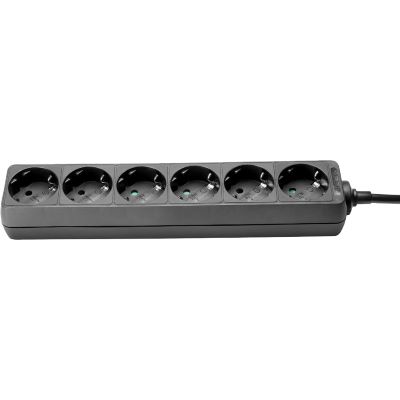
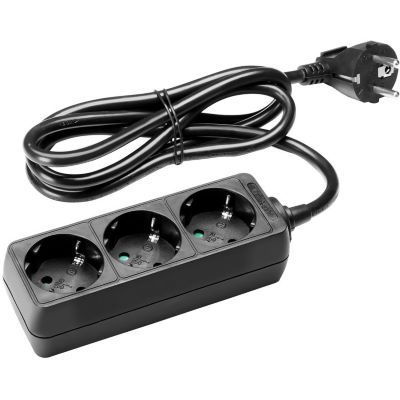
Clearly arranged multi-socket and rack distributors are practical for controllers, wireless receivers, compact mixers and other relatively small loads.

PA systems, lighting, DJ equipment, video technology and effects all require a reliably planned power supply. Small setups can often use existing Schuko circuits, while larger events rely on CEE feeds and suitable sub-distribution systems. The decisive factors are not simply the number of available sockets, but a verified incoming supply, suitable protective measures, sensible load distribution, appropriate cables and safe cable routes.
Incoming supply, protective devices, distribution, cables, connectors and cable routes must be considered together.
Start with the available incoming supply and a complete overview of all electrical loads. A ready-to-use socket strip is a very different system from a three-phase CEE sub-distribution unit. The larger the power system becomes, the more important documented protective measures and qualified electrical planning become.
Clearly arranged multi-socket and rack distributors are practical for controllers, wireless receivers, compact mixers and other relatively small loads.
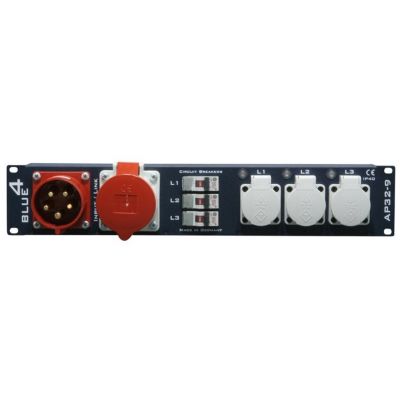
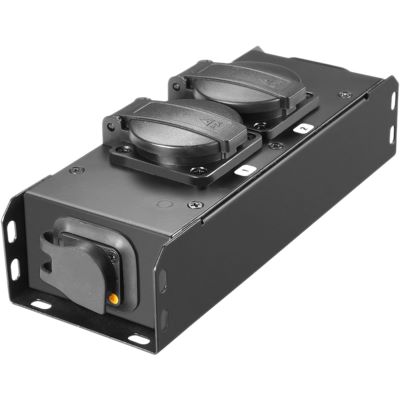
A suitable three-phase distribution system can provide several separate circuits and organise the supply for audio, lighting or backline equipment.
Higher power requirements call for larger CEE distribution systems. The incoming supply, protective devices and phase allocation belong in qualified hands.
Suitable outdoor distributors, robust power cables and correctly selected cable bridges protect both the installation and routes used by staff or visitors.
Important: use ready-to-connect distribution products only for their intended purpose. Modifications to CEE distribution systems, cables, protective devices or fixed electrical installations are not a DIY task and must be carried out by a qualified electrician.
The correct connection depends on the available supply, required power, distribution concept and applicable protective measures.
| Connection | Typical Application | Advantage | Planning Requirement |
|---|---|---|---|
| Schuko | Individual devices and small setups | Widely available | Check the actual circuit and its protection |
| CEE16 | Small stages and mobile racks | Three phases available | Use a suitable sub-distribution system |
| CEE32 | PA, lighting and medium-sized events | Higher available power reserve | Qualified load planning required |
| CEE63 / CEE125 | Larger productions | Central event power supply | Professional electrical planning required |
Power Twist / powerCON is a different concept: locking equipment connectors are useful for racks and event technology, but they do not replace a suitable incoming supply, sub-distribution system or required protective measures.
First record the PA, subwoofers, lighting, moving heads, fog machines, video equipment, backline, catering and any additional loads using the manufacturers' specifications. Only then can the required circuits and incoming supplies be determined.
Document the device, its power or current consumption and the area in which it will be used.
Organise audio, lighting, video and effects equipment into clear groups.
Existing Schuko sockets or CEE connections and the associated protective measures must be assessed correctly.
A suitably qualified person should plan the required distribution, circuit allocation and appropriate reserves.
Some devices have significant switch-on currents or dynamic operating conditions. Cable length, protective devices and simultaneous use also influence the practical power supply.
Functional separation improves clarity and may make fault finding easier. Which circuits should actually be separated depends on the specific electrical design.
The most important planning rule: never derive available power simply from the number of sockets. Check the incoming supply and protective measures first.
Current DGUV guidance names residual-current protective devices with a rated residual operating current of no more than 30 mA as an established additional measure for personal protection. An RCD does not replace correct cable sizing, overcurrent protection or a properly verified incoming supply.
The RCD responds when there is an appropriate difference between the current flowing out through the live conductors and the current returning.
At outdoor productions and unfamiliar venues, the safe operation of the protection against electric shock must be established before use.
For certain mobile applications, DGUV guidance refers to suitable portable protective devices as a possible additional solution.
Red five-pole CEE connections normally provide three line conductors in a three-phase supply. Event distributors can use these to provide several separately protected outgoing circuits. Larger groups of loads can therefore be distributed across multiple circuits.
Can, for example, supply part of the PA or a defined group of lighting equipment within a professionally planned distribution.
Provides additional capacity for another separate group of electrical loads.
Completes the three-phase allocation and enables an appropriately balanced plan.
Do not balance phases by trial and error. Larger CEE distribution systems, protective devices and assessment of three-phase installations must be handled by a qualified electrician.
Select cables according to the connector, electrical load, cable length and environment. Robust rubber-sheathed cables such as H07RN-F are common in mobile event applications. For outdoor use, the plugs and couplers must also be appropriate for the conditions.
Do not determine the required conductor cross-section solely from the attached connector. Load, length, installation method and protective measures must be considered together.
Avoid unnecessarily long routes. As cable length increases, electrical characteristics and voltage drop become increasingly relevant.
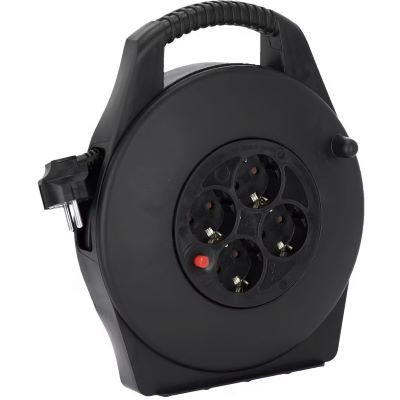
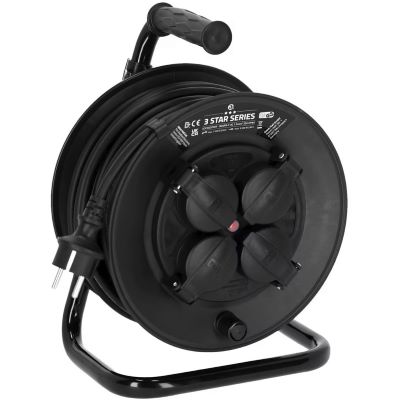
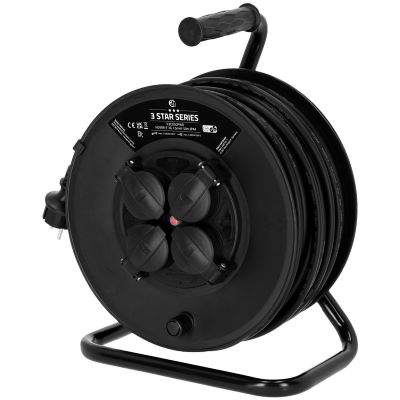
Cables left wound on a reel may heat up more strongly under higher electrical loads. Always observe the manufacturer's load and unwinding instructions.
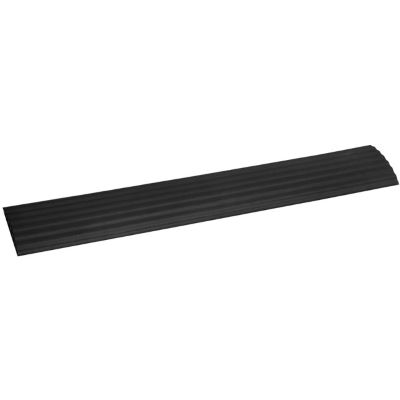
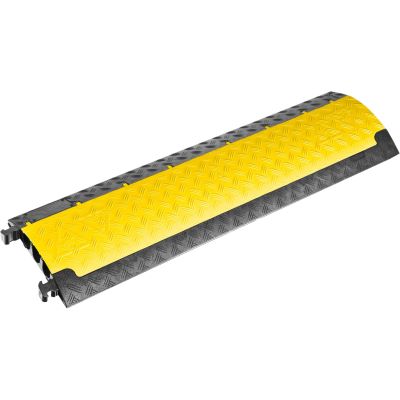
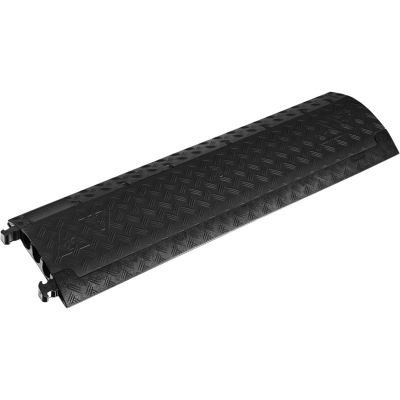
Whenever possible, route cables away from pedestrian and vehicle traffic. If a crossing cannot be avoided, suitable cable bridges protect the cables and reduce trip hazards. Channel dimensions and load capacity must match the actual application.
Use low-profile cable channels where loads and traffic are comparatively light.
Keep power, audio and data routes clearly organised so the complete installation remains understandable.
Use only bridge systems with a load capacity suitable for the actual type of traffic.
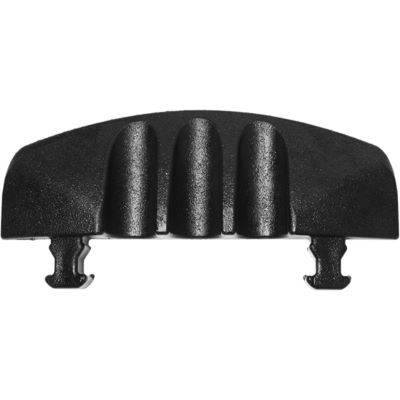
Complete transitions and cable-bridge runs with matching accessories from the same compatible system.
One IP44 distributor does not make an entire installation weatherproof. Distribution units, cables, plugs, couplers and their positioning must all be suitable for the environmental conditions.
Connections must not be placed in standing water or otherwise unprotected locations. Before an event begins, the available electrical supply and its protective measures should be professionally checked at unfamiliar venues or outdoor productions.
If the condition of an incoming supply is unknown, simply connecting equipment to see whether it works is not an appropriate verification method.
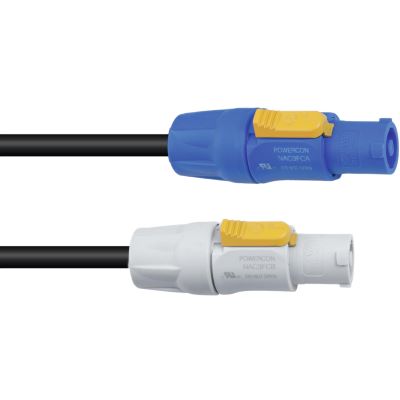
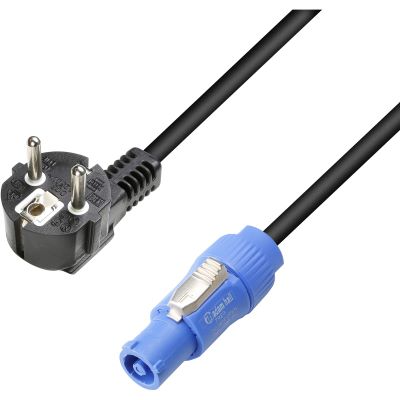
The selection follows the same application groups as the German guide: Schuko and rack distribution, CEE16 and CEE32 distribution, power cables and cable reels, followed by mechanical cable protection.
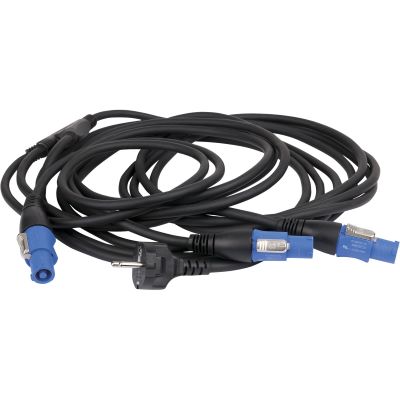
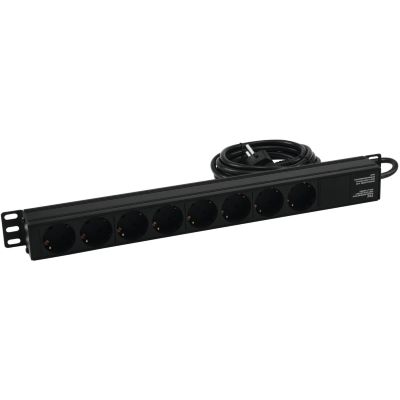
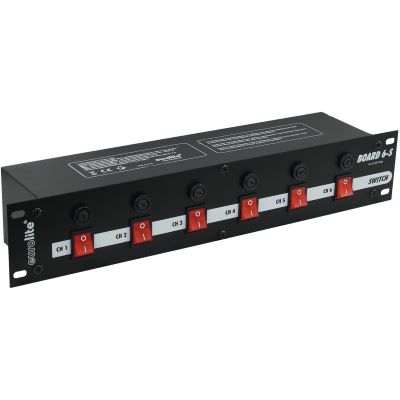
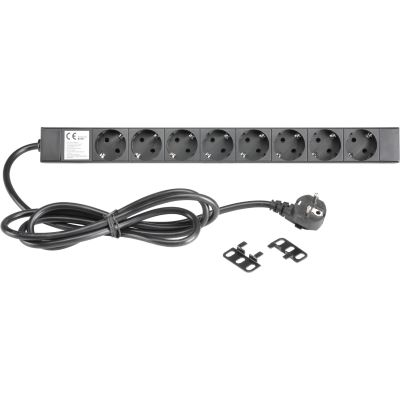
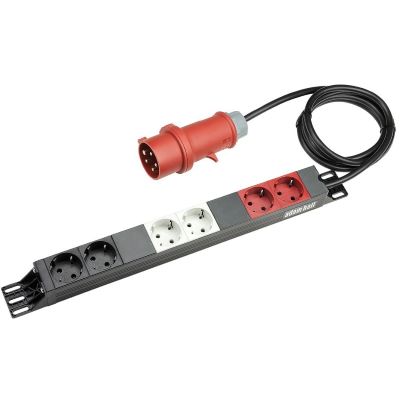
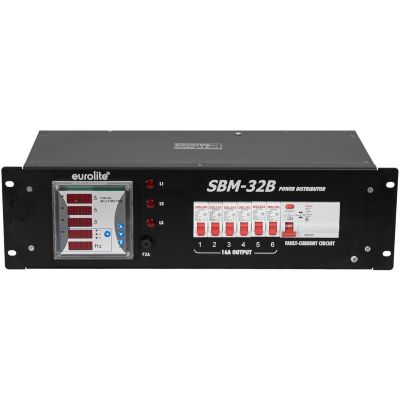
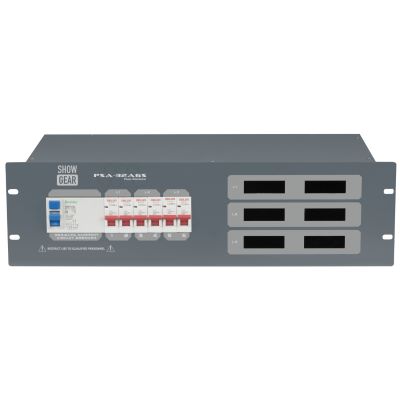
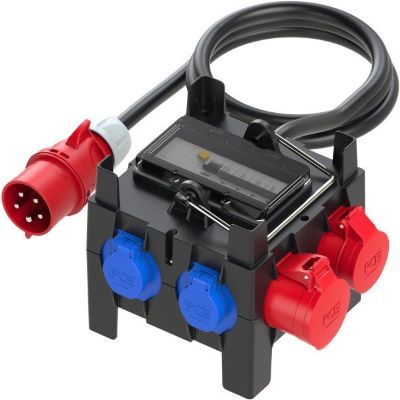
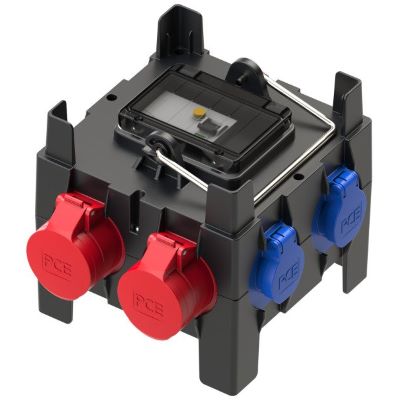
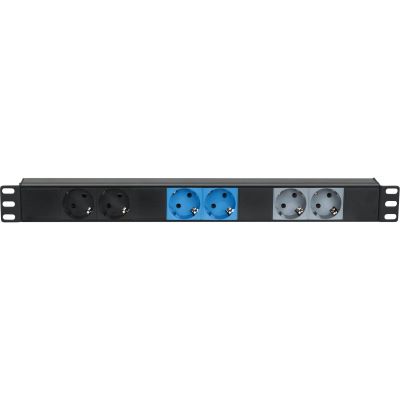
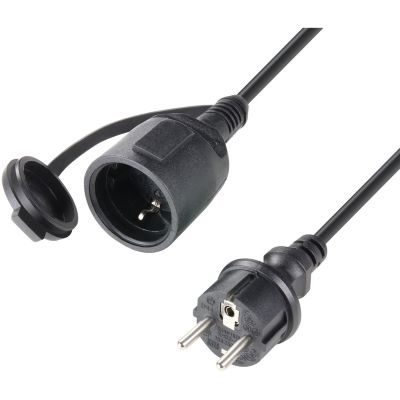
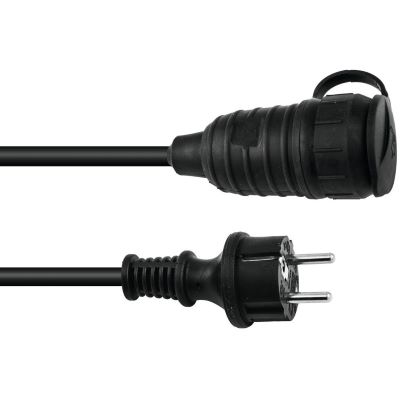
Select every cable according to its intended connection, electrical load, length and environment.
Choose the cable bridge according to channel dimensions, installation height, traffic type and required load capacity.
Rack distributors, power cables, cable reels, event distributors and professional cable protection are available from specialised manufacturers for different applications.




Instead of building long improvised chains, plan an appropriate central distribution system and sufficiently long cables.
Use suitable ready-made solutions. Modifications and rewiring must be carried out by a qualified electrician.
For professional productions, verify the available incoming supply and protective measures before use.
Cable length, electrical load and the environment must always be considered together.
Outdoor-rated components still require suitable and protected positioning.
Plan exposed cable routes early and use suitable cable bridges or an alternative routing method where necessary.
For small setups, a correctly protected Schuko supply may be sufficient. The decisive factor is the actual available circuit capacity, not simply the number of existing sockets.
CEE16 describes an industrial connector with a nominal current of 16 A. Red five-pole versions are typically used for three-phase 400 V supplies.
CEE32 allows a higher-capacity central incoming supply from which suitable distribution equipment can provide several protected outgoing circuits. Planning and verification must be carried out by appropriately qualified personnel.
An RCD monitors residual current and can disconnect the supply under corresponding fault conditions. It is an important additional protective measure, but does not replace other required protective measures.
For events, an appropriately dimensioned distribution system with suitable cables should be planned instead. Long improvised chains make assessment more difficult and add mechanical connection points.
Cable, plug, coupling and distributor must all suit the environmental conditions and electrical load. Robust mobile cables are common in event technology, but the specific dimensions must be selected for the actual application.
Follow the manufacturer's permitted load values for both the wound and unwound condition. Under higher loads, a wound cable may experience substantially greater thermal stress.
Ready-to-use compatible components may be connected according to their intended purpose. Modifications, rewiring and electrical repairs to mains or CEE components must be carried out by a qualified electrician.
Avoid crossing pedestrian routes wherever possible. Where this cannot be done, select a cable bridge according to channel dimensions, load capacity, height and the actual type of traffic.
Have the incoming supply and its protective measures properly checked before use. This is particularly important at unfamiliar venues and outdoor productions.
A generator is a separate electrical supply system with its own requirements for protective measures, earthing or protection concept and sizing. For event use, it must therefore be planned by appropriately qualified personnel.
Include powerful loudspeakers, subwoofers and amplifiers in the load plan from the beginning.
Take the connected load of moving heads, PAR fixtures, strobes and other lighting equipment into account.
Fog machines and other higher-power effects should be included as dedicated electrical loads during planning.
Plan audio, data and power connections completely before the equipment is installed.
Record all electrical loads first and then verify the available power supply. Smaller setups can often be organised with Schuko and rack distribution, while larger productions require suitable CEE distribution systems. RCD protection, circuit protection, phase allocation, conductor cross-section and outdoor suitability form one complete protection concept. Finally, robust cables and correctly selected cable bridges ensure that the planned power reaches the equipment without creating unnecessary risks.
Power supply, stage construction, lighting, PA systems, mixers, microphones, DJ equipment and recording: the central Musikhaus Korn guide takes you to further buying advice, comparisons and complete setup guides.