The Diamond Touches the Groove
Stylus profile, condition and correct tracking force directly influence groove tracking, sound quality and how safely the record is played.

The cartridge connects your record to the mixer: the stylus follows the groove and the cartridge converts its mechanical movement into an electrical signal. Systems for classic mixing, club use, scratching, DVS and high-quality vinyl playback differ significantly. This guide explains Concorde and headshell systems, spherical and elliptical stylus profiles, output level, tracking force, wear and how to choose the correct replacement stylus.
Do not choose a cartridge only by colour or appearance. Stylus profile, tracking force, output level, tonearm compatibility and the intended DJ technique should always be considered together.
The stylus traces the modulated record groove. Its mechanical movement travels through the cantilever to the transducer inside the cartridge, where it is converted into a small electrical Phono signal.
Stylus profile, condition and correct tracking force directly influence groove tracking, sound quality and how safely the record is played.
The cantilever transfers the movement of the stylus tip to the cartridge's transducer and must react in a controlled and predictable way.
The cartridge converts mechanical movement into an electrical signal and influences output level and the fundamental sonic characteristics of the system.
A conventional cartridge produces a very small signal that requires a suitable Phono preamplifier and equalisation. It should therefore not simply be connected to a LINE input.
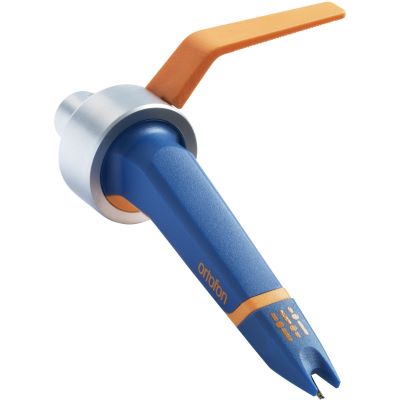
A Concorde system combines cartridge body, cantilever and stylus in one compact unit. On a compatible S-shaped tonearm it mounts directly to the SME-type bayonet connection.
This makes installation and cartridge changes particularly convenient and is one reason why Concorde systems are so widespread in traditional DJ setups.
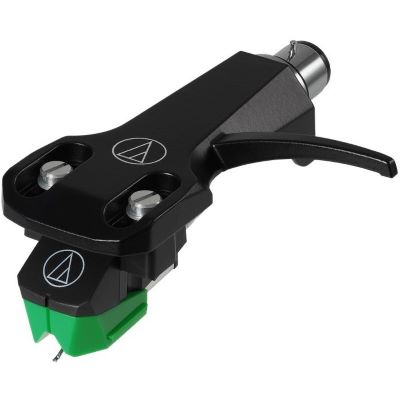
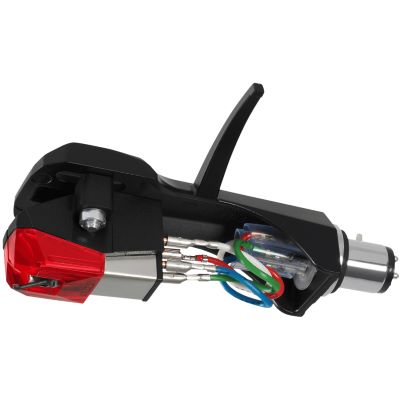
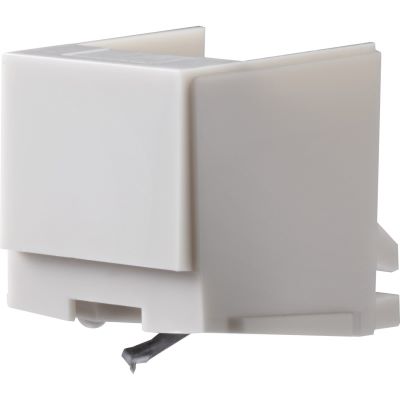
With a conventional headshell system, the cartridge is screwed onto a separate cartridge carrier. This gives you more freedom to adjust overhang and cartridge alignment individually.
Pre-mounted models such as the Audio-Technica AT-VM95E/H or AT-XP5/H reduce setup work, but final alignment should still be checked on your own tonearm.
Which design is easier for DJs? Concorde is especially convenient when quick mounting and cartridge changes are priorities. A separate headshell provides more freedom if you want to try different 1/2-inch cartridges, fine-tune overhang or adapt the setup more individually.
The profile influences how the stylus contacts the groove. DJ applications and detail-oriented playback therefore often use different approaches.
The spherical or conical profile is robust and very common in DJ cartridges. It is particularly suitable for cueing, backcueing, mixing and scratching because it can track reliably during typical forward and backward record movements.
Concorde MIX MKII, DJ MKII, Scratch MKII and Digital MKII all use spherical styli for different DJ applications.
An elliptical stylus contacts the groove walls differently and can retrieve finer information from the record. This makes it interesting for high-quality playback, digitisation and detail-oriented club use.
Concorde Club MKII and Audio-Technica AT-VM95E/H use elliptical styli. For aggressive scratching, a dedicated spherical DJ system is generally the more suitable route.
Do not decide by stylus profile alone: compliance, tracking force, output voltage, cartridge weight, tonearm and the intended application must also be compatible.
A solid choice for conventional mixing, backcueing and a versatile introduction to a two-turntable DJ setup.
High tracking ability and a robust spherical stylus for mixing, clubs, events, backspins and regular DJ use.
Designed for fast forward and backward record movements, backspins, beat juggling and intensive scratching.
High output and signal behaviour designed for reliable timecode transmission in digital vinyl systems.
For detail-oriented club playback: Concorde Club MKII follows a different route with an elliptical stylus and is particularly interesting when sound detail and high-quality vinyl reproduction have priority over aggressive scratch techniques.
Even a high-quality cartridge can only perform correctly when the tonearm is adjusted to match it. Always use the tracking-force specification for the exact cartridge or stylus you are using.
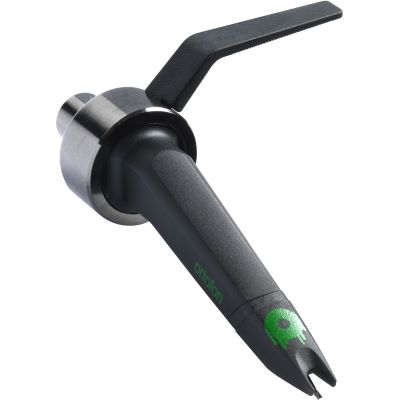
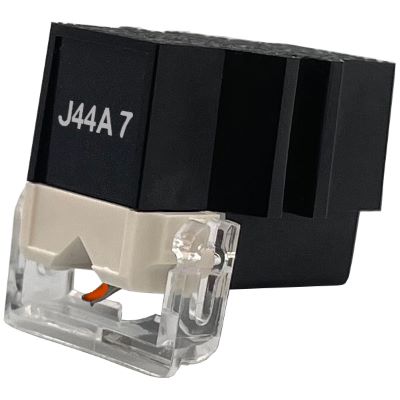
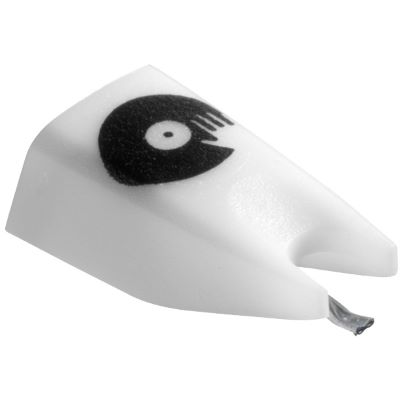
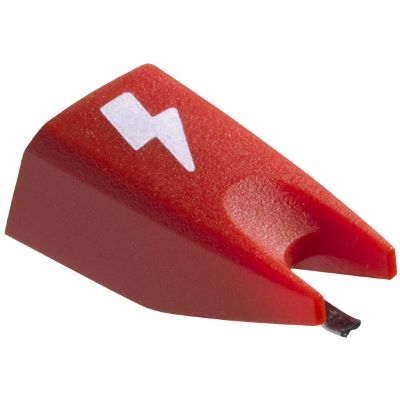
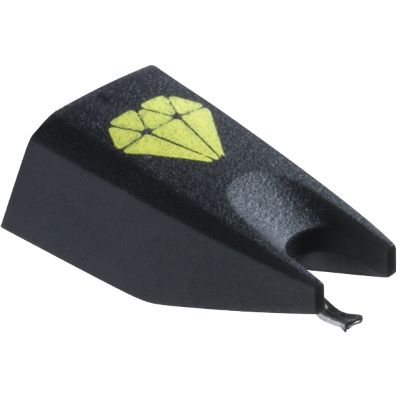
On many cartridges, the stylus assembly can be replaced separately. If the cartridge body itself is still technically sound, the matching stylus can replace the worn playback component without replacing the complete system.
For current Concorde MKII systems, choose the matching MKII replacement stylus: MIX for MIX, DJ for DJ, Scratch for Scratch, Digital for Digital and Club for Club.
Different generations can look very similar. Product name, series designation and manufacturer compatibility information are more reliable than the colour of the stylus housing.
A matching replacement stylus is a small but useful backup for regular vinyl gigs. Transport it safely in a protective case rather than loose between cables and adapters.
Increasing distortion, unclear treble or unusual sibilance can be warning signs. First rule out other causes such as dirt, incorrect adjustment or a problem elsewhere in the signal chain.
If a previously reliable stylus suddenly skips more often, check record cleanliness, tonearm adjustment and the mechanical condition of the stylus and cantilever.
A bent cantilever or visibly damaged stylus should not continue to be used on your records. If in doubt, replace the stylus rather than risking unnecessary vinyl damage.
There is no universal replacement interval for every stylus. Service life depends on stylus profile, tracking force, record cleanliness, playing technique and how intensively the system is used. Regular inspection is more useful than applying one fixed number of hours to every cartridge.
| Type | Mounting | Main Focus | Typical Application |
|---|---|---|---|
| Concorde MIX | Directly on SME tonearm | Robust all-rounder | Mixing, beginner setup |
| Concorde DJ | Directly on SME tonearm | Tracking & everyday DJ use | Club, events |
| Concorde Scratch | Directly on SME tonearm | High stability | Scratch, battle |
| Concorde Digital | Directly on SME tonearm | Timecode signal | DVS |
| Concorde Club | Directly on SME tonearm | Elliptical detail retrieval | Club, digitisation |
| Headshell System | 1/2-inch cartridge on headshell | Adjustment & broad selection | DJ, turntablism, HiFi |
Directly mounted cartridge systems for DJs and vinyl enthusiasts.
Pre-mounted and conventional 1/2-inch cartridge solutions.
Original and compatible stylus variants for existing systems.
Separate carriers for interchangeable 1/2-inch cartridges.
Direct-drive turntables for vinyl DJ workflows.
Mixers with suitable inputs for two-turntable setups.
Controlled record movement for mixing and scratching.
Cleaning tools, adjustment aids and additional vinyl accessories.
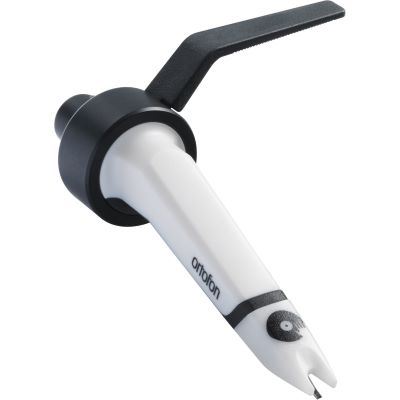
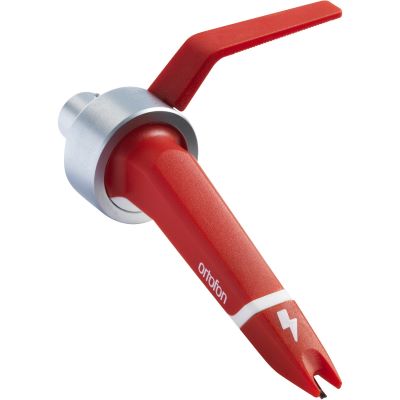
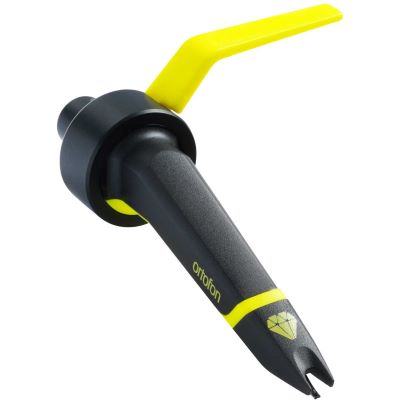
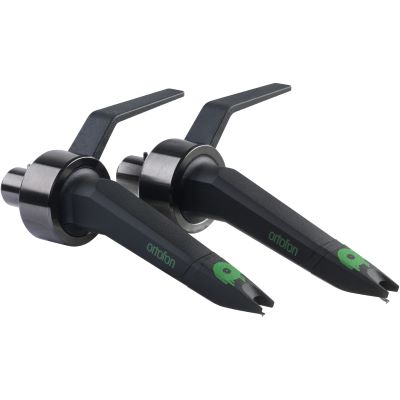
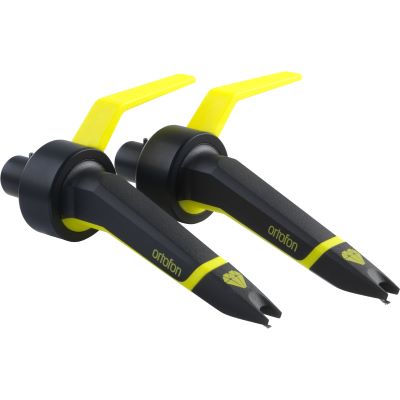
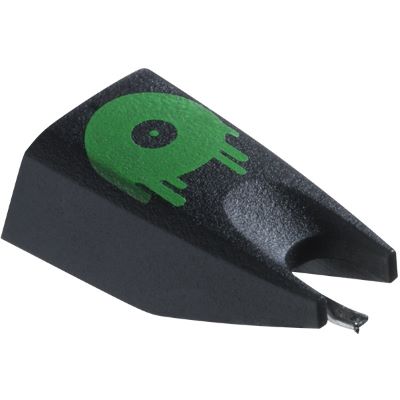
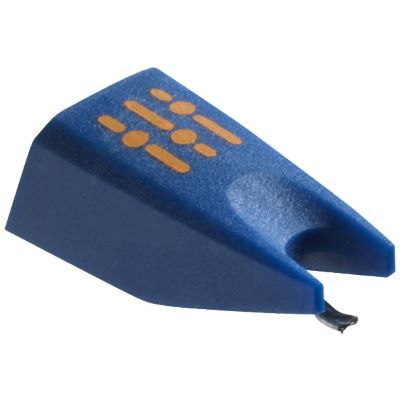

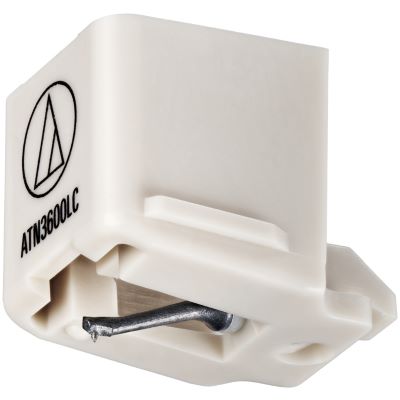
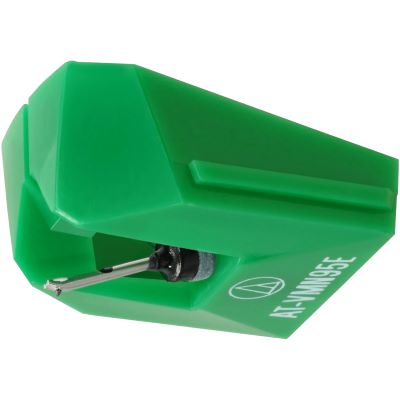




Always check the exact cartridge model, series and generation.
More pressure does not solve a fundamentally incorrect cartridge or tonearm setup.
A bent cantilever or damaged tip can affect both the sound and the record permanently.
Overhang and cartridge alignment influence tracking across the complete record.
Use a suitable stylus-cleaning tool and work carefully in the direction recommended by the manufacturer.
Scratch, DVS, club mixing and pure listening place different demands on the stylus and cartridge.
The stylus is the actual playback tip together with its cantilever assembly. The cartridge additionally contains the transducer that converts the mechanical movement into an electrical signal.
Concorde cartridges can be mounted particularly quickly on compatible SME-type tonearms. Headshell systems provide more freedom when selecting cartridges and adjusting overhang and alignment.
Spherical styli are widely used for mixing, backcueing and scratching. Elliptical variants are particularly interesting when detailed groove tracking and high-quality sound reproduction are the priority.
Use a system specifically designed for scratch and turntablism, with high tracking ability and a suitable robust spherical stylus.
Dedicated Digital or DVS systems are designed for reliable timecode transmission. One example is the Ortofon Concorde Digital MKII.
On many cartridges, yes. The replacement stylus must be compatible with the cartridge body, and the remaining cartridge must still be technically sound.
Check the manufacturer, exact cartridge name and generation. Especially with older Concorde, OM and other product families, do not decide only by colour or visual appearance.
There is no universal replacement interval for every model. Usage, record condition, tracking force and cleaning all affect wear. Regularly inspect both the sound and the mechanical condition of the stylus.
Use the tracking force specified by the manufacturer for the exact cartridge or stylus. A higher value should not be selected without a valid technical reason.
For regular vinyl gigs, this is very useful. A damaged stylus can then be replaced quickly without changing the complete cartridge system.
For classic DJing, a robust spherical cartridge such as Concorde MIX or DJ provides a versatile foundation. Scratch DJs should prioritise reliable tracking during fast record movements, while DVS systems benefit from cartridges designed specifically for stable timecode transmission. If detailed vinyl reproduction is your priority, compare elliptical systems as well.
Correct mounting is just as important. Concorde offers particularly convenient cartridge changes, while headshell systems provide additional adjustment options and a very broad choice of cartridges. Tracking force, anti-skating and overhang then need to be set correctly.
Wear does not automatically mean replacing the complete cartridge. If a compatible replacement stylus is available and the cartridge body is still in good condition, the system can often be restored quickly. Always check the exact model generation to protect sound quality, tracking and your record collection.
From cartridges, replacement styli and DJ turntables to mixers, controllers and media players as well as recording, musical instruments and event technology, the central Musikhaus Korn guide contains further comparisons, buying advice and practical knowledge.