
Low E
Musikhaus Korn Buying Guide
How to Tune a Guitar: Standard, Drop & Tuner
A correctly tuned guitar is the foundation for chords, riffs, solos and playing together with other musicians. Learn standard tuning E–A–D–G–B–E, how to use clip-on and pedal tuners correctly and how alternative tunings such as Drop D, E♭, DADGAD and Open G work. You will also learn why a guitar can still sound out of tune even when its open strings are correct.
Electric, acoustic & classical guitar
Standard & alternative tunings
Tuner & ear training
Related Guitar Topics
From the Lowest to the Highest String
What Is Standard Guitar Tuning?
A normal six-string guitar is tuned from the thickest, lowest string to the thinnest, highest string as E–A–D–G–B–E. This standard tuning is used for electric guitars, steel-string acoustic guitars and six-string classical guitars.
A String
D String
G String
B String
High E
Easy way to remember it:
from thick to thin, the international notation is
E–A–D–G–B–E. In German note naming,
the second string is often called the H string.
Electronic tuners normally display the internationally
used letter B.
String by String to the Target Pitch
How to Tune a Guitar Correctly with a Tuner
Switch the tuner on and select chromatic mode or the appropriate guitar mode. Tune one string at a time and keep the other strings as quiet as possible while the tuner measures the note.
Start with the Low E String
Play only the sixth string. The display shows the recognised note and whether the pitch is below or above the target.
Recognise Whether the String Is Flat or Sharp
If the tuner shows that the note is too low, carefully increase the string tension with the corresponding tuning machine. If the pitch is too high, loosen the string. Turn slowly: thin strings in particular react noticeably to very small movements.
Tune Up to the Target Pitch from Below
If a string is too high, lower it slightly below the desired pitch first and then tune upwards again in a controlled way. This approaches the target while the string and tuning machine are under tension.
Check the Whole Guitar Again
All strings act together on the neck and bridge. On guitars with floating tremolo systems especially, a string that was already correct can change while the other strings are being tuned. Check E–A–D–G–B–E at least one more time after the first pass.
From a Clip to a Stage Pedal
View All Guitar Tuners
Which Tuner Is Suitable for Your Guitar?
The correct tuner depends mainly on where you play and how the device should detect the note.
| Type | How It Measures | Especially Practical For | Consider |
|---|---|---|---|
| Clip-On Tuner | Instrument vibration | Electric, acoustic and classical guitar | Attach securely to the headstock |
| Pedal Tuner | Electrical guitar signal | Pedalboards, rehearsals and stage | Instrument cable required |
| Handheld Tuner | Microphone or input | Home, lessons and several instruments | Microphone responds to ambient sound |
| Tuner App | Smartphone microphone | Quick checks when travelling | Noisy environments can interfere |
| Tuning Fork | Reference pitch | Ear training | Other strings must be derived by ear |
| Pitch Pipe | Acoustic reference notes | Tuning without electronics and ear training | Accuracy depends on your comparison |
Clip-On Tuner
The sensor detects vibration directly from the instrument. This also works well when other musicians are playing nearby and requires no cable connection on an acoustic guitar.
Pedal Tuner
The tuner sits in the electrical signal path. Many pedal tuners mute the output while tuning, allowing silent tuning during rehearsal or on stage.
Chromatic Tuner
A chromatic tuner recognises every semitone and is therefore particularly flexible for E♭, Drop D, DADGAD and open tunings.
From Lower Riffs to Open Chords
Understanding Drop D, E♭, DADGAD and Open Tunings
Alternative tunings change range, chord shapes and string tension. Make a note of standard tuning before you begin and change each string deliberately.
| Tuning | Low to High | What Changes? | Typical Application |
|---|---|---|---|
| Standard | E A D G B E | Reference point | Almost every style |
| E♭ Standard | E♭ A♭ D♭ G♭ B♭ E♭ | Every string one semitone lower | Rock, blues, different string feel |
| Drop D | D A D G B E | Only the low E string is lowered to D | Rock, alternative, metal |
| DADGAD | D A D G A D | Open, modal fundamental character | Folk, fingerstyle, acoustic |
| Open D | D A D F♯ A D | Open strings form a D-major chord | Slide, folk, songwriting |
| Open G | D G D G B D | Open strings create a G-major character | Blues, slide, rock |
For significantly lower tunings:
if the strings become noticeably loose, a heavier string set
can be useful. Large changes in tuning or string gauge can
also require checking the neck, nut, intonation and tremolo.
Combine a Tuner with Musical Hearing
Can You Tune a Guitar without an Electronic Tuner?
Yes. First you need a reliable reference pitch, for example from a tuning fork, pitch pipe, another correctly tuned instrument or another known reference note.
- Listen carefully to the reference pitch
- Play the corresponding guitar string
- Compare beats and differences in pitch
- Adjust the string slowly
- Check all intervals again afterwards
An electronic tuner remains extremely practical for accurate final checking. Tuning by ear is still useful because it trains you to recognise pitch differences more quickly and notice when a string moves during a song.
Check Several Times after a String Change
Why Do New Guitar Strings Go Out of Tune?
The Strings Need to Settle
New strings and their windings adjust after installation. They therefore need to be retuned more frequently during the first minutes of playing.
Wind Cleanly at the Tuner
Loose, overlapping or untidy windings can reduce tuning stability. Wind each string onto the tuning post in a controlled way.
Check Nut and Bridge
The string should move freely through its contact points. If it catches, stored tension can suddenly release during tuning or bending.
Recheck the Entire Set
After every major tension adjustment, tune the other strings again, particularly with tremolo and floating-bridge systems.
Correct Open Strings but Wrong Chords?
Tuning and Intonation Are Not the Same Thing
Tuning sets the pitch of the open strings. Intonation describes whether fretted notes remain as accurate as possible across the fingerboard. A guitar can therefore display perfect E–A–D–G–B–E tuning and still sound noticeably out of tune higher up the neck.
A Simple Test at the 12th Fret
Tune the open string accurately first. Compare the harmonic at the 12th fret with the normal fretted note at the 12th fret. If the fretted note is noticeably sharp or flat, the intonation should be checked.
For Home, Lessons and Stage
View All Tuners
Selected Tuners for Different Applications
Clip-on tuners are highly practical for acoustic and electric instruments, while pedal tuners integrate directly into a live guitar rig.
Clip-On

Korg
Korg PC-2 Pitchclip 2
View Tuner
Chromatic

D'Addario
Eclipse PW-CT-17BK
View Tuner
Rechargeable
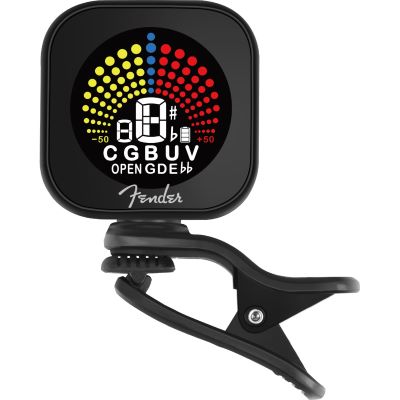
Fender
Fender Flash Tuner 2.0
View Tuner
Stage Pedal
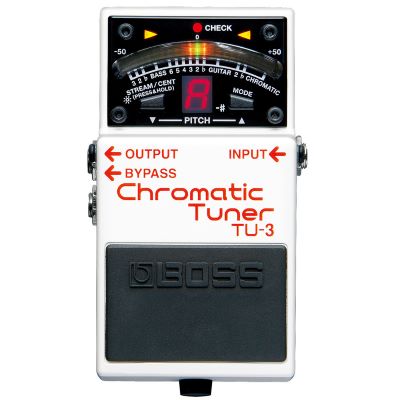
Boss
Boss TU-3 Chromatic Tuner
View Pedal Tuner
Rechargeable

D'Addario
Nexxus 360 Rechargeable
View Tuner
Compact
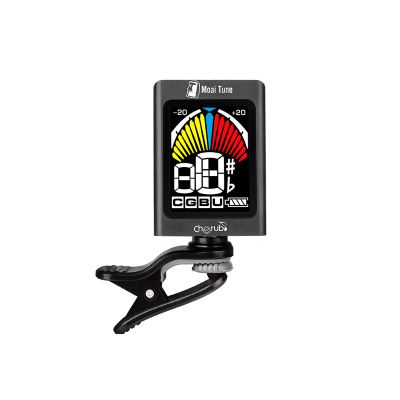
Cherub
WST-680 Moai Tune
View Tuner
Sorted by Application
50 Tuners and Tuning Aids for Guitarists
First decide between a clip-on, pedal or compact tuner. Tuning forks and pitch pipes provide additional tools for ear training and reference-pitch work.
Clip-On & Headstock Tuners
- Cherub WST-680 Moai Tune
- D'Addario Eclipse PW-CT-17BK
- Cherub WST-551C
- Fender Flash Tuner 2.0
- D'Addario Eclipse Rechargeable
- Ibanez PU3-BK
- Fender Bullet Tuner
- Korg PC-2 Pitchclip 2
- D'Addario Nexxus 360
- D'Addario PW-CT-12RC
- D'Addario NS Micro Tuner
- Cherub WST-675 White
- Korg PitchStrap Gold
- Korg PitchStrap Silver
- Korg PitchStrap Black
- Cherub WST-675 Black
- Cherub WST-675 Grey
- Korg AW-LT100G
- Fender Original Tuner Daphne Blue
- Fender Original Tuner Fiesta Red
Pedal & Stage Tuners
Chromatic, Automatic & Compact Tuners
Reference Pitch & Ear Training
When the Guitar Will Not Stay in Tune
Why Does a Guitar Keep Going Out of Tune?
New or Old Strings
New strings need time to settle. Very old, corroded or heavily played strings can instead react increasingly inconsistently.
Nut and Tuning Machines
If a string sticks in the nut or is wound badly around the tuning post, string tension can change suddenly instead of moving smoothly.
Tremolo and Bending
Intensive tremolo use and strong bends place demands on the complete system of strings, nut, bridge and tuning machines.
Temperature Changes
After transport or a significant temperature change, allow the instrument to acclimatise and then check the complete tuning again.
Brand Worlds at Musikhaus Korn
Manufacturers of Guitar and Stage Tuners
Compare clip-on, chromatic and professional pedal tuners from established manufacturers.





Frequently Asked Questions About Guitar Tuning
Answers About Tuning a Guitar Correctly
How Is a Normal Six-String Guitar Tuned?
From the lowest, thickest string to the highest,
thinnest string, standard tuning is E–A–D–G–B–E.
In German terminology the B string is often called
the H string.
Is an Electric Guitar Tuned Differently from an Acoustic Guitar?
The normal standard tuning is the same:
E–A–D–G–B–E. The main differences are the strings,
instrument construction and how a tuner can detect
the signal.
Is a Clip-On Tuner Accurate Enough?
A good clip-on tuner is very practical for normal
tuning, lessons, rehearsals and many live situations.
Electric guitarists with a permanent pedalboard often
prefer a pedal tuner for live use.
What Does A = 440 Hz Mean on a Tuner?
440 Hz is a widely used reference frequency for the
note A. Tuners with calibration functions may allow
different reference values. When playing together,
all musicians should use the same reference.
Why Should You Tune Up to the Note from Below?
If a string was too high, lower it slightly below the
target pitch and then tighten it again. This allows
you to approach the correct note while the string and
tuning mechanism are under controlled tension.
What Is Drop D Tuning?
In Drop D, only the low E string is lowered by one
whole tone to D. The remaining strings stay tuned
A–D–G–B–E.
Why Does My Guitar Go Out of Tune after Changing Strings?
New strings need time to settle. Retune the entire set
several times and check that the strings are wound
cleanly around the tuning posts and move correctly
across the nut and bridge.
Why Does a Chord Sound Wrong Even Though the Guitar Is Tuned?
Possible causes include excessive fretting pressure,
old strings, nut or setup problems and incorrect
intonation. Check the open strings first and then
compare notes at different positions on the neck.
What Is the Difference Between Tuning and Intonation?
Tuning sets the pitch of the strings.
Intonation describes how accurately fretted notes
remain in tune across the fingerboard.
Should You Retune after Fitting a Capo?
It is worth checking. A capo presses the strings onto
the frets and can alter individual pitches slightly
depending on its position, string action and clamping
pressure.
How Often Should a Guitar Be Tuned?
Check the tuning before playing and whenever something
sounds wrong. Additional checks can be useful after
transport, temperature changes, strong bending or
intensive tremolo use.
Can a Guitar Be Tuned Completely by Ear?
Yes. You need at least one reliable reference note or
an already correctly tuned string. An electronic tuner
is still very practical for a final accuracy check.
Check Tuning, Strings and Setup Together
Your Guitar Still Will Not Stay in Tune?
If new strings, correct winding and careful tuning do not solve the problem, the nut, tuning machines, tremolo or general guitar setup may be involved. A targeted inspection of the instrument can then be worthwhile.
Continue Optimising Your Instrument and Setup
Related Pages About Guitars and Tuning
Choose Guitar Strings
Compare strings for electric, acoustic and classical guitars by construction, material and gauge.
Tuners & Metronomes
Compare tuners, metronomes and additional tools for regular practice.
Guitar Accessories
Discover picks, straps, stands, care products and further accessories for your instrument.
Guitar Guide
Discover guitars, amplifiers, effects and accessories as one complete instrument setup.
Correct Tuning Is the Foundation of Every Song
How to Tune a Guitar: Standard, Drop and Tuner
Tuning a guitar correctly begins with standard E–A–D–G–B–E tuning and a reliable reference pitch. Clip-on tuners are practical for almost every type of guitar, pedal tuners integrate particularly well into electric live setups and chromatic tuners make alternative tunings such as E♭, Drop D, DADGAD and Open G much easier to set accurately. A tuning fork or pitch pipe can additionally help train your ear.
Check the tuning regularly and particularly after changing strings, transporting the instrument or exposing it to a significant temperature change. If the open strings stay correct but fretted notes increasingly sound wrong, intonation should also be checked. Accurate tuning then becomes a reliable foundation for chords, recording, rehearsals and live performance.
Choose More Instruments and Equipment with Confidence
From guitars and basses to studio, DJ and event equipment, find more step-by-step help in the central Musikhaus Korn shopping guide.