Piezo Pickup
A bridge pickup captures mechanical vibration very directly. This keeps the signal level relatively consistent while you move and reduces the amount of sound from neighbouring instruments entering the signal.

Piezo pickup on the bridge, clip-on microphone on the instrument or condenser microphone on a stand? All three solutions can work extremely well, but they capture different parts of the instrument's sound. Stage volume, studio use, freedom of movement and feedback risk therefore determine which solution is best for your setup.
Start with the environment in which you play. A loud stage, acoustic ensemble and classical recording each place different demands on pickup method, positioning and feedback control.
A bridge pickup captures mechanical vibration very directly. This keeps the signal level relatively consistent while you move and reduces the amount of sound from neighbouring instruments entering the signal.
The microphone stays attached to the instrument and captures additional air and body resonance. It is a strong option when freedom of movement and acoustic detail are both important.
Greater distance allows the sound of the instrument to develop as a whole. Particularly in classical recordings, the resonating body and room can blend together more naturally.
Dedicated wireless systems for violin and viola combine instrument pickup, transmitter and receiver and remove the instrument cable from a mobile stage performance.
Practical rule of thumb: the louder and more mobile the stage, the more attractive a directly mounted pickup becomes. The more important natural body resonance and room sound are, the stronger the case for a microphone.
| Feature | Piezo Pickup | Clip Microphone | Stand Microphone |
|---|---|---|---|
| Sound | Direct and present | Acoustic and detailed | Open and spacious |
| Movement | Very free | Very free | Playing position should remain relatively constant |
| Feedback | Comparatively easy to control | Depends on monitor level and position | More dependent on room and stage volume |
| Room Sound | Low | Medium | Freely adjustable through distance |
| Typical Setup | Pickup, optional preamp / DI | Microphone, power supply / adapter | Microphone, stand, XLR and preamp |
| Typical Application | Band, stage, effects | Live, theatre, ensemble | Studio, classical, room recording |
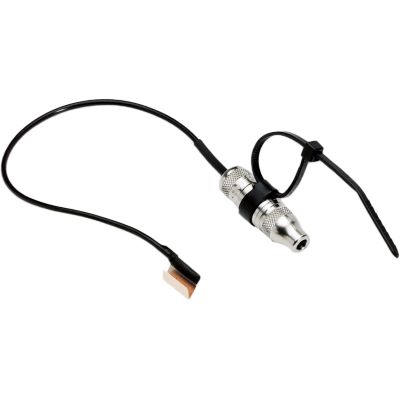
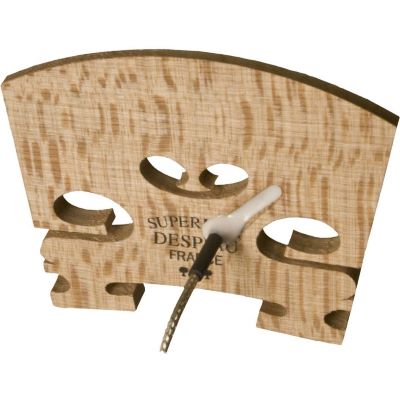
A piezo sensor reacts to mechanical movement rather than primarily to airborne sound. On many string instruments it sits in or against a bridge wing, capturing the energy of the strings very directly.
Because the signal is taken directly from the bridge, a piezo pickup is less dependent on the position of the player in relation to a microphone.
This makes it particularly practical on loud stages, in bands and in setups where the musician moves while playing.
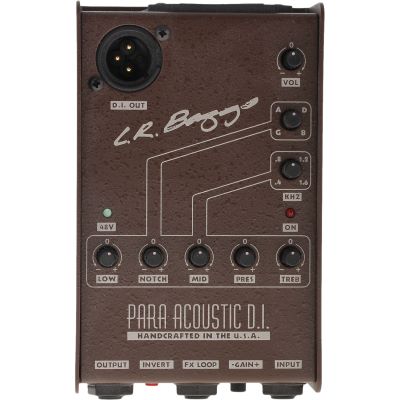
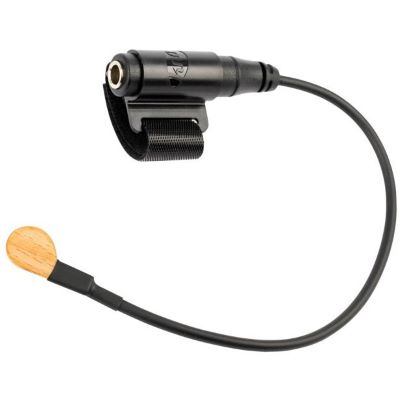
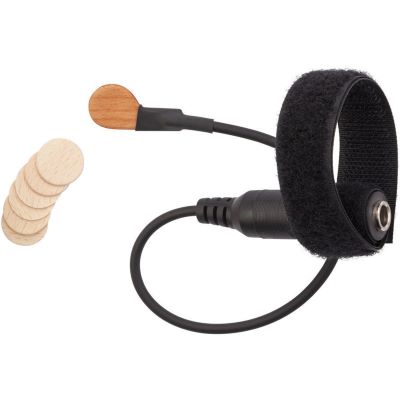
Many retrofit string-instrument pickups operate passively and require no battery. A suitable preamp can subsequently provide impedance matching, gain and tone shaping.
The input impedance of the following device can have a noticeable influence on the sound of a passive piezo.
Clamp-on systems can be installed without permanently modifying the instrument. A pickup integrated into a new bridge, by contrast, requires professional fitting.
Neither the sensor nor the output socket should damage the bridge or varnish.
Do not modify an important bridge yourself: if a bridge cutout needs to be changed or a dedicated pickup bridge installed, professional fitting is the safer solution.
A microphone captures airborne sound rather than only the vibration of the bridge. This means resonances from the top, back, body and room become a stronger part of the resulting signal.
Condenser microphones are particularly interesting for bowed strings because they can reproduce fast transients, subtle bow noise and dynamic nuances in detail.
A clip microphone keeps its distance to the instrument relatively constant, while a microphone on a stand allows greater freedom when adjusting distance and room content.
The trade-off is greater sensitivity to monitor volume, room acoustics and neighbouring instruments. For live use, microphone direction should therefore be considered together with the position of the monitors.
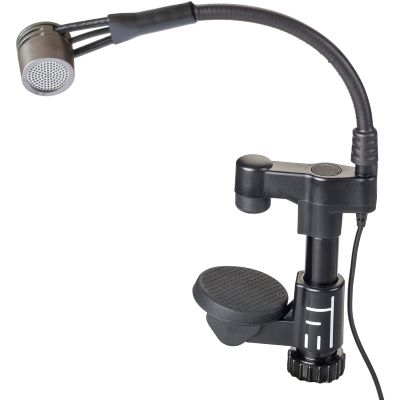
Before applying strong EQ, move the microphone. Small changes in distance and angle can substantially alter the balance between bow sound, body resonance and room ambience.
A clip microphone can be aimed towards the bridge or top. Very close placement emphasises bow and mechanical noises, while slightly more distance often produces a more balanced result.
A useful starting point lies below the bridge between the top and strings. Moving towards an F-hole often increases level, while more distance captures more of the overall body resonance.
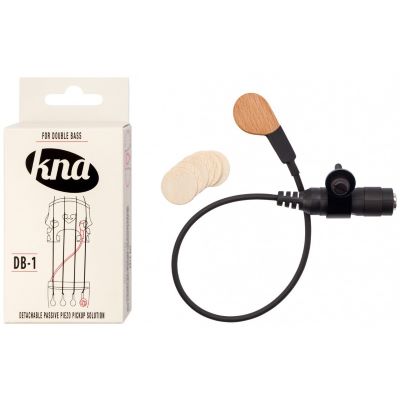
A double bass benefits from enough distance for its low-frequency resonance to be captured as a whole. Clip microphones must also be mounted securely without interfering with the strings or bow.
Start at a moderate distance and listen to how the instrument interacts with the room. Adjust position first and only then consider stronger equalisation.
| Instrument | Live Band | Acoustic Ensemble | Studio |
|---|---|---|---|
| Violin | Piezo or clip microphone | Clip or stand microphone | Stand microphone |
| Viola | Violin / viola pickup | Clip microphone | Condenser microphone |
| Cello | Bridge piezo | Clip microphone | Stand microphone or combination |
| Double Bass | Double-bass pickup | Double-bass clip microphone | Microphone with some distance |
The complete signal chain determines whether the pickup or microphone can deliver its intended result.
Passive piezo systems can benefit from a high-impedance instrument input or dedicated acoustic preamp. Appropriate impedance matching can prevent the signal from sounding unnecessarily thin or hard.
EQ, notch filtering and phase reversal can also be useful for shaping live sound and controlling feedback.
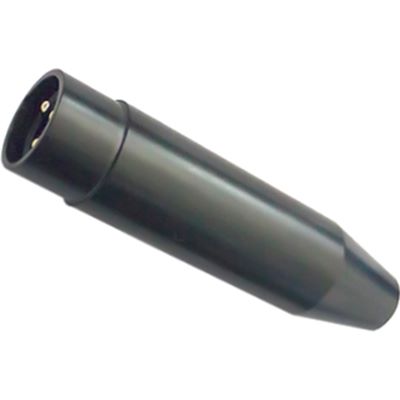
Many condenser microphones require 48-volt phantom power. Certain clip microphones use Mini-XLR and therefore need a manufacturer-specific adapter before they can be connected to a normal XLR microphone input.
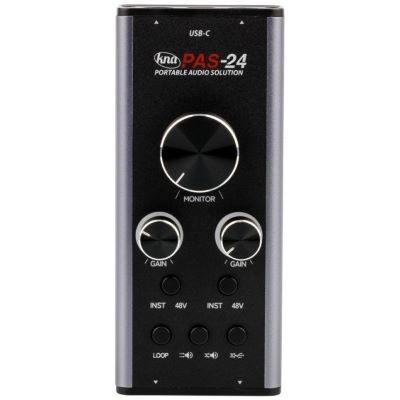
An audio interface handles preamplification and conversion for computer recording. Separate microphone, instrument and Hi-Z modes are particularly useful when a setup may use both microphones and pickups.
Plan the entire chain: pickup or microphone → correct input / preamp → optional DI or wireless system → mixer or audio interface → monitoring, PA or recording software.
Players who move extensively on stage can benefit from a wireless connection. Dedicated systems combine instrument pickup and radio transmission and thereby reduce cable pull on the instrument.
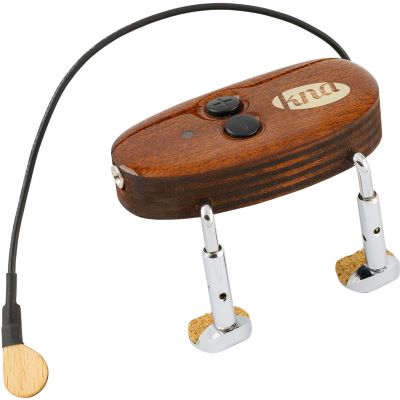
The selection covers bridge pickups for violin, viola, cello and double bass, dedicated instrument microphones, wireless solutions and the signal-chain components needed for live performance and recording.
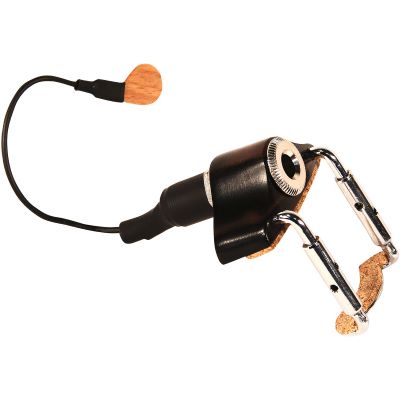
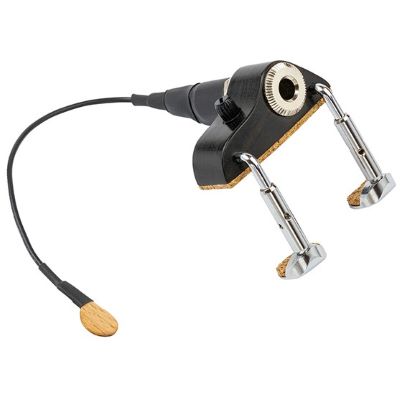
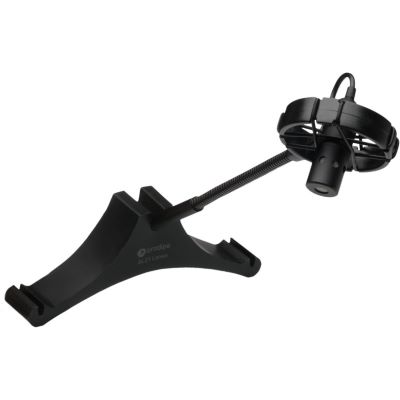
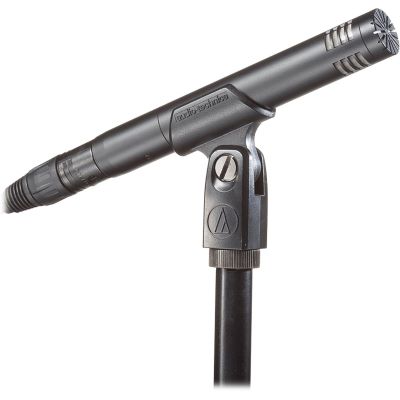
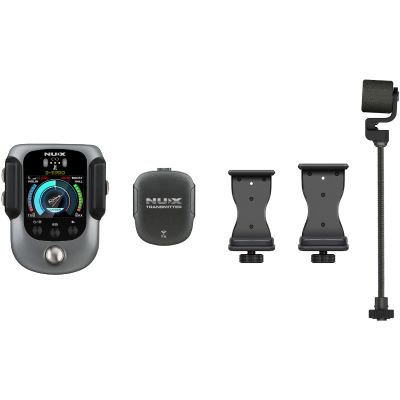
Explore manufacturers represented in pickups, microphones and acoustic amplification technology.



Pickup solutions for amplified acoustic instruments and practical live signal paths.
Microphone solutions for studio, stage and detailed instrument recording.
Dedicated microphone solutions for acoustic instruments and practical live use.
An unsuitable input impedance can make a passive piezo sound thin or hard. A suitable Hi-Z input or acoustic preamp can provide a better electrical match.
Excessive bow noise, too little body or a harsh sound can often be improved more naturally by moving the microphone a few centimetres before applying strong EQ.
The bridge is acoustically and mechanically important. If a bridge needs to be modified or replaced for a pickup system, the work should be carried out professionally.
For loud stages and maximum freedom of movement, a pickup is particularly practical. A microphone captures more acoustic body and air sound and is therefore excellent for natural live and studio applications.
Yes. Several bridge and clamp pickups can be mounted without permanently modifying the instrument. Alternatively, a clip-on microphone can be used.
Not every system absolutely requires one, but passive piezo pickups often benefit from a suitable high-impedance preamp or instrument input.
Possible causes include sensor position, pressure at the mounting point, input impedance and EQ. Check the mechanical installation and signal path before using strong equalisation.
A useful starting point is between the bridge and tailpiece, aimed below the bridge. The exact position can then be adjusted according to the desired balance of body, bow and F-hole sound.
A dedicated clip-on condenser microphone provides a consistent distance on stage. In the studio, a microphone positioned further away can capture the large resonating body more naturally.
Many models require 48-volt phantom power. Certain specialist clip microphones additionally require a manufacturer adapter between Mini-XLR and standard XLR.
Yes. Connect microphones to a suitable microphone input and passive pickups ideally to an appropriate instrument or Hi-Z input.
A good condenser microphone positioned at some distance is often a natural starting point because the resonating body and room can be recorded together.
Wireless is particularly useful for stage movement, theatre and shows. For studio work or a fixed orchestral position, a wired connection is usually simpler.
Yes. A pickup can provide a stable, direct foundation while a microphone adds acoustic body and room sound. The two signals need to be carefully balanced in level, phase and EQ.
Piezo pickups are particularly strong when a constant, direct signal and controllable behaviour on a loud stage are required. Clip microphones combine freedom of movement with more acoustic body sound, while a microphone on a stand offers the greatest freedom when adjusting distance and room sound in the studio.
Violin and viola players can choose between temporarily mounted pickups and dedicated wireless systems. Cello and double bass benefit from sensors and clip microphones designed specifically for their larger bridge and body dimensions.
The complete signal path is ultimately decisive: pickup, microphone, preamp, phantom power, wireless, audio interface and mixing console must work together electrically and sonically. Planning the chain as one complete system creates a string sound that can be controlled reliably on stage, in rehearsals and during recording.
Find further guidance on string instruments, wind instruments, studio equipment, recording, DJ technology and event equipment in the central Musikhaus Korn guide.