4/4 – The Standard Size
The standard size for most adults and taller teenagers. Smaller adults may occasionally feel more comfortable with a 3/4 violin or a less common intermediate size.

1/4, 1/2, 3/4 or 4/4? Especially with a first violin, choosing the right size is more important than an elaborate finish. Then there are the bow, case, shoulder rest, rosin and suitable strings. This guide explains what children, adults, parents and returning players should consider when buying a beginner violin.
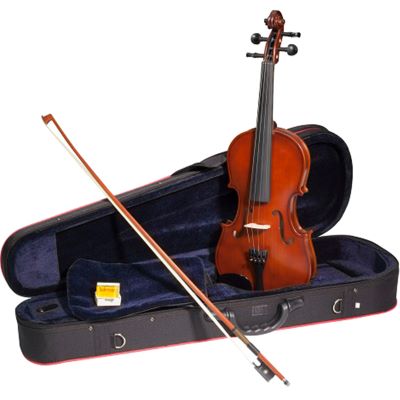
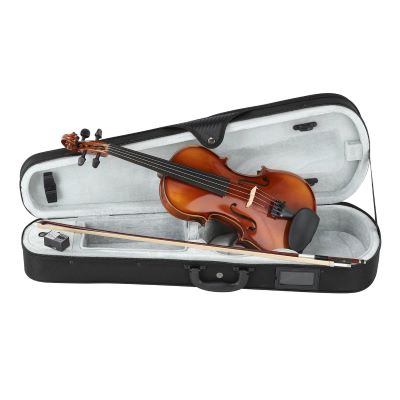
A good beginner violin should fit the player's body size, be properly set up and be easy to tune reliably. Particularly practical are ready-to-play violin outfits , where the bow and case are already included.
For adults and sufficiently tall teenagers, a 4/4 violin is usually the right choice. Children often need a smaller instrument in 3/4, 1/2, 1/4 or 1/8 size. Age alone is not enough to determine the correct size: arm length, hand size and the actual playing posture are more important.
The measurements are intended as a guide. The most reliable method is to try the violin with the left arm extended while keeping the shoulder relaxed.
| Violin Size | Approx. Arm Length | Typical Use | What to Check |
|---|---|---|---|
| 1/8 | approx. 43 cm | Young children | The arm should not have to be completely straightened. |
| 1/4 | approx. 47 cm | Young students | The scroll should be comfortably reachable. |
| 1/2 | approx. 52 cm | Children and younger teenagers | The left arm should remain slightly bent. |
| 3/4 | approx. 56–57 cm | Older children and teenagers | The hand should reach the pegbox without stretching. |
| 4/4 | from approx. 60 cm | Teenagers and adults | Choose full size only when it genuinely feels comfortable. |
The standard size for most adults and taller teenagers. Smaller adults may occasionally feel more comfortable with a 3/4 violin or a less common intermediate size.
Often the final children's size before a full-size violin. It already offers a strong sound while remaining shorter and easier to reach.
A common size in music schools. It is especially important that the bow and shoulder rest also match a 1/2 violin.
Smaller violins allow children to begin lessons without overextending the arm. An oversized violin is not a sensible “growth reserve”.
Check the size regularly as children grow: after a growth spurt, moving to the next violin size can make posture and fingering considerably easier.
Bridge, string height, pegs and fine tuners need to work together. A poorly set-up instrument can make fingering and tuning unnecessarily difficult, regardless of how attractive the wood may look.
Many student violins use spruce for the top and maple for the back and sides. For beginners, clean workmanship and reliable playability are more important than particularly dramatic wood figuring.
Four fine tuners are particularly practical at the beginning. Small pitch corrections can be made more precisely than by relying exclusively on the larger tuning pegs.
Ebony is frequently used because it is hard and durable. What matters most is that the pegs turn smoothly and reliably hold their position.
The bridge is held between the top and strings without glue and transfers vibration to the body. Its position and angle should remain carefully adjusted.
A student should enjoy playing the instrument. A balanced, responsive tone is more helpful than an instrument that remains rough or uneven despite correct playing technique.
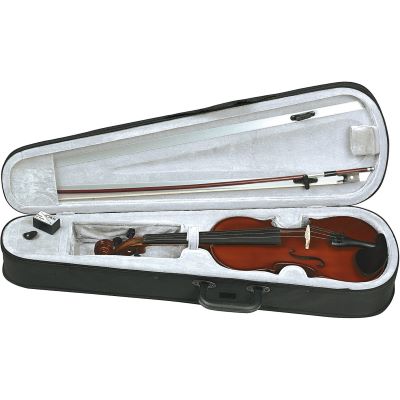
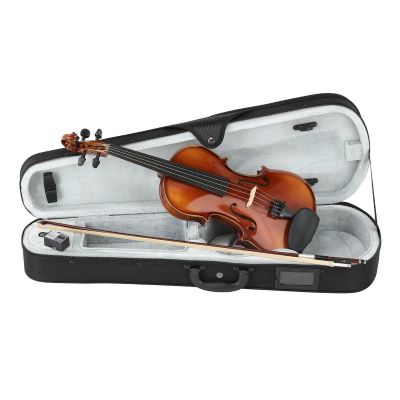
For beginners, a complete outfit is often the simplest solution. Many violins at Musikhaus Korn are supplied with a bow and case, and some sets also include rosin.
This means parents and beginners do not immediately need to decide which individual bow or case matches the instrument. Advanced players, on the other hand, may benefit from putting together a more individual setup.
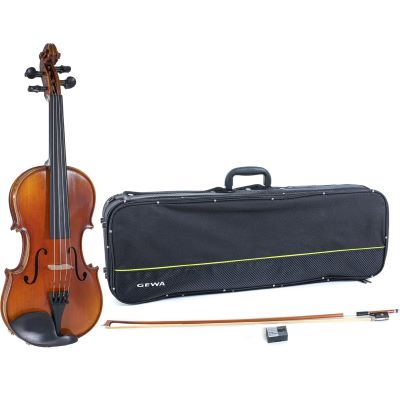
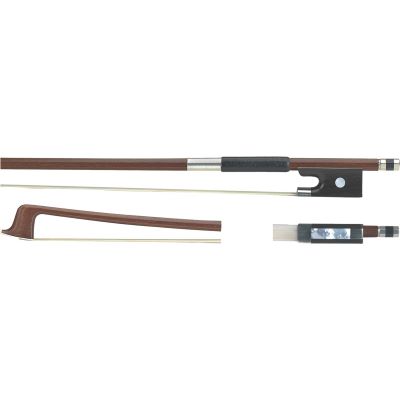
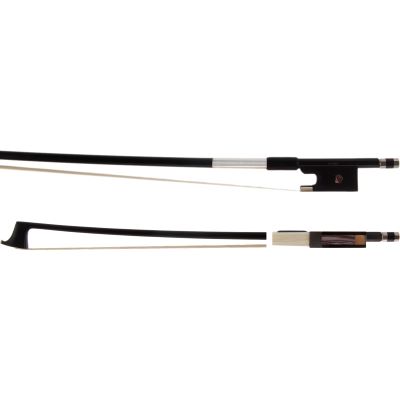
The bow needs to match the size of the violin. Stable student bows made from suitable woods or carbon are interesting options for beginners. Balance, a straight stick and a reliably functioning frog are important.
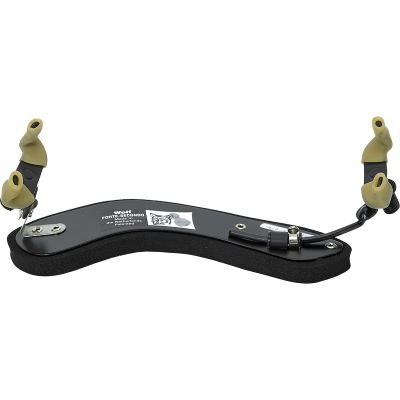
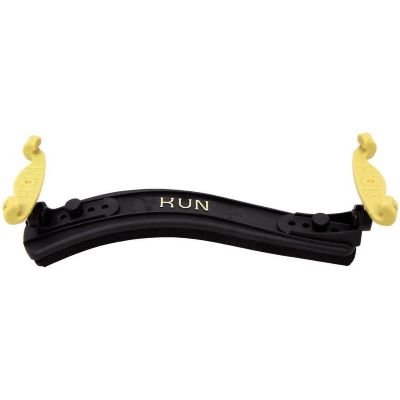
A shoulder rest can stabilise the violin between the collarbone, shoulder and chin. Its height and width should suit the player's anatomy without unnecessarily clamping or stressing the instrument.
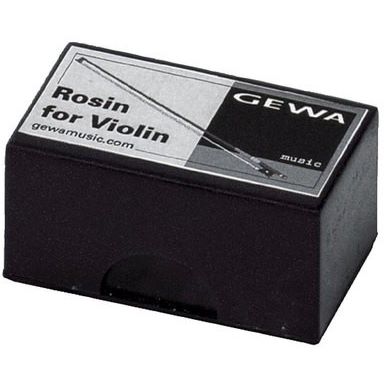
Without rosin, new bow hair can glide over the strings almost silently. A thin, even layer provides the necessary grip. Too much rosin, however, simply creates unnecessary dust.
Loosen the bow after playing: the bow hair is tensioned for playing and should be loosened afterwards. This prevents the bow stick from remaining under unnecessary tension.
For traditional violin lessons, an acoustic violin is usually the most direct route. Resonance, bow pressure and tone development are experienced immediately through the body and strings.
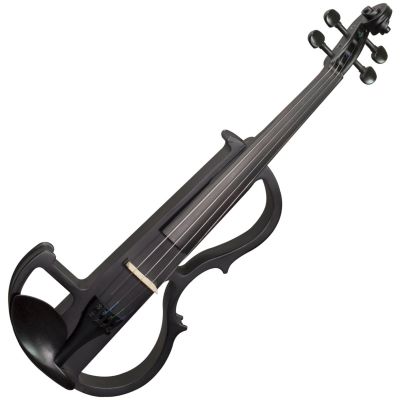
An electric violin can be interesting when headphones, amplification, recording or effects play an important role. An electric violin still produces mechanical playing noise and is therefore not completely silent.
Anyone planning to play in classical ensembles or orchestras later should ideally develop the basic technique on a well-set-up acoustic violin.
Hold the violin securely without raising the shoulder. Adjust the chin rest and shoulder rest so the head and neck can remain relaxed.
Begin on open strings and develop a straight bow path between bridge and fingerboard. An even bow speed helps produce a more consistent sound.
Develop finger positions without unnecessary pressure. Unlike a guitar, the violin has no frets that automatically determine the exact pitch.
Combine bowing, rhythm and intonation step by step. Short, regular practice sessions are especially valuable at the beginning.
This selection covers student outfits, different violin sizes, an electric alternative as well as bows, shoulder rests, rosin, strings and safe instrument storage.
Ready-to-play options in several sizes for children, teenagers, adults and returning players.
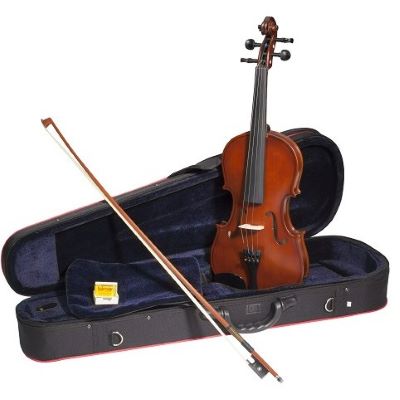
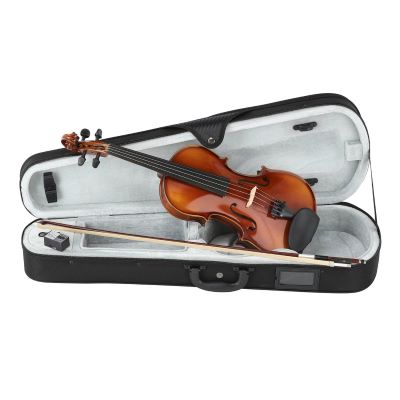
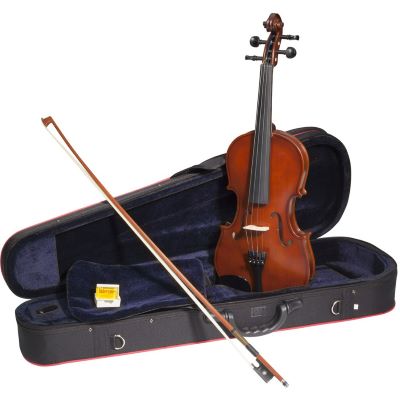
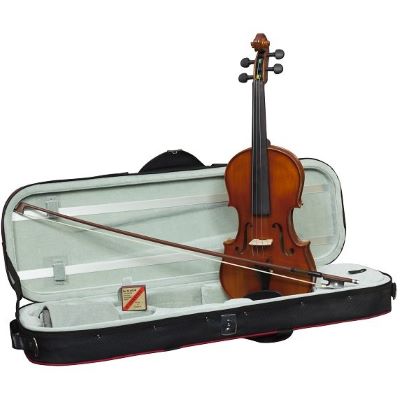
Explore the manufacturers represented in the beginner selection and discover further instruments and accessories.







After every practice session, rosin dust and fingerprints should be removed from the strings and instrument with a dry, soft cloth. Aggressive household cleaners do not belong on violin varnish.
An oversized violin forces long reaches and an awkward arm position. Children benefit more from the size that fits them now.
A 1/2-size instrument also needs an appropriate 1/2-size bow. Size and balance should be considered together.
The shoulder rest should support a natural posture rather than pushing the violin unnecessarily far away from the body.
More rosin does not automatically mean more sound. A thin, even layer is usually sufficient.
Bridge and soundpost are important parts of the acoustic system. Major corrections should be left to someone with appropriate specialist knowledge.
Reliable basic setup and comfortable playability are more important for successful learning than simply choosing the lowest possible purchase price.
A ready-to-play violin in the correct size is more important than choosing a particular brand. Sets with bow, case and fine tuners are particularly practical for beginners.
Most adults play a 4/4 violin. For very small adults, a 3/4 or 7/8 solution may sometimes feel more ergonomically comfortable.
Arm reach is the key factor. The scroll or pegbox should be reachable without completely straightening the left arm.
Only when the child is tall enough. A violin that is too large makes posture and fingering more difficult. Smaller sizes are not inferior instruments; they are ergonomically adapted student violins.
Many players use a shoulder rest, while some teaching approaches work differently. The player's anatomy, chin rest and the teacher's recommendation should determine the choice.
Rosin increases friction between the bow hair and the string. Without sufficient grip, it is difficult to set the string into controlled vibration with the bow.
The tuning should be checked before playing. New strings stretch and often require more frequent small corrections during their first period of use.
Yes. A correctly sized instrument, regular short practice sessions and good instruction provide a sensible basis for adult beginners as well.
It can be, particularly for modern applications or when headphones and amplification are important. For classical learning, an acoustic violin provides more immediate feedback from body resonance and bowing.
Strings should be replaced when they are damaged, corroded, noticeably aged in sound or no longer maintain stable tuning reliably.
At minimum, a suitable bow, rosin and a protective case are needed. Depending on posture and lessons, a shoulder rest, music stand, tuner and spare strings may also be useful.
A good beginner violin starts with the right size. Most adults use a 4/4 violin, while children often need 3/4, 1/2, 1/4 or 1/8 depending on their arm reach. A smaller, properly fitting violin supports a more natural posture and makes fingering easier. For growing children, the fit should be checked regularly.
Complete violin outfits are especially practical for a first purchase because the violin, bow and case are already matched. Rosin is often included, while a suitable shoulder rest can be added depending on the player's posture. Fine tuners, suitable strings and a simple care routine help beginners focus on bowing, intonation and making music.
Find further guidance for musical instruments, studio and recording equipment, DJ gear and event technology in the central Musikhaus Korn guide.