88
Digital Piano
88 weighted keys, hammer action, piano sounds, pedals and built-in speakers make a digital piano the most direct route for traditional lessons and pianist-oriented playing.

Do you want to learn piano, play complete songs with automatic accompaniment, design your own sounds, perform live with a band or produce music on a computer? Digital pianos, stage pianos, keyboards, synthesizers, workstations and MIDI keyboards are designed for different musical goals. This guide takes you directly to the instrument type that best matches your priorities.
The best choice is not determined by the instrument with the largest number of sounds. Piano lessons place completely different demands on the keyboard from beat production, automatic accompaniment or a solo entertainer performance.
88 weighted keys, hammer action, piano sounds, pedals and built-in speakers make a digital piano the most direct route for traditional lessons and pianist-oriented playing.
Integrated speakers, many instrument sounds, rhythms and accompaniment functions make home keyboards attractive for beginners, hobby musicians and uncomplicated music-making at home.
A transport-friendly enclosure, direct sound access, professional outputs and often a weighted keyboard make stage pianos strong instruments for band rehearsals and live performances.
If oscillators, filters, modulation and sound design matter more than realistic piano technique, a synthesizer is the most creative instrument type in this comparison.
Sounds, sequencing, arrangement and extensive performance control are combined in one instrument. This suits songwriters and musicians who want to develop complete productions directly on the keyboard.
A MIDI keyboard normally has no internal sound engine. It controls virtual instruments, a DAW and compatible external MIDI hardware and is therefore particularly useful in a home studio.
Extensive styles, automatic accompaniment and quick registrations make arranger keyboards complete performance tools for solo entertainers and large song repertoires.
If the keyboard should feel as close as possible to a piano, begin with digital and stage pianos. If accompaniment, sounds or production features are more important, start with keyboards, synthesizers or workstations.
A digital piano is optimised for piano tone and piano technique. 88 keys, touch sensitivity and hammer action are particularly important. Furniture-style models usually include three pedals, their own speaker system and a permanent stand or cabinet.
Stage pianos remove the furniture-style cabinet and concentrate on transport, connections and direct access to sounds. Some include speakers while others require monitors, a keyboard amplifier or a PA.
Home and learning keyboards are quick to set up and normally contain their own speakers. Automatic accompaniment, learning functions, rhythms and many instrument sounds are more important than a heavy piano-style mechanism.
Styles can generate accompaniment including drums, bass and other instruments. Registrations allow rapid changes between complete sound and accompaniment configurations for different songs.
Synthesizers are particularly interesting for electronic music, pop, ambient, sound design and experimental sounds. The keyboard may deliberately be lighter and faster than a traditional piano keyboard.
Workstations combine extensive sound generation with sequencing, arrangement and performance functions. The aim is to create and organise complete musical productions directly inside one keyboard instrument.
Pads, faders, rotary controls and transport controls can complement the keyboard. This is useful when software instruments and the DAW provide the actual sound.
Compare the main purpose, keyboard size, internal sounds and speaker concept before deciding which product group is most relevant to you.
| Instrument | Main Focus | Typical Keys | Own Sounds | Speakers | Ideal For |
|---|---|---|---|---|---|
| Digital Piano | Piano playing | 88, weighted | Yes | Usually yes | Lessons, home |
| Stage Piano | Live piano | 73–88 | Yes | Depends on model | Stage, rehearsal, studio |
| Home Keyboard | Learning & sounds | 49–76 | Yes | Yes | Beginners, hobby players |
| Entertainer Keyboard | Automatic accompaniment | 61–88 | Yes | Frequently yes | Solo performance |
| Synthesizer | Sound design | 25–88 | Yes | Usually no | Studio, stage |
| Workstation | Production | 37–88 | Yes | Usually no | Arrangement, songwriting |
| MIDI Keyboard | Software control | 25–88 | Usually no | No | Home studio, DAW |
The number of keys determines range and physical size, while the keyboard mechanism determines how the instrument responds under your fingers.
If classical piano technique is your main goal, a realistic weighted keyboard should have priority. It develops dynamic control and finger technique differently from a light synth-action keyboard.
For organ playing, synthesizer leads, automatic accompaniment and mobile production, a lighter action can feel more comfortable and make the instrument considerably easier to transport.
Producers and synthesizer players should additionally consider aftertouch, pitch and modulation controls, drum pads, encoders and freely assignable controllers.
Prioritise 88 weighted keys, pedals, headphone connections and a stable sitting position. Additional functions are secondary to the keyboard feel and piano sound.
A slim stage piano or compact digital piano saves space. A keyboard stand and headphones create a flexible setup that can be dismantled when necessary.
Fast sound changes, splits, layers and suitable line outputs are especially useful in rehearsal and live situations.
If software instruments provide most of your sounds, a MIDI keyboard is highly efficient. If you want to work without a computer, a workstation or synthesizer becomes more relevant.
These examples deliberately cover very different priorities: piano practice, portability, home keyboard playing, automatic accompaniment, sound design, live production and software control.
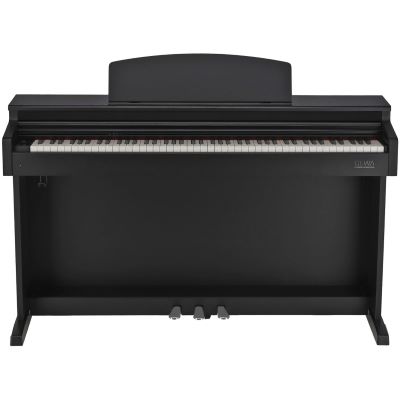
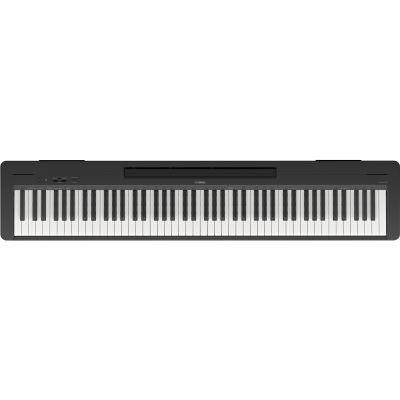
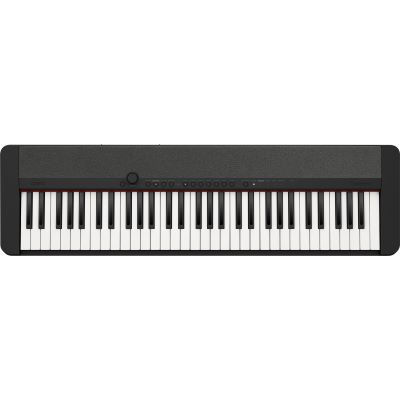

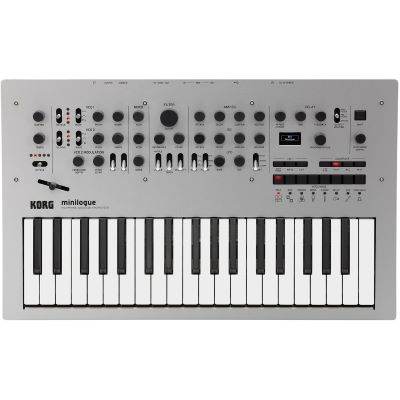
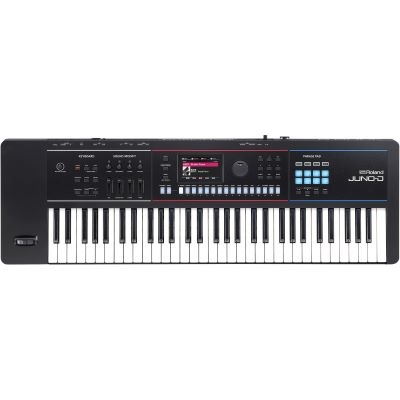
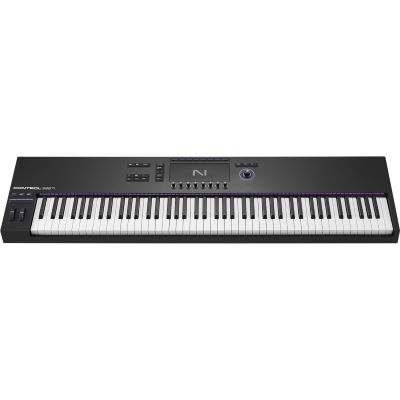
Decide on the instrument type first. Only after that do the number of keys, keyboard action, internal sounds, speakers and connections become meaningfully comparable.
Stage pianos, keyboards and synthesizers need a stable stand at a comfortable playing height. Matching permanent furniture-style bases are available for many digital pianos.
A stable sitting position is important for longer practice sessions. Pianists in particular benefit from a suitable bench at the correct playing height.
Sustain belongs to the basic piano setup. Anyone learning traditional pedal technique should check whether a compatible three-pedal unit is available for the chosen instrument.
For lessons, rehearsals and stage use, transport dimensions should already be considered when buying the instrument. The bag has to match the exact width, depth and height.
A thousand sounds are of little help if your actual goal is to learn piano technique and the keyboard action does not support that goal.
A full 88-key keyboard makes sense for long-term classical piano playing. For production, synthesizer leads or mobile keyboard use, fewer keys can be considerably more practical.
Many synthesizers, workstations and professional stage pianos require external monitoring, headphones, a keyboard amplifier or a PA.
A pure controller normally needs a computer, software instrument or compatible external sound generator before it can actually produce sound.





Keyboard action and touch can only be judged to a limited extent from specifications. Compare several instruments using the same piano passages, chords and sounds and also check the seating position, controls and connections you can reach while playing.
Compare home, learning and entertainer keyboards together with their most important features.
Compare 88-key instruments according to keyboard action, pedals, speakers and additional features.
Discover analog, digital and hybrid sound engines as well as instruments for electronic production.
Combine keyboards, controllers and interfaces for virtual instruments and music production.
Anyone who wants to learn traditional piano playing should prioritise the keyboard and playing feel and begin with a digital or stage piano with 88 weighted keys. A keyboard is the more versatile solution for learning functions, automatic accompaniment and a large number of immediately available sounds. Stage pianos combine pianist-oriented playing feel with a transport-friendly construction for rehearsals and live performances.
Synthesizers are aimed at musicians who want to create sounds themselves. Workstations go a step further and combine sound generation, performance, sequencing and arrangement. In a computer-based home studio, a MIDI keyboard is often enough because virtual instruments provide the actual sound generation. The deciding factor is therefore not which keyboard instrument has the largest number of functions, but which one performs your most important musical task most directly.
From musical instruments and home-studio equipment to DJ and event technology, find further step-by-step help in the central Musikhaus Korn shopping guide.