Standard Large Cajón
A large seating surface, substantial bass and a clear snare sound make the classic full-size Cajón useful for lessons, pop, folk, acoustic sessions and stage use.

A Cajón is compact, ready to play within seconds and lets you create your first grooves with only a few basic techniques. Bass, snare sounds and accents are produced directly with your hands on the playing surface. For beginners, the most important factors are a comfortable seat height, a responsive snare system, a clear difference between bass and high strokes and a pleasant overall playing feel.
Begin with where you intend to play and with your body size. Detailed differences in wood, visual design and specialist extensions can be considered afterwards.
A large seating surface, substantial bass and a clear snare sound make the classic full-size Cajón useful for lessons, pop, folk, acoustic sessions and stage use.
A lower seating height and smaller dimensions can be more comfortable for children, teenagers and smaller adults.
Compact construction makes travel models useful for lessons, journeys, street music and situations where transport volume needs to remain low.
A build kit combines a musical instrument with a project: assemble the body and then play grooves on your self-built Cajón.
The instrument is played on its front plate. Deeper strokes towards the central area produce a bass-oriented sound.
Strokes closer to the upper edge are brighter and shorter and, depending on construction, are more strongly influenced by the internal snare system.
Many modern Cajóns use snare spirals, wires or tensioned strings that vibrate against the front plate.
This creates the characteristic buzzing sound that performs a role similar to the snare drum in a compact rhythm setup.
Depending on the instrument, snare response may be fixed, adjustable or switchable.
With a 2inOne construction, for example, the internal snare element can be removed or repositioned to change the character of the instrument.
Bass and snare should respond clearly even when played with controlled dynamics.
An instrument that only sounds convincing when struck extremely hard can make dynamic playing unnecessarily difficult.
Many full-size Cajóns are approximately 30 × 30 × 50 centimetres. These dimensions work well for many adults.
Medium and junior designs mainly reduce the sitting height. Your feet should remain securely on the floor and your knees and hips should not be forced into an uncomfortable position.
At the same time, you need to reach the upper part of the playing surface without permanently rounding your back or sliding forwards on the Cajón.
The Schlagwerk CP83, for example, has a seating height of approximately 45 centimetres and is therefore particularly interesting for smaller players.
| Type | Seating Comfort | Bass Volume | Mobility | Suitable For |
|---|---|---|---|---|
| Standard Large | Very suitable for many adults | Powerful | Medium | Beginners, bands, lessons, stage |
| Medium | Lower seat height | More compact | Good | Smaller adults and teenagers |
| Junior | Adapted for children | Smaller body volume | Very good | Children and first rhythm experience |
| Travel | Depends on construction | Less body volume | Very high | Travel, lessons, street music |
| DIY Kit | Depends on the finished model | Full Cajón sound is possible | Normal after assembly | DIY projects, schools, families |
A defined low bass and a clearly audible snare effect can perform many of the rhythmic functions of a compact drum kit in acoustic arrangements.
Look for a clearly defined upper playing zone. With guitar and vocals, the backbeat should remain audible without forcing you to strike the instrument excessively hard.
Responsive string or snare constructions can support fast finger figures, slaps and dynamic accents.
Your personal playing feel becomes particularly important for detailed articulation.
A Cajón is an acoustic percussion instrument and is not silent.
Controlled technique, rods or brushes make it possible to vary playing volume considerably.
These models illustrate different sizes and snare concepts, from the classic 2inOne system to lower Medium Cajóns and complete beginner bundles.
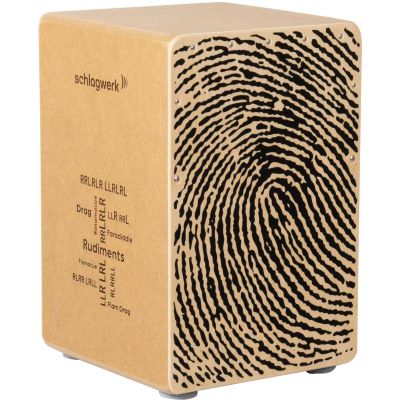
Large all-round Cajón with a removable internal snare element and a traditional full-height design.
Instrument and structured learning material combined in one direct beginner package.
Full-size Cajón for a straightforward introduction to bass strokes and snare accents.
Large-format Cajón for lessons, rehearsals and first accompaniment grooves.
Standard large dimensions with clearly defined bass and snare areas.
Classic full-size construction for versatile grooves and accompaniment.
Approximately 45 centimetres high, making it particularly interesting for smaller players.
Compact seating height for younger players and smaller adults.
Complete package with Cajón, bag, seat pad and learning material for getting started.
Child-friendly Cajón with compact dimensions, rounded edges and a responsive snare sound for first rhythms.
Compact junior Cajón with approximately 35 centimetres of height for smaller percussion players.
Lightweight mobile solution for lessons, journeys and spontaneous rhythm sessions.
Compact Cajón construction kit for school, family projects and your own first instrument.
Full-size Cajón as a DIY project with a normal adult seating height.
Bass and snare are all you need at the beginning. Once both basic sounds can be reproduced reliably, ghost notes, finger accents and more complex patterns can be added.
Sit securely and relatively upright. Your hands should reach the upper playing area without keeping your back permanently rounded.
Begin with a deep basic stroke and listen for a full sound without using unnecessary force against the playing surface.
Practise a brighter stroke near the upper playing area, then alternate evenly between bass and snare sounds.
Place the bass, for example, on beats one and three and the snare accent on beats two and four. Eighth notes can then be added gradually.
Learning material, brushes and a suitable bag are useful additions once the basic instrument has been selected. Extra sound add-ons can be added later as your playing develops.
Structured learning material for basic strokes, grooves and playing technique.
Alternative playing tool for softer grooves, brush techniques and different tonal colours.
Transport solution for rehearsals, lessons and live performances.
Protective bag for transportation and storage of a compatible Cajón.
Additional sound option for expanding percussion and Cajón setups.
Additional component for creating a more focused bass response on compatible Cajón setups.
Wood finish and colour are personal preferences. In everyday use, seating comfort, bass/snare separation and direct response are more important.
If the player constantly slides forwards or reaches the playing surface only with a strongly rounded back, the size is not ideal.
Good Cajón technique uses fingers, palm and rebound. Volume should not be generated exclusively through hard impacts.
Grooves only become clear and musical once both fundamental sounds can be reproduced reliably on their own.
Brushes and sound add-ons are enjoyable, but posture, basic strokes and timing are more important at the beginning.
The playing plate and edges can be damaged during transport. A suitable bag is useful when travelling regularly to lessons or rehearsals.
Different manufacturers use their own body dimensions, snare concepts, playing surfaces and accessory systems. Comparing complete ranges is therefore worthwhile.




Extensive Cajón range including 2inOne, Rudiments, Kids, Medium, DIY kits and numerous Cajón add-ons.
Cajóns, beginner bundles, brushes, bags and further percussion accessories.
Cajón series with different body heights plus learning and transport accessories.
Traditional box Cajóns and especially compact travel-oriented designs.
Musikhaus Korn can help you choose a suitable Cajón, explain different snare systems and find compatible bags, brushes, learning material and other percussion accessories.
A beginner Cajón should first and foremost be comfortable to play. A clear difference between bass and snare sounds makes the first grooves easier to understand, while a suitable seating height supports relaxed posture. Large standard models work well for many adults, while Medium and Junior Cajóns provide an ergonomic alternative for smaller players.
There are also differences between snare systems. Spirals, wires and strings can respond differently and, depending on the instrument, may be fixed, adjustable or removable. For beginners, direct and controllable response is usually more useful than a large number of extra functions.
With learning material, brushes, a suitable bag and short regular practice sessions, the Cajón can quickly become part of acoustic music, pop, folk, lessons and small ensembles. Additional percussion and Cajón add-ons can then expand the setup step by step.
From drums and percussion to guitars, keyboard instruments, studio equipment, DJ gear and event technology: further Musikhaus Korn guides help with selection, comparison and building a suitable setup.