rekordbox
Particularly interesting if you work with AlphaTheta or Pioneer DJ hardware, want to prepare your library for compatible media players or connect controller and club workflows.

Your DJ software determines how you organise tracks, control decks, use stems, operate effects and work with your controller. rekordbox, Serato DJ Pro, TRAKTOR Pro 4, djay Pro and VirtualDJ all follow different priorities. Engine DJ adds a platform for compatible standalone systems. This comparison helps you choose the right workflow for bedroom DJing, mobile DJing, club use, vinyl/DVS and creative performance.
Start with the workflow and hardware you want to use, not with the longest feature list. In digital DJing, software and controller form one complete system.
Do not begin with the longest feature list. The deciding factors are which hardware you want to use and how you want to DJ.
Particularly interesting if you work with AlphaTheta or Pioneer DJ hardware, want to prepare your library for compatible media players or connect controller and club workflows.
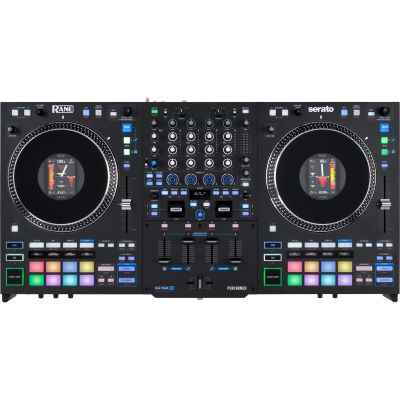
Strong controller, DVS and performance workflow with stems, Hot Cues, sampler functions and a broad range of officially supported DJ hardware.
Four decks, Remix Decks, Pattern Player, flexible beatgrids, stem separation and extensive MIDI mapping make TRAKTOR particularly interesting for electronic and hybrid sets.
Four decks, Neural Mix, DVS and broad streaming-service integration make djay attractive for computer, tablet and mobile-controller setups.
Extensive hardware support, stems, video, DVS, flexible mappings and broadcast functions appeal to DJs who want to configure their system particularly individually.
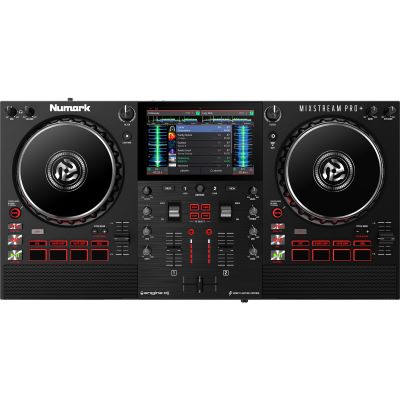
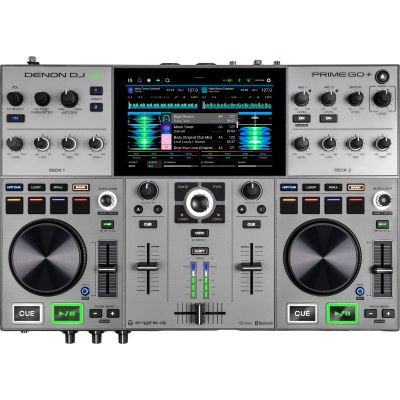
Engine DJ is primarily the library and operating-system platform for compatible Denon DJ, Numark and Rane standalone hardware. The actual performance can take place without a laptop.
Buying rule: decide on the software workflow you want first and then choose the controller. Hardware and software are one combined system in digital DJing.
Almost every current DJ application provides virtual decks, mixer, browser, Hot Cues, loops, Sync and effects. The most important differences now lie in library management, hardware integration, stems, DVS, streaming, video and additional performance concepts.
Basic mixing is possible on all major platforms. The difference becomes clearer when you look at how the software handles advanced performance and music-management tasks.
An officially supported controller can map pads, displays, jog wheels and its audio interface directly to the software. Universal MIDI hardware can often be mapped manually, but not always with the same level of integration.
DJs planning to play on independent club players evaluate export and library functions differently from DJs whose computer remains part of every performance.
Waveforms, effects and stems only help when track selection, cueing, levels and fundamental mixing already work confidently. Familiar software with matching hardware is usually more useful than changing platforms constantly.
Stem separation is now one of the most important creative differences between DJ platforms. The programs vary in the number of separated elements, preparation, processing, quality and hardware control.
Current rekordbox workflows can process four areas such as vocals, instruments, bass and drums separately. More demanding stem processing benefits from a suitably powerful computer.
These elements can be isolated for acapellas, instrumentals and live mashups. Suitable performance controllers provide direct hardware buttons for stem control.
TRAKTOR separates drums, bass, instruments and vocals and combines the resulting elements with dedicated Stem Deck functions, filters and effects.
Both platforms also provide live-separation workflows. Depending on the streaming service, restrictions can apply when tracks come from an online catalogue.
Hardware matters: if stems are central to your performance, compare not only the software but also how quickly your controller can mute, isolate or apply effects to the individual musical elements.
Streaming can be especially useful for requests and open-format DJs. Providers, countries, functions and required subscriptions can change, however. A local music selection remains the most reliable backup for important performances.
Both platforms integrate current streaming offers directly into their music browser. Recording or stem functions may be restricted for tracks from individual services.
TRAKTOR includes Beatport-oriented workflows, while djay integrates several major catalogues and is therefore attractive for flexible mobile and open-format applications.
Supported standalone systems can access compatible services via integrated Wi-Fi, allowing music searches directly from the hardware display without a laptop.
Streaming is not a backup: an internet connection, login or service availability should never be your only way of playing music at an important event.
DVS uses timecode vinyl or comparable control methods to operate digital decks with real turntables. Serato DJ Pro, TRAKTOR Pro 4, rekordbox, djay and VirtualDJ all provide corresponding workflows.
The table focuses on the major differences relevant to the workflow. Individual functions may still depend on hardware, licence level, service availability and software version.
| Software | Main Strengths | Stems | DVS | Especially Suitable For |
|---|---|---|---|---|
| rekordbox 7 | Library, USB export, AlphaTheta hardware | 4 areas | Yes, depending on setup | Club, rekordbox ecosystem |
| Serato DJ Pro | Controller, scratch, performance | Vocals, Melody, Bass, Drums | Yes, depending on hardware/licence | Performance, Open Format, DVS |
| TRAKTOR Pro 4 | 4 Decks, Remix Decks, Pattern Player | Drums, Bass, Other, Vocals | Yes | Electronic, Hybrid, Creative |
| djay Pro | Mobile devices, streaming, Neural Mix | Neural Mix | Yes | Mobile, Streaming, flexible hardware |
| VirtualDJ 2026 | Broad hardware support, video, mapping | Stems 2.0 | Yes | Custom setups, Video, Open Format |
| Engine DJ 5 | Standalone, library export, streaming | Hardware dependent | No classic focus | Denon DJ, Numark and Rane standalone |
Depending on the individual device, DDJ-FLX controllers support both ecosystems. This means some controllers can later be used with a different software platform without replacing the complete hardware.
Native Instruments hardware is closely integrated with TRAKTOR. The platform additionally supports extensive MIDI mapping and a variety of modular setups.
Engine DJ systems use desktop software mainly to prepare the music library. Performance and audio playback then run directly on compatible standalone hardware.
Controller compatibility is more important than brand loyalty: check whether the exact model supports the functions you want directly. Stems, DVS, displays, pad modes and mixer functions can vary even between controllers from the same product family.
DJ software licences, upgrades and performance extensions.
Hardware for hands-on operation of decks, mixer, pads and software functions.
Control digital tracks with turntables and traditional DJ hardware.
Separate outputs and flexible integration of computers, mixers and external audio signals.
Control vinyl and compatible media for digital vinyl systems.
Additional controllers and interfaces for custom mappings and hybrid setups.
Pre-listening and cueing independently of the software platform.
Position your computer clearly and ergonomically above or beside the controller.
The current software selection includes professional DJ licences, upgrades and creative tools for performance, remixing and preparation.
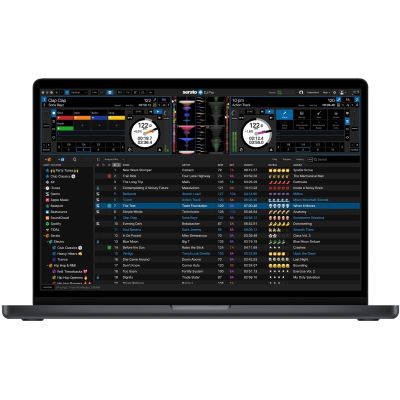
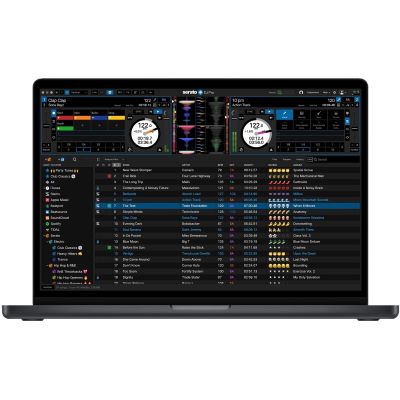
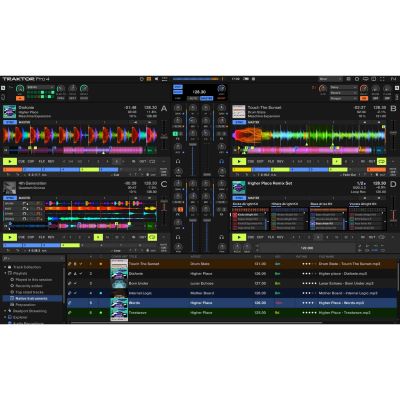
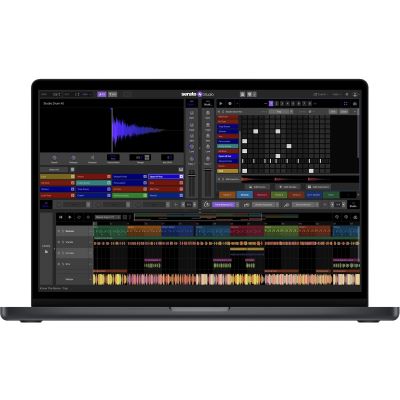
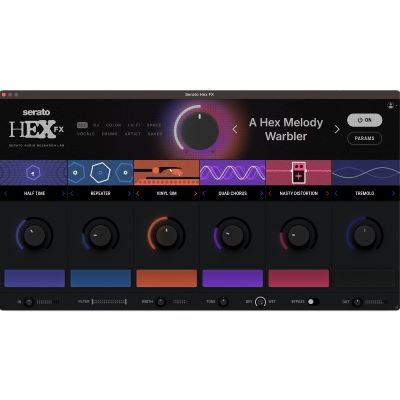
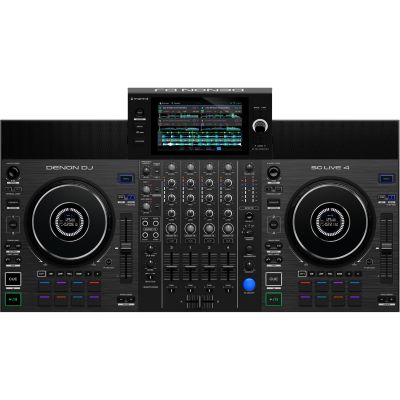
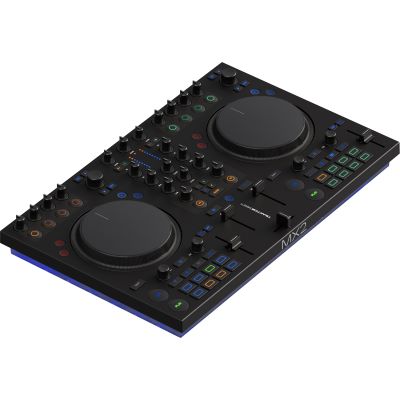
The examples below represent different software integrations, from a compact multi-platform controller to four-channel stem and performance hardware.
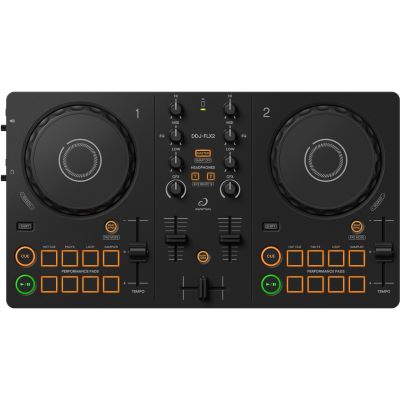
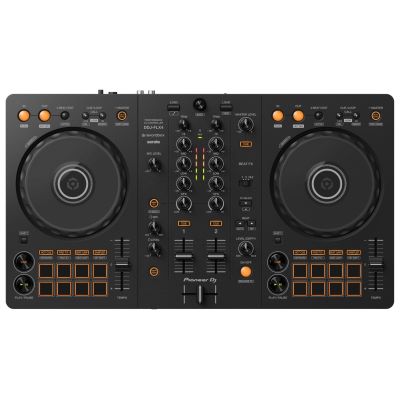
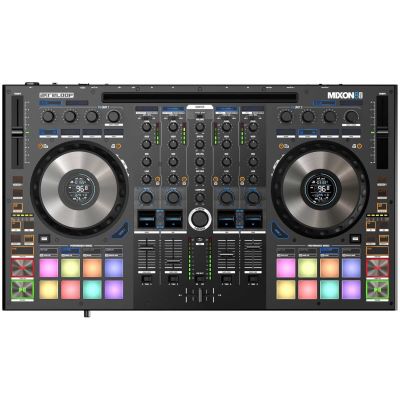
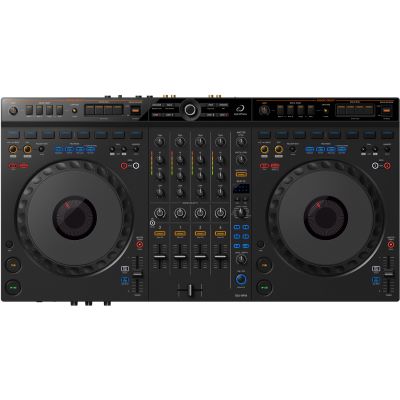
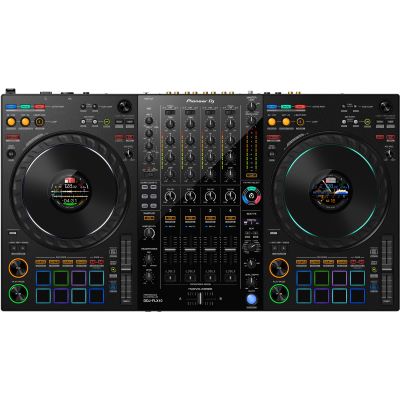
These systems represent the alternative workflow in which library preparation can take place on a computer but actual playback runs directly on the DJ hardware.
Use the manufacturer pages to compare software licences, controllers, standalone systems and suitable accessories within the corresponding ecosystems.







The most important factor is software that directly supports the controller you already own or plan to buy. A clear two-deck workflow is more important for getting started than having as many specialist functions as possible.
rekordbox is particularly interesting if you want to prepare your library for compatible AlphaTheta or Pioneer DJ players. Serato and TRAKTOR can also be integrated into various professional club setups.
All major current platforms now provide corresponding functions. The main differences are separation, operation, hardware integration and restrictions that may apply to streamed tracks.
Yes, but cue points, playlists and library data are not always transferred completely between platforms. Your controller should also support the new software officially or through a suitable mapping.
Serato DJ Pro, TRAKTOR Pro 4, rekordbox, djay and VirtualDJ provide DVS options. The important factor is the complete combination of licence, mixer or audio interface and timecode system.
That depends on the device. Some controllers unlock functions automatically or include a licence, while others require an additional full version or subscription.
Serato, rekordbox, djay, VirtualDJ and Engine DJ provide current streaming integrations to different extents. The service, subscription plan and individual functions should be checked before use.
Not in the same sense as Serato or TRAKTOR. Engine Desktop primarily prepares and manages the library, while Engine OS on compatible hardware handles independent DJ operation.
TRAKTOR Pro 4, rekordbox, Serato DJ Pro, djay Pro and VirtualDJ support multi-deck workflows. How practical four-deck operation is depends strongly on the controller being used.
rekordbox is particularly strong when a digital music library and a club-oriented hardware workflow need to work together. Serato DJ Pro combines controller, scratch, DVS and performance DJing. TRAKTOR Pro 4 focuses strongly on creative electronic workflows with four decks, Remix Decks, Pattern Player and flexible beatgrids.
djay Pro combines mobile devices, streaming and Neural Mix, while VirtualDJ focuses on broad hardware support, video and extensive customisation. Engine DJ provides the alternative for DJs who prepare their library on a computer but want to perform entirely on standalone hardware.
The most useful choice is therefore rarely the software with the longest feature list. Choose the platform that fits your controller, music library, later hardware and the way you actually perform.
From DJ software, controllers and media players to vinyl and performance DJing as well as recording, musical instruments and event technology, the central Musikhaus Korn guide contains further comparisons and decision-making aids.