Start with the Main DJ System
Decide first between a controller, standalone system or modular player-and-mixer setup. This choice determines your software workflow, deck count, connections and future expansion options.

From your first controller to a modular club booth, a useful DJ setup is not about buying the largest possible collection of equipment. The important part is spending your budget on the components that support the way you actually want to DJ.
Compare practical setup routes for beginners, bedroom DJs, mobile DJs, vinyl enthusiasts and professional club workflows.
A controller is only one possible part of a DJ system. Depending on your workflow, the complete setup may also include headphones, a computer, loudspeakers, media players, a mixer, turntables, cartridges, PA equipment, lighting, furniture, cables and transport protection.
Decide first between a controller, standalone system or modular player-and-mixer setup. This choice determines your software workflow, deck count, connections and future expansion options.
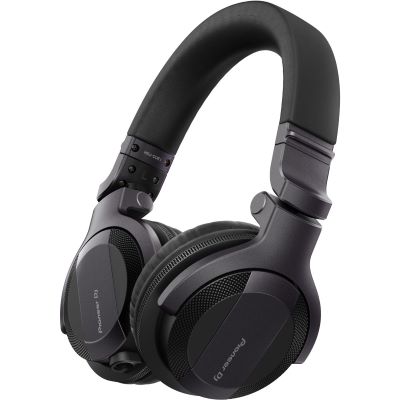
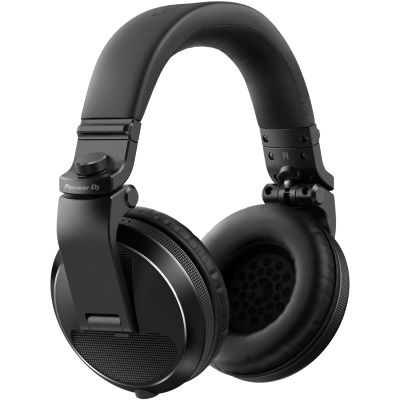
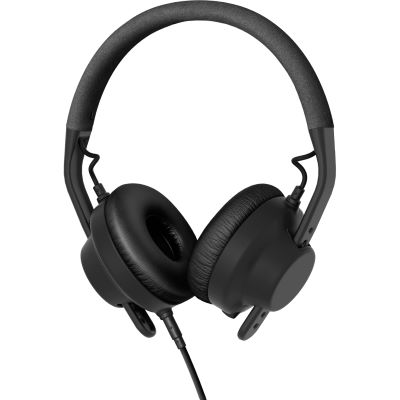
Cueing and beatmatching require reliable monitoring. Closed, durable DJ headphones therefore belong in the basic budget even when the overall setup is inexpensive.
Compact active monitors can be sufficient for a bedroom setup. Mobile event work requires a PA system designed for the room size, audience and required sound pressure.
Cables, cases, tables, stands and safe power distribution turn individual products into a setup that can be used reliably in everyday situations.
Beginner strategy: if you already own a suitable computer and usable speakers, invest most of your first budget in the controller and DJ headphones. Dedicated monitors can be added later.
These price levels are planning guidelines. An existing laptop, loudspeakers or suitable furniture can reduce the amount you need to spend. Always check the linked product pages for current prices.
| Budget | Recommended Focus | Example | Suitable For |
|---|---|---|---|
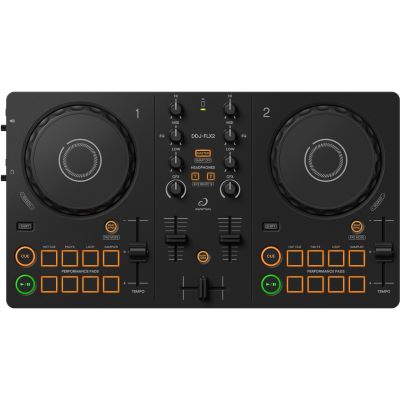
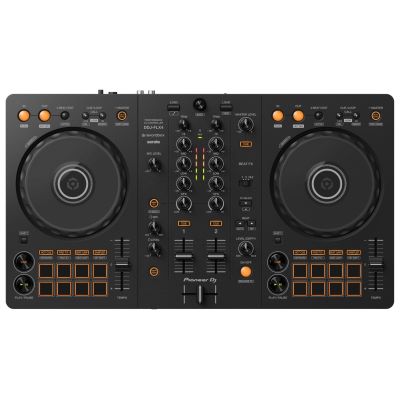
| Up to €300 | Controller + headphones | DDJ-FLX2 + HDJ-CUE1 | First mixes, home use |
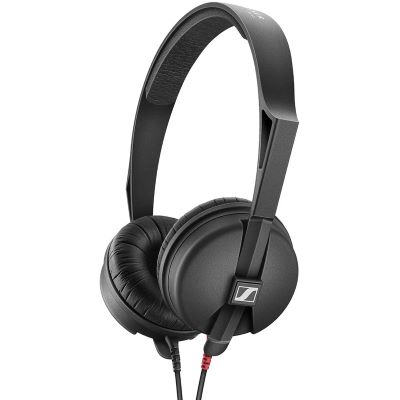
| Up to €500 | Larger controller + better headphones | DDJ-FLX4 + HD 25 Light | Regular practice and learning |
| Up to €1,000 | Controller + headphones + monitors | DDJ-FLX4 + HD 25 + DM-40D | Complete bedroom setup |
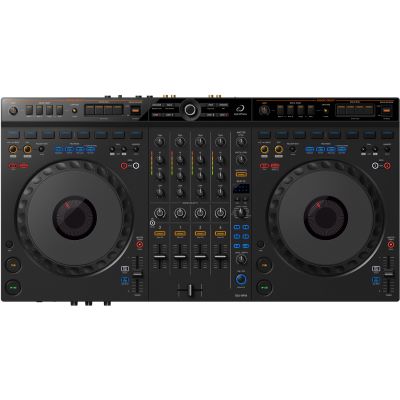
| Up to €1,500 | Performance controller or standalone | DDJ-GRV6 or SC Live 4 | Advanced DJs and events |
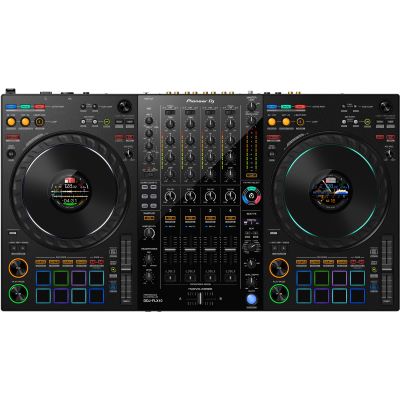
| Up to €2,500 | 4-deck performance + better monitoring | DDJ-FLX10 + HD 25 + T7V | Ambitious home and streaming setups |
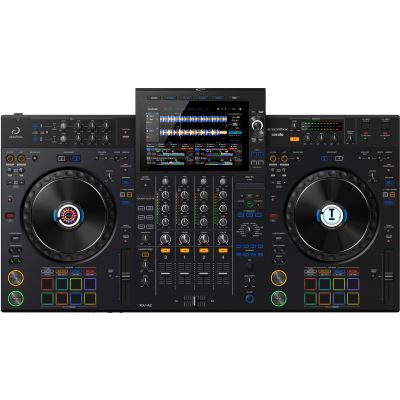
| From €4,000 | Professional all-in-one system | AlphaTheta XDJ-AZ | Club preparation and professional DJs |
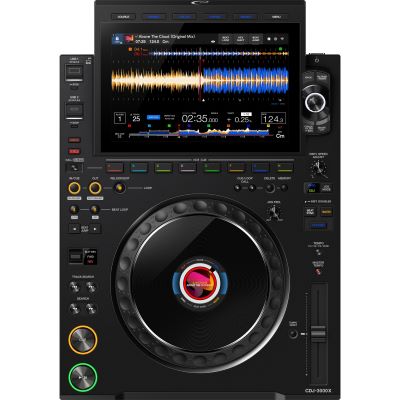
| From €8,000 | Separate players + club mixer | 2 × CDJ-3000X + DJM-A9 | Club booths, professionals and rental |
When a computer and playback system are already available, a compact two-deck controller is an efficient starting point. A DDJ-FLX2 together with an HDJ-CUE1 covers the fundamental controls and headphone monitoring without unnecessary extras.
A DDJ-FLX4 provides a more spacious control surface and room for developing a regular workflow. Combine it with dependable DJ headphones such as the Sennheiser HD 25 Light MK2.
Adding your own active monitors makes the DJ workspace independent of existing consumer speakers. A controller, reliable headphones and a compact monitor pair form a practical permanent home setup.
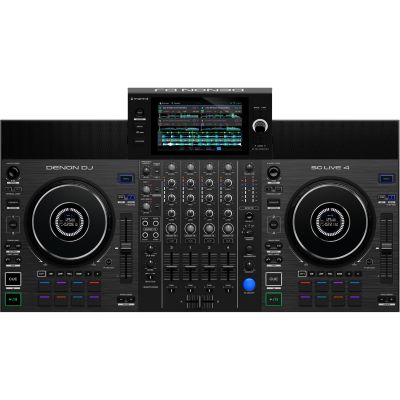
At this level you can choose between a larger computer-based performance controller and a more independent standalone workflow. The DDJ-GRV6 represents the first route, while the Denon DJ SC Live 4 represents the second.
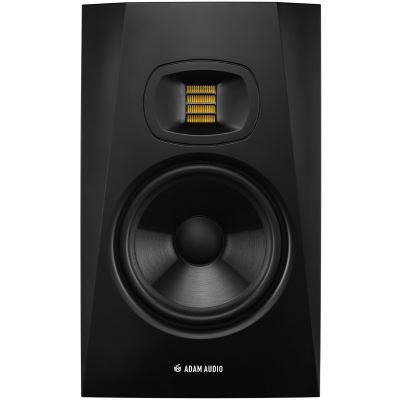
Four-deck performance, more extensive controls and stronger monitoring become realistic. A DDJ-FLX10, HD 25 and two ADAM Audio T7V monitors create a powerful home or streaming workspace.
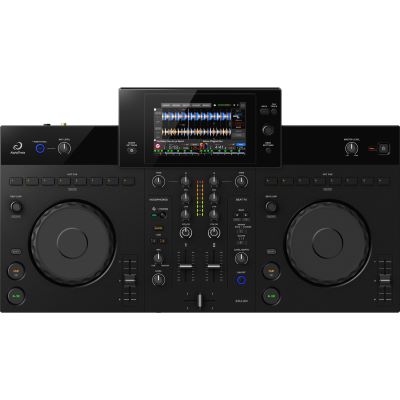
A professional all-in-one system such as the AlphaTheta XDJ-AZ combines several decks, extensive controls and a workflow that is much closer to a professional DJ booth. Remember to budget for monitoring and transport protection.
Club booths are a separate class: DJs who specifically want individual players and a dedicated club mixer can build a modular system. A DJM-A9 with two AlphaTheta CDJ-3000X players represents this type of professional configuration.
Two DJs with the same budget can require completely different equipment. Where you play, how often you transport the setup, your music source and your preferred workflow are more useful criteria than a rigid shopping list.
A controller, closed headphones and compact active monitors cover most home applications. A large PA system and heavy flight cases are usually unnecessary at the beginning.
A mobile setup needs more than the DJ system itself. PA equipment, stable furniture, cables, transport cases and often lighting all have to share the available budget.
Standalone systems or individual media players with a mixer are useful when you want your practice environment to resemble a conventional club booth.
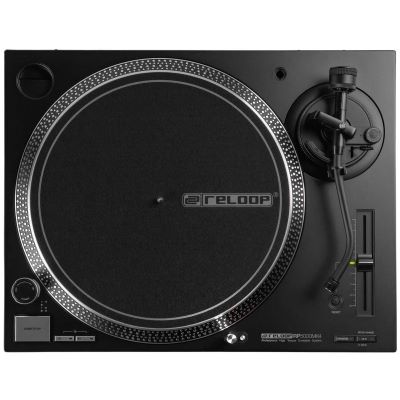
Two direct-drive turntables, a suitable mixer, cartridges and headphones form the core. Replacement styli and other wear parts should also be considered over time.
Larger controllers make sense when additional decks, layering, stems, effects and more complex transitions genuinely form part of your performance style.
Check USB connections, audio routing, inputs and outputs before purchasing so your DJ system can integrate into a streaming workflow without unnecessary additional hardware.
Open the category that solves the next real limitation in your current setup. This makes it easier to expand gradually without buying overlapping equipment.
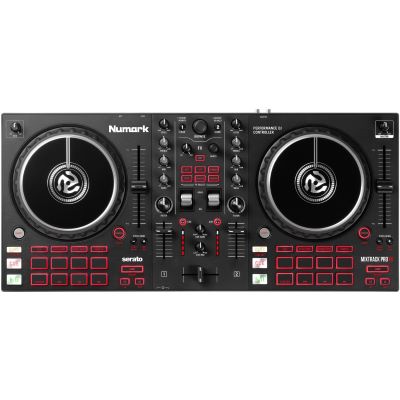
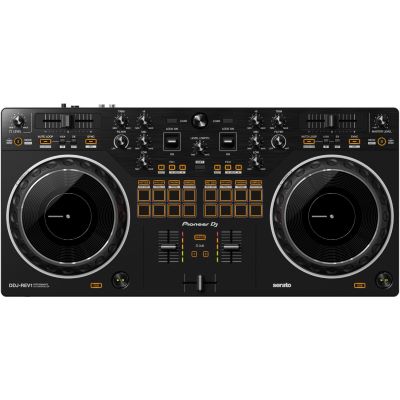
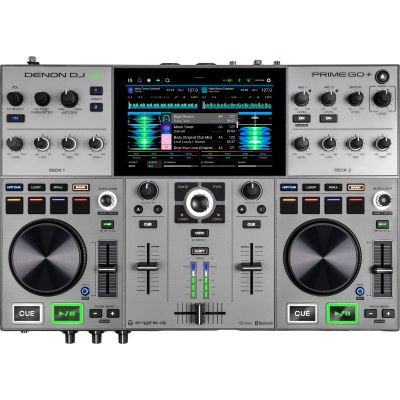
Integrated control surfaces for software-based DJ systems.
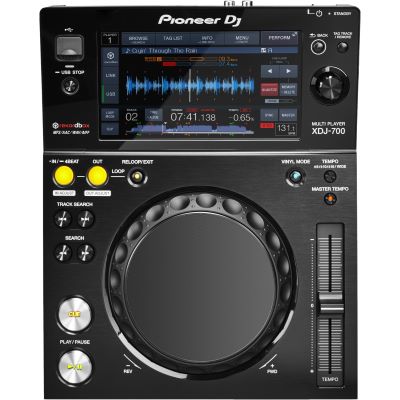
Individual players for modular and club-oriented setups.
Central mixing for media players, turntables and additional sources.
Direct-drive models are particularly relevant for DJ applications.
Cartridge systems and suitable styli for vinyl DJ workflows.
Robust closed monitoring for cueing and beatmatching.
Compact loudspeakers for home DJing, production and streaming.
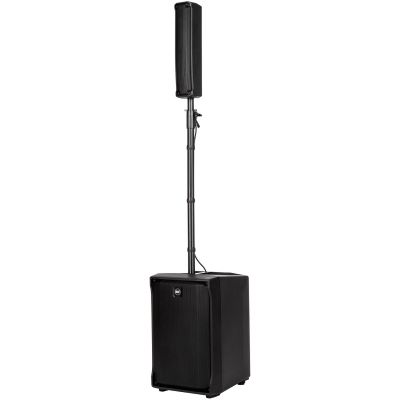
Sound reinforcement for mobile DJs, parties and professional events.
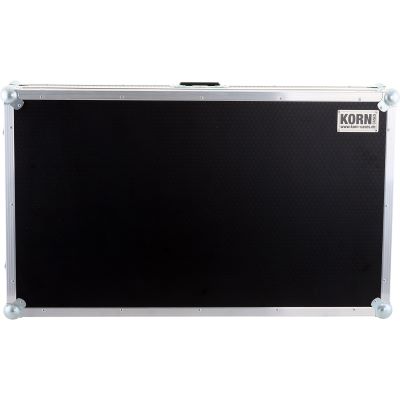
Protect controllers, players and mixers during regular transport.
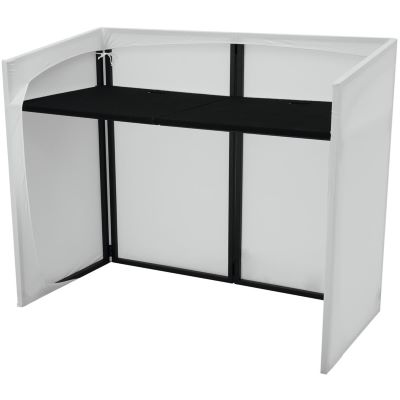
Combined protection and workspace solutions for mobile setups.
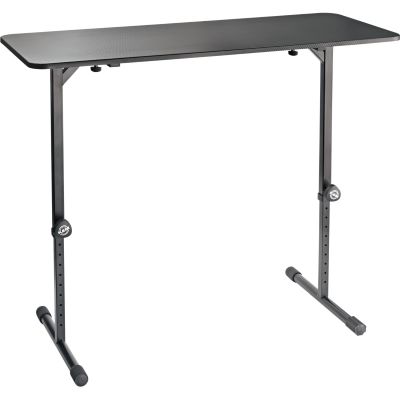
Ergonomic work surfaces for controllers and club components.
Lighting usually becomes a second expansion stage for mobile events.
The selection ranges from inexpensive controllers to standalone systems, headphones, monitors, club components, vinyl equipment and products for mobile DJs.
Price information: prices displayed below reproduce the guide snapshot dated 24 August 2026. Prices, availability and product ranges can change. Please use the linked English product page for the current offer.
Compact controllers for first mixes through to complete professional all-in-one workstations.

From affordable beginner monitoring to professional headphones for regular club and event use.
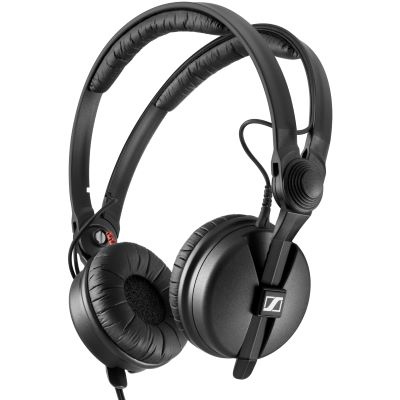
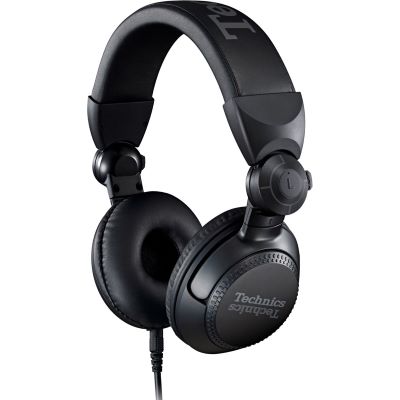
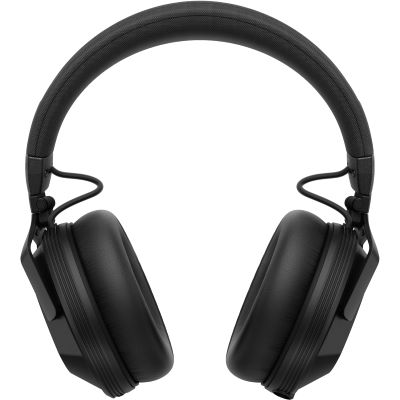
Compact stereo systems and larger individual monitors for different room sizes and listening distances.
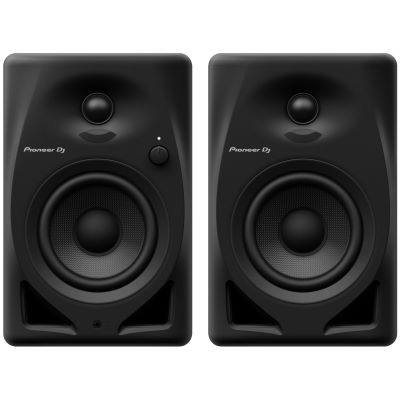
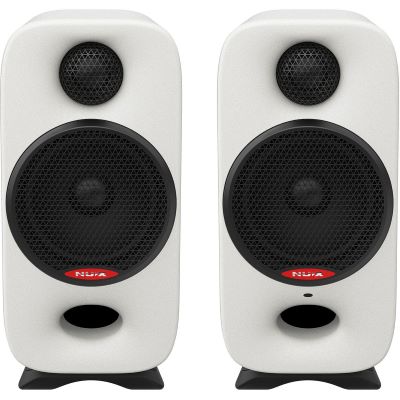
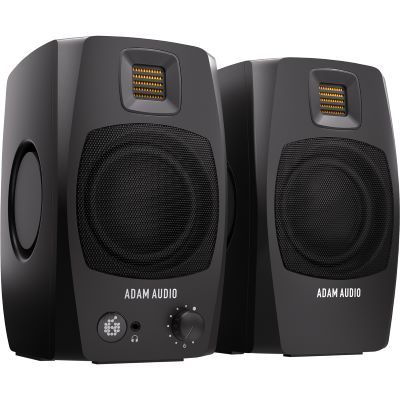
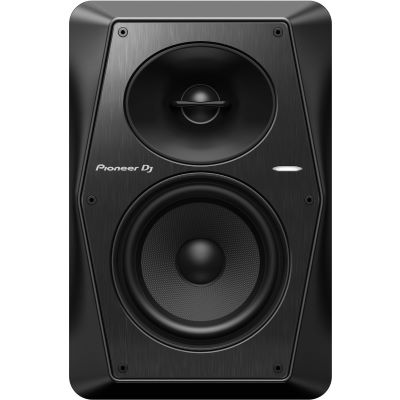
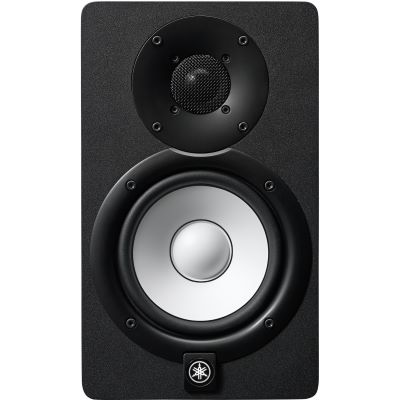
Components for club-style workflows and DJs who intentionally prefer individual devices rather than one integrated controller.
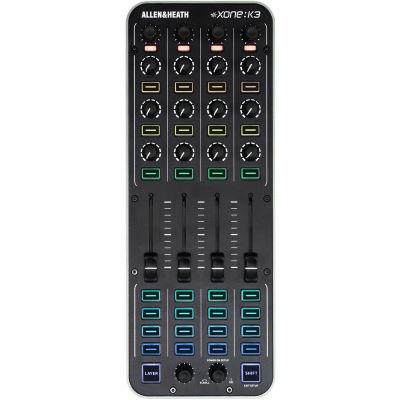
These investments become important when your DJ system regularly leaves the home or studio.
A vinyl budget is distributed differently because you need two turntables, a mixer, two cartridges and headphones before the basic two-deck workflow is complete.
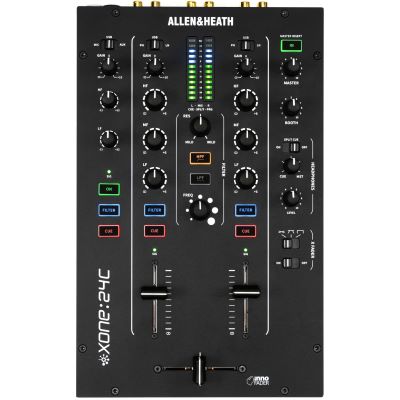
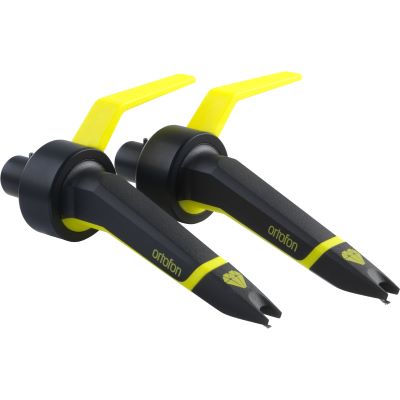
A representative configuration can combine two Reloop RP-5000 MK4 turntables, an Allen & Heath Xone 24C mixer, an Ortofon Concorde Twin Club MKII cartridge set and Sennheiser HD 25 headphones.
Records, replacement styli, slipmats, furniture, cases and monitoring may add further costs. Hybrid DJs who combine digital and vinyl sources should pay particular attention to the available mixer inputs and outputs.
At weddings, birthday parties and corporate events, the controller or standalone system is only one part of the investment. Sound reinforcement, transport and a repeatable setup become equally important.
Choose sound reinforcement according to room size, audience, event type and future expansion requirements. Larger systems may additionally require subwoofers.
Cases and bags protect controllers, mixers and players and make recurring setup and teardown easier to organise.
A stable DJ table or Mix Station provides an appropriate working height and creates a cleaner, professionally organised event setup.
When the DJ system and PA are reliable, the next available budget can go into fixtures, effects and lighting control.
Budget rule for mobile DJs: an expensive controller cannot compensate for inadequate PA, unsafe transport or incomplete cabling. Budget for the complete event system rather than just its central DJ device.
Even excellent equipment can become unnecessarily expensive when it does not fit the rest of the system and requires additional adapters, interfaces or replacement cables.
Before buying, compare the master outputs on the DJ system with the available inputs on your monitors or PA. Balanced connections are particularly useful for many professional and mobile applications.
Plan the complete signal path: source → mixer or controller → master output → cable → monitor or PA input.
Guide status: 24 August 2026. Product ranges, technical specifications and prices may change. The linked product pages contain the current shop information.
From controller and player specialists to monitoring, vinyl equipment and individually manufactured cases, these brand areas provide useful routes for expanding an existing DJ setup.








Four decks provide little benefit when the immediate goal is simply to learn clean transitions and basic mixing.
Reliable DJ headphones are a working tool rather than an optional accessory.
Home and studio monitors are designed for a different application than sound reinforcement for an event.
Mobile DJs should budget for cases, cables and a practical workspace from the beginning.
Workflow, connectivity and actual application are more important than the logo printed on the equipment.
If your DJ workspace also needs to handle recording, music production or more complex computer routing, the studio guides provide additional decision paths for monitors, interfaces, computers and complete production workspaces.
If you already have a suitable laptop and speakers, a controller and DJ headphones can provide a useful starting point below €300. A larger budget allows you to add dedicated active monitors and build a more independent home workspace.
Yes. Standalone DJ systems and media players can operate without the conventional controller-and-laptop workflow. Denon DJ SC Live 4 and AlphaTheta XDJ-AZ are examples of this approach.
A controller is usually a cost-effective way to start when a suitable computer is already available. Standalone systems reduce dependence on the computer and provide a more self-contained DJ workspace.
Yes. Two decks are sufficient for learning transitions, beatmatching, EQ control, cueing and creative basic mixes. Additional decks become valuable when you deliberately work with extra tracks, loops or more complex layering.
Not necessarily. You can begin with headphones and an existing playback system. Dedicated active monitors become particularly useful once you mix regularly and establish a permanent DJ workspace.
Include the controller or standalone system, PA, transport protection, cables, a table or workstation and, where required, lighting. A dependable complete system is more useful at an event than one premium component surrounded by inadequate accessories.
A conventional two-turntable system requires two direct-drive turntables, a mixer, two cartridges and DJ headphones. Monitoring, furniture, records, replacement styli and cases can add to the total.
Upgrade the component that currently limits your workflow. Depending on the application, that may be better headphones, dedicated monitoring, additional inputs and outputs, a standalone system or a stronger PA for mobile work.
It is particularly relevant when you specifically need to practise a modular player-and-mixer workflow or use the equipment professionally. For general learning at home, a capable controller often provides considerably more functionality for the same budget.
Avoid spending every euro on the main device. Cables, bags, cases, stands, furniture and other small accessories can increase the final cost. A reserve is particularly useful when building a mobile setup.
The right DJ setup begins with the actual application. Beginners who already own a suitable laptop can start with a controller and dependable DJ headphones. Active monitors become a useful next step when a permanent home DJ workspace is established. Advanced DJs can then move toward larger performance controllers or standalone systems.
Mobile DJs have different priorities because PA systems, cases, furniture, cabling and lighting become part of the overall setup. Vinyl DJs need two turntables, a mixer, cartridges and consumable parts. Professional club systems often use individual media players together with a separate DJ mixer. The most effective budget is therefore the one allocated to the workflow you genuinely need.
Discover the central Musikhaus Korn buying guide with additional topics covering musical instruments, studio equipment, recording, DJ equipment and event technology.