What Will Be Reproduced?
Speech, background music, DJ music and a complete live band place different demands on loudspeakers and subwoofers.

How large does your PA system need to be? For 50 guests, a compact solution is often sufficient, while with 100 or 200 people, bass reserve, dispersion and overall system performance become considerably more important. For 500 people, the entire coverage area should be planned.
This guide provides practical starting points for speech, weddings, DJ events and live bands and explains why audience size alone is not enough to select the right PA.
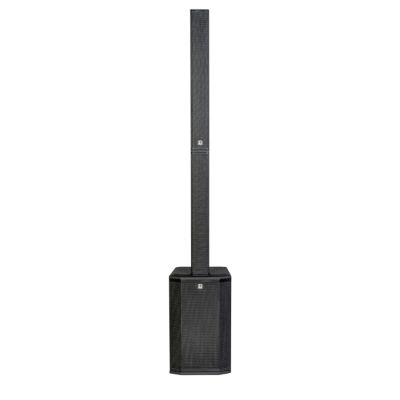
Two events with 100 guests can have completely different requirements. Speech at a conference primarily requires intelligibility. A DJ party additionally needs powerful bass and considerably more dynamics. A live band also needs a mixer, microphones and monitoring.
Speech, background music, DJ music and a complete live band place different demands on loudspeakers and subwoofers.
A compact hall is easier to cover evenly than a long room, marquee or large outdoor area.
A subwoofer is usually unnecessary for a speech. For DJs, dance music, kick drum and electric bass, the low-frequency foundation becomes much more important.
Outdoors, supportive room reflections are absent. Longer distances and wind can therefore require additional performance and coverage reserve.
Practical rule: do not size a PA so that it has to operate permanently at its limit during a normal event. Sufficient reserve produces more relaxed sound and gives dynamic signal peaks additional headroom.
The following setups are deliberately intended as starting points. The next question is whether the system will mainly reproduce speech, dance music or a live band.
A large sound reinforcement system is usually unnecessary for a small celebration, wedding ceremony, presentation or acoustic performance. Two compact active speakers or a capable column PA system provide a flexible basis.
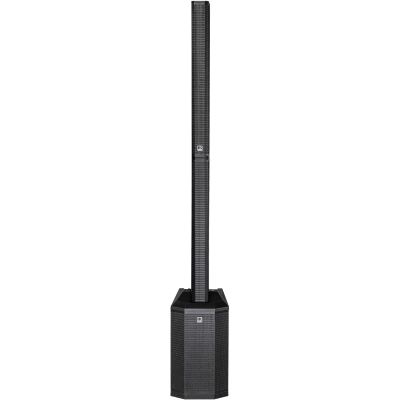
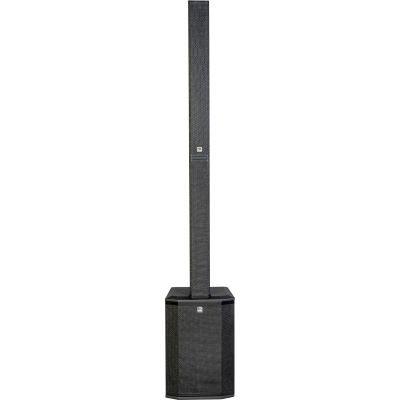
At around 100 people, requirements vary more strongly according to the type of event. For a conference, two good 10- or 12-inch active speakers can be sufficient. For a dance floor, an additional subwoofer should be included.
Powerful column systems are also interesting when fast setup and discreet appearance are more important than maximum modular expandability.
For 200 guests, a classic modular PA becomes particularly attractive. Two capable 12- or 15-inch tops provide mids, highs and useful reach. For DJ or live music, one or two subwoofers add the required low-frequency reserve.
In long rooms, an additional speaker position can be more useful than simply generating more level from the stage.
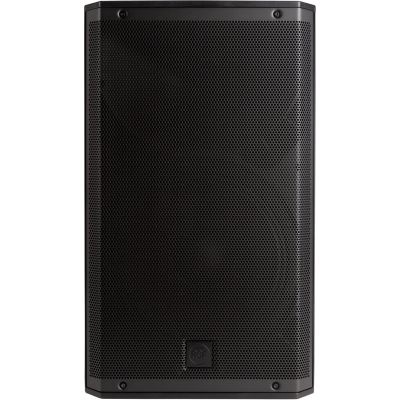
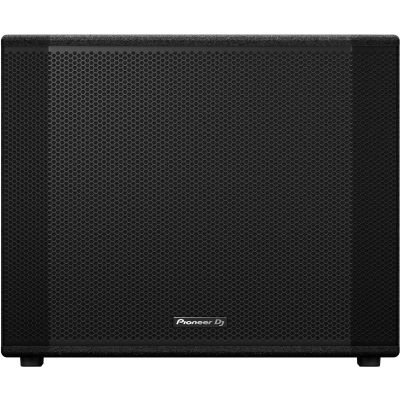
At around 500 guests, the PA should no longer be selected solely through a simple audience formula. Five hundred seated listeners place fundamentally different demands on the system from a loud outdoor party with the same number of visitors.
For a one-off large event, renting event equipment can be more economical because the complete system can be matched to the actual stage and audience area.
The figures are intended as guidance for typical mobile events.
| Guests | Speech | DJ / Party | Band | Typical System Idea |
|---|---|---|---|---|
| 50 | 1–2 compact tops | 2 tops + sub optional | 2 tops + mixer | Column PA or small active system |
| 100 | 2 capable tops | 2 tops + 1 sub | 2 tops + sub + monitoring | Powerful stereo or column system |
| 200 | High-performance tops | 2 tops + 1–2 subs | 2 tops + 2 subs + monitoring | Modular 2.1 / 2.2 PA |
| 500 | Plan the complete area | Scalable system with several subs | Professional system planning | Main PA + possible fill / delay systems |
Electrical wattage alone does not tell you how loudly a loudspeaker can actually play. Achievable sound pressure and speaker efficiency are at least as important for practical performance.
A speaker with wide horizontal dispersion covers a different area from a more narrowly focused system. Stage width, room depth and audience position should therefore be considered together.
The subwoofer handles energy-intensive low frequencies. This allows the tops to concentrate more strongly on mids and highs, which is particularly relevant for DJ and band setups.
Modern active speakers combine amplifier, DSP, limiter and loudspeaker as one coordinated system. Two products with similar electrical power can therefore differ in useful range and maximum level.
For 500 people, intelligently distributed sound can work better than two extremely loud speakers beside the stage. Controlled distribution becomes especially important across long or wide areas.
Plan the system so normal operation does not permanently sit on the limiter threshold. This helps preserve intelligibility, dynamics and control when music or moderation briefly becomes louder.
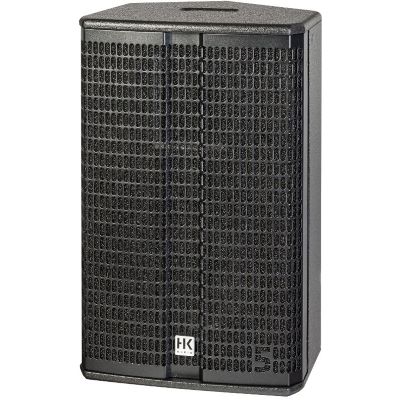
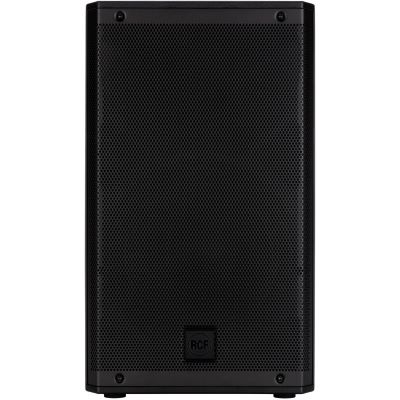
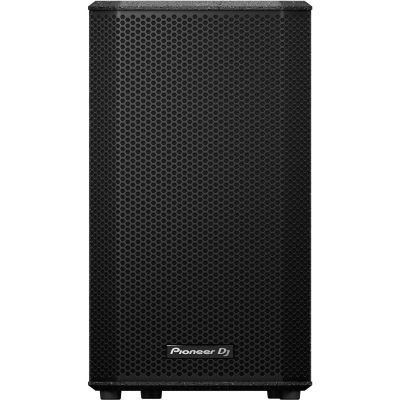
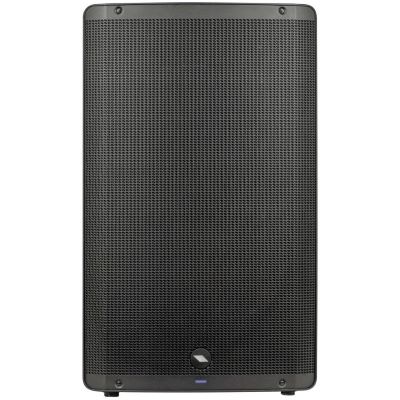
The audience size a single product can cover always depends on the complete setup. The following products represent suitable building blocks for different event concepts.
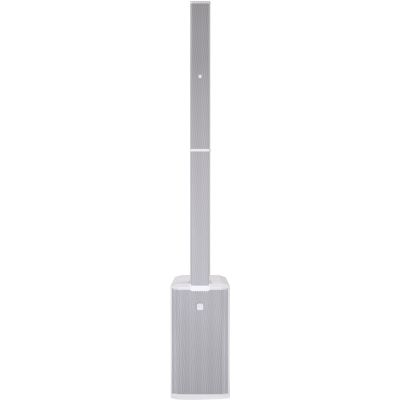
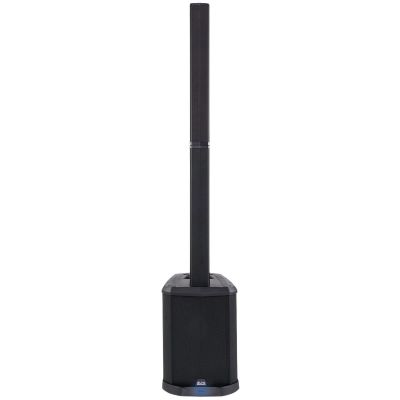
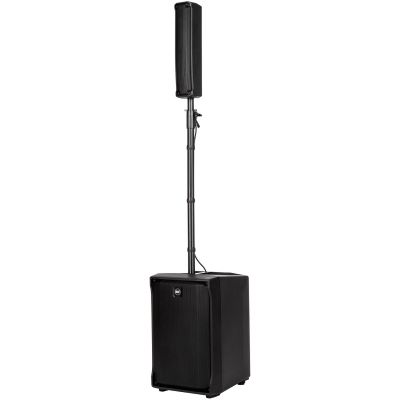
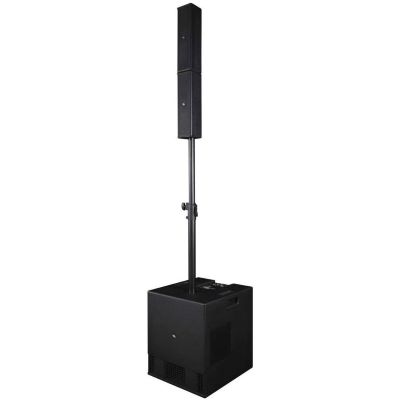
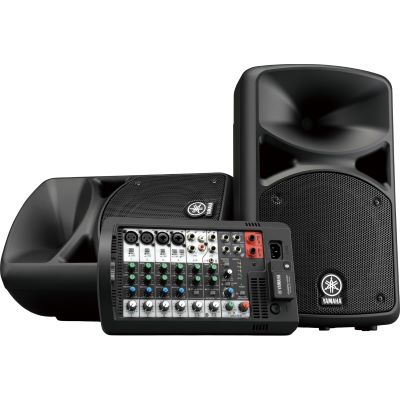
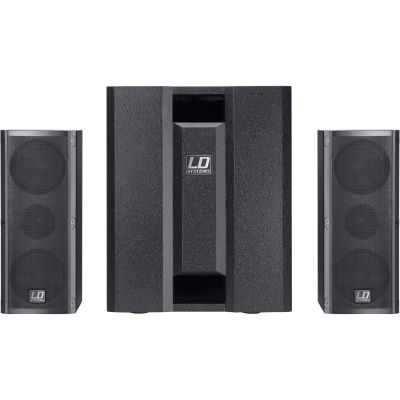
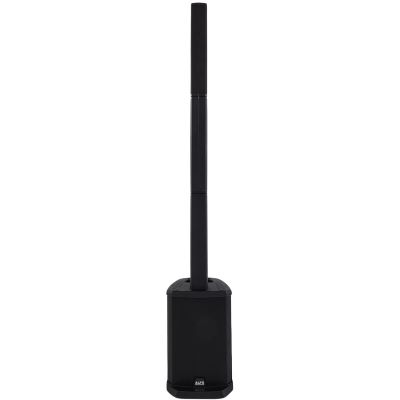
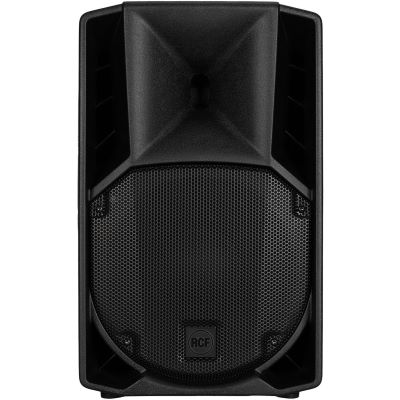
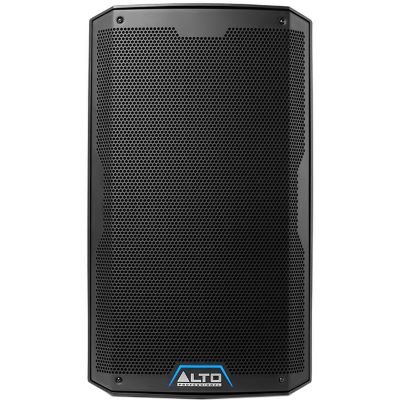
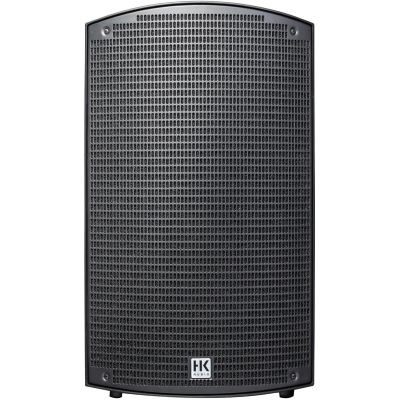
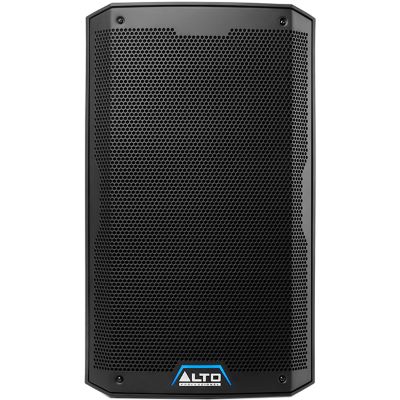
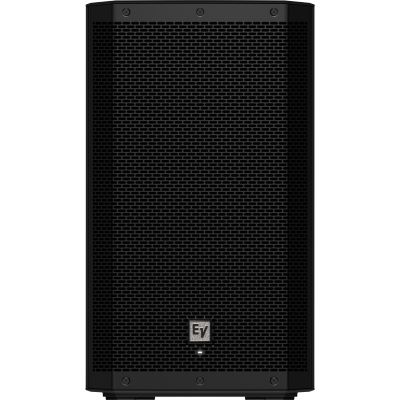
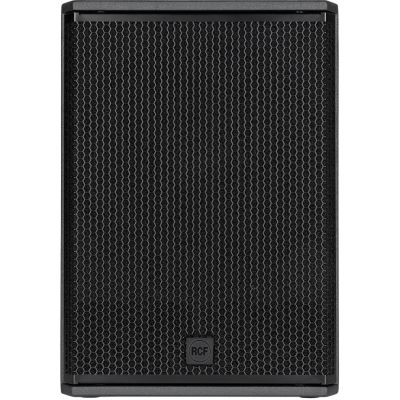
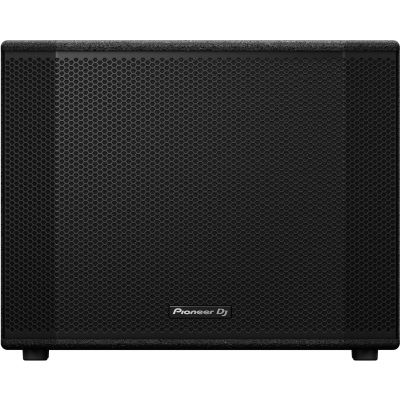
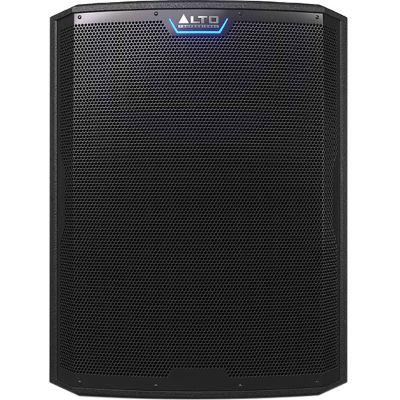
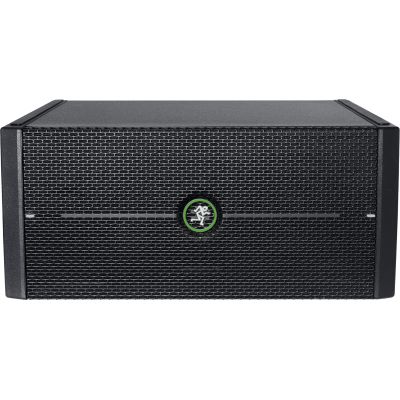
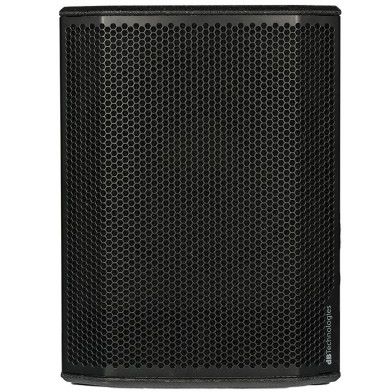
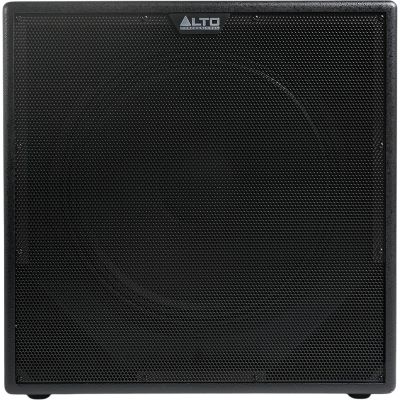
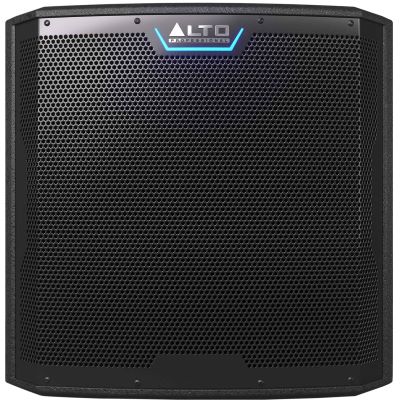
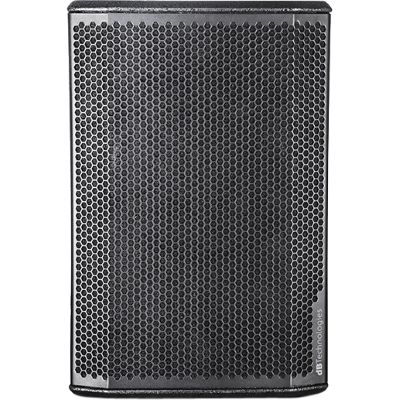
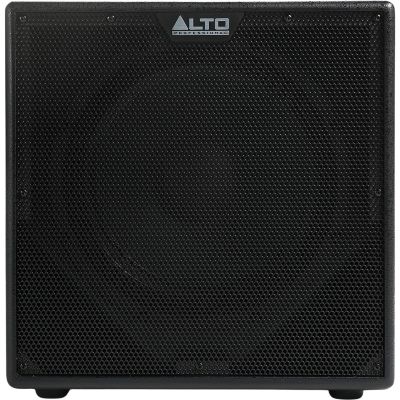
The high-frequency section should ideally project above the heads of the first rows so the sound is not blocked directly by people standing in front of the speaker.
Avoid sending unnecessary sound towards walls or the stage. Correct aiming improves clarity and reduces avoidable reflections.
Front speakers should ideally stand in front of the microphone line. This reduces the chance of amplified sound feeding back into open microphones.
In deep rooms or with several hundred guests, additional speaker positions can create more even sound reinforcement.
A small mixer is sufficient for two microphones. A live band needs enough inputs, monitor paths and reserve for additional instruments.
Vocals, moderation and speech have different requirements. Wireless microphones provide additional freedom of movement.
Active stage monitors or in-ear systems provide live musicians with a separate monitor signal.
Stable speaker stands and sufficiently long XLR and power cables are part of the basic equipment for a mobile PA.
The manufacturer pages provide additional speakers, subwoofers, complete systems and matching accessories from brands represented in the product selection.








For speech and moderate music, a compact column system or two small active tops are a good starting point. For a DJ party, an additional subwoofer can be useful.
Two capable tops or a high-quality stereo column system are flexible solutions. For the later dance floor, provide enough bass reserve or add a subwoofer.
Not necessarily for speech. For DJ music, dance events or live music with kick drum and bass, a subwoofer significantly improves the low-frequency foundation.
For music, a modular system with two powerful tops and one or two subwoofers is a useful starting point. Room size and required level must also be checked.
This depends on music style, subwoofer size and desired level. One powerful sub can be sufficient for moderate applications; two subs often provide DJs and bands with additional reserve and more flexible positioning.
For 500 people, do not automatically assume that two speakers are sufficient. Audience area, distance, required level and type of event determine whether additional tops, subwoofers or delay speakers are needed.
There is no reliable watts-per-person figure. Maximum sound pressure, efficiency, dispersion, number of speakers and their spatial distribution are more important for planning.
Powerful column systems can cover medium-sized events very well in suitable applications. For particularly loud and bass-heavy music, a modular top-and-sub system is often more flexible to expand.
Plan additional reserve outdoors and evaluate the actual area. Safe power supply, protected equipment and stable speaker placement also need to be considered.
Rental can be useful for one-off larger events, open-air productions or complex audience areas. The PA can then be selected specifically for the actual venue.
For larger events, the room, stage, audience area, monitoring and desired level become decisive. Musikhaus Korn can help with the configuration of an appropriate PA system.
For approximately 50 people, a compact PA or column system may already be the correct solution. With 100 guests, two capable speakers form a flexible basis that can be expanded with a subwoofer for dance music.
At around 200 people, a modular top-and-sub system becomes significantly more important. For 500 people, the complete audience area should be planned instead of selecting the PA purely by guest count.
The application remains decisive: speech primarily requires good intelligibility and even dispersion, while DJs and bands demand considerably more low-frequency energy and dynamic reserve. Mobile users should also include transport weight, stands, cables, cases, mixer and monitoring in the system from the beginning.
Discover further buying guides, comparisons and complete project routes covering musical instruments and event technology.