Prefer 88 Weighted Keys
For a long-term piano-learning path, a weighted 88-key keyboard is a very good starting point. If the child later plays an acoustic piano, there is no need to first become accustomed to a completely different keyboard range.

Does a child really need 88 keys? Is hammer action too heavy? How high should the piano bench be, and what can you do if the child's feet or the pedals are still out of reach? When choosing a first digital piano for a child, body size, learning goal and an ergonomic practice position are more important than the longest possible list of features. This guide takes parents step by step towards a suitable piano for lessons and home practice.
If a child begins regular piano lessons, the instrument should provide a good foundation for future playing technique. A smaller body does not automatically mean that a shorter keyboard is required. It is much more important that the bench, keyboard height, feet and pedals can be arranged to suit the child.
For a long-term piano-learning path, a weighted 88-key keyboard is a very good starting point. If the child later plays an acoustic piano, there is no need to first become accustomed to a completely different keyboard range.
A lighter keyboard can be motivating for a child's first musical discoveries. If regular piano lessons are already planned, compare it directly with a fully weighted piano action.
A compact piano on a stable stand saves space. The bench, pedal and stand must then be adjusted together so that the child reaches a natural and stable playing position.
A traditional piano has 88 keys. The entire range is not required for a child's first songs, but a full keyboard can still make sense because note positions, octaves and distances are learned on the same range used later.
The piano should detect how strongly a key is played. This helps the child learn not only to play the correct notes but also to control volume and expression directly with the fingers.
A good weighted action should provide resistance without forcing the child into tense playing. This is why trying the instrument is important. Whether the child can play softly and reach several notes while remaining relaxed matters more than the name of the keyboard mechanism alone.
A lighter feel can be comfortable for very young players. For classical lessons, however, remember that a semi-weighted keyboard can feel considerably different from a typical piano hammer action.
Many problems that are blamed on a digital piano being “too large” are actually caused by an unsuitable sitting position. A normal kitchen or desk chair should therefore not simply replace a suitable piano or keyboard bench.
The shoulders should remain relaxed and the forearms should reach the keys without strong bending at the wrists. An adjustable bench can grow with the child more easily.
If the legs hang freely in the air, the child lacks a stable base. A suitable footrest can help until the floor can be reached comfortably from the correct sitting height.
The right damper or sustain pedal becomes increasingly important during lessons. If a child cannot yet reach a fixed pedal unit sensibly, coordinate an alternative solution with the teacher.
The music should remain clearly visible without the child having to keep the head strongly lowered or turned. A fixed music rest helps create a tidy and ergonomic practice position.
The base and pedals remain permanently assembled. The instrument is always ready to play and creates a fixed learning position. This simplicity can be a major advantage when regular practice is the goal.
A compact 88-key instrument is easier to move and often requires less depth. A stable stand and a suitable bench must nevertheless be included in the planning of the complete learning position.
Some digital pianos deliberately use a shallower or lower cabinet. This can be useful in small rooms and for younger players. Bench and pedal positions still need to be checked together with the instrument.
Prioritise the functions that directly influence playing technique, posture and everyday practice.
| Feature | Priority | Why? |
|---|---|---|
| 88 Keys | High for Piano Lessons | Complete range without changing to a larger keyboard later |
| Touch Sensitivity | High | Learn to control soft and loud notes |
| Hammer Action | High for Classical Learning | Pianistic keyboard feel |
| Adjustable Bench | High | Adapt the sitting position as the child grows |
| Headphones | Very Practical | Flexible practice times |
| Metronome | Useful | Train steady timing |
| Recording | Useful | Listen back to progress and playing |
| Bluetooth / App | Optional | Additional learning and convenience functions |
A built-in metronome helps the child gradually stabilise tempo and rhythm without requiring an additional device on the piano.
Some instruments can divide the keyboard into two identical pitch ranges. Teacher and child can then play next to one another in the same register.
Short recordings make progress audible. The child can listen back and recognise whether rhythm and dynamics are already becoming more consistent.
Learning programs can add variety and motivation to practice sessions. They should complement rather than replace a suitable keyboard and a good teaching path.
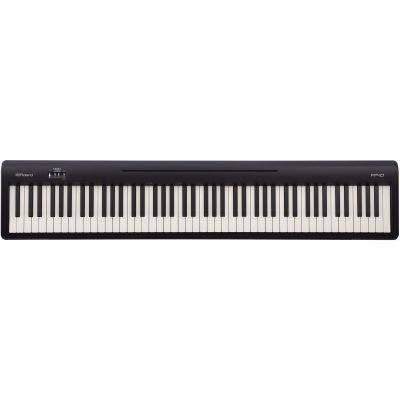
The following examples range from a compact, semi-weighted home instrument to weighted portable pianos and permanently installed family digital pianos.
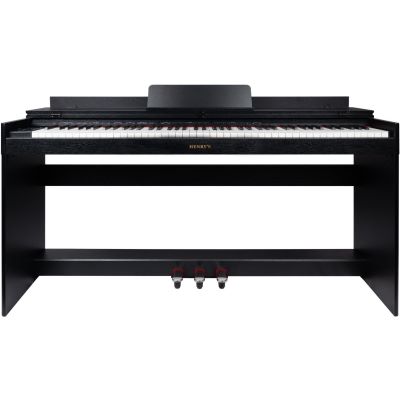
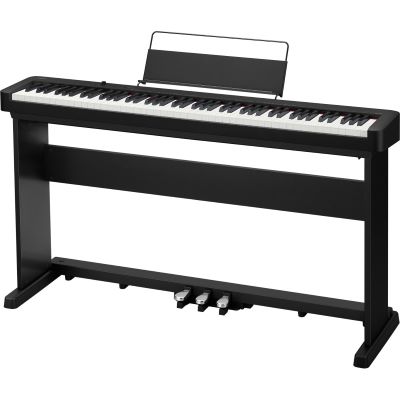
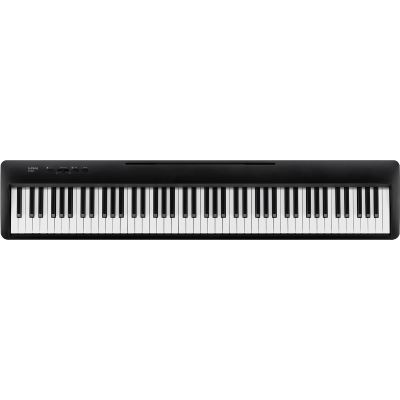
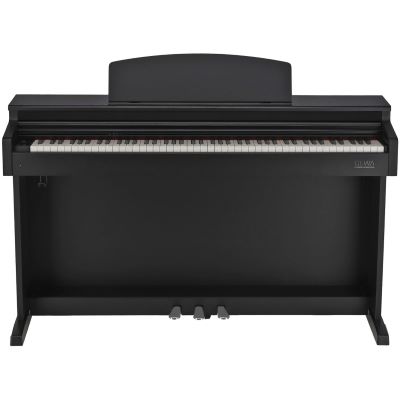
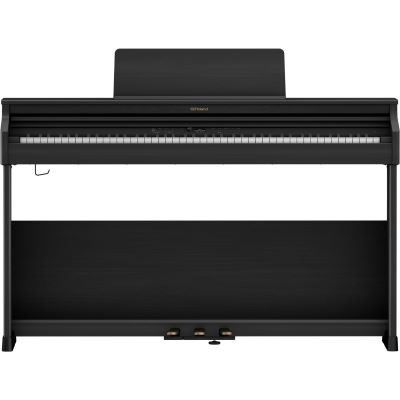
The selection is grouped by task. A home digital piano, for example, does not need a separate stand, while a portable piano only becomes a complete learning position when stand, bench and pedal have also been considered.
Two children of the same age can differ considerably in size. The learning goal, playing position and ability to adjust the workspace are more important.
A compact learning instrument can be enjoyable, but it is not automatically a replacement for the keyboard used during regular piano lessons.
If the sitting height is wrong, hands and shoulders are placed in an unfavourable position. An adjustable bench is therefore an important part of the complete piano setup.
For piano lessons, keyboard action, sound, pedals and sitting position are more important than hundreds of sounds or sophisticated accompaniment programs.






Let the child play several digital pianos. Compare the same simple melody, individual quiet notes and small chords. At the same time, test bench height and pedal position. This makes it much easier to judge which instrument actually suits the family's everyday learning routine.
Compare home, slim and family digital pianos by keyboard, speakers and features.
Discover flexible 88-key solutions for small rooms, lessons and occasional transport.
Discover learning keyboards with lighter keys, rhythms and automatic accompaniment as an alternative way into the world of keyboard instruments.
Add benches, stands, pedals, bags and additional accessories to create a complete and ergonomic practice position.
A digital piano for children should not simply be as small as possible; it should be adjustable to the child in a sensible way. For classical piano lessons, 88 keys, touch sensitivity and a suitable weighted action provide a long-term foundation. For smaller players, an accurately arranged learning position with the correct bench height, stable foot position and sensibly reachable pedals is even more important.
A permanently installed home digital piano provides a practice position that is always ready to use. A portable piano is particularly useful when little space is available or when the instrument occasionally needs to be transported. Headphones, a metronome, recording functions and learning apps can make practice easier. The best choice remains the instrument on which the child can sit comfortably, enjoys playing and can continue to develop musically over several years.
From musical instruments and home-studio equipment to DJ and event technology, find more step-by-step buying help in the central Musikhaus Korn guide.