Musikhaus Keks
Welcome!
Our cookies offer you a fast, relaxed and full-featured shopping experience. Some are necessary to operate the website and its functions. Others help us to improve our services. If you agree to this, simply consent to the use of cookies for preferences, statistics and marketing by clicking on "OK". Alternatively, you can deactivate individual cookies under "Customise cookies" or all cookies, except those required for the function of our website, under "Reject all".
Musikhaus Korn Studio Guide

Using Absorbers, Diffusers & Bass Traps Correctly in the Home Studio

Good room acoustics do not mean covering as many walls as possible with foam. Absorbers reduce unwanted reflections, diffusers distribute reflected sound through the room and bass traps address low-frequency problems. This guide explains which acoustic element solves which problem and how to treat your home studio step by step.

Absorption explained clearly Treat bass problems deliberately For recording and mixing
Absorb Reduce reflections and reverberation
Diffuse Distribute reflection energy spatially
Bass Control low-frequency energy
First Optimise speakers and listening position
The quick answer

What Is the Difference Between an Absorber, Diffuser and Bass Trap?

All three influence sound inside the room, but they perform different jobs. Start with the acoustic problem and only then choose the appropriate treatment.

Reduce Reflections

Absorbers Remove Sound Energy from the Room

Acoustic absorbers reduce reflected sound. They can help control unwanted first reflections, flutter echo and excessive reverberation. Broadband absorbers are commonly used on side walls, ceilings or rear walls.

Distribute Sound

Diffusers Scatter Reflections in Many Directions

A diffuser is not primarily intended to absorb sound. It redistributes reflected energy spatially. This can preserve a sense of liveliness while breaking up strong directed reflections.

Control Low Frequencies

Bass Traps Work in the Low-Frequency Range

Bass traps are designed to address low-frequency energy and room resonances. Small studios can produce strong bass peaks, cancellations and notes that decay for too long. Thin wall absorbers are normally not sufficient for these problems.

Important distinction: room acoustics are not sound insulation.

Absorbers, diffusers and bass traps change how sound behaves inside the room. They do not automatically prevent music, drums or bass from being transmitted into adjoining rooms. Constructional sound insulation is a separate task.

From an audible problem to the correct treatment

Which Acoustic Measure Does Your Room Need?

Do not begin by looking for empty wall space. Listen first to what actually interferes with recording or mixing.

Reverb & Flutter Echo

The Room Sounds Hard and Unsettled

If clapping produces a metallic ringing or a rapid echo between parallel surfaces, broadband absorption at deliberately selected locations is often an appropriate first step.

Stereo Imaging

Instruments Are Difficult to Locate

Early reflections from side walls, the desk and ceiling overlap with the direct sound from the monitors. Absorption at relevant first-reflection zones can make the stereo image more stable.

Bass

Individual Bass Notes Boom or Disappear

This often indicates room modes combined with an unfavourable loudspeaker or listening position. Optimise placement first, then consider treatment that is genuinely effective at low frequencies.

Too Dry

The Room Sounds Dull and Lifeless

Too much thin absorption can mainly remove treble and upper-mid energy. Diffusion or combined solutions can preserve spatial energy without recreating strong, directed reflections.

Understand the acoustic principles

How the Three Tools Work Differently

A useful room treatment combines the appropriate measures rather than attempting to treat every frequency range with the same material.

Absorption

Less Reflected Sound

Porous absorbers typically contain material in which moving air is slowed inside many small cavities. Part of the acoustic energy is converted into heat and less energy is reflected back into the room.

Very thin materials mainly affect higher frequencies. If they are used exclusively, the room can become dull at the top while low mids and bass remain problematic.

Greater material depth can extend porous absorption towards lower frequencies. A suitable air gap between absorber and wall can also increase the useful range.

Diffusion

Break Up Reflections without Simply Removing Them

A smooth wall returns sound in a comparatively directed way. A correctly dimensioned diffuser distributes the incoming energy over different directions and path lengths.

This can retain a sense of space while reducing hard, strongly directed reflections.

Diffusion requires sufficient distance. If the listening position is very close to the structure, individual parts of the diffuser can become more noticeable than intended.

Bass Treatment

Control Energy Where Small Rooms Become Difficult

Low frequencies have long wavelengths. Reflections between walls, floor and ceiling create standing waves and room modes.

At one listening position, a frequency can become very loud while another is strongly cancelled.

Broadband bass absorption generally requires substantially greater depth than conventional wall treatment. Tuned resonant designs can additionally target specific frequency ranges.

Useful rule when choosing treatment:

Removing high-frequency energy with thin material is easy. Controlled broadband absorption and effective bass treatment require considerably more acoustically active volume.

Corners are common starting points for bass treatment.

Several room boundaries meet in corners, which is why they are often useful locations for substantial low-frequency treatment. The optimum position still depends on the individual room and the actual frequency problem.

Use a deliberate sequence

Where Should Absorbers, Diffusers and Bass Traps Be Positioned?

Begin with the loudspeakers and listening position. Acoustic treatment cannot completely repair an unsuitable basic monitoring layout.

Align the Monitors and Listening Position

Position the left and right loudspeakers as symmetrically as reasonably possible and aim them towards the listening position. Avoid arbitrary wall distances and strongly asymmetrical furniture layouts.

Control First-Reflection Zones

Side walls and the ceiling between the monitors and listening position are typical areas. The mirror method is a practical way to identify lateral first-reflection points.

Evaluate Bass and Room Corners

Booming, long low-frequency decay and large tonal changes while moving around the room indicate low-frequency problems. This is when bass treatment becomes important.

Balance the Rear Wall and Remaining Surfaces

In small rooms, stronger absorption on the rear wall can be useful. When sufficient distance exists between the listener and rear wall, diffusion may also become an interesting addition.

Change one area at a time.

Listen to the same familiar reference recordings after every significant change. This makes it much easier to identify which measure genuinely improved the room.

Direct comparison

Which Acoustic Element Solves Which Problem?

Comparison of absorbers, diffusers, bass traps, reflection filters and monitor isolation pads
Element Main Task Typical Areas Particularly Useful For Keep in Mind
Broadband Absorber Reduce reflections and reverberation Side walls, ceiling, rear wall Mixing, recording and flutter echo Avoid absorbing only high frequencies
Diffuser Scatter sound spatially Often rear wall or rear area of the room Larger studios and listening rooms Allow sufficient listening distance
Bass Trap Control low-frequency energy Corners, rear wall and wall/ceiling junctions Booming and long bass decay Provide sufficient depth or effective volume
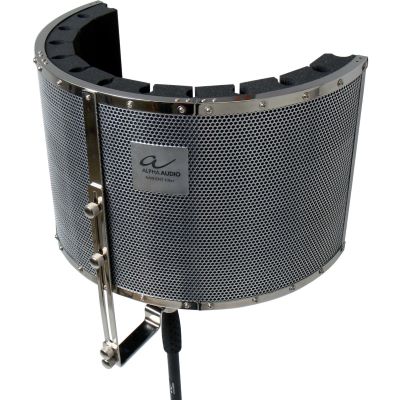
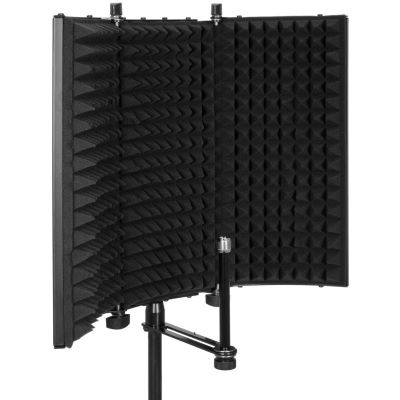
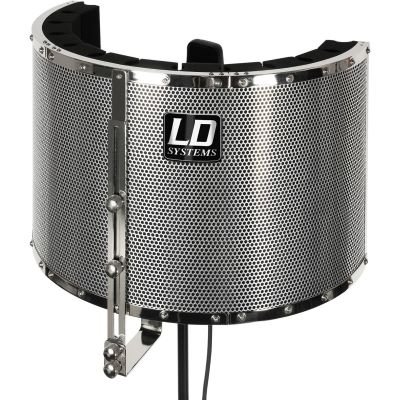
Reflection Filter Locally reduce microphone reflections Directly behind and beside the microphone Voice-over, podcasting and vocals Does not replace complete room treatment
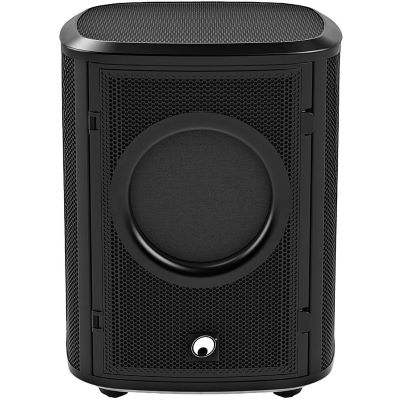
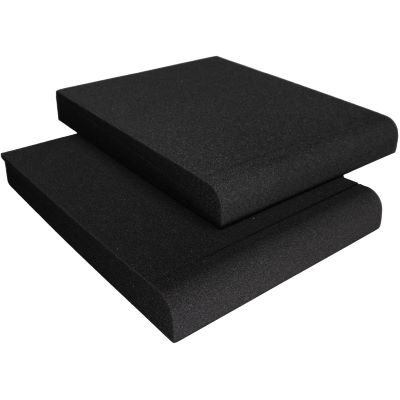
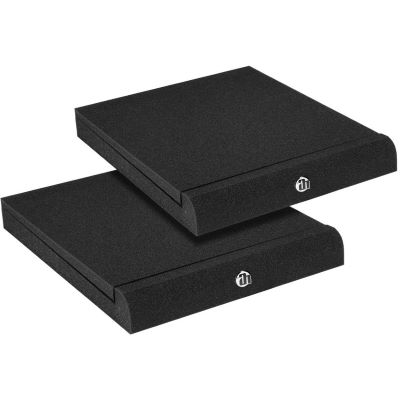
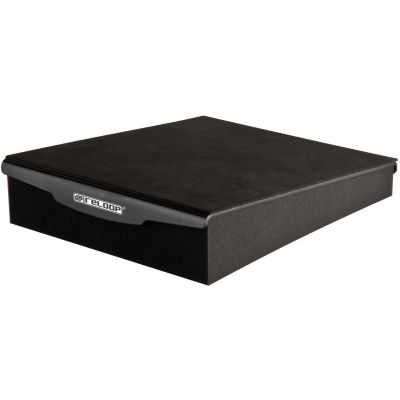
Monitor Isolation Pad Decouple a speaker from its support surface Under studio monitors Desk and monitor-stand setups Choose the correct size and alignment
Plan treatment according to how the room is used

Room Acoustics for Home Studio, Vocals, Podcasting & Mixing

Home Studio & Music Production

Reliable Monitoring Needs Balance

For dependable mixing, symmetrical monitor placement, controlled first reflections and reasonably even bass reproduction are more important than creating a completely dead room.

Begin with loudspeaker placement, isolation and the strongest reflection zones.

Vocals & Instrument Recording

The Room Quickly Becomes Part of the Recording

Sensitive studio microphones pick up both the source and the surrounding room. Microphone position, distance from reflective boundaries and local absorption can be more important than corrective plug-ins applied later.

Podcast, Speech & Streaming

Keep Speech Controlled and Intelligible

Speech benefits from a controlled, comparatively short room sound. Mobile reflection filters can help around the microphone. If room reverberation remains clearly audible, larger reflective surfaces should also be addressed.

Treat the studio as one complete system

Related Categories Around Room Acoustics & Monitoring

Room, loudspeakers, microphone position and listening position influence each other. It therefore makes sense to consider the complete studio setup when optimising acoustics.

Acoustics

Studio Acoustics

Monitor isolation pads, microphone filters and mobile absorber systems for targeted acoustic improvements.

Monitoring

Studio Monitors

Monitoring loudspeakers for recording, production and mixing.

Active

Active Studio Monitors

Powered monitor speakers with integrated amplification for nearfield and studio monitoring.

Placement

Monitor Stands

Increase freedom when positioning loudspeakers at the correct height, distance and angle.

Recording

Studio Microphones

Microphones for vocals, speech and instruments whose result is influenced by both source and room.

Signal Path

Audio Interfaces

Inputs and outputs for microphone recording and the connection of a complete monitoring system.

Second Reference

Studio Headphones

A useful additional reference for recording and for checking mix decisions independently of the room.

Complete Studio

Recording & Studio

From the microphone and interface to monitoring, software and the complete recording workspace.

Current Musikhaus Korn studio-acoustics selection

Products for Reflection Control & Monitor Isolation

The current Studio Acoustics range focuses on local microphone reflection control and the acoustic decoupling of studio monitors. Recording shields are not equivalent to a complete acoustic treatment of the entire room.

Manufacturer worlds

Brands for Studio Acoustics & Monitor Accessories

Open the manufacturer pages to discover further products from each brand in the Musikhaus Korn range.

Plan acoustic treatment deliberately

Six Common Mistakes When Treating a Home Studio

Mistake 1

Covering Every Free Wall with Thin Foam

This mainly removes high-frequency energy. Bass and low mids can remain problematic while the room becomes tonally unbalanced.

Mistake 2

Trying to Solve Bass Problems Only with EQ

A cancellation at the listening position cannot simply be repaired by adding more level. Loudspeaker position, listening position and room treatment need to work together.

Mistake 3

Planning Acoustic Elements before Monitor Placement

Even relatively small positional changes can alter reflections and bass reproduction considerably. The basic monitoring setup therefore comes first.

Mistake 4

Using Diffusion Regardless of Room Size

A diffuser requires a useful distance from the listening position. In a very tight room, absorption at the same location can be the more dependable solution.

Mistake 5

Treating a Reflection Filter as Complete Room Treatment

A recording shield acts locally around the microphone. Side walls, ceiling reflections, bass modes and the monitoring position remain largely independent of it.

Mistake 6

Confusing Sound Insulation with Room Acoustics

Good internal room acoustics do not automatically make the room quiet outside. Structure-borne sound and transmission through walls, floors and ceilings are a separate constructional issue.

Frequently asked questions

Answers About Absorbers, Diffusers & Bass Traps

What Should I Treat First in a Home Studio?

Check the monitor and listening positions first. Afterwards, lateral and ceiling first-reflection zones and clearly audible bass problems are important candidates. Additional diffusion or treatment of further surfaces should come later.

How Do I Find My First-Reflection Points?

A simple method is the mirror test. Sit at the listening position while another person moves a mirror along the side wall. A position from which you can see a studio monitor in the mirror marks a relevant reflection zone. Repeat the process on the opposite side.

Does Every Small Home Studio Need a Diffuser?

No. In small rooms, controlled bass reproduction and early reflections are usually higher priorities. Diffusion becomes more interesting when sufficient distance exists between the diffuser and listening position and more fundamental acoustic problems have already been addressed.

Where Should Bass Traps Be Positioned?

Room corners and transitions between walls and the ceiling are common starting points. The position providing the greatest benefit depends on room dimensions, loudspeaker placement, listening position and the specific frequency problem.

How Many Absorbers Do I Need?

There is no serious universal quantity that works for every room. Room size, material, absorber thickness, furniture and use vary too much. Treat clearly identified problem areas first and expand the system in a controlled way.

Is Acoustic Foam Sufficient for Bass Problems?

Thin acoustic foam is mainly effective in the mid- and high-frequency range. Low frequencies normally require substantially greater depth, material volume or specifically designed bass absorbers.

What Does a Reflection Filter Do at the Microphone?

It reduces part of the immediate reflection energy around the microphone and can make speech or vocal recordings sound drier. It is practical for compact recording positions but does not replace treatment of the complete room.

Do Monitor Pads Replace Acoustic Room Treatment?

No. Monitor pads reduce mechanical coupling between a loudspeaker and its support surface and can help with alignment. Reflections from walls, ceiling and floor and low-frequency room modes remain separate acoustic issues.

Can Room-Correction Software Replace Absorbers and Bass Traps?

Digital correction can influence frequency response at the measurement position, but it does not remove problematic reflection paths or physically shorten a long room decay in the same way as acoustic treatment. Placement, room treatment and electronic correction complement one another.

Step-by-step treatment instead of guesswork

Using Absorbers, Diffusers & Bass Traps Correctly

Absorbers, diffusers and bass traps are not competing solutions. They are different acoustic tools. Absorption creates greater control over reflections and reverberation, diffusion can preserve spatial liveliness where sufficient distance is available and bass treatment addresses the frequency range that is particularly difficult in small rooms.

Start with a clear question rather than with the number of acoustic panels you want to buy. Is the main problem excessive reverberation, an early reflection, unstable stereo imaging, booming bass or too much room sound in a microphone recording? The answer determines which treatment is useful next.

Very thin absorbers mainly influence higher frequencies. Effective broadband control and low-frequency absorption require more material depth and acoustic volume. This is why treating a complete room with only thin foam can create an unbalanced result.

The most important rule remains simple: determine the position and the problem first, then apply treatment. One deliberately placed absorber is more valuable than a wall that has been covered randomly without identifying what actually needs to be improved.

From the First Reflection Point to the Complete Studio

Plan Room, Microphone & Monitors Together

In a small studio, a clear sequence is especially useful: position the loudspeakers and listening seat, control early reflections, evaluate bass problems and only then add further acoustic elements. This creates a room in which recordings and mix decisions become more repeatable.