Musikhaus Keks
Welcome!
Our cookies offer you a fast, relaxed and full-featured shopping experience. Some are necessary to operate the website and its functions. Others help us to improve our services. If you agree to this, simply consent to the use of cookies for preferences, statistics and marketing by clicking on "OK". Alternatively, you can deactivate individual cookies under "Customise cookies" or all cookies, except those required for the function of our website, under "Reject all".
Musikhaus Korn Buying Guide

Analog or Digital Mixer?

With an analog mixer, almost every important function is directly in front of you: gain, EQ, aux send and fader can be adjusted without navigating through menus. A digital mixer, on the other hand, can store complete shows and provides extensive signal processing, flexible monitor routing, multitrack recording and often remote control from a tablet. The better choice depends on your band size, event, monitoring requirements and preferred workflow.

Analog and digital compared directly Band, stage & recording considered Monitoring & stageboxes included
The quick decision

When Does Analog Fit and When Does Digital Fit?

For small and clearly structured setups, an analog mixer remains pleasantly direct. As soon as many channels, several individual monitor mixes, recallable settings or multitrack recording become important, the advantages of a digital mixer become much greater.

Analog Mixer

Choose Analog for a Particularly Direct Workflow

  • Small band or acoustic ensemble
  • Rehearsal room and smaller stage
  • Only a few independent monitor paths
  • No layers or touchscreen required
  • Guest engineers should understand the desk immediately
  • USB and internal effects can still be available
Digital Mixer

Choose Digital for Complex and Repeatable Shows

  • Larger band with many inputs
  • Several individual monitor or in-ear mixes
  • Gate, compressor and parametric EQ per channel
  • Save complete shows and scenes
  • Multitrack recording or virtual soundcheck
  • Remote control and digital stagebox required

In short: analog is not automatically easier and digital is not automatically complicated. A modern digital mixer with a well-designed touchscreen can make six monitor mixes clearer to manage than a large analog setup with external processors and additional cabling.

Understand the signal processing

What Technically Differentiates Analog and Digital Mixers?

Analog Signal

Processing Through Analog Circuits

In a classic analog mixer, the audio signal is processed through analog circuitry. Potentiometers, faders and switches represent many functions directly on the physical surface.

Digital Processing

DSP After the Input Stage

In a digital mixer, the input signal is converted after the preamplifier and processed internally by DSP. EQ, dynamics, routing, effects and fader values can therefore exist as recallable parameters.

Hybrid

Analog Workflow with Digital Features

Many current analog mixers include digital effects, Bluetooth or USB audio interfaces. The essential mixing workflow remains analog while modern digital functions are added.

The most important buying criteria

Analog and Digital Mixers Compared Directly

Feature Analog Digital
Direct Access Very high Depends on surface and layers
Scene Recall No complete mix recall Complete shows can be recalled
EQ per Channel Usually 2–4 bands Often fully parametric
Gate / Compressor Model-dependent or external Frequently integrated per channel
Effects None to several internal FX Extensive and recallable
Monitor Routing Very clear, hardware-dependent quantity Usually considerably more flexible
Remote Control Rare Available on many models
Multitrack Recording Only with a suitable multichannel interface Integrated on many models
Stage Box Traditional analog multicore Digital I/O expansion possible
One control, one visible function

Why an Analog Mixer Can Still Be the Right Choice

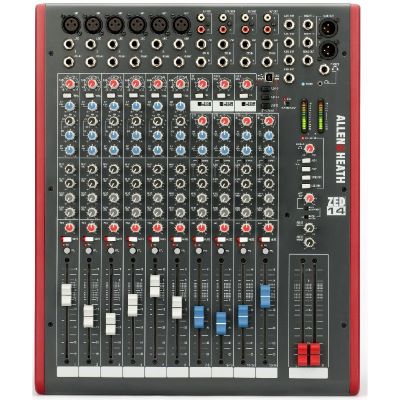
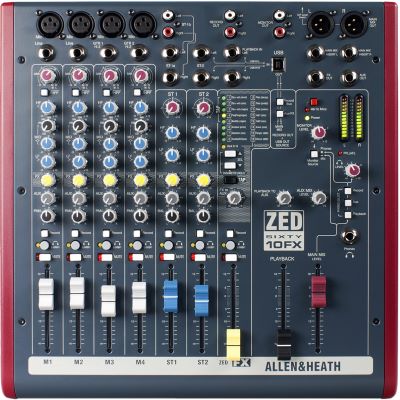
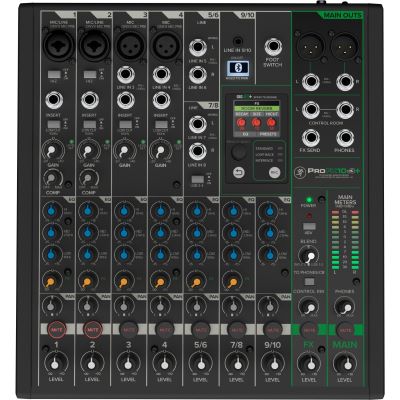
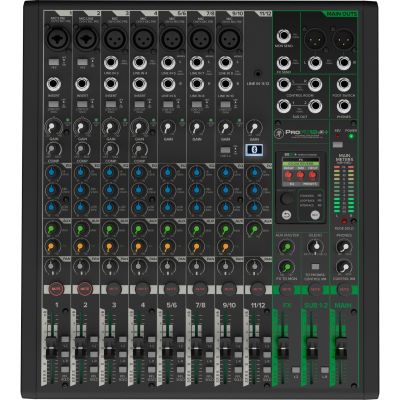
The major advantage of a traditional analog console is its physical overview. Gain, EQ, aux send and fader positions are visible at a glance. For smaller bands and events, this direct access can be faster than navigating through several digital pages.

  • Very short learning curve with classic channel strips
  • Several channels are visible simultaneously
  • No scenes or software states to manage
  • Ideal for fixed, manageable input lists
  • Models with USB and internal effects are available
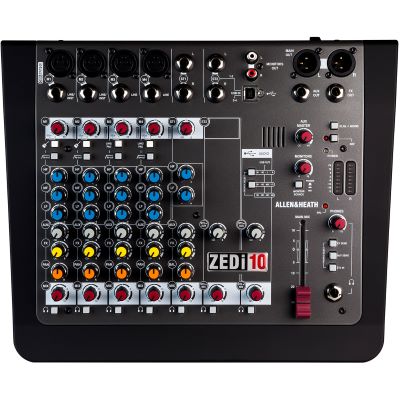
Allen and Heath ZEDi-10 analog hybrid mixer with directly accessible channel controls
Analog channel strips keep gain, EQ and aux controls permanently visible during the show.
Many functions in one console

Why Digital Mixers Become Attractive for Complex Shows

Scenes & Presets

Recall Complete Shows

Channel processing, routing, effects and fader values can be stored. This is especially useful when the same band performs repeatedly with a similar setup.

Processing

Replace External Rack Equipment

Gates, compressors, parametric EQ, graphic EQ, delay and effects can replace many individual processors that would otherwise occupy additional rack space.

Routing

Send Signals to Many Destinations

Input channels can be routed to monitor mixes, groups, matrices and recording paths without physically rebuilding the complete signal chain.

Scene Recall

Save the Soundcheck as a Starting Point

After soundcheck, the complete mix state can be stored and later recalled for another set or show. The room and stage still need to be checked again at every venue.

Motorised Faders

See the Real Value on Every Layer

When the same physical faders control different channel layers, motorised faders automatically move to the stored positions and immediately show the current values.

User Interface

Digital Does Not Automatically Mean Touchscreen

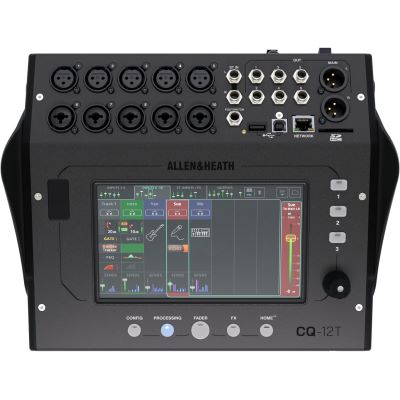
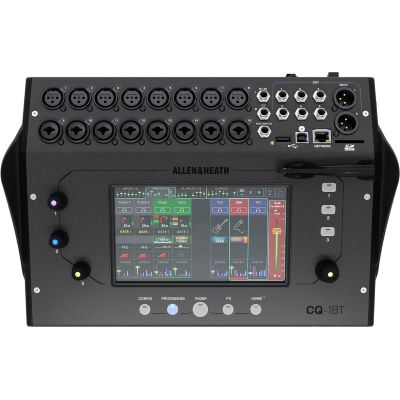
Digital mixers are available as rack mixers without a traditional surface, touchscreen consoles, desks with motorised faders or combinations of displays, encoders and physical controls.

Choose according to the application

Which Mixer Fits a Band, Acoustic Act or Event?

Singer-Songwriter

Small Analog or Hybrid Mixer

Two microphones, guitar and a playback source can be controlled very well with a compact analog or hybrid mixer. Complex multitrack routing is often unnecessary.

Rock & Pop Band

Digital Becomes Increasingly Attractive

Drum microphones, several vocals and individual monitoring can quickly make a digital console with 16 or more usable inputs the more flexible solution.

Club & Event

Choose According to the Operators

An analog console is attractive when changing users should be able to operate it immediately. Recallable digital scenes are useful for recurring event configurations.

Touring & Larger Stage

Scalable Digital System

Digital stageboxes, many mix buses, remote control and multitrack recording make scalable digital systems particularly attractive on larger productions.

Aux paths often decide the purchase

Which Mixer Is Better for In-Ear Monitoring?

For one stage monitor, analog and digital mixers can both work perfectly well. If four or five musicians each want their own monitor mix, the routing flexibility of a digital mixer becomes especially useful.

One Shared Mix

One Aux Send for Several Musicians

One aux bus can feed several wedges or several in-ear receivers when everyone listens to the same mix.

Individual Mono Mixes

One Mix Bus per Musician

Every independent mono monitor mix requires its own mix bus and an appropriate physical output.

Stereo In-Ear

Two Output Channels per Stereo Mix

A stereo monitor mix requires two output channels and therefore increases the required number of available buses and outputs.

Connect live sound and recording

Analog or Digital for Multitrack Recording?

An analog mixer with a true multichannel USB interface can record very effectively. Many compact analog mixers, however, transfer only a small number of channels or simply the stereo master mix.

  • Stereo USB is not the same as multitrack recording
  • Check the actual number of USB recording channels
  • Check supported sample rates
  • Direct SD recording can remove the need for a separate computer
  • Track playback can enable virtual soundcheck on suitable systems
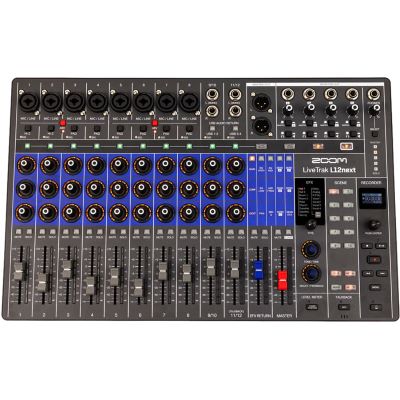
Zoom LiveTrak L12next digital mixer and recorder for multitrack live and rehearsal recording
Mixer, multitrack recorder and monitor solution can be combined in one device.
Separate front of house from the stage

When Does a Digital Stage Box Become a Major Advantage?

With an analog console at front of house, many audio signals traditionally travel from stage to console through an analog multicore. A digital system can place the I/O directly on stage and carry numerous inputs and outputs over a network connection.

Shorter Stage Cables

Keep XLR Runs Near the Sources

Microphones connect to the stagebox with relatively short cables instead of running every analog line individually to front of house.

Outputs on Stage

Return Monitor and IEM Signals

Outputs for wedges, in-ear transmitters and other stage destinations can be available directly at the digital I/O unit.

Compatibility

Match the Digital Audio Protocol

A network connector alone does not make two products compatible. Mixer and stagebox must support the same digital audio protocol or manufacturer ecosystem.

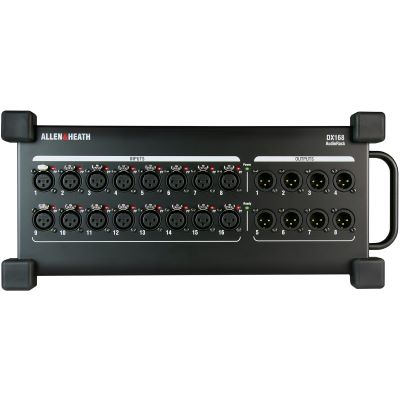
Allen and Heath DX168 X Audio Rack digital stage box for compatible live mixing systems
Digital stageboxes can carry inputs and outputs between stage and console over a compatible digital audio network.
From a compact mixer to a complete FOH system

Related Product Categories Around Mixers

Analog / Hybrid

Compact Mixers

Direct solutions for small and medium-sized setups.

Digital

Digital Mixers

Scenes, DSP, recording and flexible routing.

More Inputs

Mixers up to 24 Channels

Additional inputs for bands and events.

Stage I/O

Stage Boxes

Collect and distribute signals directly on stage.

Transport

Mixer Cases

Protect mixers during rehearsal and live transport.

Monitoring

In-Ear Monitoring

Use independent monitor paths in practical live setups.

Connections

Cables & Connectors

XLR, network, USB and other signal connections.

Complete System

PA & Sound Reinforcement

Plan the mixer as part of the complete live system.

21 verified product examples

Compare Analog and Digital Mixers

The selection ranges from directly operated compact analog mixers to extensive digital live systems. Product images are loaded from the relevant Musikhaus Korn article numbers. Prices and stock quantities are intentionally not hard-coded.

8 Analog & Hybrid Compact Mixers

Direct Physical Workflows

Internal brand worlds

Manufacturers for Analog and Digital Mixers

Do not buy by label alone

Typical Mistakes When Choosing Analog or Digital

Mistake 01

Buying Digital Only for the Feature List

A huge number of functions is not useful if you cannot operate the workflow confidently under time pressure.

Mistake 02

Assuming Analog Means No Digital Technology

Many analog mixers include USB interfaces, Bluetooth and digital effects processors.

Mistake 03

Counting Only Input Channels

For bands, available aux and mix outputs can be more important than two additional input channels.

Mistake 04

Assuming USB Means Multitrack

Some mixers transfer only the stereo master. Always check the actual USB channel count.

Mistake 05

Combining Stage Boxes Arbitrarily

Digital I/O systems must be technically and protocol-compatible with the mixer.

Mistake 06

Forgetting Transport

Touchscreens, faders and connectors should be protected with a suitable bag or case during frequent live use.

Frequently asked questions

Answers About Analog and Digital Mixers

Which is better: an analog or digital mixer?

Analog offers especially direct operation, while digital provides considerably more flexibility. Small setups often benefit from an analog workflow, whereas many channels, monitor mixes and recurring shows favour digital systems.

Is an analog mixer easier to operate?

For classic basic functions, often yes, because many controls remain permanently visible. A well-designed digital mixer can make complex routing considerably clearer, however.

Does analog sound better than digital?

The design principle alone does not determine sound quality. Preamps, converters, signal processing, gain structure and operation of the specific mixer are more important.

Which mixer is suitable for a band?

A small band may be well served by a 10 or 12-channel analog console. Full drum miking and several individual monitor mixes often make a digital mixer more flexible.

Do I need motorised faders?

No. They are particularly useful when the same faders control several layers or when stored values need to be displayed automatically after recalling a scene.

Can a digital mixer work without a tablet?

Many models have touchscreens, physical faders or encoders and can operate independently. Pure rack or remote mixers require an external control device.

What happens if Wi-Fi fails?

With remote mixers, audio processing normally continues inside the mixer while only the control connection is lost. Important productions should use a robust network strategy.

Can I record with an analog mixer?

Yes. Many current analog mixers offer USB audio. Check whether the connection transfers only stereo or several individual channels.

Why are digital mixers good for in-ear monitoring?

They often provide several mix buses, flexible output assignment and personal remote control, making individual monitor mixes much easier to manage.

Can I save the settings of an analog mixer?

The complete analog channel strip normally cannot be stored electronically. Photos or written settings can be used as a reference, whereas digital mixers can save complete scenes.

What is a hybrid mixer?

The term is commonly used for mixers that retain a largely analog signal or control workflow while adding digital features such as USB, effects, Bluetooth or recording.

When is it worth switching from analog to digital?

Digital becomes particularly attractive when many external processors, recurring shows, additional monitor paths, extensive routing or multitrack recording are required.

Workflow before feature count

Choose the Mixer According to Your Application

Write down the required inputs, monitor paths, recording needs, recurring shows and desired stagebox expansion. This quickly shows whether a direct analog console or a flexible digital system fits your work better.

The decision summarised

Analog or Digital Mixer? | Musikhaus Korn

An analog mixer provides direct access and a very easy-to-follow signal path. For small bands, acoustic setups, rehearsal rooms and events with only a few monitor mixes, this workflow remains extremely practical. Modern analog mixers can also integrate USB interfaces and digital effects without abandoning the traditional channel-strip layout.

Digital mixers show their strengths as soon as the setup becomes more complex. Scene recall, extensive channel processing, several mix buses, remote control, multitrack recording and digital stageboxes can simplify a complete live production considerably.

The decisive question is therefore not which technology appears more modern. Choose a mixer with enough inputs and outputs and an operating concept that you can use quickly and confidently during soundcheck and the show.

More buying guides

Continue Planning PA, Mixers, Monitoring and Recording

Find further buying guides covering loudspeakers, microphones, bands, instruments, studio equipment, DJ technology and event equipment in the central Musikhaus Korn guide world.