DJ System
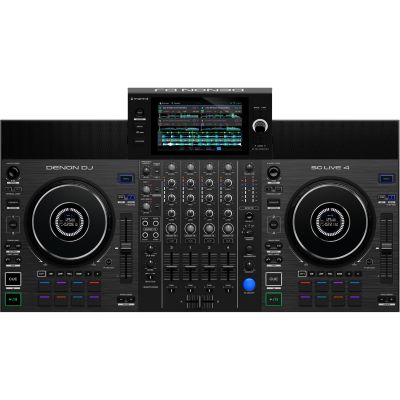
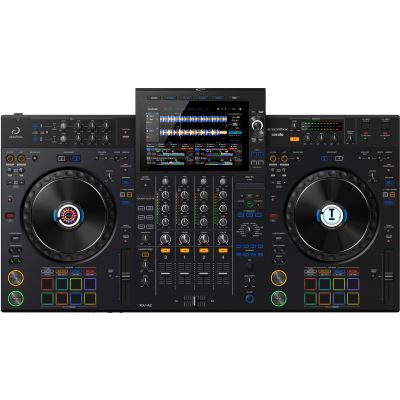
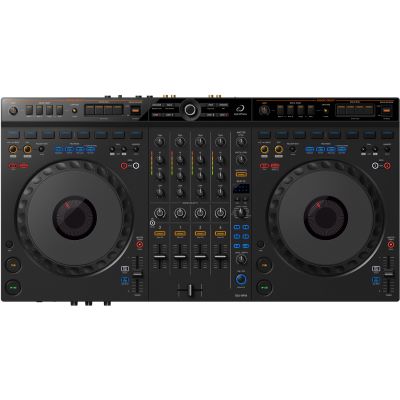
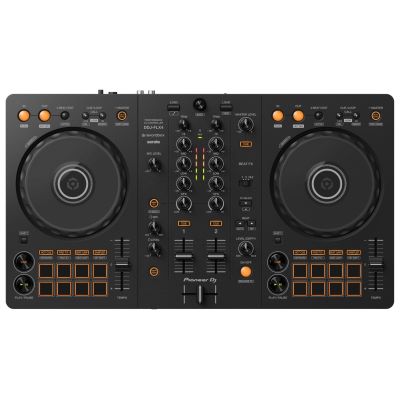
A controller with laptop or a standalone system, together with headphones, a prepared music library and a reliable master output.

As a mobile DJ, your setup not only has to sound good – it also needs to be quick to assemble, reliably connected and safe to transport. Your DJ system, PA, microphone, lighting, power distribution, cases and backup solutions should therefore be planned together. This guide explains which equipment you really need for weddings, birthdays, corporate events and other mobile DJ applications.
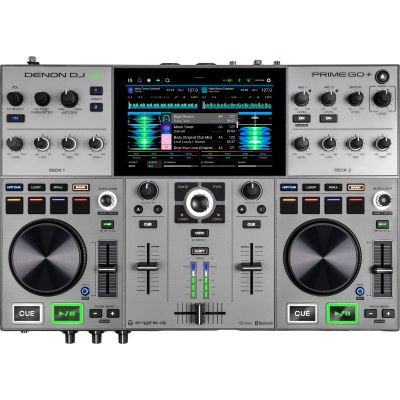
Fewer separate devices can reduce setup time and connection points – provided that the outputs, microphone inputs, operating concept and backup strategy match the event.
A complete mobile setup consists of several systems. The DJ console alone is not enough – the complete chain from the music source to the guests in the room has to work reliably.
A controller with laptop or a standalone system, together with headphones, a prepared music library and a reliable master output.
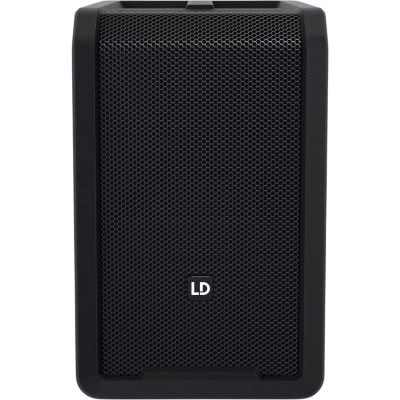
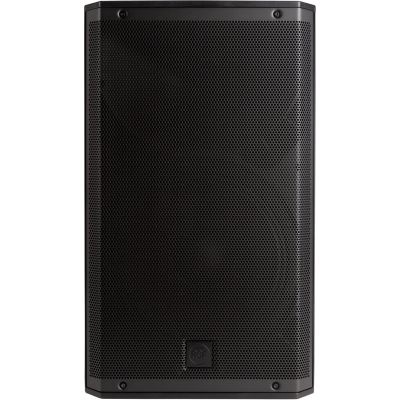
Active loudspeakers or a column PA suited to the room, audience size, musical style and required bass performance.
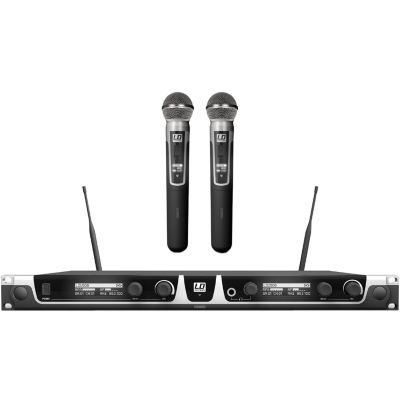
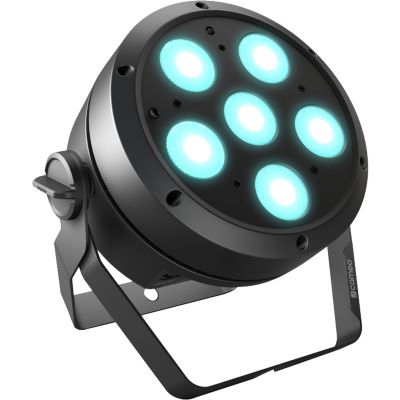
A wireless or wired microphone for announcements and a compact lighting solution for the dance floor and general atmosphere.
Cases, a DJ table, stands, audio cables, extension leads, power distribution and spare parts complete the system.
Practical rule: plan every mobile setup so that you can work without improvised furniture, missing adapters or one single critical cable connection becoming a point of failure.
For ceremonies, announcements and the dance floor, a clean installation, wireless microphone, wide sound coverage and unobtrusive lighting are particularly useful.
A versatile PA system with sufficient bass reserve and an easy-to-operate lighting system works particularly well for many private celebrations.
Corporate events and presentations often require several microphone paths, clear speech intelligibility and visually discreet sound reinforcement.
Outdoors there are no reflective room boundaries and more output may be required. Power supply, suitable weather protection and secure installation need to be clarified before the event.
Both concepts can work professionally. Mobility therefore does not automatically mean that the smallest possible device is always the best solution.
An all-in-one system combines players, mixer, display and audio interface. For mobile events this can simplify setup. Connect your music media, headphones and PA and the DJ system can operate without a permanently open laptop.
If you already use a laptop for music management, streaming or additional software, a controller provides a powerful and often comparatively lightweight system. Professional outputs, useful microphone routing and stable software support become especially important for events.
Balanced outputs are particularly useful at events. A separate booth output makes independent DJ monitoring easier. Multiple microphone inputs become useful when announcements, speeches or additional programme items are planned.
Remember: fewer separate devices mean fewer connections – but this is only an advantage when the available connections, controls and backup options suit your event.
Event size alone is not sufficient for selecting a PA. Dance music, speech, room geometry, bass requirements and loudspeaker positioning all influence which system is suitable.
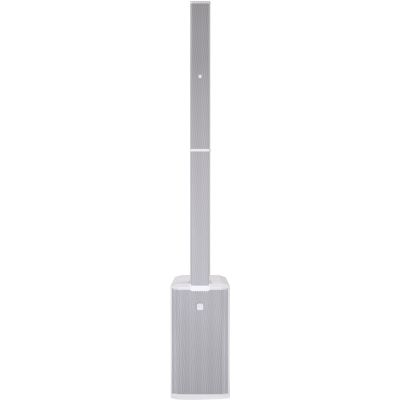
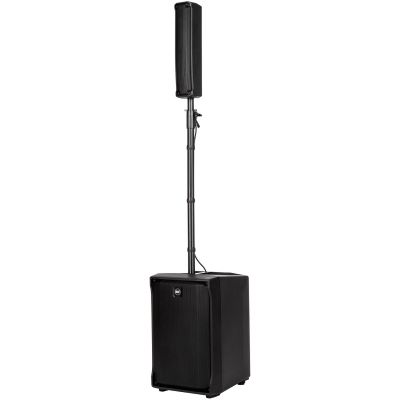
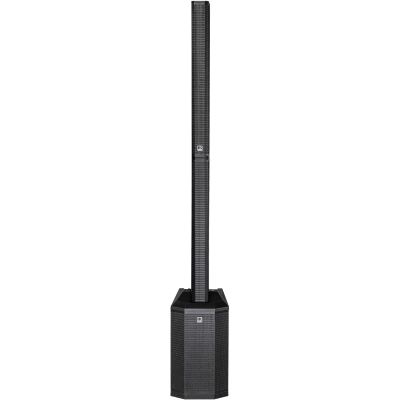
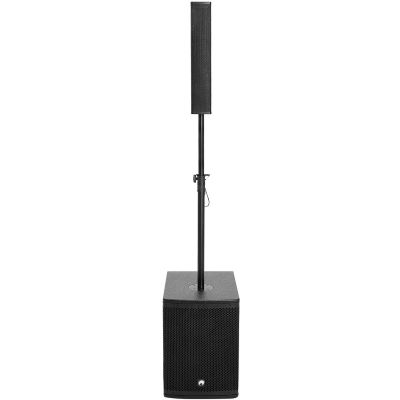
Column systems combine a bass module with slim mid/high-frequency elements. They often require no traditional speaker stands and their discreet appearance works well for weddings and corporate events.
Two active full-range loudspeakers can be mounted on stands and expanded later with one or more active subwoofers. This approach remains particularly flexible when event requirements vary.
For outdoor ceremonies, receptions, secondary areas or speech reinforcement where no nearby mains socket is available, a battery-powered speaker can be especially practical.
Do not buy by guest count alone: 100 seated guests listening to a speech require a different sound system from 100 dancing guests listening to bass-heavy music.
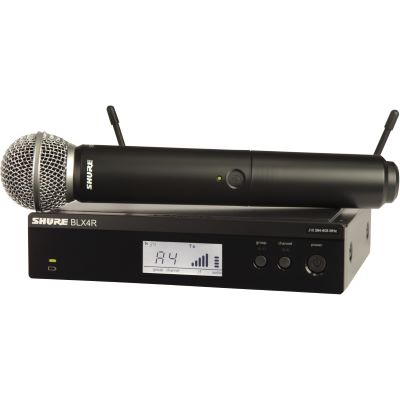
Weddings and events regularly include speeches, games, presentations and spontaneous announcements. A wireless handheld microphone gives speakers freedom of movement and avoids long microphone cables across the room.
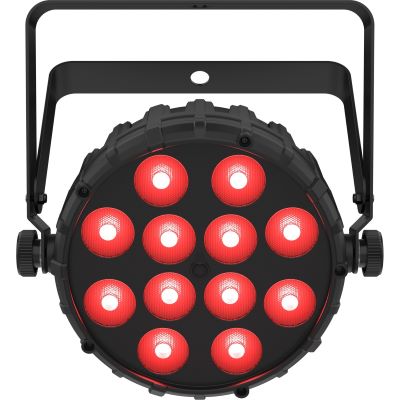
Begin with clean basic lighting. Even four compact PAR fixtures can change the atmosphere of a room significantly. Moving effects and more complex control systems can be added later.
Suitable for uplighting, illuminating a dance floor, adding colour to walls and creating a basic room atmosphere.
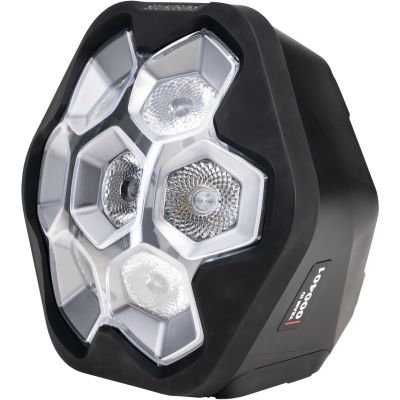
Suitable for movement, gobos and dynamic shows on larger dance floors.
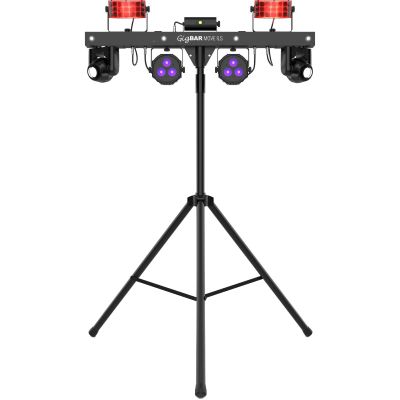
Combine several types of lighting effect in a single transport-friendly system.
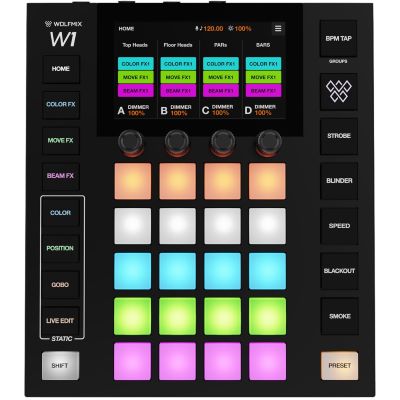
Control colours, movement and scenes deliberately and reproducibly instead of relying only on random automatic programmes.
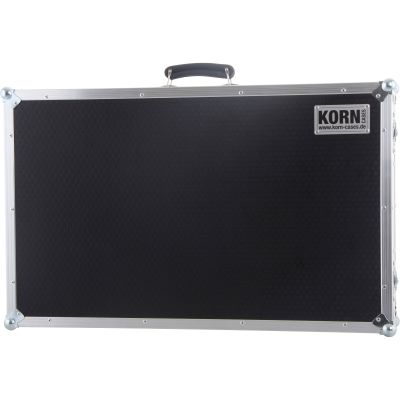
Properly fitting cases protect jog wheels, displays and connectors. Models with cable compartments can keep frequently required connections together with the device.
Plan power routes before the event and organise audio and lighting cabling clearly. Use suitable cables and distribution equipment instead of random household extensions for complex event installations.
A spare USB medium, important adapters, audio cables, headphone adapters, batteries and a second simple playback source belong in a dedicated emergency bag.
A compact birthday setup, an elegant wedding installation and a larger performance system place different demands on DJ technology, PA and lighting.
| Setup | DJ Equipment | Sound Reinforcement | Lighting | Typical Application |
|---|---|---|---|---|
| Compact | Controller + laptop | Small column or active PA | 2–4 PAR fixtures | Birthday, small celebration |
| Elegant | Standalone system | Column PA | Uplights + discreet effects | Wedding, corporate event |
| Performance | 4-deck system | Tops + subwoofer | PARs + moving heads + DMX | Larger dance event |
Plan the complete event system instead of considering the DJ console in isolation.
Software-based performance systems for mobile DJs.
Controllers, software and digital DJ systems.
Complete mobile sound systems for events.
Additional low bass for dance music and larger setups.
Announcements and speeches without long microphone cables.
Basic lighting, room colour and uplighting.
Moving effect lighting for larger dance floors.
DMX and reproducible lighting scenes for mobile events.
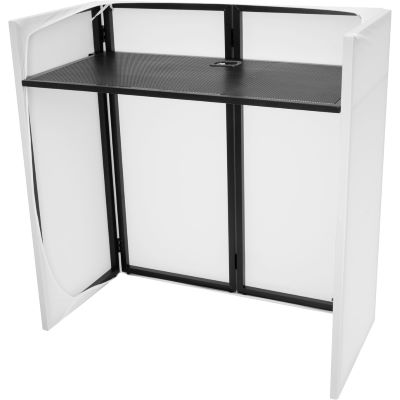
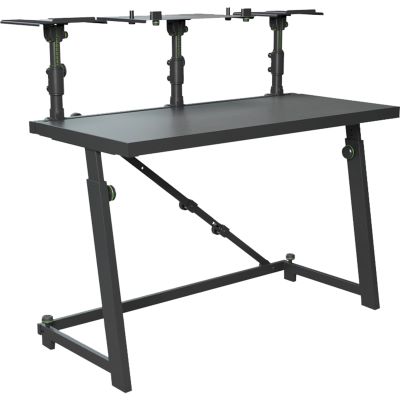
Tables and mobile DJ booths for a consistent workplace.
Protection for controllers, players and mobile equipment.
Position active loudspeakers safely and appropriately.
Build a structured and reliable event power supply.












A standalone system reduces dependence on a laptop and can simplify setup. A controller is often lighter and offers a highly flexible software workflow. Both approaches can be used professionally.
Column systems offer fast setup and a slim appearance. Traditional active tops can be combined particularly flexibly with separate subwoofers. The room, required sound pressure and transport concept are the deciding factors.
No. Many column systems already contain an integrated bass module. With traditional full-range tops, an additional subwoofer can become useful when dance music requires significantly more low bass and level.
One reliable wireless handheld microphone is sufficient for many events. Two wireless channels are practical when the DJ and other speakers regularly alternate. A simple wired microphone is additionally useful as a backup.
Several compact PAR fixtures are a good starting point because they can add colour to both the room and dance floor. Multi-effect systems or moving heads can be added later.
At minimum, carry the appropriate master audio cables, USB connection, power cable, frequently required adapters and an additional microphone cable. The exact selection depends on the connections used by your specific system.
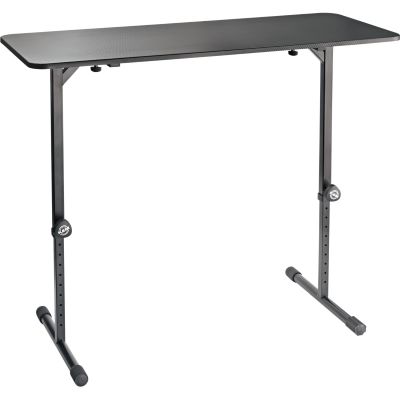
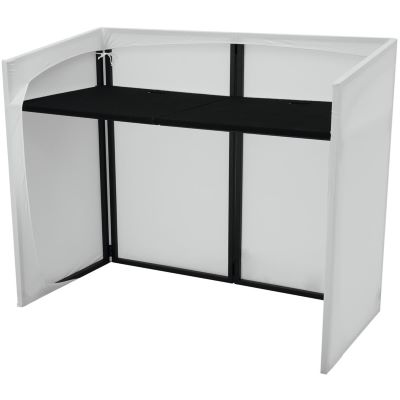
It is very useful when you work at different locations regularly. A familiar working height and sufficient load capacity make setup and performance easier while avoiding improvised furniture at the venue.
Check music media, power supplies, battery charge levels, wireless microphone batteries, audio and power cables, stands, cases, microphones and your backup playback source. A fixed checklist prevents many common failures.
The controller and headphones often can. For events you will additionally need suitable professional sound reinforcement, reliable cabling, microphones, transport solutions, a stable workspace and, where appropriate, lighting equipment.
Controllers, players, mixers, headphones and digital DJ technology.
Active systems, loudspeakers, subwoofers and matching accessories.
PAR fixtures, moving heads, effects and DMX control.
Protect mobile equipment and accelerate setup at the venue.
A professional mobile setup is not created by simply buying as much equipment as possible. It comes from a clear structure. Choose your DJ system first, then the appropriate PA and finally add microphones, lighting, DJ table, cases, power distribution and backup equipment. Every additional component should improve either sound, operation, safety or setup time.
A consistent setup routine is particularly valuable: open the cases, assemble the DJ workstation, distribute power, connect the PA, test the microphone, activate the lighting and finally check the entire system with a short soundcheck. This turns a collection of individual devices into a dependable mobile DJ system.
From DJ equipment and event technology to studio and recording equipment and musical instruments, the central Musikhaus Korn guide contains further comparisons, decision-making aids and complete project paths.