Find the Quietest Place in the Room
Computer fans, traffic, refrigerators, open windows and hard reflective surfaces can all be captured by sensitive microphones. A quiet recording position often improves the result more than another plug-in.

You do not automatically need a permanently installed vocal booth for a good vocal recording. A quiet room, the right microphone position, a sensible working distance, controlled reflections and a clean recording chain can already produce very convincing results. This guide explains how to choose your room, use condenser and dynamic microphones effectively and reduce unwanted room sound with mobile acoustic solutions.
Start with the quietest and acoustically most suitable position in the room. Then optimise the microphone distance and add acoustic treatment only where reflections are actually audible as a problem.
No. For many home-studio recordings, a sensibly furnished room can even be more flexible than a very small, heavily damped booth. What matters is achieving a good balance between the direct voice and unwanted room sound.
Computer fans, traffic, refrigerators, open windows and hard reflective surfaces can all be captured by sensitive microphones. A quiet recording position often improves the result more than another plug-in.
The better the balance between the direct voice and room sound, the easier the recording is to control later in the mix. The ideal distance depends on the voice, microphone and desired sound.
Curtains, furniture, mobile absorbers or a reflection filter can reduce unwanted reflections. The aim is a controlled recording, not a completely acoustically dead room.
The most important rule: position the singer and microphone sensibly first and listen to a test recording. Add acoustic material only where the room is actually audible as a problem.
A bedroom with curtains, a bed, shelves and a carpet may be better suited to vocals than an almost empty small room with smooth walls.
Empty walls, windows and bare floors can create clearly audible reflections. Furniture, bookshelves and heavy textiles can make the acoustic behaviour of the room more varied.
Room corners can have an unfavourable influence on low frequencies and early reflections. Some distance from the walls gives you more freedom to orient the singer and microphone deliberately.
Fans, air conditioners and other continuous noises become audible at the latest when compression is applied. A quiet computer location and quieter recording times can make a significant difference.
A short hand clap can reveal obvious flutter echo. An actual vocal test is even more important afterwards: can you hear reverberation, metallic reflections or an unpleasantly small, boxy sound?
Sound insulation is a different subject: curtains, blankets and reflection filters change the sound inside the room. They do not reliably prevent traffic, neighbours or loud music from being transmitted through walls and windows.
The transducer principle alone does not determine how much room sound is captured. Polar pattern, working distance, sensitivity and position within the room all interact.
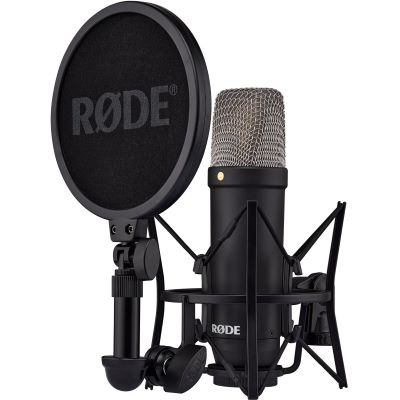
A large-diaphragm condenser microphone is a classic choice for studio vocals. It reproduces fine details, breath and dynamics very accurately. At the same time, this also means that a problematic room can become part of the recording more easily. In a quiet, controlled room this is not a disadvantage; careful positioning simply becomes more important.
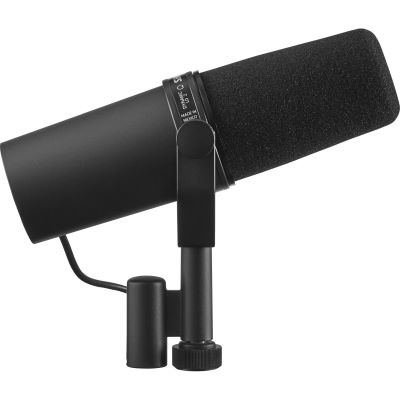
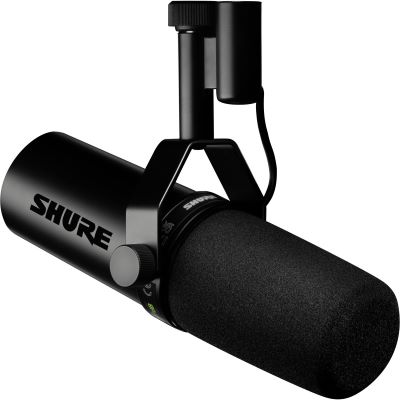
Dynamic vocal microphones can be an interesting alternative when you want to sing close to the microphone. The important point is not the simplified claim that “dynamic microphones do not pick up the room.” A dynamic microphone can also capture reflections when the voice, polar pattern and distance are poorly chosen.
Many studio microphones use a cardioid polar pattern. They are most sensitive to sound arriving from the front and noticeably less sensitive at the rear. The rear of the microphone can therefore be pointed towards a noticeable noise source where appropriate. The actual directional response depends on frequency and should be checked for the specific microphone.
Rule for vocals without a fixed booth: a suitable microphone in a good position is more valuable than an especially expensive microphone in the wrong position. Record several short variations and decide with your ears.
Small changes in position can have a major influence on how much direct voice, proximity effect and room sound reaches the microphone.
Do not place the microphone directly in front of a bare wall or in a tight corner. Use an area with some distance from large, hard surfaces.
Start with a relatively close working distance and a pop filter between the singer and microphone. Then vary the distance and angle until the voice, room contribution and proximity effect work together.
The voice travels past the microphone towards the opposite surface and can be reflected back from there. An absorbing surface behind the singer can therefore be very effective.
Closed studio headphones reduce playback spill into the microphone. Set the recording level with sufficient headroom below 0 dBFS instead of trying to record every passage as loudly as possible.
Practical comparison test: record the same passage in three different positions using the identical microphone, distance and level. A few minutes are often enough to identify the acoustically most suitable area of the room.
A reflection filter or recording shield is positioned directly around the microphone. It can reduce some of the reflections returning to the microphone from the surrounding room. This is especially practical for changing recording locations or a small home studio.
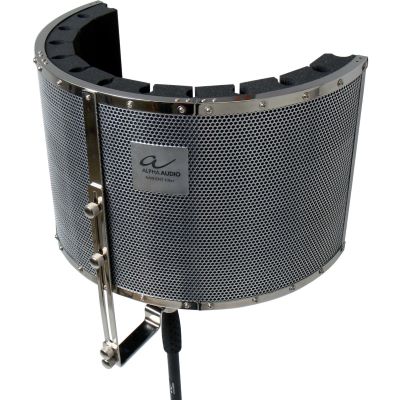
Do not completely enclose the singer: an improvised, very tight construction made from mattresses or blankets may absorb high frequencies while creating an unnaturally small and midrange-heavy sound. An open arrangement with targeted absorption at problematic surfaces is often the better solution.
The best solution depends on the room, recording distance, microphone and the type of acoustic problem you want to control.
| Solution | Strength | Well Suited For | Limitation |
|---|---|---|---|
| Optimise the Room Position | Free and highly effective | Every home studio | External noise remains |
| Mobile Absorption | Target large reflection surfaces directly | Vocals and instruments | Requires floor space |
| Reflection Filter | Compact solution directly at the microphone | Bedroom recording and speech | Does not treat the entire room |
| Dynamic Microphone at Close Distance | A high proportion of direct voice is possible | Pop, rock and powerful voices | Sound character differs from a condenser microphone |
| Large-Diaphragm Condenser | Detailed studio recording | Vocals, rap and ballads | Room and background noise need careful control |
| Fixed Vocal Booth | Defined recording environment | Regular professional use | Requires space, planning and an acoustic concept |
A complete recording position combines the microphone with suitable acoustics, stable positioning, monitoring and a reliable signal path to the computer.
Detailed condenser microphones for classic studio vocals.
Robust alternatives for close and focused vocal recordings.
Reflection filters and mobile solutions around the recording position.
Microphone preamps, conversion and headphone monitoring at the computer.
Stable positioning for repeatable vocal recordings.
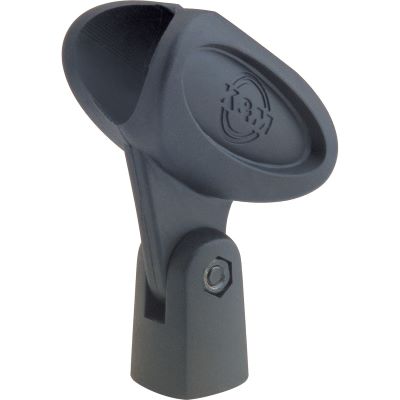
Pop filters, mounts and additional accessories for vocal recording.
Closed models reduce playback spill while recording vocals.
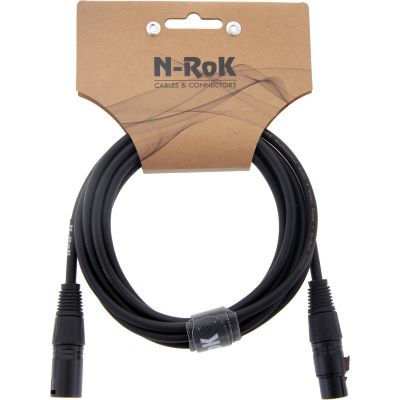
XLR connections for a reliable analogue recording chain.
This selection shows different options ranging from a compact home-studio microphone to a versatile studio model. XLR condenser microphones generally require an audio interface with suitable phantom power.
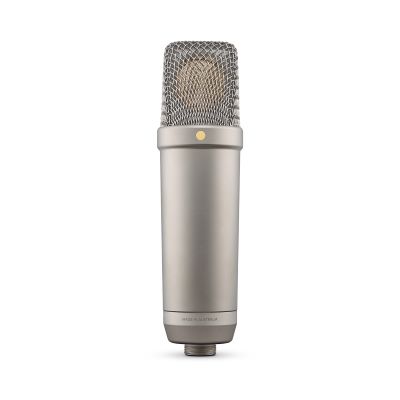
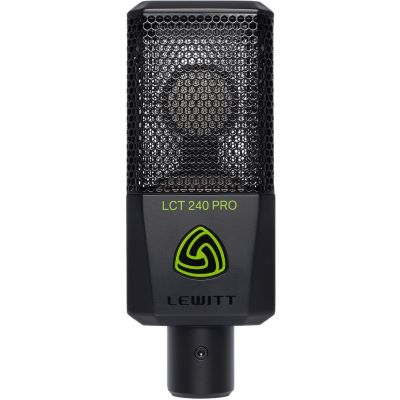
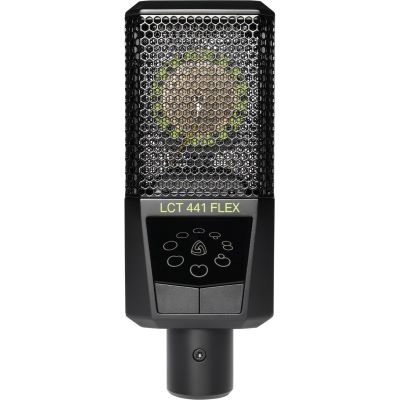
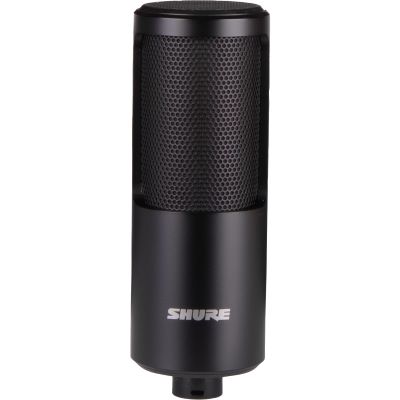
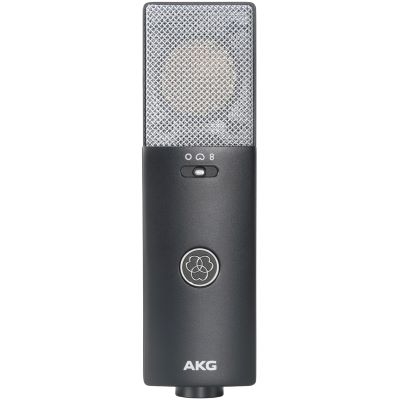
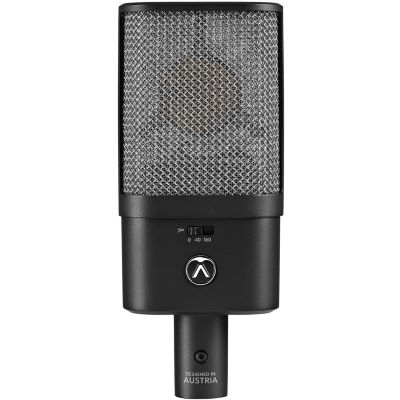
Dynamic microphones are often used at relatively short working distances and can therefore be an interesting option when a high proportion of direct voice is desired.
Mobile absorber systems can be positioned directly around the microphone and are particularly useful where no permanent acoustic installation is possible.
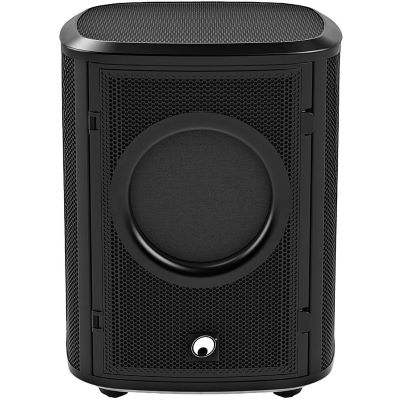
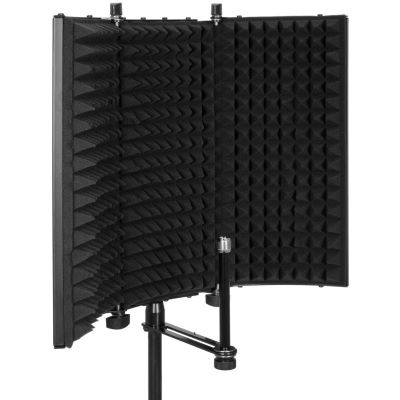

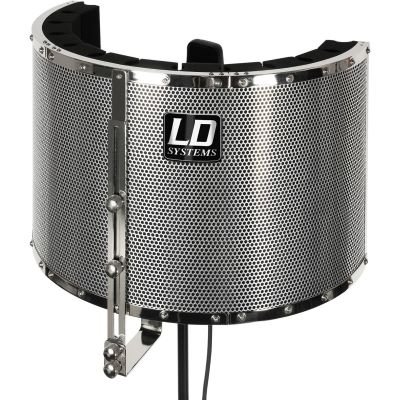
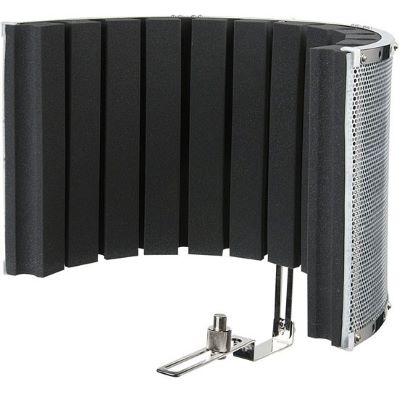
The microphone is only one part of the recording chain. Reliable positioning, suitable gain, monitoring and correct connections are just as important for a practical vocal setup.
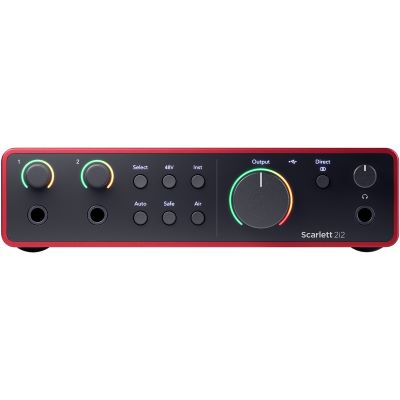
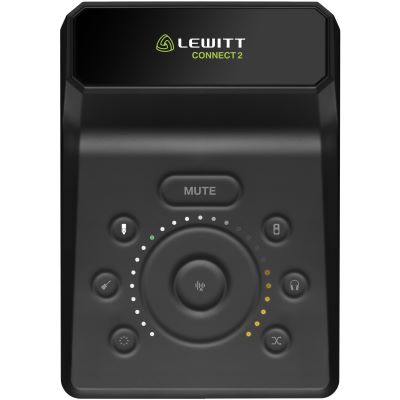
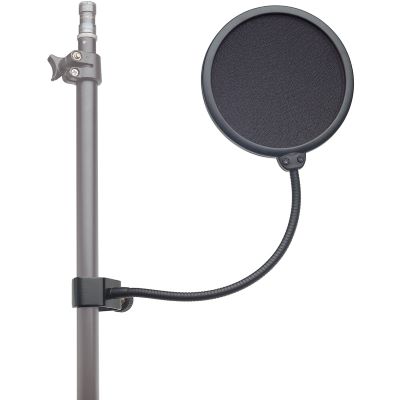
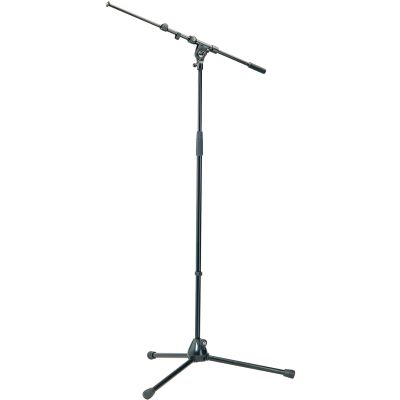
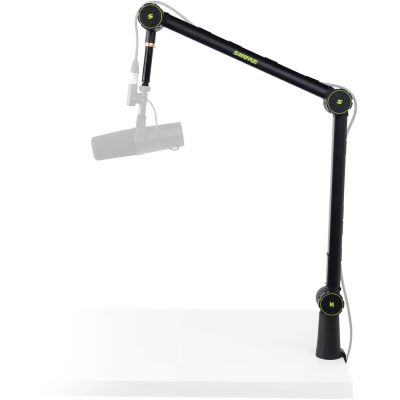
Discover additional microphones, interfaces, stands and acoustic solutions directly through the corresponding manufacturer pages in the Musikhaus Korn shop.









Many recording problems can be avoided before the first take. Microphone position, room reflections and sensible recording levels are often more important than attempting to repair the signal afterwards.
As the distance increases, the proportion of room sound often rises in relation to the direct voice. Start by testing a controlled, closer position.
Nearby hard surfaces create early reflections. Simply changing the position can make the recording sound noticeably more natural.
A recording shield controls local reflections but does not reliably keep street noise or neighbours out of the recording.
Excessive absorption focused mainly on high frequencies can create a dull sound while the midrange still remains boxy.
Modern digital recordings do not require constantly maximised levels. Sufficient headroom protects against clipping when a passage suddenly becomes louder.
Playback from open headphones can travel directly back into the vocal microphone. Closed studio headphones are usually more practical for tracking.
Performance, room, positioning and the recording chain determine the result together. A less expensive microphone in the right position can sound more convincing.
Yes. A furnished bedroom can work well for vocals. The key factors are a low background-noise level, sensible microphone positioning and as few problematic early reflections as possible.
Not necessarily. Large-diaphragm condenser microphones can also deliver very good results in a home studio. The room, polar pattern and microphone distance should simply be controlled deliberately.
Not solely because of its transducer principle. The audible room contribution depends strongly on working distance, polar pattern, voice and position. Dynamic models are often used very close to the source, however, which can provide a high proportion of direct sound.
Depending on its design, it is mounted directly around the microphone. You should additionally check which surface behind the singer reflects the forward-radiated voice back towards the recording position.
A thick absorbent surface can reduce mid- and high-frequency reflections and can therefore be useful as an improvised test. It is neither predictable broadband acoustic treatment nor sound insulation, however.
There is no universal distance. The voice, microphone type and desired proximity effect differ. Start relatively close with a pop filter and compare several distances using short test recordings.
A pop filter is very useful for close vocal recordings. It reduces bursts of air from sounds such as P and B while also providing a reproducible minimum distance to the microphone.
Closed studio headphones are particularly practical because little playback escapes to the outside. This means less backing music is captured again by the vocal microphone.
Post-processing can reduce some problems, but it does not always produce a natural result. The cleaner the original recording, the more freedom you have later when applying compression, effects and mixing.
Typically you need a suitable microphone, an audio interface for an XLR microphone, a microphone cable, stand, pop filter and closed headphones. Depending on the room, a reflection filter or additional mobile absorption may also be useful.
Continue with the individual components of your recording setup and combine microphone, room, interface and accessories into one practical system.
From the room and microphone through the interface to the complete monitoring setup.
Compare transducer principles, polar patterns and applications in a meaningful way.
Assess background noise, reflections and the practical choice of room before the session.
Important additions for a stable and flexible recording position.
A permanent vocal booth is not a requirement for a convincing vocal production. It is more important to find the quietest and acoustically most suitable area of the room, position the microphone and singer appropriately in relation to each other and deliberately reduce problematic reflections.
Begin with short test recordings without additional acoustic elements. Then compare an absorbing surface behind the singer, a mobile reflection filter or a different position. Together with a suitable studio microphone, a correctly gain-staged audio interface, pop filter and closed headphones, this creates a flexible recording position that can be removed completely after the session.
From home studios, microphones and room acoustics to musical instruments and DJ equipment as well as PA, lighting and stage technology, the central Musikhaus Korn guide contains further explanations, comparisons and complete project paths.