2 Channels
Duet, Interview or Two Speakers
A dual receiver is compact and easy to set up. Two handheld transmitters, two bodypacks or a mixed combination can operate simultaneously.

Two singers are still easy to manage. With four headsets, eight wireless microphones or a combination of handheld transmitters, lavaliers, instrument wireless and in-ear monitoring, individual wireless links become a complete RF system. Frequency coordination, receiver structure, antenna placement, rack design and reliable power management now have to be planned together.

One wireless link consists of one simultaneously active transmitter and its associated receiver channel. Count all people and instruments that need to transmit wirelessly at the same time – not the number of microphones you happen to have in storage.
A dual receiver is compact and easy to set up. Two handheld transmitters, two bodypacks or a mixed combination can operate simultaneously.
A four-channel receiver saves considerable rack space compared with four separate devices. Scan functions, channel status and outputs remain together in one central unit.
At this point, all frequencies should be coordinated together. Multi-channel receivers, external antennas and structured power distribution become increasingly useful.
Larger systems benefit from network control, frequency management, antenna cascading and fixed documentation for every wireless link.
Plan some reserve: if you need six wireless links today, a system with a clean expansion path can be more economical than a solution that is already operating at its absolute limit with the sixth channel.
With a single wireless link, one scan and transmitter synchronisation are often sufficient. With multiple links, every active frequency must work together with all the others. At the same time, receiver organisation, antenna placement and power management become more important.
Six individually free frequencies are not automatically a good six-channel combination. With traditional wireless systems, several transmitters can influence one another. Compatible frequency groups or systematic frequency management are therefore important.
Dual and four-channel receivers reduce the number of power supplies, rack units and cables. Professional receivers may also add network control, scan functions and central system monitoring.
An interference-free radio signal does not automatically create a good mix. Each receiver channel should be routed separately to the mixer so that speech, vocals and instruments can be processed independently.
A wireless link is the active connection between one transmitter and one receiver channel. A dual receiver therefore contains two independent receiver channels; a four-channel receiver contains four.
Some systems can store or prepare several transmitters. However, they still cannot transmit simultaneously on the same receiving channel. Two simultaneously active microphones require two separate receiver channels.
Rule for multi-channel wireless: number of simultaneously active transmitters = minimum number of receiver channels required at the same time.
First, examine the existing RF environment at the venue. Compatible frequencies can then be assigned to all microphones. Manufacturer frequency groups, automatic scanning and professional management software can simplify this process considerably.
During the initial scan, external RF sources and already occupied areas should be visible without your own transmitters affecting the result.
Use the receiver or suitable RF tools to search for appropriate frequency areas at the actual venue.
Do not simply choose arbitrary free frequencies. Use coordinated frequency groups or the calculations provided by the wireless system.
Switch on every transmitter and perform a walk test across the actual stage and audience areas that will be used during the event.
At large events: generally available frequency ranges are not reserved exclusively for your system. If several users operate comparable wireless equipment at the same venue, local coordination becomes necessary.
The number of channels does not determine sound quality by itself. The most suitable receiver architecture depends on the current channel count, the planned expansion and how centrally the complete system should be managed.
| Receiver Design | Advantage | Ideal For | Consider When Expanding |
|---|---|---|---|
| Single-Channel | Maximum modularity | 1–2 wireless links | More power supplies and rack space |
| Dual Receiver | Two channels in a compact unit | 2–6 wireless links | Check the antenna structure of the product family |
| Four-Channel | High channel density | 4–16+ wireless links | Cascading and network options |
| Dante / Network | Audio and control can be integrated | Installations and large productions | Plan the network infrastructure together |
With only a few compact receivers, the antennas supplied with each device are often sufficient. As the channel count increases, antenna splitters, receiver cascading and shared external antennas become increasingly interesting.
Receiving antennas should not be hidden deep behind metal, closed cases or other RF-shielding structures. A free position with a sensible radio path towards the stage makes stable reception easier.
Some multi-channel receivers can pass the antenna signal on to additional units. Depending on the system, this can allow eight channels to be organised using only one pair of receiving antennas.
In larger racks, an active splitter can distribute one antenna pair to several receivers. This reduces the number of antennas and helps create repeatable touring setups.
Antenna distribution is a system decision: always check whether the relevant receiver family supports cascading, external antennas or active distribution before purchasing the additional infrastructure.
A multi-channel rack should not only work at the next show. It must also remain understandable under time pressure. Clear channel numbering and defined cable routes prevent mix-ups during setup and operation.

A band using six wireless microphones and four wireless in-ear links does not have six RF systems at the venue – it has ten. IEM transmitters are intentionally strong radio sources and therefore belong in the same overall frequency coordination.
Where possible, different system groups or frequency ranges can help keep microphone and monitoring equipment clearly structured.
Powerful IEM transmitting antennas should not be positioned unnecessarily close to the receiving antennas used by wireless microphones.
The final walk test should take place with wireless microphones, instrument links and in-ear transmitters all switched on.
The selection includes complete multi-channel sets, professional receivers, flexible system packages as well as transmitters and infrastructure for future expansion.
Ready-to-use systems for two or four simultaneously active microphones or audio links.
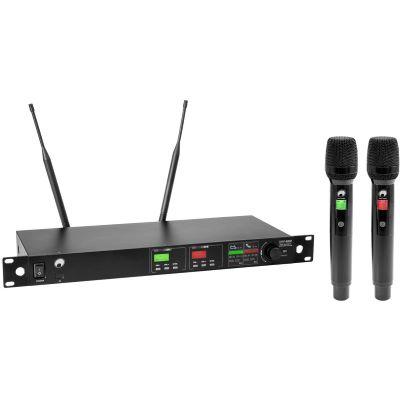
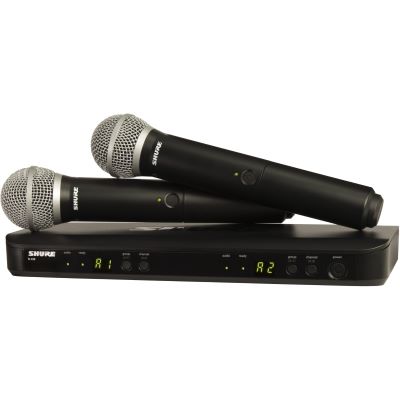
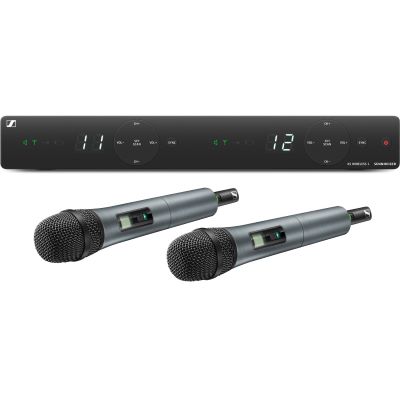

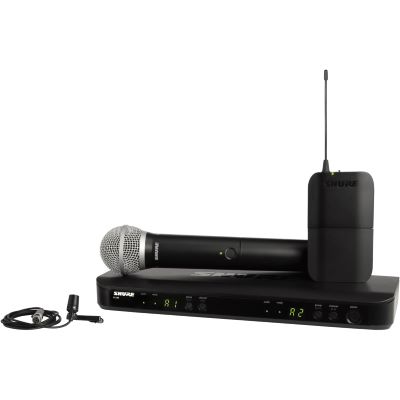

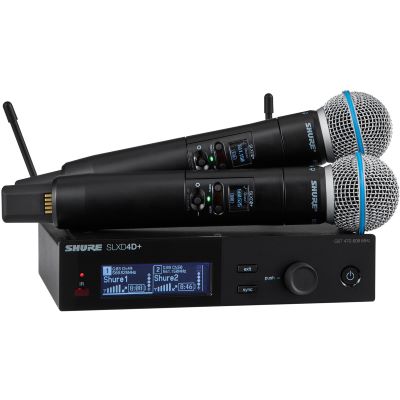


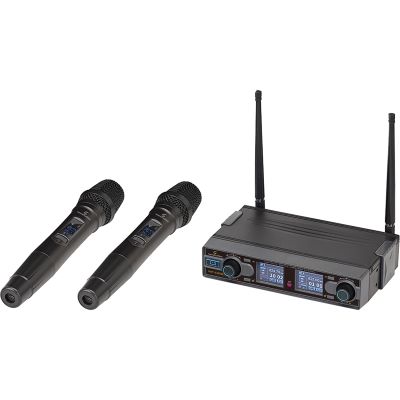
Dual and four-channel rack receivers with advanced management, network and system functions.
View All Wireless ReceiversScalable professional systems for combinations of handheld, bodypack and lavalier transmitters.
Components must always match the receiver series and its frequency variant.
View All Wireless TransmittersWith several wireless links, the product family becomes particularly important. Compatible transmitters, receivers, rechargeable batteries and antenna components are considerably easier to expand within a coordinated system.






All frequencies must be planned as one compatible combination, not as isolated individual channels.
Transmitters and receivers from the same product family must also be compatible in terms of their frequency range.
Poor antenna positioning can affect a wireless link more severely than expected.
IEM transmitters are part of the same overall RF planning at the event.
With eight similar-looking bodypacks, clear numbering prevents a large number of avoidable mistakes.
Spare energy and a documented plan for dealing with a problematic wireless link belong in a professional workflow.
Yes. You need four compatible wireless channels. A four-channel receiver or two dual receivers provide a particularly clear setup. All four frequencies need to be coordinated together.
Not automatically in terms of sound quality. A four-channel receiver can save rack space, power supplies and often antenna complexity. Separate receivers can be more modular for small systems that may later be divided into different setups.
Yes, provided their frequencies are coordinated correctly. The transmitter and receiver forming one individual wireless link must, however, remain within their respective compatible system.
This depends on the particular wireless system, channel spacing and other signals present at the venue. For a concrete channel count, use the compatible frequency groups or frequency calculation provided by the system manufacturer.
Not necessarily with every system architecture. With many traditional rack receivers, shared antenna distribution can make the system considerably clearer. Some modern multi-channel receivers already include cascading options.
Technically, compatible receivers can receive the same transmitted signal. In a traditional PA setup, however, one defined receiver channel is normally assigned to each wireless link so that routing and monitoring remain clear.
The signals compete with one another and reliable transmission is not possible. Every simultaneously active transmitter requires its own suitable wireless channel.
Yes. Wireless microphones and wireless in-ear systems should be treated as one complete RF setup even though they perform different jobs.
Network and software functions become particularly useful when many receivers must be monitored or when new frequency plans are regularly created. They are not essential for two straightforward wireless links.
Do not plan only additional hardware. Organisational reserve is equally important: spare batteries, clearly labelled transmitters, documented frequencies and a defined procedure for dealing with an affected wireless link.
Compare handheld, headset, lavalier and instrument wireless according to the intended application.
Compare receivers when an existing wireless installation needs additional channels or a more centralised rack structure.
Select handheld, bodypack and plug-on transmitters according to the receiver family and exact frequency variant.
Plan wireless monitoring together with the microphone links instead of treating it as an independent RF system.
For two microphones, a dual system is particularly convenient. From four channels onwards, multi-channel receivers, clear labelling and one shared frequency scan become increasingly important. With eight or more wireless links, antenna routing, network control, power management and in-ear monitoring should all be combined within one overall plan.
Microphones, PA systems, mixers, recording, in-ear monitoring, instruments, DJ equipment, lighting and event technology: the central Musikhaus Korn guide provides further buying advice, comparisons and complete setup solutions.


