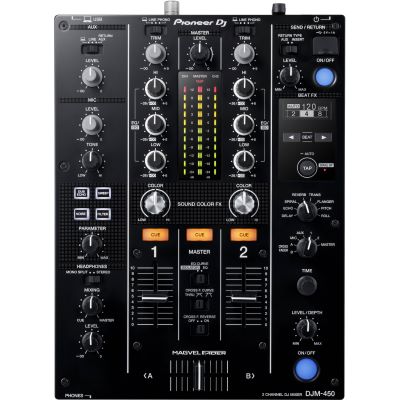
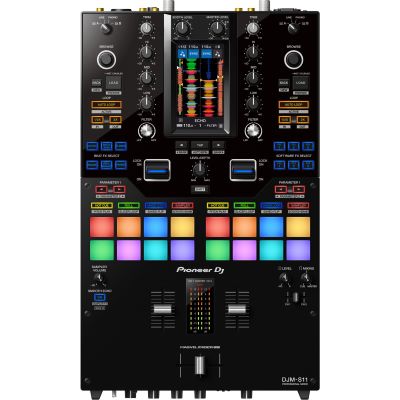
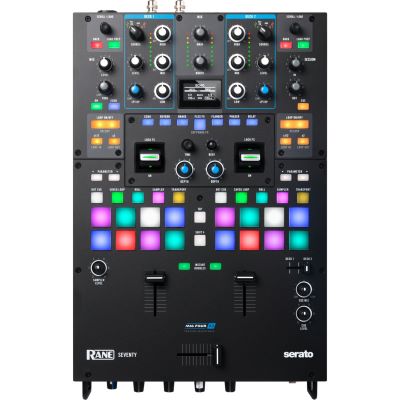
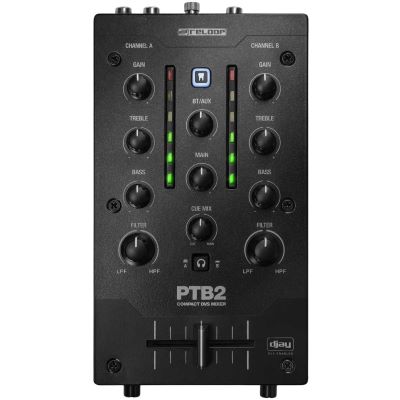
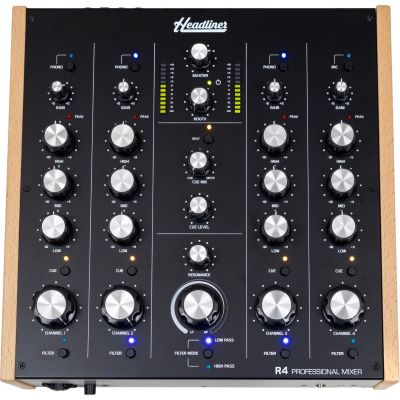
2-Channel Mixer
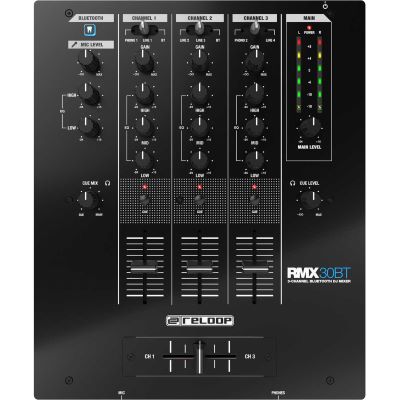
Ideal for two turntables or two media players. Compact, straightforward and completely sufficient for classic two-deck DJ sets.

Two, three or four channels? Classic line faders or rotary controls? Integrated effects, USB audio, DVS or a deliberately pure analogue signal path? The DJ mixer is the control centre between turntables, media players, headphones, booth monitors and the PA system. This guide explains which functions you really need and how mixers for bedroom DJing, vinyl, scratch, mobile DJing, clubs and performance setups differ.
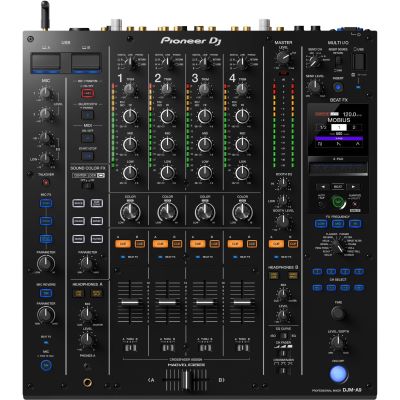
Start with your music sources and playing style. Channel count matters, but phono inputs, USB audio, crossfader design, filters and outputs can be even more important in everyday use.
Begin with your playback sources and the way you mix. Channel count is important, but the crossfader, phono inputs, USB audio, filters and outputs can be more decisive for your actual setup.
Ideal for two turntables or two media players. Compact, straightforward and completely sufficient for classic two-deck DJ sets.
Useful when two main decks should remain permanently connected while a third source, sampler or additional player is also available.
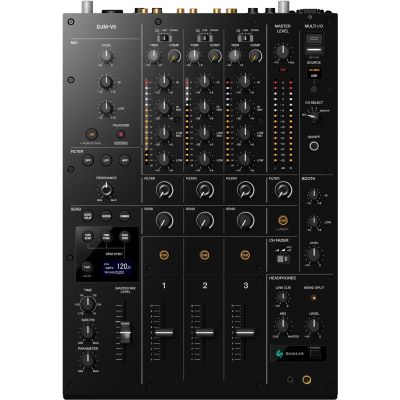
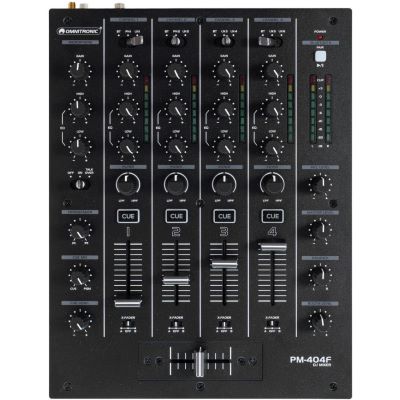
Four players, turntables or several digital sources can be connected simultaneously and controlled independently.
Battle mixers prioritise the crossfader, pads and DVS. Rotary mixers use large rotary controls, isolators and flowing transitions.
Rule of thumb: two sources mean two channels are enough. Add more channels only when you genuinely want additional players, turntables or performance devices available at the same time.
Two turntables or two media players form the classic setup. While one track is playing, the next track is prepared. For vinyl DJs, scratch, DVS and compact home setups, a high-quality two-channel mixer can therefore be exactly the right solution.
An additional channel can accommodate a third player, sampler or another line-level source. This is suitable for DJs who want a compact system without giving up expansion possibilities.
Two players plus two turntables, four separate media players or several computer and performance sources can all remain connected simultaneously. Free channels also make DJ changeovers easier.
A larger mixer requires more desk space and adds more controls. For a pure two-deck setup, a fourth channel therefore does not automatically provide a musical advantage.
The audio path remains largely analogue. Vinyl and rotary DJs in particular appreciate this direct concept. An integrated USB sound card or digital effects are not necessarily part of the design.
Digital signal processing enables integrated effects, digital inputs, USB audio, internal routing and close integration with modern DJ media players.
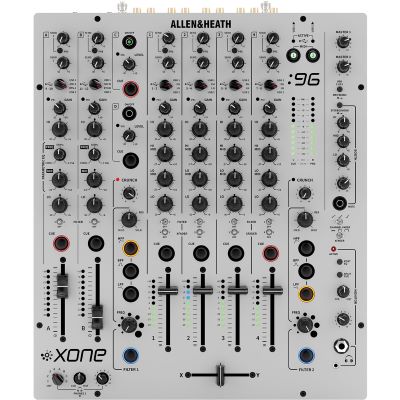
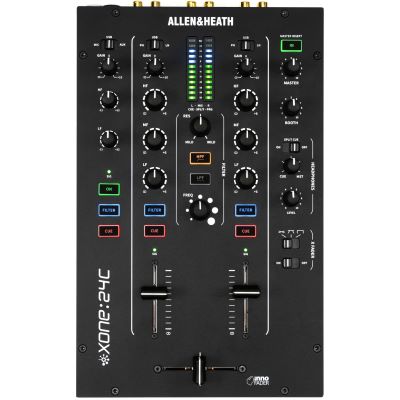
Models such as the Xone:24C combine an analogue signal path with a USB audio interface. Vinyl, DVS, computer audio and external hardware can therefore be connected within one compact system.
Do not judge the mixer only by “analogue” or “digital”. Consider the complete workflow: sources, routing, effects, audio interface, recording, DVS and the connections required by your speakers or PA system.
Vertical channel faders allow fast level changes and are standard on many club mixers. Long and smooth-running faders are particularly useful for controlled blends.
Scratch DJs need a light, durable crossfader with a short cut distance and adjustable curve. Performance pads and DVS control are common additions on modern battle mixers.
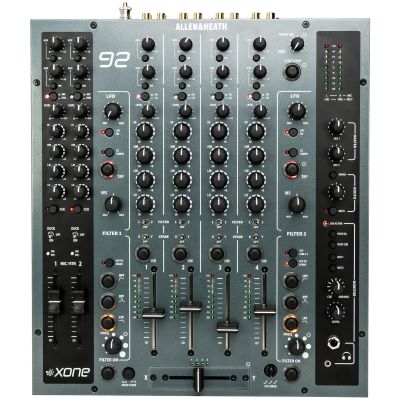
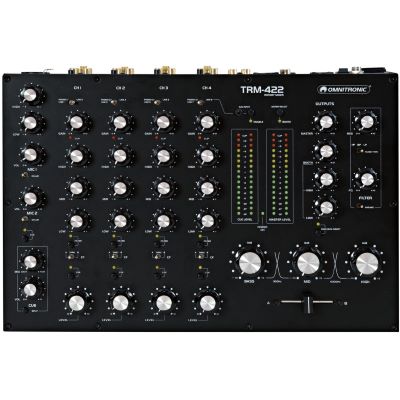
Rotary mixers replace conventional channel faders with large volume controls. The concept is especially popular for long, finely controlled transitions in house, disco, soul and electronic music.
Bass, mids and treble are directly accessible and make a three-band EQ particularly clear for conventional transitions.
Xone- and V10-oriented workflows divide the midrange more precisely and allow finer adjustments during long transitions.
High- and low-pass filters continuously reduce frequency ranges and are among the most frequently used tools in modern DJ mixing.
Rotary-oriented mixers in particular can offer powerful isolators that raise or completely remove broad frequency sections from the master signal.
Media players provide line-level signals. Traditional turntables need a suitable phono preamplifier. Vinyl DJs should therefore check both the number and quality of the available phono inputs.
An XLR Master output is useful for professional PA systems. A separate Booth output controls the DJ monitoring system, while a Record output can provide an independent recording signal.
USB audio interfaces connect DJ software and DVS directly to the mixer. Send/Return or Insert connections become important when external effect processors need to be integrated.
If you want to control DJ software with timecode vinyl or route computer audio through an external mixer, an integrated multichannel audio interface can simplify cabling considerably.
| Type | Channels | Main Focus | Typical Application |
|---|---|---|---|
| 2-Channel Mixer | 2 | Clear and compact | Home, vinyl, two players |
| Battle Mixer | 2 | Crossfader, pads, DVS | Scratch, turntablism |
| 3-Channel Mixer | 3 | Compact + additional source | Hybrid, mobile, performance |
| Club Mixer | 4–6 | Routing, effects, Booth | Club, festival, large setups |
| Rotary Mixer | 2–4+ | Rotaries, isolator, sound | House, disco, vinyl |
Compact mixers for two turntables, two media players, battle and DVS systems.
More sources without moving to a large four-channel booth.
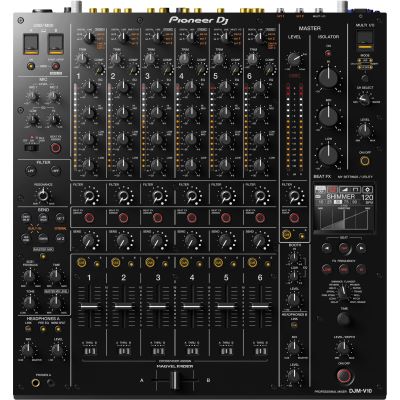
Four or more channels for players, vinyl and complex professional setups.
Independent line-level sources for modular DJ booths.
Vinyl and DVS sources for suitable Phono channels.
Control digital tracks with turntables and DJ software.
External processing for mixers with suitable effect paths.
Protect your mixer during transport to gigs and rehearsals.
From an analogue hybrid mixer to a dedicated battle system: two channels can cover very different DJ workflows.
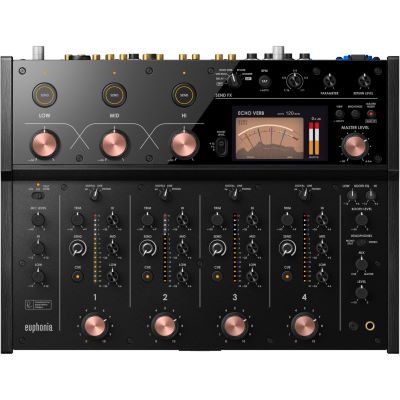
Rotary mixers focus on controlled level changes, isolators, filters and a deliberately hands-on mixing workflow.








Phono, USB, Booth, crossfader and effects can be more important than an additional channel that remains unused.
Media players and traditional turntables require different input stages.
An integrated USB sound card does not automatically mean complete support for your preferred DVS software.
The crossfader is central to scratch performance, but often considerably less important for long club blends.
At events, you should be able to control the DJ monitoring level independently from the Master signal.
Samplers and external effects require suitable additional channels, Send/Return or Insert paths.
Yes. Two turntables or two media players can be mixed completely with a two-channel mixer. Additional channels only become necessary for additional sources.
When three or four players, turntables, computers or other sources need to remain connected simultaneously and be controlled independently.
Usually a two-channel mixer with a particular focus on the crossfader, scratching, performance pads and DVS control.
Large rotary controls are used for channel volume instead of conventional linear channel faders. This concept supports particularly smooth and finely controlled transitions.
Not necessarily for purely analogue or media-player setups. For DVS, computer audio or recording, an integrated multichannel audio interface can simplify cabling considerably.
Three bands are straightforward and widely used. Four bands provide more detailed midrange control and are especially useful for long and precise transitions.
Look for high-quality Phono inputs, suitable EQ and filter functions and the fader or rotary control concept that matches your preferred playing style.
Four or more channels, professional Master and Booth outputs, flexible inputs and robust controls are particularly useful. The effect and routing concept should match the desired workflow.
Yes, if the controller or its audio interface provides a suitable output. The external mixer then treats the controller signal like another Line source.
DJM mixers often focus strongly on integrated effects and a digital club workflow. Xone models are known for analogue signal paths, four-band EQs and characteristic filters. The better choice depends on your preferred way of working.
A good two-channel mixer is completely sufficient for two turntables or media players. Three channels add useful reserve, while four-channel club mixers are especially attractive for modular player, vinyl and hybrid systems.
Your playing style then determines the details. Scratch DJs need a fast crossfader and DVS functions. Club DJs focus on routing, Booth monitoring and effects, while rotary DJs prefer large rotary controls, isolators and a particularly direct mixing workflow.
Finally, check the rear panel carefully: PHONO, LINE, USB, Master, Booth and Send/Return should match your complete system. This ensures that the mixer fits not only the number of music sources but your entire DJ workflow.
From DJ mixers, controllers and media players to vinyl and performance setups as well as recording, musical instruments and event technology, the central Musikhaus Korn guide contains further comparisons and decision-making aids.