Musikhaus Keks
Welcome!
Our cookies offer you a fast, relaxed and full-featured shopping experience. Some are necessary to operate the website and its functions. Others help us to improve our services. If you agree to this, simply consent to the use of cookies for preferences, statistics and marketing by clicking on "OK". Alternatively, you can deactivate individual cookies under "Customise cookies" or all cookies, except those required for the function of our website, under "Reject all".
Musikhaus Korn Recording Guide

Understanding Microphone Preamps: Gain, 48 V & Sound

A microphone produces a comparatively weak audio signal. A microphone preamplifier – or mic preamp – raises this signal to a level that audio interfaces, converters and other studio equipment can work with effectively. Good preamps should provide sufficient gain while adding as little unwanted noise as possible. Other designs are deliberately chosen to add colour, saturation or character to voices and instruments.

Gain & headroom explained Understand 48 V, pad & impedance Choose 1, 2 or 8+ channels correctly
Gain Amplifies the weak microphone signal
48 V Powers many XLR condenser microphones
Pad Reduces particularly strong input signals
ADAT Can transmit additional preamp channels digitally
Define the purpose first

When Do You Actually Need an External Microphone Preamp?

Modern audio interfaces already contain microphone preamps, so an additional device is not automatically necessary. An external preamp becomes interesting when your existing system no longer provides enough gain, channels, connections or the sound character you want.

✓
Interface Is Enough

One or Two Conventional Microphones

If your audio interface provides enough clean gain and the required phantom power, you normally do not need an additional preamp for standard home-studio recordings.

+
More Amplification

Quiet Dynamic or Ribbon Microphone

If a microphone requires a large amount of gain, a more powerful preamp or a suitable inline booster can provide a more comfortable gain range.

♫
Sound Shaping

Shape the Sound During Recording

Transformers, valves and deliberately driven amplifier stages can add harmonic colour, density and saturation before the signal even reaches the DAW.

8
More Channels

Drums, Bands and Larger Studios

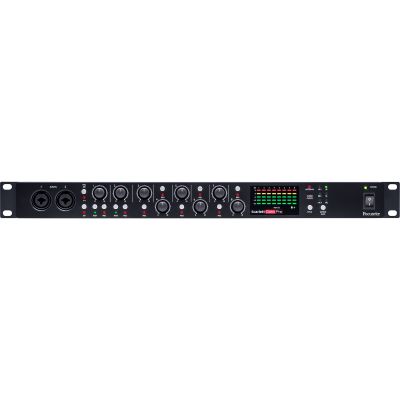
An eight-channel preamp with ADAT can add microphone inputs to a compatible audio interface without replacing the complete interface.

Practical rule:

Do not buy an external preamp simply because it appears more “professional”. Buy one when it solves a specific problem: more gain, more channels, additional connections or a sound character you deliberately want to record.

From microphone signal to working level

What Does a Microphone Preamp Do?

Microphones produce signals at microphone level. This level is considerably lower than the signal level normally used by downstream studio equipment and converters.

Amplification

Amplify the Signal

The preamp increases the voltage of the microphone signal. The required amount of gain depends on the microphone, sound source, distance and desired recording level.

Signal Quality

Keep the Signal as Clean as Possible

Every electronic stage produces some noise and distortion. A good preamp should provide sufficient amplification without unwanted noise becoming a dominant part of the recording.

Character

Optionally Shape the Sound

Not every preamp is designed to remain completely invisible. Certain circuits are chosen specifically because of their own sonic character.

What Does “Bringing Mic Level to Line Level” Mean?

In simplified terms, the preamp receives a weak microphone signal and sends a much stronger signal to the next part of the recording chain. Converters, compressors, equalizers and other Line-level equipment can then process the signal effectively.

Is More Gain Automatically Better?

No. What matters is having enough amplification for the specific microphone. A sensitive condenser microphone on a loud vocalist may require relatively little gain, while a low-output dynamic microphone used for speech can require significantly more.

Set levels correctly

Understanding Gain, Headroom and Noise

The Gain control determines how strongly the input stage amplifies the microphone signal. The aim is a strong, clean level with enough reserve for unexpected peaks.

Ask the singer, speaker or musician to perform the loudest expected passage and set the gain according to that level. A recording does not have to remain just below 0 dBFS at all times.

Modern digital systems provide sufficient dynamic range, so leaving a sensible safety margin is more useful than recording unnecessarily hot.

Headroom is the reserve between the normal operating level and overload. Vocals, snare drums, percussion and brass instruments can produce short peaks well above their average level.

Gain is not a quality competition.

The right amount of usable, low-noise gain for the microphone and source is more important than the largest number printed in the specifications.

Warm Audio WA-73 microphone preamp with gain controls and level settings
Input and output gain controls can also be used creatively on character-oriented analogue preamps.
The most important switches

48 V, Pad, Low-Cut, Polarity and Impedance

These controls solve different problems in the recording chain. They should not be activated simply because they are available.

Phantom Power

48 V Phantom Power

Many professional XLR condenser microphones require P48 phantom power. Activate it only for equipment designed to receive it.

High Input Levels

Pad

A pad attenuates a particularly strong input signal before it can overload the sensitive amplifier stage.

Low Frequencies

Low-Cut / High-Pass Filter

A high-pass filter reduces low-frequency disturbances such as footfall noise, rumble or unnecessary low-frequency room content.

Multi-Mic Setups

Polarity Ø

Reversing polarity can be useful when several microphones are used together. It does not, however, correct timing differences caused by different microphone distances.

Microphone Interaction

Input Impedance

Some preamps provide selectable input impedances. With certain dynamic, ribbon and transformer-coupled microphones, changing the electrical load can result in subtle changes in level and sound.

Which preamp type fits the task?

Compare Microphone Preamps by Application

The useful solution depends on the problem you want to solve – not simply on the price or the size of the device.

Comparison of microphone preamp solutions by task, important features and typical use
Task Solution Important Typical Application
More Gain Inline Booster Check microphone type Podcast, ribbon and dynamic microphones
Clean Single Track 1-Channel Preamp Gain, noise and headroom Vocals and instruments
Stereo / Two Sources 2-Channel Preamp Consistent channel behaviour Piano, stereo recording and duos
Add Sound Colour Valve / Transformer Preamp Input and output gain Vocals, bass and guitars
Drums / Complete Band 8-Channel Preamp 48 V, ADAT and word clock Multitrack recording
Internal versus external

When Does an External Preamp Really Make Sense?

An external microphone preamp is most useful when it provides something your existing audio interface does not.

Gain Reserve

More Clean Gain

For low-output dynamic microphones or passive ribbon microphones, a more powerful input stage can provide a more comfortable working range.

Creative Sound

Deliberate Analogue Character

Transformers, valves and discrete circuits can become a creative part of the recording sound rather than merely amplifying it.

Studio Expansion

More Microphone Channels

An ADAT-equipped preamp can expand a compatible interface from a few microphone paths to significantly more simultaneous recording channels.

A modern interface preamp is not automatically inferior.

Choose an external device because of a concrete technical or sonic benefit rather than because it is external.

Compact additional amplification

Inline Microphone Preamps for More Gain

Inline boosters are placed between the microphone and the main microphone preamp. They are particularly useful when the existing interface is fundamentally suitable but a specific microphone requires more gain reserve.

Avoid unnecessary double preamplification

How to Connect an External Microphone Preamp Correctly

The external preamp should normally feed a genuine Line input on the audio interface whenever possible.

Microphone to Preamp

Connect the microphone via XLR to the Mic input of the external microphone preamp.

Check 48 V

Activate phantom power on the preamp only when the connected microphone requires it.

Preamp to Interface

Connect the Line output of the external preamp to a genuine Line input on the audio interface whenever possible.

Check the Levels

Adjust the preamp and Line input so enough headroom remains and no input stage is overloaded unnecessarily.

Important:

Do not unnecessarily send the Line output of an external preamp through another microphone preamp with its gain turned up. Use a dedicated Line input or preamp bypass on the interface whenever the design provides one.

The complete signal chain

Related Product Categories Around the Mic Preamp

Recording Source

Studio Microphones

Large- and small-diaphragm microphones for vocals, instruments and stereo recordings.

Conversion & DAW

Audio Interfaces

Converters, Line inputs and internal preamps for connecting the recording chain to your DAW.

Balanced Connection

Microphone Cables

Balanced XLR connections between the microphone and microphone preamplifier.

Instruments & Signal Matching

DI Boxes

Match instrument signals for studio, stage and combined preamp recording setups.

Manufacturer worlds

Microphone Preamp Brands at Musikhaus Korn

Compare different circuit concepts, channel counts and expansion options directly within the individual manufacturer ranges.

Frequently asked questions

Answers About Microphone Preamps

Do I Need an External Preamp for Every Microphone?

No. Audio interfaces and mixing consoles normally already contain microphone preamps. An external preamp is primarily useful when you need more gain, more channels, additional functions or a specific sound character.

How Much Gain Does a Microphone Need?

This depends on the microphone sensitivity, sound source and microphone distance. Condenser microphones often require less amplification, while low-output dynamic and passive ribbon microphones can require considerably more gain.

What Does 48 V Phantom Power Do?

It supplies compatible microphones and active equipment with power through the XLR cable. Activate it only when the connected device is specified for phantom power.

What Is an Inline Preamp or FetHead?

It is a compact additional amplifier placed between the microphone and the main microphone preamp. Depending on the version, it can be designed for dynamic, ribbon or phantom-powered microphones.

Is a Tube Preamp Automatically Better?

No. Valve, transistor and transformer circuits represent different technical and sonic concepts. What matters is whether the specific preamp suits the microphone, source and desired result.

What Does a Pad Do on a Microphone Preamp?

A pad reduces a very high input level so that the input stage does not overload when recording loud sources or particularly strong microphone signals.

How Do I Connect an External Preamp to My Audio Interface?

Connect the microphone to the external preamp and then connect its Line output to a suitable Line input on the interface. This avoids unnecessary double microphone preamplification.

What Is the Benefit of an 8-Channel Preamp with ADAT?

It can add additional digital input channels to a compatible audio interface. This is particularly useful for drum recording, complete bands and larger multitrack sessions.

What Does Variable Input Impedance Mean?

Some preamps allow different electrical loads to be selected for the microphone. Depending on the microphone design, this can subtly affect both level and sound.

Is Polarity Reversal the Same as Phase Correction?

No. The Ø switch reverses polarity. Timing differences between two microphones remain and must be controlled through microphone placement or appropriate processing.

The key points

Understanding Microphone Preamps: Gain, 48 V & Sound

A microphone preamp raises the comparatively weak signal of a microphone to a level that can be processed effectively by the rest of the recording chain. Sufficient gain, low self-noise and adequate headroom are the most important technical fundamentals.

An external preamp is not automatically better than the preamp built into a modern audio interface. It becomes useful when additional gain reserve, more microphone channels, specialised connections or a particular analogue sound colour is required. Inline boosters solve the more specific problem of a microphone signal that is too weak for the available preamp.

For band and drum recording, eight- and twelve-channel systems provide a particularly practical expansion path. ADAT and other digital connections allow additional preamps to be integrated into many existing audio interfaces. This turns the microphone preamp from a simple Gain control into a flexibly planned part of the complete recording system.

More Buying Advice

From the Microphone Preamp to a Complete Recording Setup

Discover more Musikhaus Korn guides covering microphones, audio interfaces, guitar recording, studio monitoring, headphones and complete studio technology.