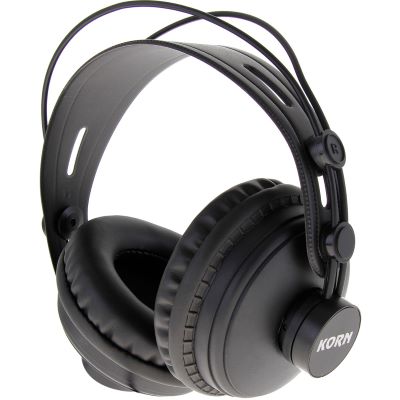
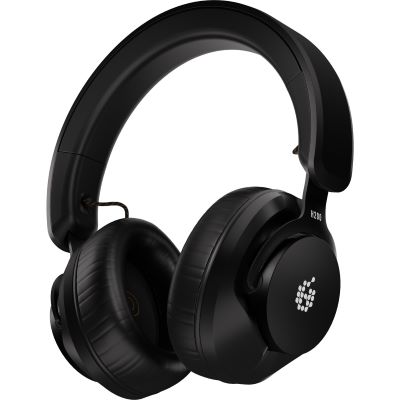
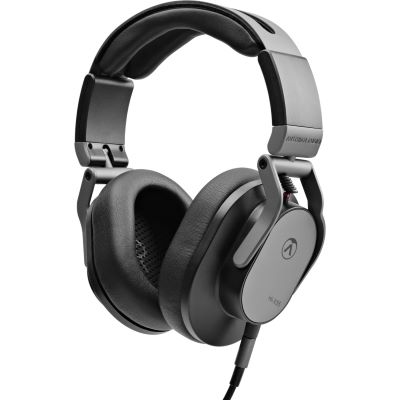
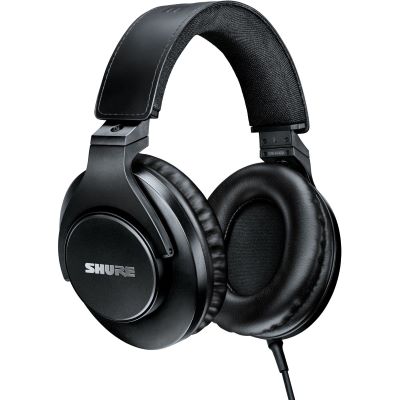
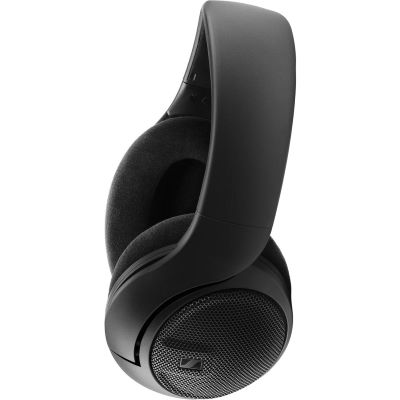
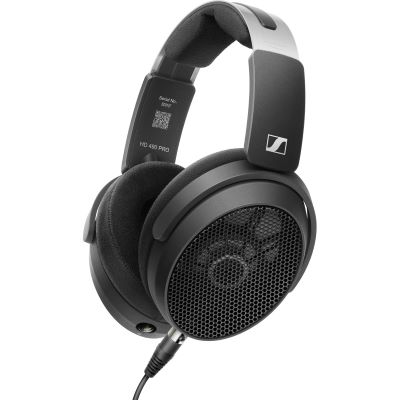
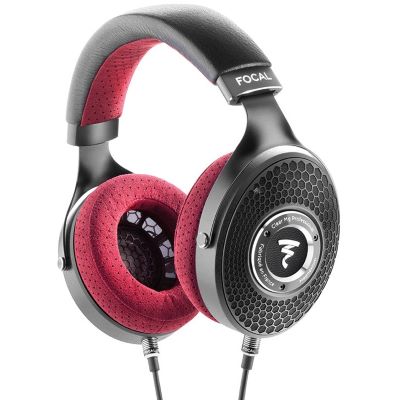
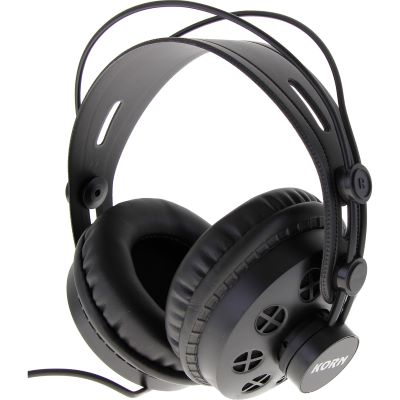
Closed-Back
During vocal recording, as little click, playback or metronome sound as possible should leak back into the microphone. A well-isolating closed design is particularly useful for this.

Closed-back studio headphones provide stronger isolation from your surroundings and allow less sound to escape from the ear cups. This makes them the classic choice for recording. Open-back headphones allow air and sound to pass through the ear cups and often provide a more spacious, less enclosed listening experience – a major advantage for mixing, editing and critical listening. Semi-open models sit between the two concepts.
The important question is not which construction is generally better. What matters is the main task your headphones need to perform.
During vocal recording, as little click, playback or metronome sound as possible should leak back into the microphone. A well-isolating closed design is particularly useful for this.
In a quiet environment, open headphones often provide more generous stereo imaging and a less enclosed listening experience. This can also make long mixing sessions feel more comfortable.
If you want to buy only one pair and also record microphones, a good closed-back model is particularly flexible. Semi-open headphones work well when isolation is less important.
Use closed headphones for performers and tracking, and open headphones for the engineer, arrangement, mixing and critical detail checks.
Choose a closed-back model if you record vocals, acoustic instruments or other microphone sources. If you work almost exclusively on mixing, editing and production in a quiet environment, starting directly with an open-back design can make more sense.
The rear of the driver is largely separated from the surrounding room. Less headphone sound escapes to the outside and less environmental sound reaches your ears.
The rear of the ear cup is acoustically more transparent. Your ears remain more connected to the surrounding room and reproduction can feel less confined “inside the head”.
The ear cup is partially ventilated. This creates a middle ground between isolation and a more open presentation, although it does not provide the complete advantages of either extreme.
No. The construction alone does not determine the frequency response. A very well-tuned closed-back headphone can be considerably more reliable than a poorly tuned open model.
Open construction can, however, make certain acoustic tuning approaches and a spacious presentation easier to achieve.
The enclosed air volume behind the driver affects its acoustic behaviour. In addition, the seal of the ear pads influences perceived bass.
A poor fit or glasses that interrupt the seal can therefore change the bass balance of a closed-back headphone noticeably.
The construction determines the practical conditions. Whether a particular headphone is sonically suitable for your studio depends on the specific model.
| Characteristic | Closed-Back | Open-Back | Semi-Open |
|---|---|---|---|
| Isolation | High | Low | Medium |
| Sound Leakage | Low | Clearly Audible | Medium |
| Microphone Recording | Very Suitable | Limited Suitability | Conditionally Suitable |
| Mixing | Absolutely Possible | Particularly Popular | Well Suited |
| Spatial Presentation | Model-Dependent | Often More Spacious | Between Both |
| Noisy Environment | Suitable | Unsuitable | Limited |
| Long Sessions | Comfort Depends on Model | Often Airier | Good Middle Ground |
During vocal recording, the microphone is often only a few centimetres away from the performer. Loud playback from open headphones can therefore become audible on the recorded vocal track.
Closed ear cups reduce this bleed. Click tracks are particularly problematic: a small amount of music leaking into a vocal recording can often disappear into the final mix, while a sharp metronome can remain clearly audible during quiet passages.
The same principle applies to acoustic guitar, strings, speech and other sensitive microphone recordings.
When playing electric guitar through DI, keyboard, e-drums or purely virtual instruments, isolation is less critical as long as no open microphone is active.
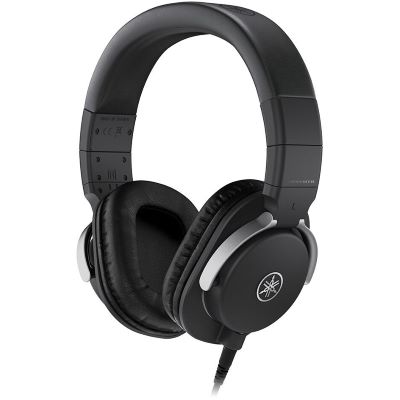
Many open models provide a wider and airier stereo presentation. This can make it easier to judge panning, reverberation and the spatial depth of a mix.
The open construction can feel more natural during long sessions. However, fans, conversations and other environmental sounds are also much easier to hear.
Open studio headphones provide a useful second perspective alongside loudspeakers. Details and deep frequencies can be checked without the same influence from room acoustics.
Headphones do not reproduce the natural left-to-right loudspeaker crosstalk of a stereo monitor system and therefore create a different spatial perception. Important mix decisions should ideally be checked on several playback systems you know well.
Semi-open headphones are interesting when you want a somewhat more open listening experience without giving up acoustic damping completely.
For keyboards, digital pianos, e-drums and music production without an active microphone, semi-open models provide a comfortable middle ground.
Compared with a fully closed headphone, the more open acoustic construction can make spatial decisions and longer production sessions feel more comfortable.
Semi-open still means that sound escapes from the ear cups. With sensitive microphones, a fully closed-back model remains the safer choice.
Impedance is important, but it does not determine on its own how loud a particular headphone will play from a given output. Sensitivity and the available power of the headphone amplifier also need to be considered.
Many headphones in the approximate 30 to 80-ohm range can be used flexibly with audio interfaces, mobile recorders and other devices. The actual sensitivity remains important.
Models with, for example, 120 or 250 ohms can be well suited to studio equipment with a powerful headphone output. Check whether your existing interface provides sufficient volume and dynamic headroom.
During recording sessions, an additional headphone distribution amplifier can provide several independent listening positions for musicians and engineers.
Impedance, sensitivity, required listening level and the actual headphone amplifier form one system. A lower impedance does not automatically mean “better for every interface”, and a higher impedance does not automatically mean “more professional”.
Headphone output, volume control and sufficient amplifier power for the selected headphone are important selection criteria.
Replacement pads, cables, adapters, distribution systems and headphone amplifiers keep a studio headphone setup flexible over the long term.
Headphones and loudspeakers provide two different perspectives on stereo imaging, balance and deep bass and therefore complement each other well.
Microphones, interfaces, monitoring and additional equipment for complete recording and production workstations.
Compare different open, closed and semi-open headphone concepts directly within the individual manufacturer ranges.








Open-back models are often preferred because their spatial presentation can be comfortable for judging panorama, reverberation and long mixing sessions. Good closed-back studio headphones can also be used successfully for mixing, particularly in noisy or shared environments.
They reduce the amount of sound escaping from the ear cups. This means playback and click tracks are less likely to leak back into the vocal microphone.
Yes, but playback can bleed into the microphone. Closed-back headphones are therefore usually the more practical solution for professional vocal recording.
The ear cup is partially acoustically open. This creates more interaction with the surroundings than a closed model, but less than with a fully open headphone.
If recording is part of your everyday workflow, a closed-back model is the most flexible solution. For almost exclusive mixing and production in a quiet room, an open-back headphone can make more sense.
No. Neutrality depends on the driver, housing, pads and tuning of the specific model. Open construction primarily determines isolation and the acoustic operating conditions.
This cannot be determined from the ohm value alone. The output capability of the interface and the headphone sensitivity are also relevant. With high-impedance models, make sure enough volume and dynamic headroom are available.
They often feel airier because there is less acoustic isolation. However, weight, headband pressure, pad material and the shape of your head have at least as much influence on actual comfort.
Technically yes, but it is unfavourable for critical work. Environmental sound reaches your ears almost unhindered and can change your perception of details and tonal balance.
Not necessarily, but the combination is very practical: closed-back for tracking and open microphone recording situations, open-back for editing, mixing and critical cross-checking.
Closed-back studio headphones are the classic choice for recording and monitoring. They reduce environmental noise and at the same time prevent playback or click tracks from escaping strongly into the room. This isolation is particularly useful when recording vocals, speech and acoustic instruments.
Open-back studio headphones are especially interesting for mixing, mastering, editing and critical listening in a quiet environment. Their acoustically transparent ear cups can provide a spacious stereo presentation and a more airy listening experience. In return, they offer very little isolation.
Semi-open headphones combine characteristics of both concepts and are well suited to production, instruments and general monitoring. A flexible studio setup often eventually combines a closed tracking headphone with an open reference model.
In addition to construction, consider impedance, sensitivity, wearing comfort, weight, availability of replacement parts and the headphone output you already have. Studio headphones are often worn for many hours at a time, so fit and a sound signature you know well are at least as important as individual technical specifications.
Discover further Musikhaus Korn guides covering studio monitors, audio interfaces, microphones, recording, instruments and complete studio technology.