PA System
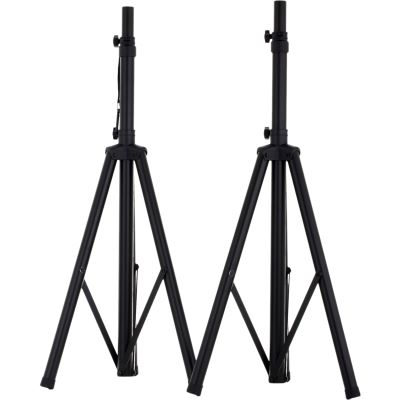
Loudspeakers need to reach the audience area in a controlled way. A mobile active PA can be sufficient for smaller events, while larger areas require a professionally matched and potentially zoned system.

Outdoors, there are no walls, ceiling or acoustic support from a room. At the same time, longer distances, wind, weather, power routes and large audience areas become part of the technical challenge.
A good open-air setup therefore does not begin with one loudspeaker. It begins with the area, audience, programme and infrastructure. This guide covers PA, subwoofers, digital mixers, stage boxes, wireless microphones, monitoring, lighting, stage equipment, power distribution, cable protection, transport and backup.

Visitor numbers and volume are not the only important factors. Consider the actual audience area, distance between stage and audience, music style, amount of speech, number of performers, power supply and whether each item of equipment is genuinely suitable for the intended outdoor conditions.
Loudspeakers need to reach the audience area in a controlled way. A mobile active PA can be sufficient for smaller events, while larger areas require a professionally matched and potentially zoned system.
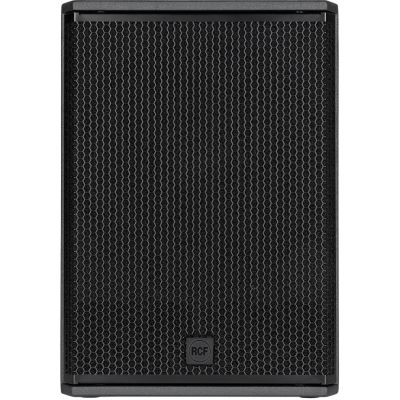
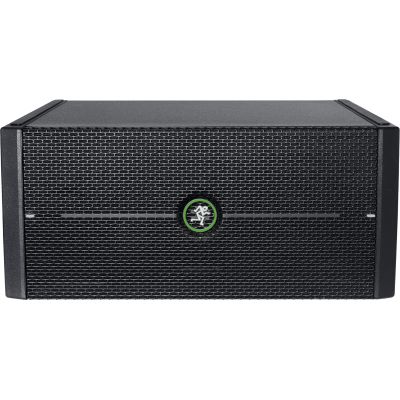
Live bands and DJs benefit from separate low-frequency reinforcement. The number and positioning of subwoofers have a major influence on bass distribution across the area.
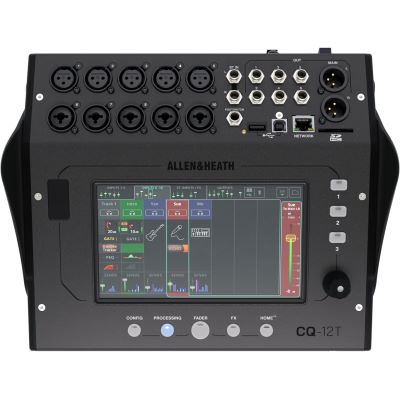
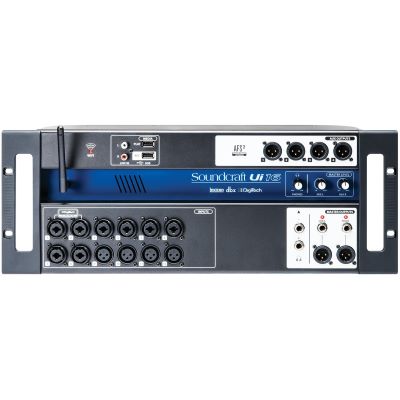
Microphones and instruments are collected on stage and routed to the mixing position. Digital mixers and stage boxes reduce long bundles of individual audio cables.
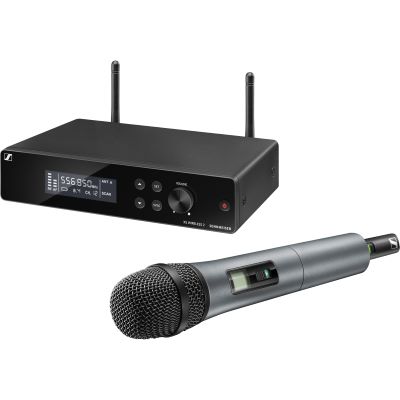
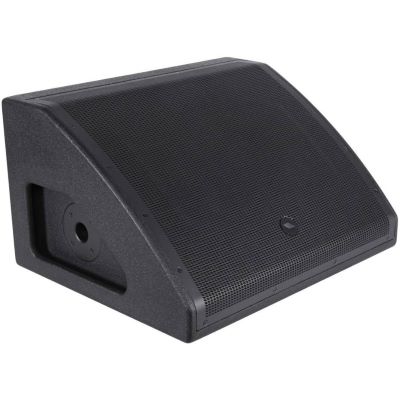
Wireless microphones provide freedom of movement. Stage monitors or in-ear systems give musicians their own mixes.
Lighting, trusses and stage surfaces need to suit the venue. Outdoors, the suitability of the equipment and installation for the actual environmental conditions requires particular attention.
Long power and signal paths belong in the site plan from the beginning. Visitor routes, work areas and vehicle access should not be considered only after setup starts.
For larger public open-air events: stage engineering, rigging, electrical distribution, weather protection and large-scale sound reinforcement belong in the hands of appropriately qualified event professionals. A small mobile PA setup cannot simply be scaled directly to festival size.
Visitor numbers are only a rough guide. A compact dance floor has different requirements from a long festival site. Speech, live music and DJ sets also require different amounts of headroom.
| Application | Sound Reinforcement | Mixing | Stage | Planning |
|---|---|---|---|---|
| Small Yard / Garden | Compact active or column PA | Compact mixer | Flat performance area | Mobile |
| Club or School Festival | Two tops + subwoofer | Digital mixer useful | Platform or small stage | Scalable |
| Open-Air Concert | Powerful PA + subs | Digital mixer + stage box | Stage + monitoring | Technical concept |
| Town Festival / Festival | Professionally planned system | FOH + digital stage I/O | Professional outdoor stage | Professional planning required |
Outdoors, sound level falls with increasing distance and there are no reflective room boundaries to support the system. Loudspeakers therefore need sufficient headroom and should be positioned to cover the actual audience area as evenly as possible.
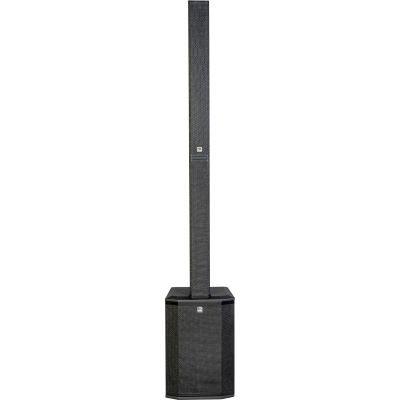
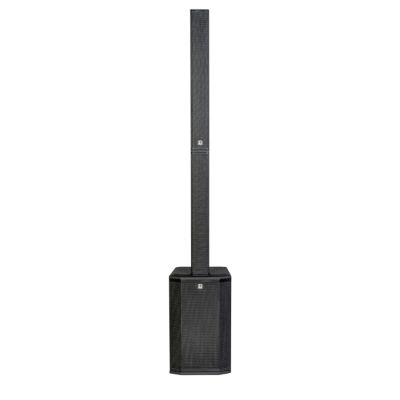
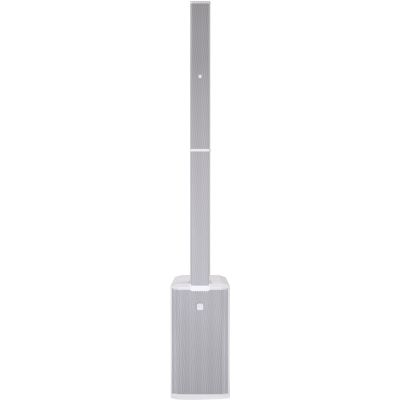
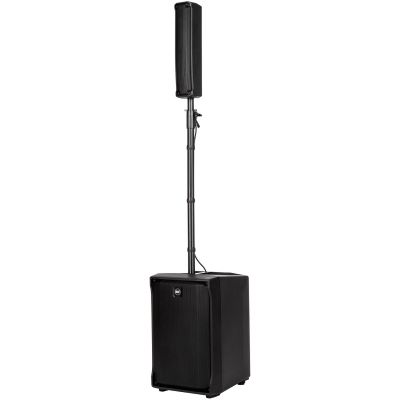
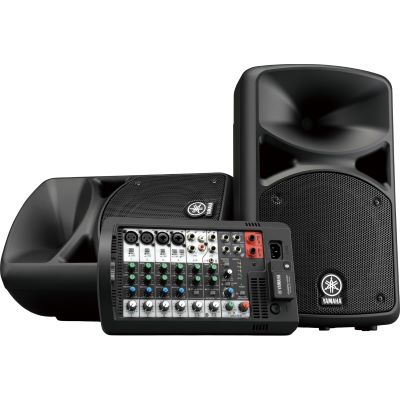
Active loudspeakers are practical for small and medium mobile events because amplification and signal processing are already integrated into the cabinet.
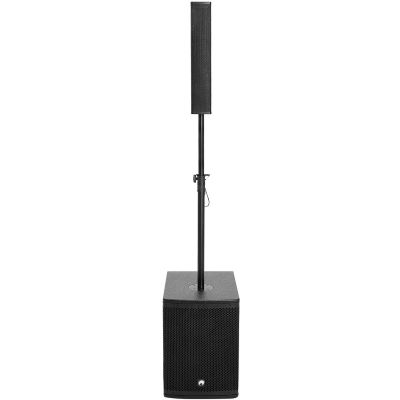
Quick to assemble and transport-friendly. They are particularly suitable for smaller areas, speech and moderate music levels.
Over longer distances, an additional loudspeaker zone can be more useful than simply running the main system louder. Additional zones need correct level and time alignment.
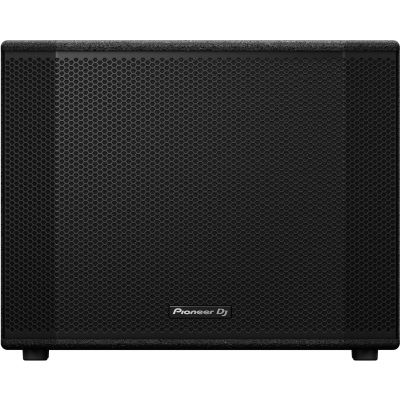
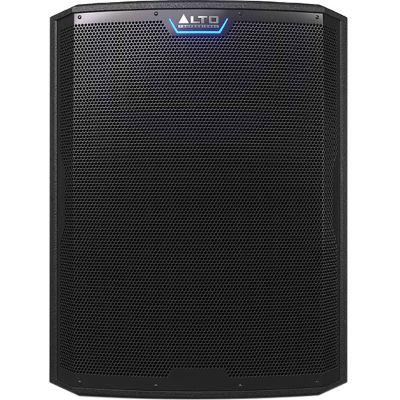
A 15-inch subwoofer can provide a practical compromise between transport size and bass headroom. 18-inch systems often provide greater low-frequency extension and reserves for larger events, but require more transport capacity and space.
Positioning is even more important than driver size alone. Several subwoofers should not simply be distributed randomly across the site. Their position and alignment affect where low frequencies add together or cancel out.
For larger open-air systems, the subwoofer concept should therefore be treated as part of the complete technical plan.
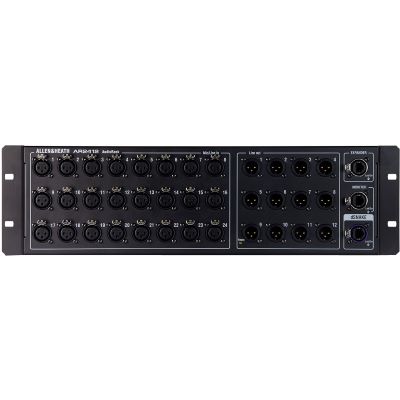
A band quickly creates many signals: vocals, drums, guitars, bass, keyboards, moderation and playback. A stage box collects these signals at the stage and routes them to the mixer in a structured way.
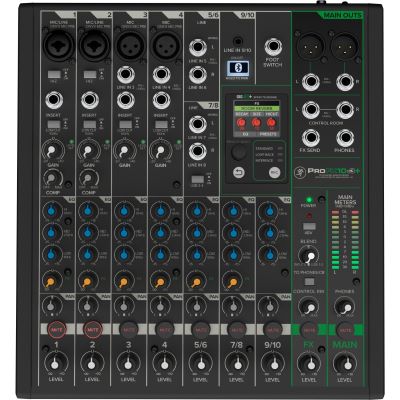
Scenes, EQ, gates, compressors, effects and monitor paths can be managed centrally. Settings for different bands can also be stored in advance.
A compatible stage box reduces the number of individual analogue lines between the stage and FOH. Compatibility with the mixer system is essential.
A robust traditional solution when many XLR signals need to follow one defined cable path. Plan the required send and return channels beforehand.
Wireless systems are especially practical for moderation and moving performers. Outdoors, longer distances may need to be covered and many other wireless systems can be active at the same event.
Multiple wireless channels should therefore be planned together and tested across the actual event area before the audience arrives.
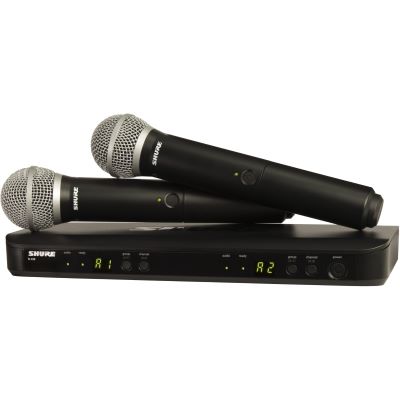
Suitable for moderation, announcements and straightforward club or town events.
Useful for interviews, presentations and two alternating moderators.
With several performers, frequency ranges, antennas, batteries and receivers should be considered as one complete wireless system.
Classic wedges can be deployed quickly and do not require personal receivers. The more independent monitor mixes are required, the more mixer outputs need to be available.
In-ear monitoring can reduce stage volume and provide individual mixes. Wireless systems additionally require appropriate frequency planning and reliable power supply.
Outdoors, only use equipment whose protection rating and installation are genuinely suitable for the actual environment. Placing a normal indoor lighting system under a roof does not automatically make it permanently weatherproof outdoor equipment.
Moderators and performers first need to be clearly visible.
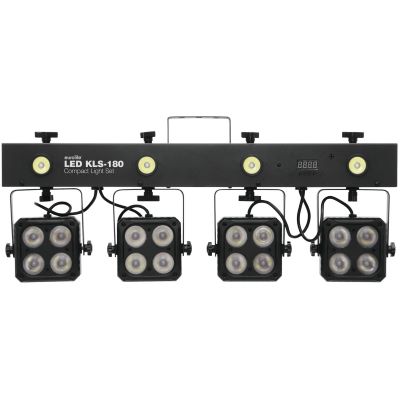
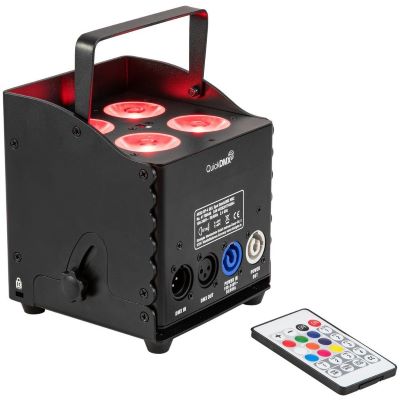
Coloured area lighting shapes the stage, backdrop and scenery.
Moving effects complement concerts and evening programmes.
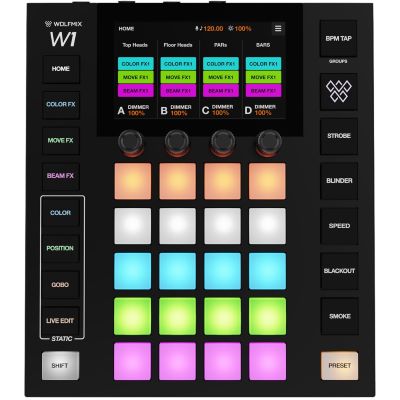
Central control makes scenes and cues reproducible.
Outdoor lighting: protection ratings, connectors, covers, positioning, wind loads and manufacturer instructions need to be checked individually for every fixture and installation.
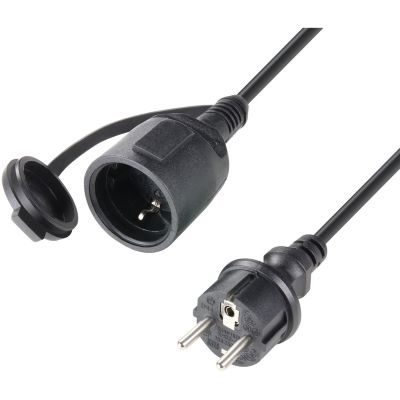
Audio, lighting and other equipment require an appropriately dimensioned power distribution system. High-power systems should not be combined through arbitrary extension leads without proper planning.
Rain, wind and temperature affect both equipment and stage structures. A clear protection and shutdown concept for sensitive equipment should exist before the event begins.
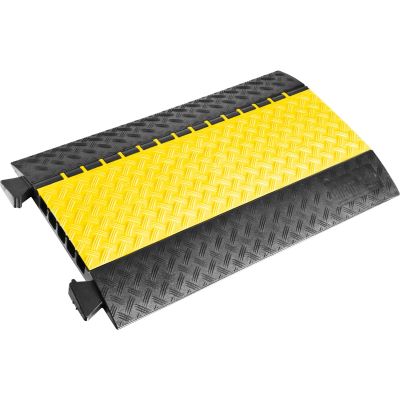
Where cables must cross visitor or work routes, suitable cable bridge systems can provide mechanical protection and organised cable routing.
Top speakers for mobile PA systems.
Low-frequency reinforcement for concerts and dance floors.
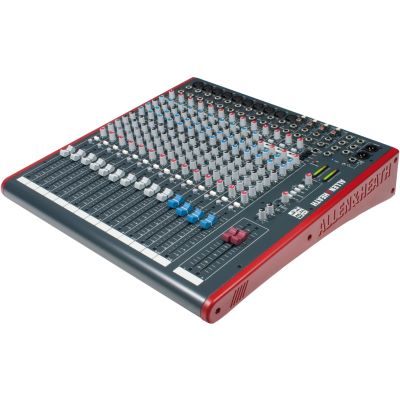
FOH mixing, monitor paths and scene storage.
Collect many stage signals in a structured way.
Moderation and vocals without long microphone cables.
Individual monitor mixes for musicians.
Front light, wash, effects and control.
Modular stage surfaces and accessories.
The selection is organised by product category. Final system sizing should always reflect the actual area, programme, existing infrastructure and desired expansion path.
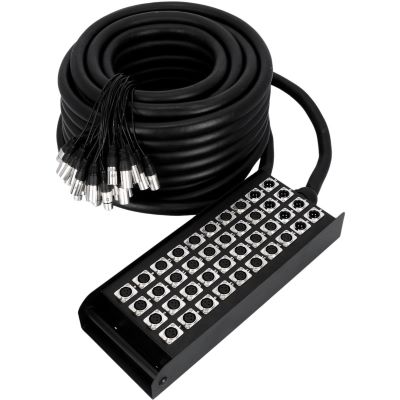


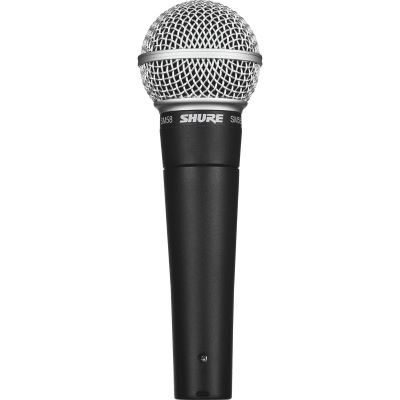
Microphones, DI boxes and instruments are connected to the stage box or multicore according to a defined input list. Channel numbers and cables should be labelled clearly so faults can be located more quickly during soundcheck.
The main mix supplies the audience. Musicians receive separate aux or monitor paths. Larger areas may require additional speaker zones that need to be time-aligned with the main system.
Guide status: 24 August 2026. Outdoor suitability, wireless frequency ranges, electrical distribution, rigging, stage engineering and weather protection need to be checked for the actual venue. Safety-relevant systems belong in qualified professional hands.
A small technical failure should not interrupt the programme. Prepare the essential spare equipment before soundcheck and before weather becomes a problem.










If a large outdoor stage, additional PA, extensive lighting, barriers or technical personnel are only required for individual dates, rental can be more practical than permanently maintaining an oversized inventory.
Musikhaus Korn offers mobile large stages as well as sound, lighting and event equipment and technical support for event applications.
This depends on audience area, distance, programme and required sound level. Active speakers or column systems can be sufficient for smaller events. Larger areas require a professionally planned and scalable PA system.
Outdoors, there are no reflective walls or ceilings to support the sound. The system therefore needs to cover the required area more directly. Greater distance should not be compensated for solely by continually increasing the volume.
Not necessarily for speech-only applications. For live bands, DJs and bass-heavy music, suitable subwoofers are generally part of a complete sound reinforcement system.
A stage box simplifies signal routing as soon as many microphones and instruments come together on the stage. Digital stage boxes must be compatible with the mixer system being used.
Digital mixers offer scene storage, extensive channel processing, flexible monitoring and routing. Settings can be prepared for several bands and recalled more quickly during changeovers.
This depends on the line-up and the number of independent monitor mixes required. Singers, drummers and other musicians often need different signals.
Only when the protection rating, manufacturer instructions, installation and weather protection suit the specific application. A normal indoor device is not automatically suitable for rain or permanent outdoor operation.
Cable routes should remain outside visitor areas wherever possible. Unavoidable crossings can be protected with cable bridges suitable for the expected load and application.
Power demand, cable routes, suitable cables, distribution and protection measures need to be planned together. Larger event-power installations belong in appropriately qualified hands.
Renting is particularly useful when a large stage, additional sound reinforcement, lighting or infrastructure is required only a few times per year. Your own inventory can remain compact and be expanded specifically for larger events.
Open-air event technology begins with a realistic assessment of audience area, programme and distance. Active loudspeakers or a scalable PA system reproduce speech and music, while subwoofers provide the low-frequency foundation for concerts and DJ applications.
Digital mixers and stage boxes organise extensive stage signals and make separate monitor paths possible. Wireless microphones, lighting equipment, stage platforms, power cables and cable bridges complete the technical infrastructure.
Particularly important is whether every component is suitable for the actual outdoor conditions. At large town festivals, festivals and professional outdoor stages, sound reinforcement, rigging, electrical distribution and weather protection should be planned as one complete event concept.
Discover additional guides covering club events, bands, DJs, weddings, schools and auditoriums, theater, microphones, PA, lighting and complete event technology.