Reproduce Speech Clearly
For presentations, wedding ceremonies or moderation, compact active speakers or a column PA are often sufficient. Deep bass is less important than speech intelligibility and even coverage.

Column PA, two active speakers or a larger system with subwoofers? The right choice depends on much more than wattage and audience size.
Type of event, room or outdoor area, required volume, bass demand, signal sources, transport and future expansion all matter. This guide takes you from a compact speech setup to complete PA systems for DJs and live bands.
PA stands for “Public Address”. Depending on the application, a complete sound reinforcement system can include speakers, amplification, mixer, microphones, monitoring, cables, stands and subwoofers.
For presentations, wedding ceremonies or moderation, compact active speakers or a column PA are often sufficient. Deep bass is less important than speech intelligibility and even coverage.
Two top speakers provide broad stereo coverage. For electronic music, chart music and higher levels, a suitable subwoofer quickly becomes an important part of the system.
Vocals, instruments and playback sources require enough mixer channels. Subwoofers, stage monitors or in-ear monitoring are then added according to the line-up.
Outdoors there are no reflective walls to support the sound, and larger areas require controlled coverage. Expandable tops, subwoofers and professional system planning become particularly important.
Important: “100 people” is not a complete performance specification. A speech for 100 seated guests places very different demands on a PA than a DJ party for 100 people on a dance floor. Room, distance, music style and desired level must always be considered as well.
Speech needs less deep bass than DJ music. A live band additionally creates many individual signals that have to be mixed.
Audience size, room depth, ceiling height, seating arrangement and indoor or outdoor use determine the required coverage.
Count microphones, instruments and playback sources. Include additional mixer channels for later expansion.
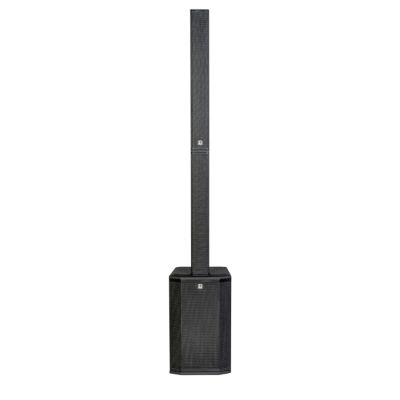
Column systems are attractive for quick setup. Modular tops and subwoofers are more flexible when the system needs to scale.
If larger events may follow later, consider connections, DSP, additional subwoofers and monitoring from the start.
Efficiency, speaker design, maximum achievable sound pressure level, dispersion and DSP also determine how loudly and how far a PA can operate effectively.
A suitably dimensioned system can reproduce short level peaks cleanly without operating at maximum output all the time. This supports intelligibility and reduces audible distortion.
Practical selection rule: do not simply buy the system with the largest wattage figure. Choose a PA with sufficient headroom, suitable dispersion and the correct bass foundation for the actual application.
Each system type has a useful application. Transport, achievable level, bass performance and expandability are the key differences.
| PA Concept | Strengths | Typical Application | Expandability |
|---|---|---|---|
| Column PA | Quick setup, compact transport, wide dispersion | Acoustic music, weddings, speech, small DJ setups | Limited to good depending on the model |
| Active Full-Range Tops | Flexible, robust, can often also work as monitors | Bands, DJs, clubs and stages | Very good |
| 2.1 or 2.2 System | More deep bass and greater headroom | DJ, live music and dance events | Very good |
| Passive PA | Central power amplifiers and modular system design | Installations, rental and larger systems | Very high |
The following values are starting points for typical mobile applications, not a fixed performance formula. Outdoor operation, high sound levels and bass-heavy music require greater reserves.
| Audience | Speech / Acoustic | DJ / Music | Band / Live |
|---|---|---|---|
| Up to approx. 50 | Compact column or 1–2 active tops | 2 tops, subwoofer optional | 2 tops + small mixer |
| Approx. 50–100 | 1–2 columns or 2 active tops | 2 tops + 1 subwoofer | 2 tops, subwoofer + monitoring |
| Approx. 100–200 | Powerful tops with suitable coverage | 2 tops + 1–2 subwoofers | 2 tops, 1–2 subs, mixer + monitors |
| Approx. 200–500 | Scalable system and controlled coverage | Several powerful tops and subwoofers | Professional system and stage planning |
For large or widely distributed events: an additional loudspeaker position may make more sense than simply increasing level from the front. From roughly 200 people, outdoor areas or more complex stages, individual system planning becomes increasingly useful.
They mainly reproduce mid and high frequencies and strongly influence speech intelligibility, useful distance and horizontal coverage.
Subwoofers relieve the tops of low-frequency work. They become especially important for DJ music, kick drum, bass and higher sound levels.
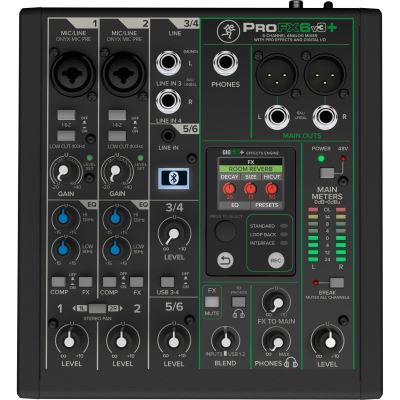
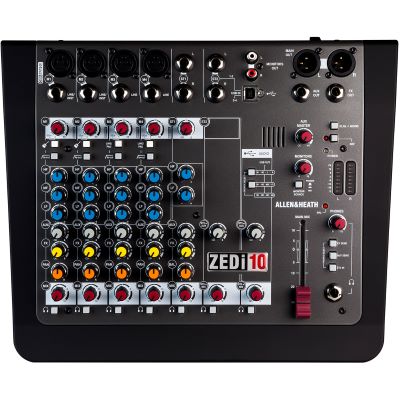
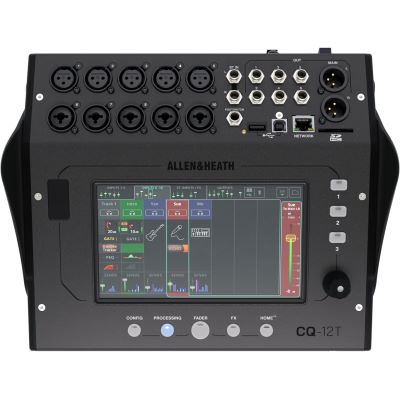
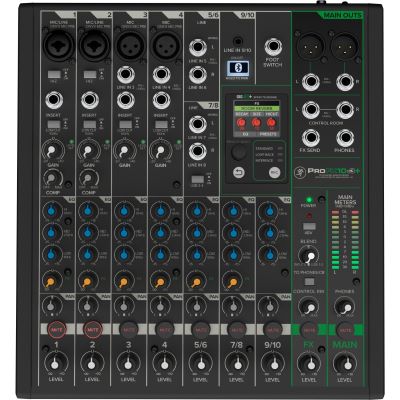
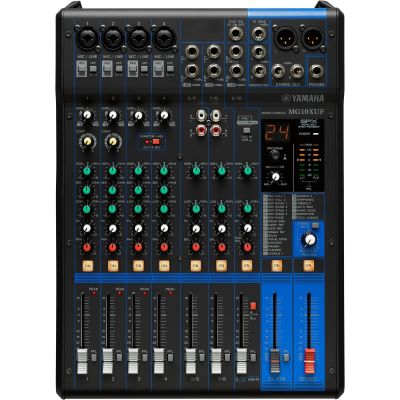
The mixer combines microphones, instruments and playback sources. Channel count, monitor sends, effects and operating concept need to match the application.
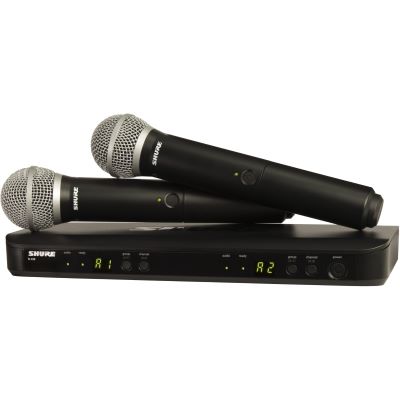
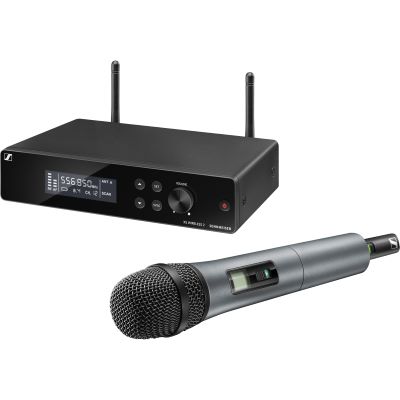
Used for vocals, speech and moderation. Wireless systems provide freedom of movement, while wired microphones reduce technical complexity.
Musicians need their own monitor mix. Active monitor speakers are straightforward, while in-ear monitoring can reduce stage volume.
Safe stands, appropriate XLR cables, power distribution and transport solutions are part of a PA system that needs to work reliably every day.
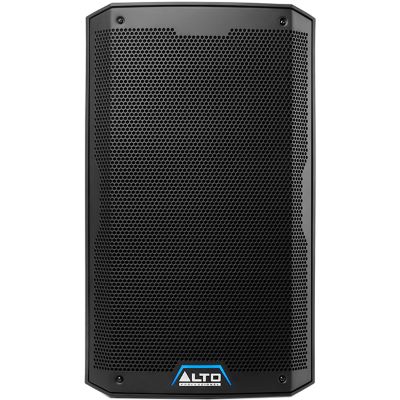
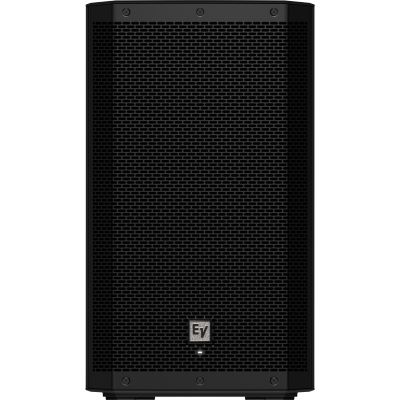
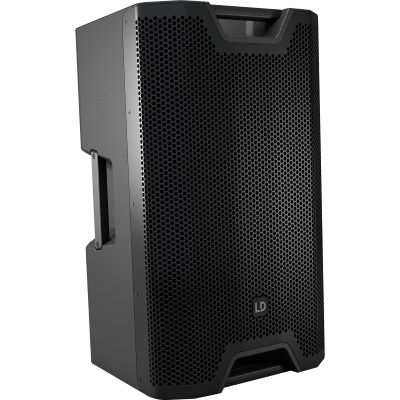
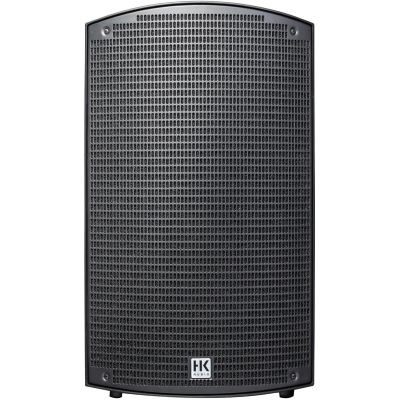
The selection shows several routes from compact column systems to modular band and DJ systems. Current technical specifications and included accessories are listed on the respective product pages.
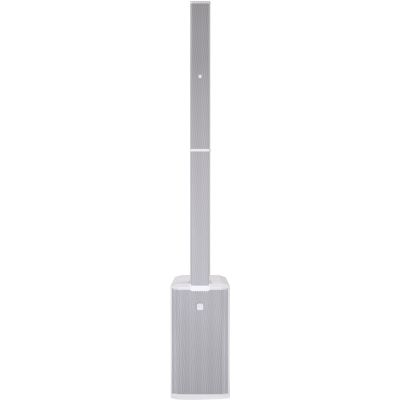
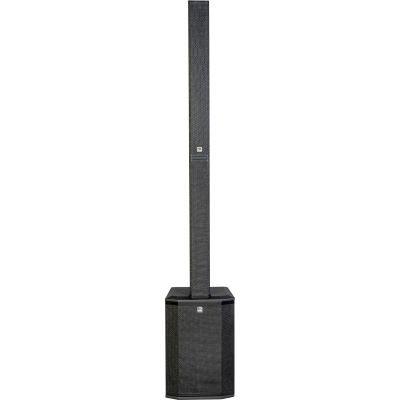
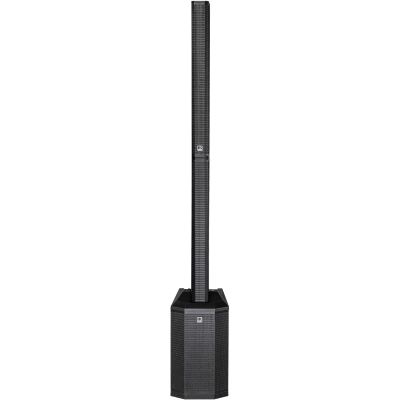
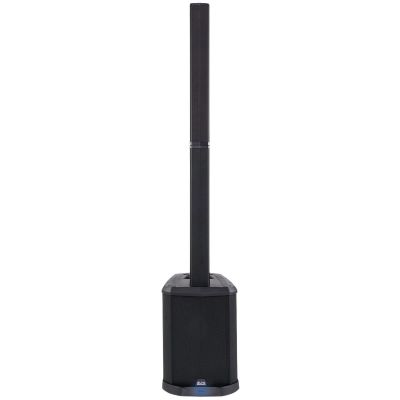
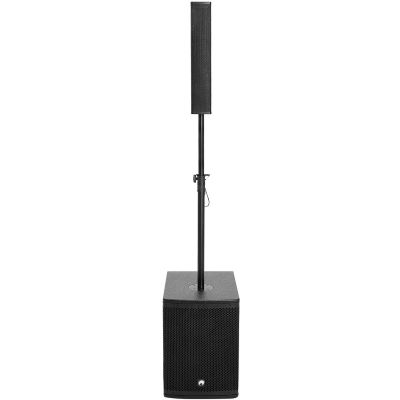
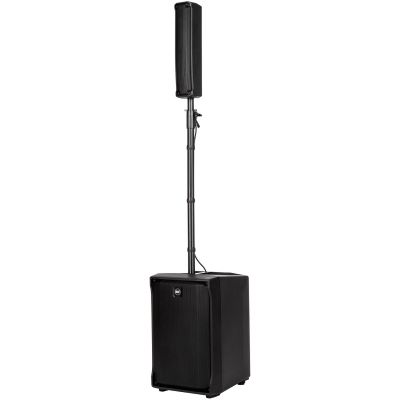
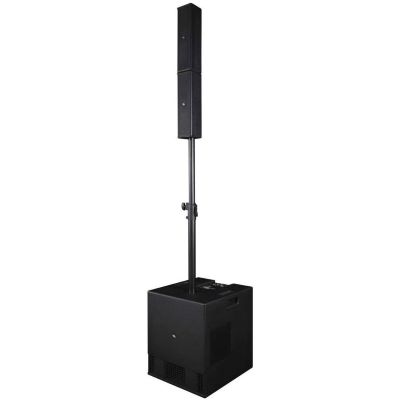
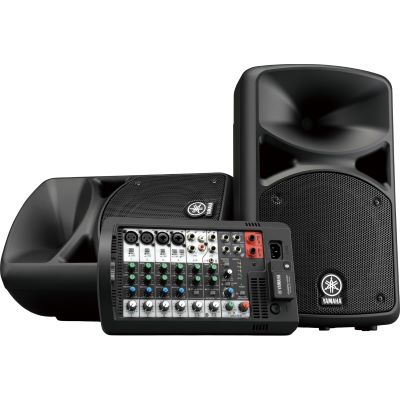
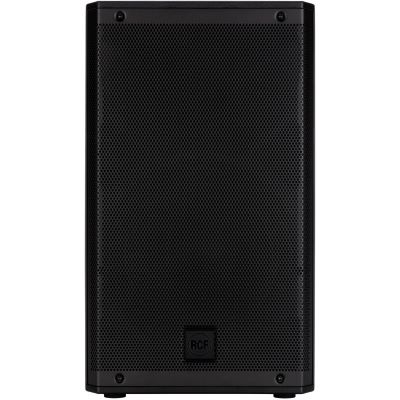

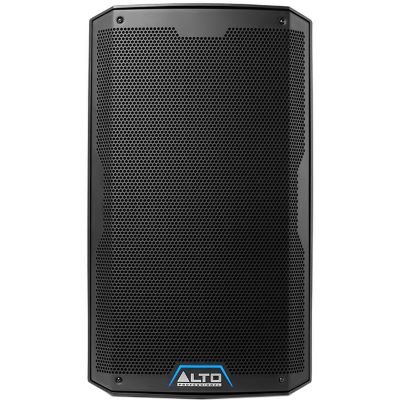
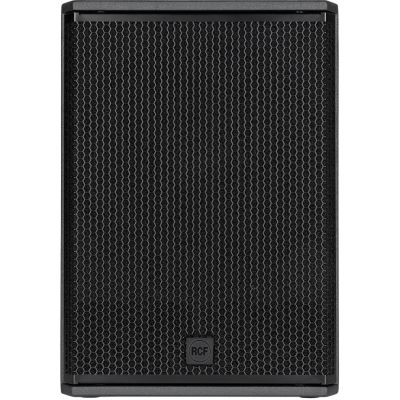
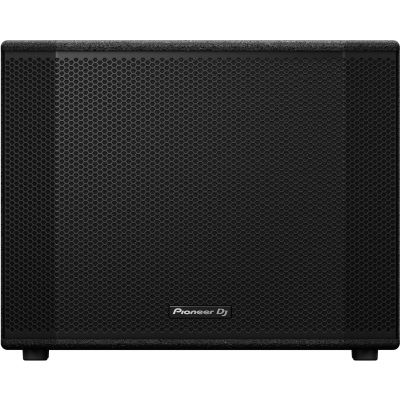
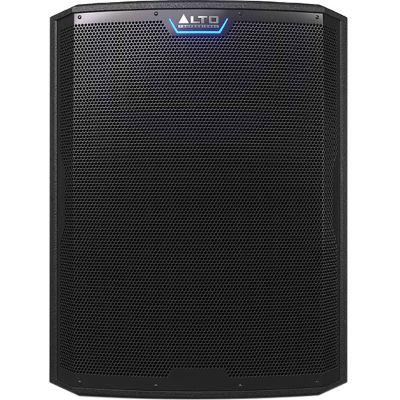
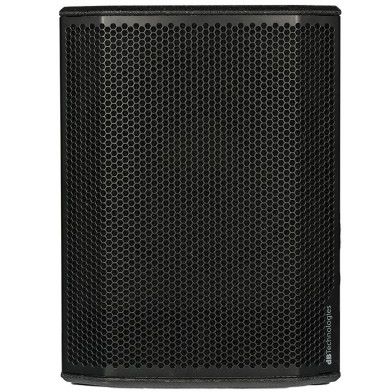
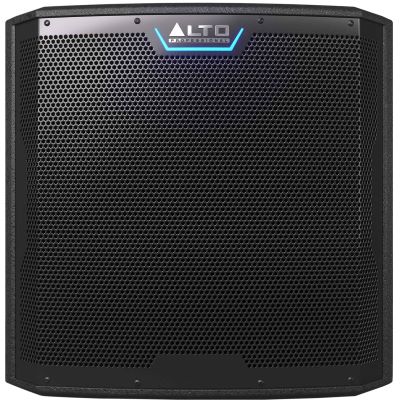
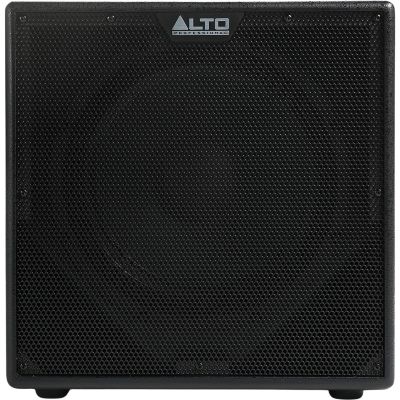
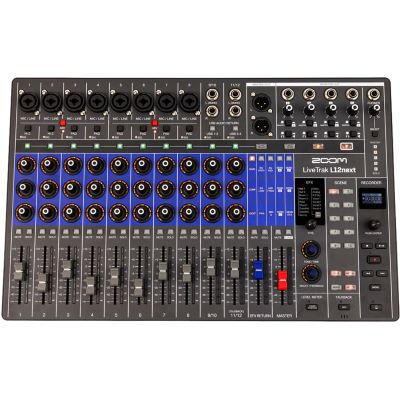
The high-frequency section should ideally project above the heads of the audience instead of directly into the first row.
If too much loudspeaker sound enters an open microphone again, the risk of feedback increases.
Set strong input levels without clipping and avoid leaving unnecessary microphones open.
Use a crossover frequency and DSP preset that suit the tops and subwoofer instead of allowing both systems to operate independently over the complete frequency range.
Wattage alone says too little about useful level, coverage and sound quality.
Full-range tops do not automatically replace a suitable subwoofer for bass-heavy dance music.
Additional microphones and playback sources quickly use the last free input.
Poor height reduces useful high-frequency coverage behind the first rows.
A complete stage requires much more than only the front speakers.
Outdoors, greater distance and the absence of room reflections require additional reserve.
These manufacturers are represented in the product selection above and offer additional speaker, mixer, wireless and accessory ranges at Musikhaus Korn.








For larger events, acoustically difficult spaces or one-off productions, personal system planning can be more useful than a generic recommendation based only on audience size.
The right PA is created by combining the application, room or outdoor area, audience and signal sources. A compact column system can be completely sufficient for speech, while mobile DJs often benefit from two active speakers and an additional subwoofer.
Bands additionally require a mixer, microphones, monitoring and a larger number of inputs and outputs. Speaker stands, XLR cables, power supply, protective covers and cases should also be included because these components strongly influence how quickly and reliably the system works in everyday use.
If the system is expected to grow later, expandability and sufficient headroom should be important selection criteria from the beginning.
There is no fixed wattage figure. Speech, DJ music, room size, outdoor operation, speaker efficiency, maximum sound pressure and dispersion all influence the required system.
For speech, one well-positioned loudspeaker can be sufficient. For music and a wider audience area, two speakers are usually the more flexible solution.
A subwoofer is often unnecessary for speech or quiet background music. For DJ music, kick drum, bass and a dance floor, a subwoofer provides significantly more low-frequency foundation.
Column systems are compact and quick to assemble. Conventional active tops can usually be expanded more flexibly with additional speakers and subwoofers.
10-inch speakers are compact, while 12-inch systems are a versatile middle ground. 15-inch tops provide more low-frequency reserve, but they do not automatically replace a subwoofer for bass-heavy music.
Active speakers integrate the power amplifier and are especially straightforward for mobile setups. Passive systems are useful when amplification should be planned centrally and modularly.
Count all microphones, instruments and playback sources and then add reserve. A live band needs significantly more inputs and monitor paths than one presenter.
Column systems or two active tops work well for speeches and background music. If guests will dance later, include a suitable subwoofer in the planning.
A typical starting point is two front speakers, one or two subwoofers, a mixer with sufficient channel capacity and stage monitors or in-ear systems.
Outdoor operation requires greater reach and headroom. Power supply, weather conditions, safe positioning and suitably protected equipment also need to be considered.
From individual products to complete setups, the central Musikhaus Korn guide contains additional buying advice and project routes for instruments, recording, DJ equipment and event technology.