
Musikhaus Korn Guide
Two, Four or More Inputs? Plan Your Audio Interface Correctly
Two inputs are often enough for vocals and guitar. A stereo synthesizer already occupies two channels, while vocals plus a stereo keyboard require three. For drums, bands or larger hardware studios, four, eight or even more inputs quickly become useful. The decisive question is which signals you want to record simultaneously.
Mic, Line & Instrument Inputs Explained
From 2 Channels to a Multichannel Studio
Plan for ADAT Expansion
Related Recording Topics
Continue Planning Your Studio
Compare interfaces with microphones, MIDI hardware and the additional studio equipment required for your recording setup.
Typical Audio Interface Input Counts
Count Sources, Not Tracks
How Many Signals Do You Want to Record at the Same Time?
This is the question that determines the number of channels you need. Your DAW can contain many tracks that are recorded one after another. What matters for the audio interface is how many physical signals need to enter it at exactly the same time.
One Voice or One Instrument
A microphone needs one microphone input. A passive electric guitar connected directly to the interface needs a suitable instrument or Hi-Z input.
Vocals Plus Guitar
If you want to sing and record guitar at the same time, two suitable channels are ideal. This is one of the classic singer-songwriter setups.
One Stereo Synthesizer
A synthesizer with a left and right output requires two line inputs. A single stereo instrument can therefore already occupy an entire two-channel interface.
Vocals Plus Stereo Keyboard
One vocal microphone plus a keyboard in stereo requires three inputs simultaneously. An interface in the four-channel class provides useful additional headroom here.
Small Live Session or Podcast
Several speakers, two musicians or a combination of microphones and stereo hardware are typical reasons for needing four simultaneously usable inputs.
Drums or a Complete Band
Kick drum, snare, overheads and additional drums each require their own microphone channels. A band recording can therefore very quickly reach eight or more input signals.
The simple decision:
If you usually record alone, two inputs are often enough.
If you use several stereo devices or record several people,
four to six channels are more convenient. For drums and complete
bands, plan for eight or more microphone or line channels.
Not Every Input Is the Same
Distinguish Mic, Line, Hi-Z and Digital Inputs Correctly
The number in the specifications is not enough on its own. You also need to know which type of signal each input can handle.
Mic Input
Microphones require a microphone preamp. Condenser microphones often additionally require 48 V phantom power. If you want to use four microphones simultaneously, specifically look for four microphone preamps.
Line Input
Synthesizers, drum machines, external preamps and many effects units provide line-level signals. A stereo synthesizer requires two line inputs: left and right.
Instrument / Hi-Z
Passive electric guitars and electric basses connect directly to a high-impedance instrument input. On many interfaces, this mode can be selected on a combo input.
Digital Inputs
ADAT, S/PDIF and other digital connections transfer signals that have already been converted to digital audio. They can increase the total number of available channels but require compatible external hardware.
What Counts on an XLR / Jack Combo Input?
An XLR/jack combo socket looks like two different connections, but it normally represents only one input channel. Depending on the interface, you can connect an XLR microphone, line signal or instrument there, for example, but you cannot record two signals simultaneously through the same socket.
Check Each Input Type Separately
Read the specifications for microphone inputs, line inputs, instrument inputs and digital inputs separately. A device with four inputs in total does not necessarily have four microphone preamps.
Remember:
Do not buy the largest I/O number. Buy the right inputs for the
sources you actually use.
Quick Setup Check
Which Channel Count Fits Which Recording?
These are typical examples. The actual connection type of your microphones and instruments remains the deciding factor.
| Recording | Required Signals | Suitable Class | What to Check |
|---|---|---|---|
| Vocals | 1 microphone | 1–2 inputs | Mic preamp, 48 V if required |
| Vocals + Guitar | 2 mono sources | 2 inputs | Mic + Hi-Z |
| Stereo Synthesizer | 2 line signals | 2 inputs | 2 line inputs |
| Vocals + Stereo Synth | 3 signals | 4 inputs | Mic + 2 line inputs |
| Podcast with 4 People | 4 microphones | 4+ inputs | 4 real mic preamps |
| Small Drum Microphone Setup | 4–6 microphones | 6–8 inputs | Enough microphone preamps |
| Band / Drum Kit | 8 or more signals | 8+ inputs | ADAT expansion can be useful |
Compact and Flexible
Compare USB Interfaces
When Are Two Inputs Enough on an Audio Interface?
Two inputs are ideal for many classic home-studio tasks: vocals and guitar, two microphones, one stereo keyboard or a production workflow in which instruments are recorded one after another. If you mainly work alone, this gives you plenty of functionality without occupying much desk space.
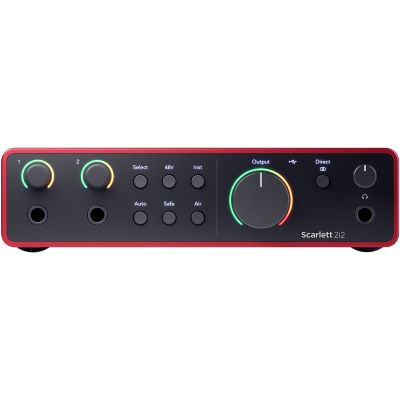
Focusrite
Scarlett 2i2 4th Gen
View Product
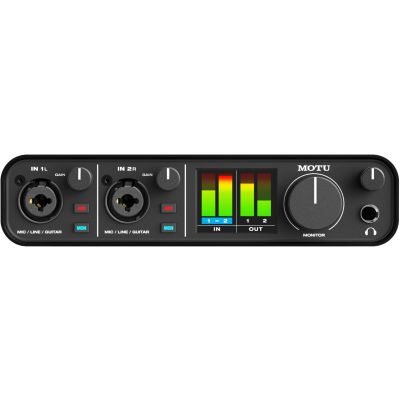
MOTU
M2
View Product
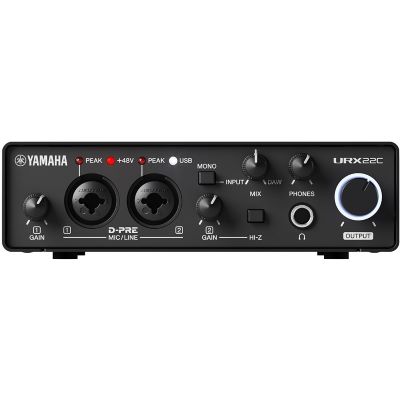
Yamaha
URX22C
View Product
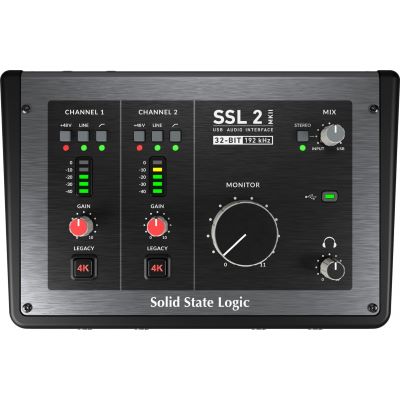
Solid State Logic
SSL 2 MKII
View Product
Two inputs are not too few:
If you record your instruments one after another, a two-channel
interface can easily be used for extensive productions. More inputs
are only required when several sources need to remain connected and
be recorded separately at the same time.
More Devices without Repatching
Who Benefits from an Audio Interface with Four Inputs?
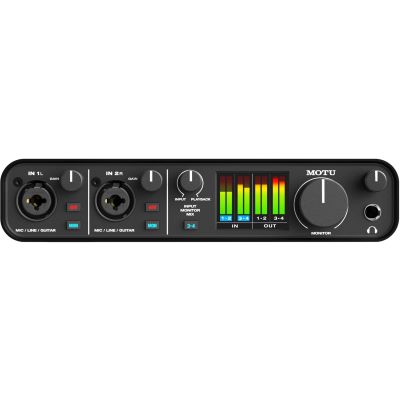
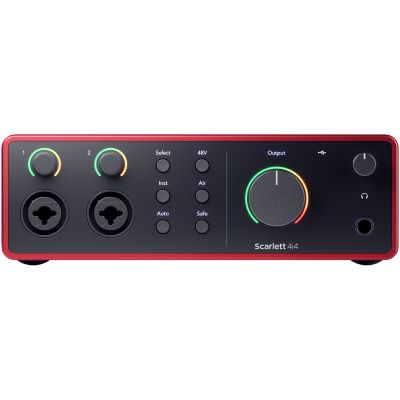
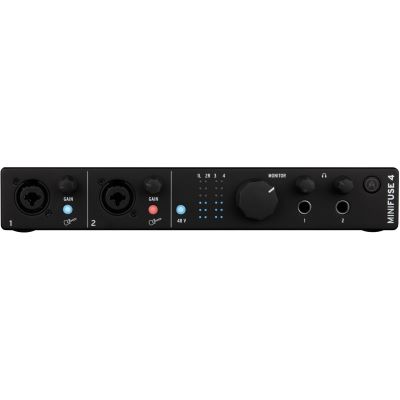
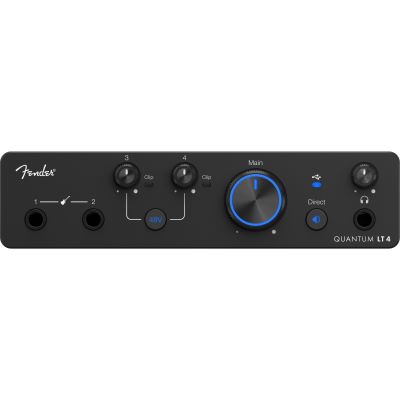
Four inputs become particularly interesting when your studio grows beyond the classic vocals-and-guitar setup. A stereo synthesizer plus vocals or guitar, several hardware sound generators or small sessions can be connected more conveniently. However, always check exactly how those four inputs are configured.
For Bands and Growing Studios
When Do Six, Eight or More Inputs Become Useful?
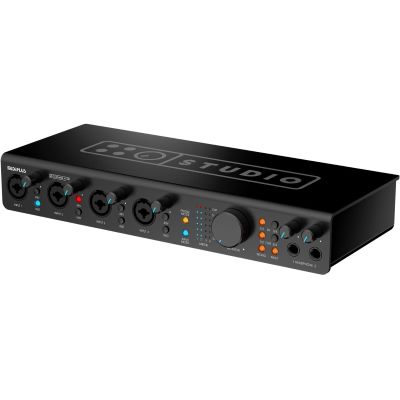
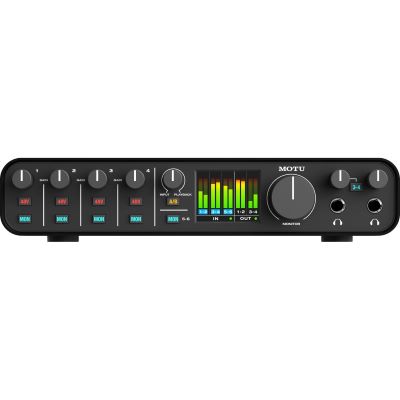
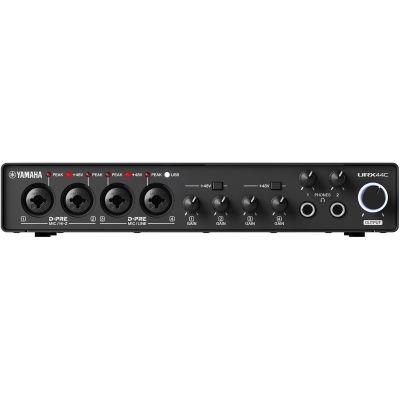
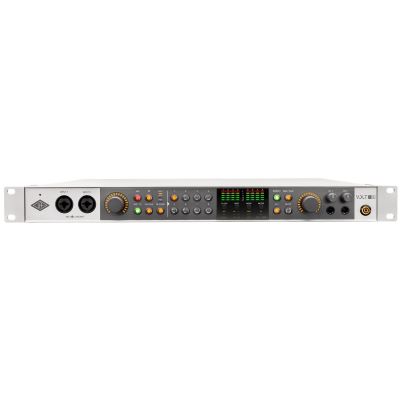
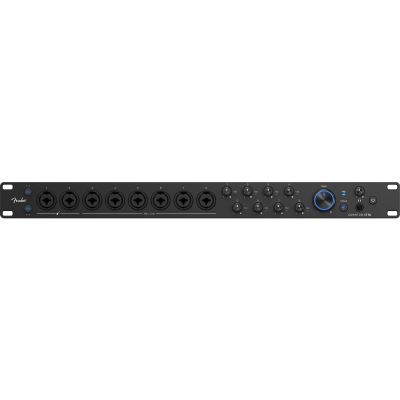
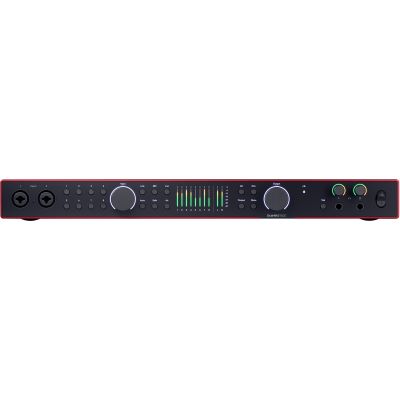
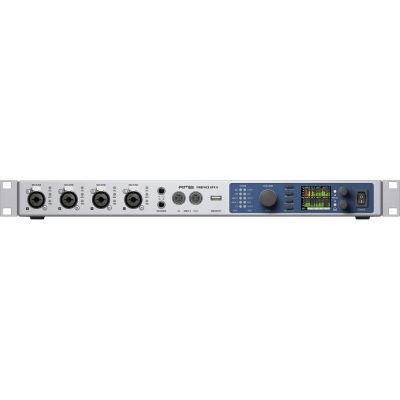
Multichannel interfaces become particularly valuable as soon as several musicians are recorded simultaneously, a drum kit is miked or many hardware instruments need to remain permanently connected. At this point, the number of actual microphone preamps becomes especially important.
Two Inputs Today – More Tomorrow
When Is an Audio Interface with ADAT Worthwhile?
If your studio is expected to grow, a digitally expandable interface can be a better long-term solution than a device whose analogue inputs are already completely occupied.
Compatible microphone preamps or AD/DA converters can be connected digitally to the main interface via ADAT. Additional microphones or line signals can therefore be integrated into the same recording system. This is particularly interesting for drum recording, bands and larger synthesizer setups.
The number of channels available via ADAT depends, among other things, on the selected sample rate and the specific equipment of the devices being used. If you work at high sample rates, check before buying how many digital channels the interface actually provides at your preferred sample rate.
ADAT does not replace microphone preamps:
An optical digital input does not itself contain XLR microphone
sockets. To add more microphones, you need a compatible external
preamp or converter.
Inputs Are Not the Only Thing That Matters
Why Outputs and Headphone Paths Are Important Too
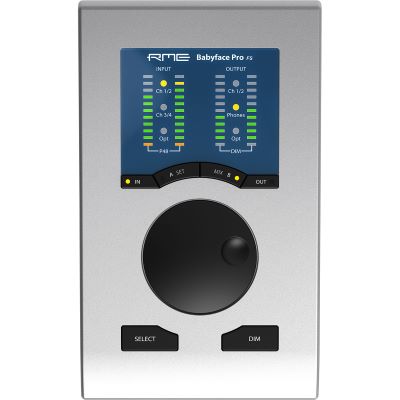
Additional inputs are of limited use if several musicians cannot monitor their signals properly afterwards. For larger sessions, plan the output side at the same time.
Studio Monitors
A stereo monitor pair requires two outputs. Additional monitor pairs or external signal paths require correspondingly more outputs.
Headphone Mixes
Two musicians often want to hear different balances. Separate headphone outputs and flexibly routable output pairs are particularly useful in this situation.
External Hardware
If you want to send signals from the DAW to external effects, reamping equipment or other studio hardware, plan additional line outputs.
Compare Series and Manufacturers
Audio Interface Manufacturers at Musikhaus Korn
Many manufacturers offer several sizes within the same product family, ranging from compact two-channel desktop units to professional multichannel interfaces.








Scarlett and other recording solutions ranging from compact desktop units to multichannel setups.
Interfaces for small studios, mobile production and extensive audio I/O systems.
Compact and professional interfaces with extensive routing and digital options.
Recording and production solutions for home studios, content production and music production.
Interfaces for producers and extensive hardware and synthesizer setups.
Desktop and rack solutions for demanding recording workflows.
Recording interfaces and equipment for guitarists, musicians and modern recording setups.
Recording technology and interfaces for music production, speech and multichannel applications.
Frequently Asked Questions About Channel Count
Two, Four or More Audio Interface Inputs: The Key Answers
Are Two Inputs Enough for a Home Studio?
For many home studios, yes. If you mainly work alone and record vocals, guitar or one stereo instrument, two inputs are very flexible. Additional tracks can then be recorded one after another.
How Many Inputs Do I Need for Vocals and Guitar at the Same Time?
Usually two: one microphone input for the vocals and one suitable instrument or Hi-Z input for the guitar. If the guitar is recorded with a microphone instead, two microphone preamps are required.
Why Does a Stereo Synthesizer Need Two Inputs?
Stereo consists of a left and a right audio channel. If you want to record the complete stereo sound of a keyboard, synthesizer or drum machine, two line inputs are therefore used.
Does a 4-In Audio Interface Always Have Four Microphone Inputs?
No. The four inputs may consist, for example, of two mic/line combo sockets and two additional line inputs. If you want to record four microphones simultaneously, specifically check for four microphone preamps.
How Many Inputs Do I Need for a Podcast?
This mainly depends on the number of microphones used simultaneously. Two people with two XLR microphones require two mic preamps. For four people, four simultaneously usable microphone channels are useful.
How Many Inputs Do I Need for a Drum Kit?
This depends on the intended microphone setup. A reduced recording can work with only a few microphones. Kick, snare, several toms, hi-hat and overheads, however, can quickly require eight or more microphone channels.
Can I Add More Inputs Later?
Yes, on suitably equipped interfaces. Digital connections such as ADAT allow compatible external preamps and converters to be connected. Check the supported channel count and sample rate of the specific devices.
Should I Buy More Inputs Than I Currently Need?
A small reserve is useful if you already know that more synthesizers, microphones or musicians will be added. Buying additional channels only for a theoretical future need is not automatically better, however. Expandability may be the more flexible alternative.
The Complete Recording Setup
These Components Belong Around Your Audio Interface
Audio Interfaces
USB interfaces, sound cards and audio converters for different channel counts.
Studio Monitors
Active nearfield and studio monitors for recording, mixing and production.
MIDI Interfaces
Additional MIDI ports for synthesizers, drum machines and larger hardware setups.
Recording & Studio
Combine microphones, monitors, recording technology, MIDI hardware and additional equipment.
The Decision Summarised
Two, Four or More Inputs? Audio Interface Guide
The number of inputs your audio interface needs does not depend on the later number of tracks in your DAW, but on the signals that need to be recorded simultaneously. Two inputs are often sufficient for solo musicians, vocals and guitar or a stereo synthesizer. Four inputs provide more freedom for hardware, several musicians or combinations of microphone and stereo signals. Six, eight or more channels become interesting for drums, band recordings and extensive studios.
In addition to the pure number, distinguish between microphone, line, instrument and digital inputs. If you want to connect four microphones, you need four suitable microphone preamps. For two stereo synthesizers, four line inputs are the decisive requirement. If your setup is expected to grow later, ADAT and other digital expansion options can be especially valuable.
More Buying Advice
Plan Your Next Music or Recording Setup
Discover more guides covering instruments, home studios, microphones, DJ equipment, loudspeakers and event equipment.