49
49 Keys
A strong choice for MIDI controllers, synthesizers, beats, bass, leads and songwriting when studio space is limited.

How many keys do you really need? 49 keys save space in the studio, 61 keys are a versatile all-round choice, 73 keys combine a large playing range with better portability and 88 keys provide the complete piano range. The right choice, however, does not depend on the number alone: keyboard action, music style, instrument type and where you use it are at least equally important.
Start with your most frequent musical task. More keys are useful when you actually need to reach them simultaneously. If you mainly play beats, leads or straightforward chords, a more compact instrument can be significantly more practical in everyday use.
A strong choice for MIDI controllers, synthesizers, beats, bass, leads and songwriting when studio space is limited.
Five octaves provide enough room for many chords, splits, synthesizer parts, keyboard parts and two-handed playing without becoming excessively wide.
More playing room than 61 keys while retaining a noticeably narrower format than many full-size 88-key instruments.
The first choice for classical piano, virtual grand pianos, film music and large orchestral arrangements where you want the complete modern piano range available at once.
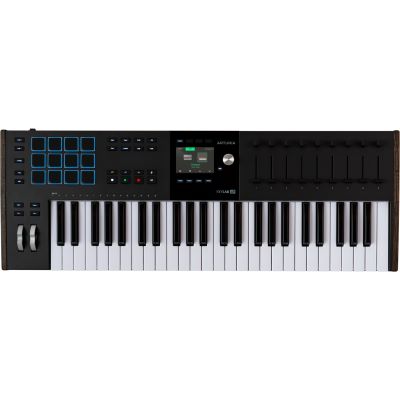
A 49-key keyboard covers approximately four octaves and is therefore compact enough for many studio desks. Chords, bass lines, leads and straightforward two-handed parts work comfortably.
Wider piano accompaniments and large split zones, however, reach the physical limits of the keyboard more quickly.
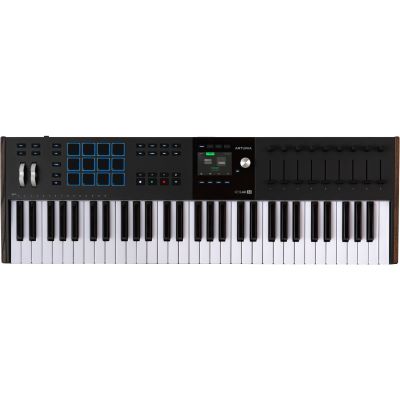
Five octaves allow many pop, rock, synthesizer and organ parts to be played without constantly using octave switching.
That is why 61 keys are common on synthesizers, workstations, entertainer keyboards and larger MIDI controllers.
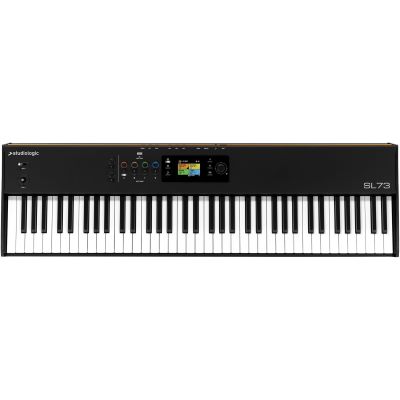
This format is especially common on stage pianos and master keyboards. On several current instruments the keyboard may extend from E to E, but the exact note range always depends on the individual model.
76 keys form a closely related alternative and are particularly common on keyboards and workstations.
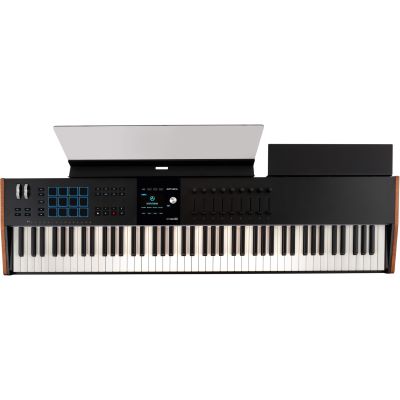
Classical repertoire, sophisticated piano parts and large orchestral keyswitch layouts benefit from having the complete keyboard physically available.
The trade-off is greater width, weight and required space. For a pure synthesizer or beatmaking workflow, 88 keys are therefore not automatically better.
A 49-key MIDI controller can theoretically access the complete MIDI note range by shifting the keyboard up or down in octaves. However, the entire physical keyboard moves to the new register.
You therefore cannot simultaneously hold a very low bass note with the left hand and a very high piano note with the right hand if both lie outside the current physical range.
Two instruments with exactly the same number of keys can feel completely different. Even within one controller family, the 49- and 61-key versions may use a semi-weighted action while the 88-key version changes to weighted hammer action.
Light, quick and comfortable for synth leads, organ playing, electronic music and many performance-oriented live applications.
Provides more resistance than a typical light synth-action keyboard without the weight and feel of a pronounced piano-style hammer mechanism.
Designed around piano playing. It is especially useful on 73- and 88-key master keyboards as well as stage and digital pianos.
Particularly popular on organ and certain stage keyboards. Fast runs, glissandi and characteristic organ techniques receive greater emphasis.
On smaller screens, the table can be scrolled horizontally.
| Keys | Main Strength | Typical Instruments | Especially Good For | Compromise |
|---|---|---|---|---|
| 49 | Compact | MIDI controller, synthesizer | Studio, beats, leads, mobile production | Less room for large splits |
| 61 | Universal | Keyboard, synth, workstation, MIDI | Band, songwriting, all-round studio | No complete piano range |
| 73 | Large range with less width | Stage piano, master keyboard | Live piano, electric piano, studio | Fewer outer registers than 88 |
| 88 | Complete piano range | Digital piano, stage piano, master keyboard | Piano, classical, orchestra, film music | Larger and heavier |
Both sizes work well with software instruments. 73 or 88 keys become more interesting when piano and large orchestral libraries are recorded frequently.
Bass, leads and sound design often require relatively little physical range. A 61-key performance synth creates additional room for layers and two-handed playing.
73 keys are especially interesting when piano playing feel and mobility need to work together. 88 remain the choice for players who want to sacrifice as little of the classic piano range as possible.
A digital piano is intended to reproduce the concept and playing range of a piano. The complete 88-key keyboard is therefore the consistent standard.
49 keys already provide enough space for bass lines, chords and synth lines. The remaining desk space can instead be used for pads, controllers, a drum machine or additional hardware.
A strong all-round format. Piano, organ, brass, pads and synthesizer parts can be played comfortably without transporting a large 88-key case to every rehearsal or performance.
73 keys combine a generous playing range with reduced width. This is precisely why the format is attractive for mobile stage instruments.
88 keys reduce the need for octave switching, allow wide two-handed passages and provide more room for large orchestral libraries and their keyswitch zones.
Comparing closely related controller concepts makes the practical differences in width, range and keyboard feel especially clear.
The selection deliberately includes several different product groups. This shows how the same number of keys can fulfil a different role on a MIDI controller, synthesizer, workstation or stage piano.
Width and load capacity have to match the instrument. With heavy 73- and 88-key hammer-action instruments, stability becomes especially important.
Sustain is important for piano parts. Master keyboards can additionally provide expression or further pedal inputs for controlling software and hardware while both hands remain on the keys.
The practical difference between 61 and 88 keys becomes especially obvious during transport. Always consider the instrument, bag and stand as one total transport weight.
An 88-key master keyboard still needs enough depth around it for a monitor, mouse and additional controllers. Measure the real installation area before buying rather than looking only at the key count.
If you mainly produce synth leads and beats, a full 88-key controller may sacrifice desk and transport space without giving you a practical musical advantage.
A 61-key synth controller may fit your music better than a heavy 88-key piano action — or exactly the opposite. Playing feel and size must be evaluated together.
Both sit between 61 and 88 keys, but they are not the same format. Always check the actual first and last notes as well as the keyboard mechanism of the specific model.
Everyday use also requires space for the stand, pedals, seating position, cables and possibly a transport case.






Try a bass note plus chord, a two-handed piano passage and a split sound on 49, 61, 73 and 88 keys. Afterwards, compare the instrument width, weight and keyboard feel. You will quickly notice whether you really need the additional playing range or whether a more compact instrument supports your everyday workflow better.
Go deeper into pads, faders, aftertouch, DAW control and keyboard action for your studio workflow.
Compare 49, 61 and 88 keys directly within the same premium controller family.
Compare 73- and 88-key instruments for piano, electric piano, studio and stage applications.
Learn about number of keys, velocity sensitivity, sounds, automatic accompaniment and the different types of keyboard instruments as one complete overview.
49 keys are ideal when studio space and mobility are important. 61 keys extend the range into a versatile all-round format for synthesizers, workstations, MIDI controllers and live keyboards. 73 keys are particularly attractive for players who want to combine a generous piano range with reduced physical width. 88 keys finally provide the complete range of a modern piano.
The number of keys should never make the decision on its own. A light synth action, semi-weighted keyboard and weighted hammer mechanism serve different playing goals. Choose your musical application first, then the physical range you actually need and finally the appropriate keyboard feel. This way, the instrument fits not only on your studio desk or into the transport case, but also remains suitable for your music in the long term.
From musical instruments and home-studio equipment to DJ and event technology, find more step-by-step buying guidance in the central Musikhaus Korn guide.