Musikhaus Keks
Welcome!
Our cookies offer you a fast, relaxed and full-featured shopping experience. Some are necessary to operate the website and its functions. Others help us to improve our services. If you agree to this, simply consent to the use of cookies for preferences, statistics and marketing by clicking on "OK". Alternatively, you can deactivate individual cookies under "Customise cookies" or all cookies, except those required for the function of our website, under "Reject all".
Musikhaus Korn Buying Guide

Keyboard Instruments for Small Apartments: More Music in Less Space

You do not need a dedicated music room for a keyboard instrument. What matters is how wide and deep the instrument is, whether it should remain permanently set up, whether you want to practise with headphones and how many keys your musical goal actually requires. From a 25-key MIDI controller to a slim 88-key stage piano, there are solutions for desks, living rooms, bedrooms and compact practice corners.

Compact to 88 keys Headphone friendly For piano, keyboard & studio
Four Typical Living Situations

Which Keyboard Instrument Needs the Least Space?

The smallest solution is not automatically the best musical solution. If you seriously want to learn piano, a slim 88-key instrument can make more sense than a small keyboard. If you produce beats or play synthesizers, the required footprint can be reduced much more dramatically.

USB
Desk

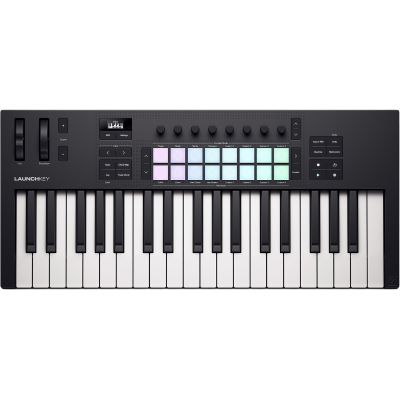
MIDI Keyboard with 25 to 49 Keys

Ideal for software instruments, beat production and songwriting. Many models are USB powered and can be moved to a shelf, drawer or other storage space after the session.

61
Flexible Corner

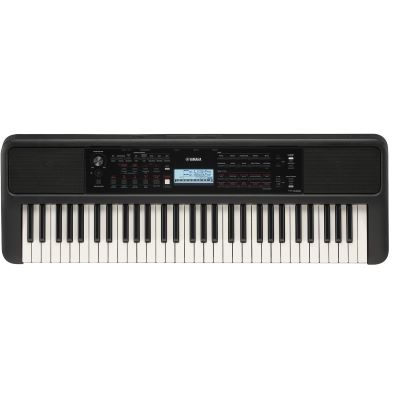
Home Keyboard with 61 Keys

Integrated speakers and low weight make a home keyboard especially straightforward. On a folding stand, the complete floor area can be freed again after playing.

88
Piano Corner

Slim Stage Piano with 88 Keys

If piano playing is important, you do not necessarily have to compromise on note range. Portable 88-key pianos can have very shallow cabinets and can stand on a separate support.

SYN
Mini Studio

Desktop Synthesizer

If you already own a MIDI keyboard, a synthesizer without its own keyboard can save a considerable amount of space. Several compact sound modules can be played from a single controller.

Space rule: do not measure width alone. In small apartments, cabinet depth often determines whether an instrument can remain permanently set up without blocking a walkway, desk or seating area.
Measure the Instrument and the Space around It

How Much Space Does a Keyboard Instrument Really Need?

Width

The Number of Keys Mainly Determines the Width

A 25- or 37-key MIDI keyboard is considerably shorter than an 88-key piano. However, controllers with pads, faders, pitch controls or other operating elements can require additional space at the sides.

Always compare the actual external dimensions rather than the number of keys alone.

Depth

Cabinet Depth Is Especially Important in Small Rooms

Home keyboards, MIDI controllers and portable pianos are often very shallow. Furniture-style digital pianos additionally need their base and pedal area.

In return, the complete practice area is permanently ready and does not need to be assembled before every session.

Sitting Position

You Also Need Space in Front of the Instrument

Allow room for a bench or stool, your legs and the movement required to use the pedals. An instrument can fit perfectly against the wall and still be impractical if sitting at it permanently blocks an important walkway.

Storage

Flexible Setups Need a Dedicated Storage Place

If the keyboard is packed away after each session, the stand, power supply, pedal and sheet music also need a defined storage location. A light instrument that can be made ready in seconds is more practical than a heavy system containing many separate components.

Measure before Buying

Check the Complete Floor Plan

  • maximum instrument width
  • maximum acceptable cabinet depth
  • space for bench and legs
  • power outlet and cable route
  • storage space for stand or bag
  • distance from doors and radiators
An Instrument Can Respect Several Uses of the Same Room

Leave It Set Up or Put It Away after Playing?

Musical goal → number of keys → available footprint → permanent or flexible setup → headphones & accessories.

A Permanent Setup Encourages Daily Practice

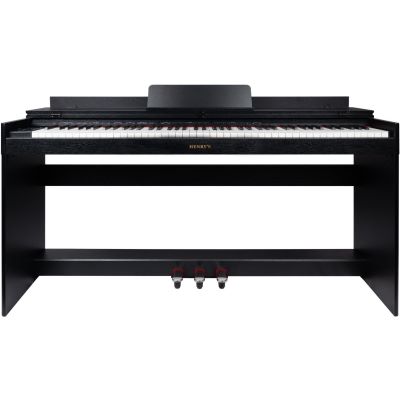
If sufficient wall space is available, a slim digital piano can make more sense than a keyboard that is constantly packed away. Bench, pedals and sheet music remain ready to use.

A Folding Setup Gives Living Space Back

A portable keyboard or stage piano can be used on a folding keyboard stand . After practice, the same area can be used for other activities again.

A Desk Setup Uses Furniture You Already Have

A small MIDI keyboard can sit directly in front of a computer monitor. This lets the same desk become a music-production workspace.

Compare Instrument Classes for Limited Living Space

Which Solution Saves the Most Space?

The table can be scrolled horizontally on smartphones.

Instrument Space Required Own Sound Keyboard Especially Suitable For
MIDI Keyboard 25–37 Very low Usually no Compact / light Production, beats, software
Home Keyboard 61 Low Yes, with speakers Usually light Hobby, learning, auto accompaniment
Desktop Synth Very low Yes No own traditional keyboard Studio sound design
Portable Piano Medium, usually shallow Yes Up to 88 keys Piano with little available depth
Slim Digital Piano Permanent wall space Yes Usually 88 keys Regular piano lessons
Do Not Compromise Unnecessarily on the Keyboard for Piano Lessons

88 Keys despite a Small Apartment?

Yes. A complete piano range inevitably requires width, but modern portable pianos can reduce cabinet depth considerably.

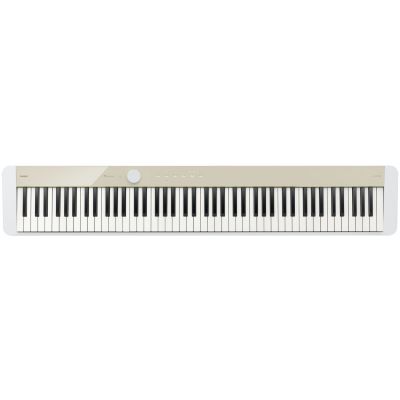
The Casio Privia PX-S1100 MB is only around 23.2 cm deep while still combining 88 weighted keys with integrated speakers.

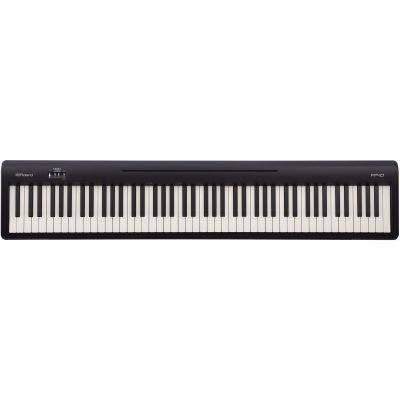
The Roland FP-10 is also significantly shallower than a traditional furniture-style piano at around 25.8 cm deep. A folding stand keeps the setup flexible, while a matching fixed stand can turn the same instrument into a permanent practice area.

For piano students: if 88 weighted keys are part of the learning goal, a shallow portable piano is usually a more sensible space-saving compromise than a significantly shorter keyboard.
Roland FP-10 BK compact 88-key digital piano with shallow cabinet depth for small apartments
A portable 88-key piano can preserve a full piano-oriented keyboard while reducing the depth of the complete setup.
A Small Desk Can Become a Complete Studio

MIDI Keyboards and Synthesizers for Limited Desk Space

Compact All-Rounder

37 Keys

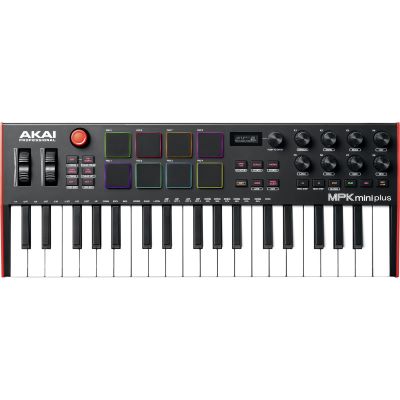
The Akai Professional MPK mini Plus requires only around 45 × 18 cm of desk space. Three octaves, pads, controls and MIDI connections still provide a comprehensive production workflow.

One Keyboard

Control Several Sound Modules

Desktop synthesizers do not have a conventional keyboard. A single MIDI keyboard can therefore control several small synthesizers one after another instead of repeating the same keyboard hardware on every sound generator.

Complete Compact Synth

Sound Design with Its Own Playing Surface

The Arturia MicroFreak measures only around 31 × 23 cm and combines synthesis, a sequencer and a touch keyboard in an especially compact hardware instrument.

Consider Neighbours and Flatmates

Headphones Make Electronic Keyboard Instruments Apartment Friendly

Quiet Practice

Headphone Output

On keyboards and digital pianos, the electronic sound can be heard through headphones. This makes practice times considerably more flexible.

Mechanical Noise

The Keys and Pedals Remain Audible

The keyboard and pedals continue to move mechanically. With a hammer-action keyboard in particular, quiet knocking and return noises can still be heard in the room even when headphones are used.

Speaker Position

Do Not Block the Speaker Path

Some portable pianos radiate sound downwards or towards the rear. When positioning the instrument on furniture or directly against a wall, keep the intended speaker path clear.

Room Volume

Moderate Integrated Speakers Are Usually Enough

Built-in speakers are normally sufficient for small rooms. Large keyboard amplifiers or PA speakers are generally unnecessary for pure home practice.

Five Product Groups for Different Living Situations

50 Suitable Keyboard Instruments for Small Rooms

The selection combines standalone instruments and controller solutions. Decide first by musical goal and only then by the available footprint.

Accessories Should Not Need More Space Than the Instrument

Space-Saving Accessories for the Apartment

Flexible Setup

Folding Keyboard Stand

X-stands and folding table stands can be collapsed after playing. With heavy 88-key pianos, always pay particular attention to sufficient load capacity and stability.

Ergonomics

Adjustable Bench

A compact keyboard bench provides a better playing position than an arbitrary living-room chair. Some models can also be folded or reduced for storage.

Quiet Practice

Headphones

A fixed hook or small holder on the studio desk keeps headphones within reach without requiring additional shelf space.

Storage

Use the Bag as Storage

If the instrument is packed away regularly, a suitable bag protects it from dust and makes secure storage behind a wardrobe, sofa or door much easier.

Plan Compactly without Compromising on the Wrong Thing

Common Mistakes in Small Apartments

Mistake 1

Choosing Only by the Number of Keys

A 76-key keyboard can be shallower than a 61-key model with large operating controls. Always compare the actual external dimensions.

Mistake 2

Buying Too Small for Piano Lessons

If 88 weighted keys are required, a shallow portable piano saves space more sensibly than shortening the keyboard itself.

Mistake 3

Forgetting the Stand and Seating Position

The depth of the instrument itself is only one part of the equation. Include both folded and assembled dimensions of the complete setup.

Mistake 4

Confusing Headphones with Complete Silence

The speaker sound disappears, but mechanical key and pedal noises remain audible in the room.

Brand Worlds at Musikhaus Korn

Brands with Compact Keyboard Instruments

Frequently Asked Questions When Living Space Is Limited

Answers about Compact Keyboard Instruments

Which Keyboard Instrument Needs the Least Space?
Compact MIDI controllers and desktop synthesizers need the least space. However, they require a computer, external controller or external sound generator depending on the setup. If you want a standalone instrument, small home keyboards are particularly compact.
Can I Set Up a Digital Piano in a Small Apartment?
Yes. Slim digital pianos and portable stage pianos can reduce cabinet depth considerably. An 88-key piano remains wide, but it can still occupy surprisingly little room from the wall into the room.
Which Solution Is Suitable for Learning Piano?
For a long-term piano-learning path, a weighted 88-key keyboard is recommended. In a small apartment, a slim portable or slim furniture-style digital piano is especially interesting.
Are 61 Keys Enough in an Apartment?
For keyboard playing, pop, automatic accompaniment, many synthesizer sounds and hobby use, 61 keys are extremely versatile. For complete classical piano literature, 88 keys provide the better foundation.
Can I Put a Stage Piano Away after Playing?
Yes. That is one of the major advantages of a portable piano. However, consider its weight, safe storage and the time required to set up the stand, pedal and cables.
Is a MIDI Keyboard Ideal for a Small Desk?
Often yes. Models with 25 to 37 keys require very little space and can control virtual instruments. They usually do not contain their own piano or synthesizer sounds.
Which Saves More Space: a Keyboard or a Digital Piano?
A 61-key keyboard is normally shorter and lighter. A portable digital piano needs more width but provides 88 keys and a playing feel that is more strongly focused on piano.
What Is a Desktop Synthesizer?
A desktop synthesizer does not have its own traditional keyboard. It is played from a MIDI keyboard, sequencer or computer and can therefore save a considerable amount of space.
Can I Play Piano with Headphones at Night?
The electronic sound can be reproduced through headphones so the speakers remain silent. The keyboard and pedals still create mechanical noise.
Should the Instrument Remain Permanently Set Up?
If regular practice is the goal, an immediately playable setup can be motivating. If the room needs to serve several purposes, a light instrument on a folding stand can be more practical.
How Do I Measure the Required Space Correctly?
Measure the width and depth of the instrument and add the sitting position, pedal area and required movement space. For a flexible setup, you additionally need storage space for both the instrument and its stand.
Which Solution Works for Both an Apartment and a Home Studio?
A compact MIDI keyboard is particularly efficient when the sounds already come from a computer. If you also want to play without a computer, a home keyboard or portable stage piano is more versatile.
Test the Room before the Instrument

Use a Tape Measure and Floor Plan before Buying

Mark the width and depth of the desired instrument with masking tape on the floor or desk. Put a chair in front of it and check doors, walkways and drawers. This immediately shows whether a permanent piano setup works or whether a folding system will fit everyday life better.

Match the Available Space to the Music You Want to Make

More Pages about Compact Keyboard Setups

Complete Overview

Keyboard Guide

Understand the fundamental differences between home keyboards, digital pianos, synthesizers and other keyboard instruments.

Portable Piano

Portable Stage Pianos

Compare weighted pianos with reduced cabinet depth for living rooms, lessons and mobile use.

Studio Desk

MIDI Keyboards up to 49 Keys

Discover particularly space-saving controllers for desks, music production and virtual instruments.

Sound Design

Synthesizer Guide

Choose keyboard and desktop synthesizers according to sound generation, keyboard format and studio workflow.

Limited Living Space Does Not Have to Limit Your Musical Options

Keyboard Instruments for Small Apartments: Buying Guide

Keyboard instruments that fulfil their musical purpose with the smallest sensible footprint are especially useful in small apartments. Home keyboards combine compact dimensions with integrated speakers. Portable stage pianos can provide 88 weighted keys while keeping cabinet depth low. MIDI keyboards fit directly onto a studio desk, while several desktop synthesizers can share one existing controller keyboard.

Do not decide by width or number of keys alone. First measure the available space and then determine whether piano playing, automatic accompaniment, music production or sound design is the main priority. Headphones, a folding stand and sensible storage can make the difference between an instrument that constantly gets in the way and a setup that integrates naturally into everyday apartment life.

Choose More Instruments and Equipment with Confidence

From musical instruments and home-studio equipment to DJ and event technology, find more step-by-step buying guidance in the central Musikhaus Korn guide.