LED PAR
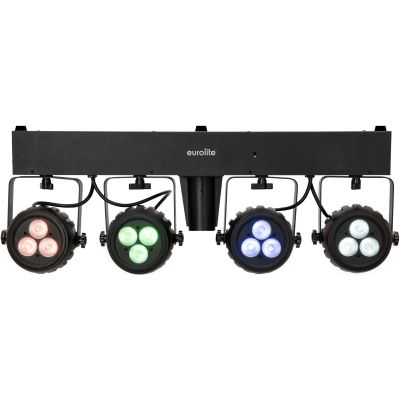
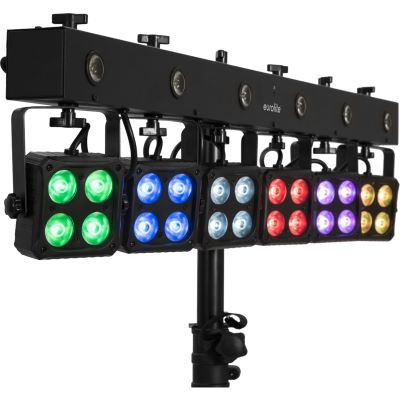
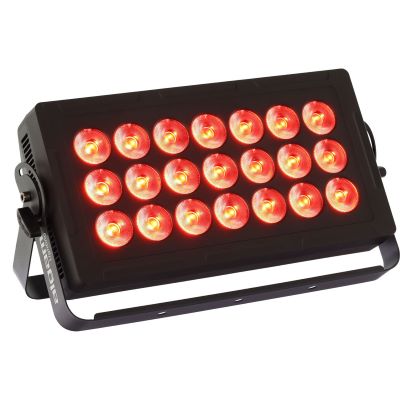
The most versatile starting point. LED PARs colour walls, stages or performers and, depending on the model, provide automatic programmes, sound activation and DMX control.

LED PAR, complete lighting set, moving head or lighting effect? A good first lighting setup does not need as many fixtures as possible. It needs the right types of light for the application. This guide explains colour, movement, DMX, fog and haze, stands and sensible upgrade stages for DJs, bands, parties and small stages.
Start with one clear task. Do you want to make a band visible, add colour to a dance floor or create moving show effects? Once the goal is clear, the right product category usually becomes much easier to identify.
The most versatile starting point. LED PARs colour walls, stages or performers and, depending on the model, provide automatic programmes, sound activation and DMX control.
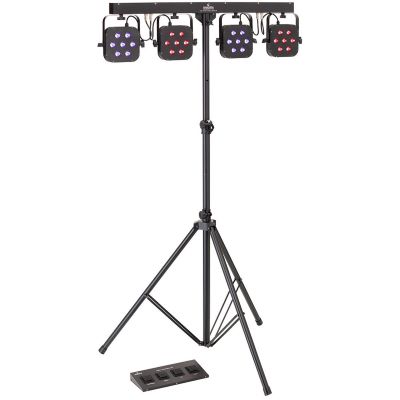
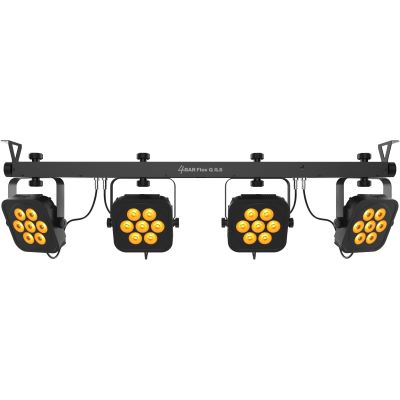
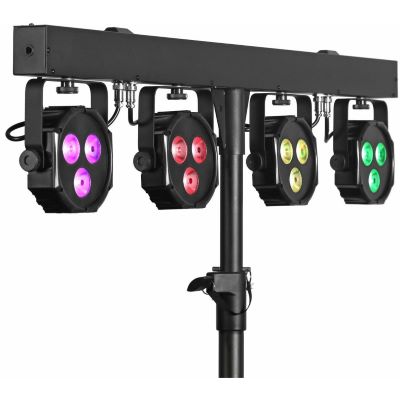
Several spotlights are already mounted on one bar. For mobile DJs, solo entertainers and small bands, this is often the easiest way to get started.
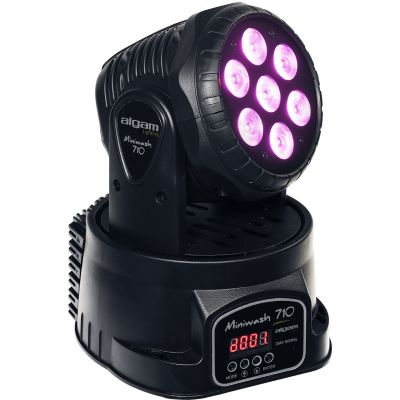
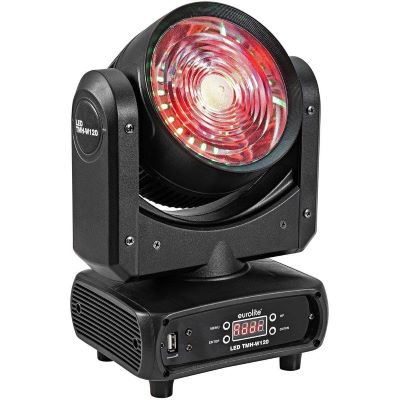
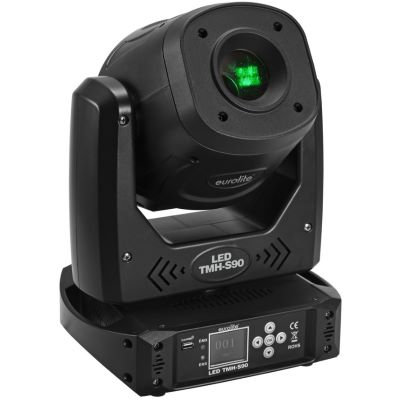
Motorised fixtures move their light beam around the room. Spot models create focused projections, while wash models produce broad moving areas of colour.
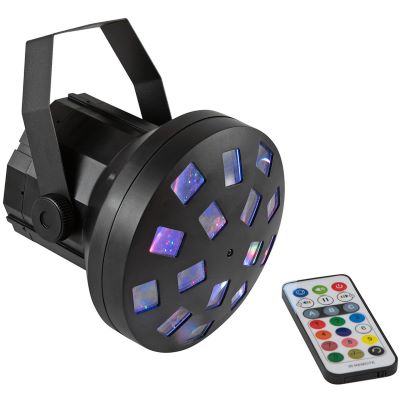
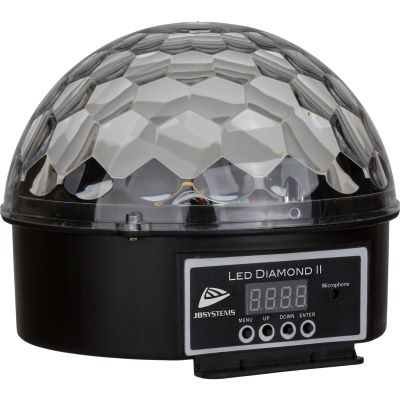
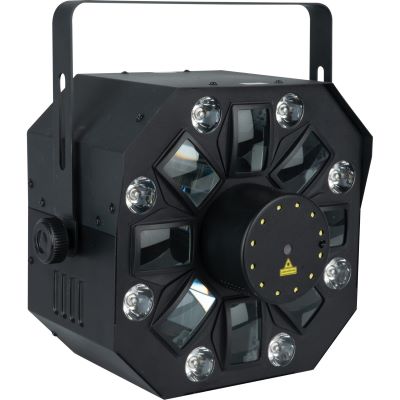
Derby, beam, flower and pixel effects create patterns and movement. They are excellent additions to a basic lighting setup, but they do not replace it.
Recommendation for your first purchase: two to four LED PAR fixtures or one compact lighting set are usually more useful than immediately buying several moving heads and specialised effects.
Broad, soft light for covering larger areas. Wash lighting is suitable for stage backgrounds, musicians, walls and colourful basic atmospheres.
A narrower beam creates targeted accents. Moving-head spots may additionally project gobos, prisms and different colours.
Very narrow rays become particularly impressive when used with haze. They are primarily a show element rather than conventional basic stage lighting.
Patterns, pixels, rotating beams and derby effects add movement to a dance floor and are especially popular in DJ and party setups.
RGB mixes light from red, green and blue LEDs. RGBW adds a dedicated white LED and can produce cleaner white light. Additional colours such as amber, warm white or UV extend the available colour palette and effects.
A wide beam angle illuminates a larger area, while a narrow angle creates a more concentrated beam. A zoom fixture can change its beam angle and therefore perform several different lighting tasks.
Easy rule to remember: wash creates atmosphere, spot adds accents, beam creates visible rays and effect lighting adds movement.
| Device | Main Task | Operation | Suitability for Beginners |
|---|---|---|---|
| LED PAR | Colour and area lighting | Simple operation through to DMX | Very high |
| Lighting Set | Complete basic lighting | Very straightforward | Very high |
| Moving Head | Moving spots or washes | Much more useful with DMX | Medium |
| Lighting Effect | Patterns and party effects | Automatic operation often available | High as an addition |
| Fog Machine / Hazer | Makes light beams visible | Simple operation through to DMX | Optional |
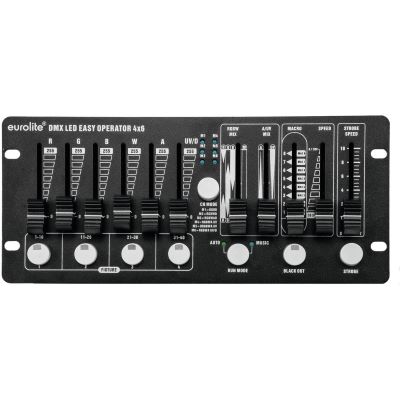
DMX is the widely used control protocol for stage lighting. A controller sends commands to connected fixtures. Each fixture receives a start address and then uses the number of DMX channels required by its selected operating mode.
For small parties, automatic programmes, sound activation, remote controls or master/slave operation are often entirely sufficient at first.
Colours, brightness, movements and effects can be recalled repeatedly. This is particularly useful for bands and shows that use the same cues more than once.
A hardware controller is direct and robust. Software often offers more visual overview and programming options but requires a suitable interface and a computer or tablet.
You do not need DMX on day one. Start by learning what the fixtures themselves can do. Add DMX when you want defined colours, blackouts, scenes, chases and movements to occur deliberately and repeatedly.
Fixtures, bars, stands and cables become part of the stage structure. Load limits and suitable mounting hardware therefore belong in the planning from the beginning.
Add the total weight of the fixtures, crossbars and accessories and compare it with the permitted load of the lighting stand.
Lighting equipment mounted above people requires suitable mounting hardware and the required secondary safety devices for the specific installation.
Route power and control cables so that they do not create trip hazards and connectors are not exposed to unnecessary pulling forces.
A traditional fog machine produces clearly visible clouds. A hazer distributes a finer haze more evenly through the room. For beams and moving-head effects, light haze often looks more natural because the rays become visible without filling the entire stage with dense fog.

A useful beginner system can grow step by step. Keep the basic lighting and add control, movement and atmosphere only when they solve a real requirement.
Start with two to four PAR fixtures or one complete lighting set. Automatic and sound-activated programmes are initially sufficient.
Add a DMX controller and save fixed colours, blackouts, scenes and simple chases.
Add moving heads or selected lighting effects while keeping the existing basic stage lighting.
Add a hazer, cases, improved stands and organised DMX cabling to complete the mobile setup.
From individual LED PARs to DMX controllers: these examples show different routes for small stages, bands, mobile DJs and party rooms.
Flexible individual fixtures for stages, walls, musicians and mobile setups.
View All LED PARs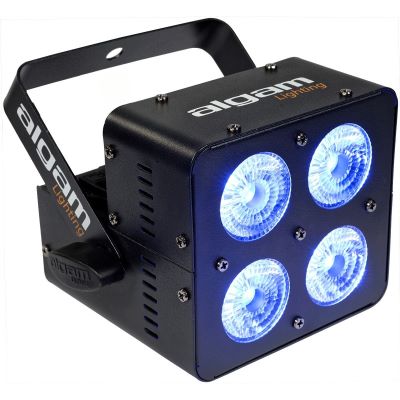
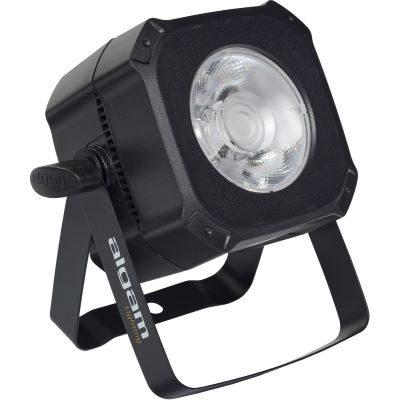
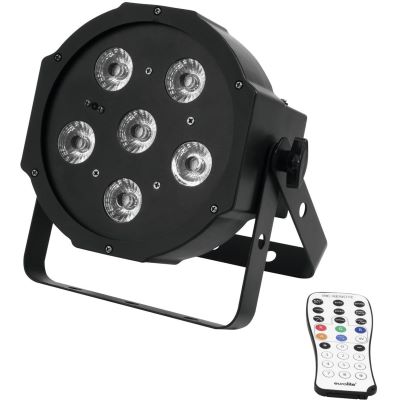
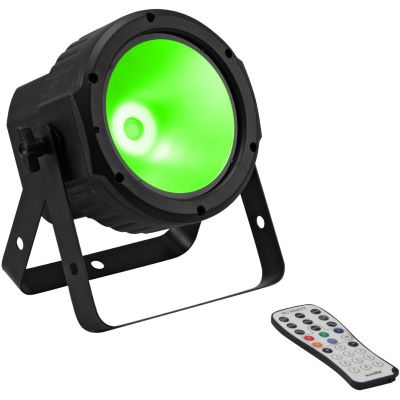
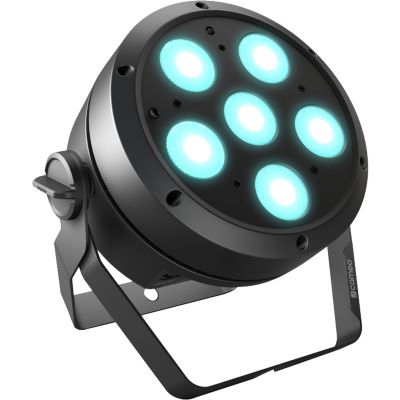
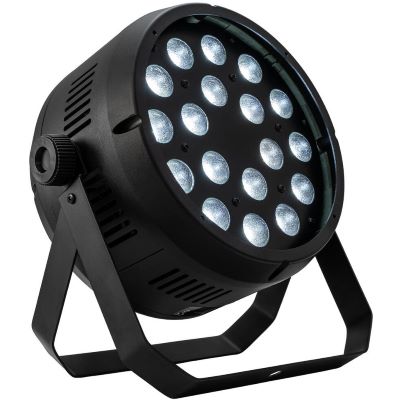
Several fixtures are already combined on one bar, reducing setup time and cabling.
View All Lighting SetsAdd movement after a reliable basic lighting setup is already available.
View All Moving HeadsUse effects to add movement and visual variety to an existing base lighting setup.
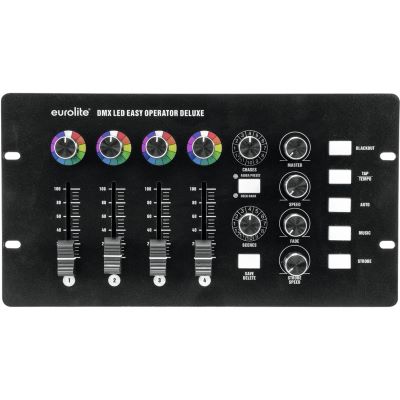
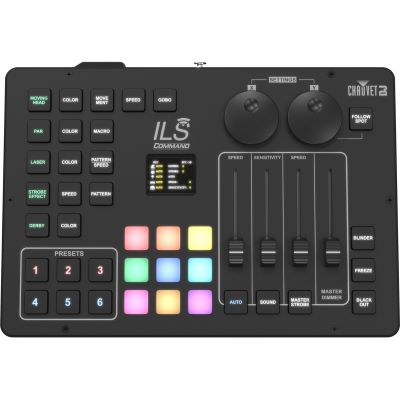
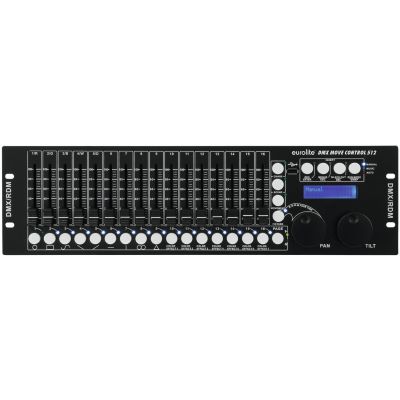
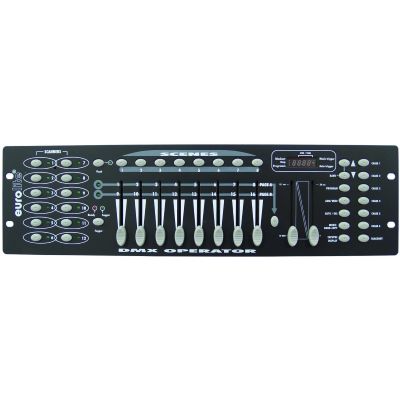
View All Lighting EffectsThe next step when automatic programmes are no longer enough.
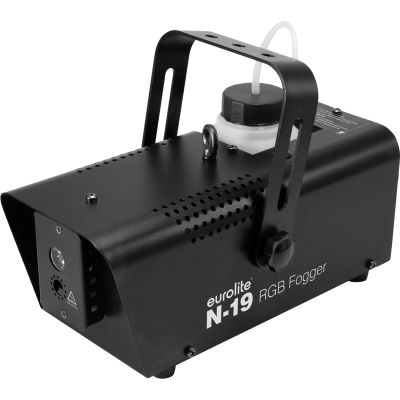
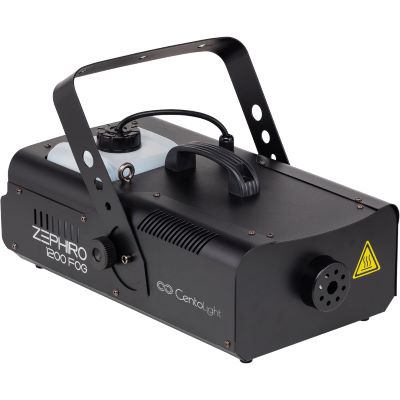
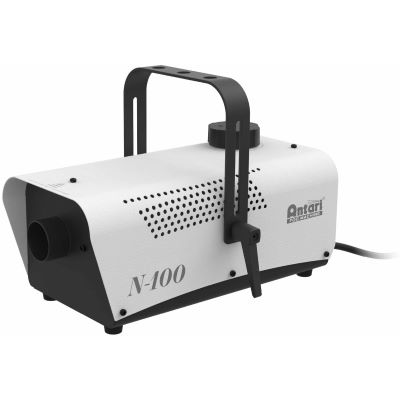
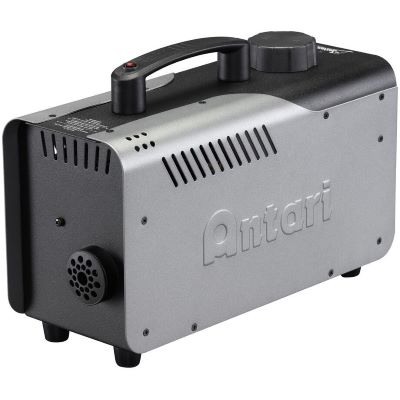
View All Lighting ControllersAdd atmosphere only after the basic lighting and control system are working reliably.
View All Fog & Effect MachinesRaise lighting bars and individual fixtures to a useful working height while observing the specified load capacity.
Clamps, mounting equipment and suitable safety components form part of a properly installed lighting system.
Find cables, mounting components and further equipment for expanding a stage lighting setup.
Protect fixtures and controllers during transport and keep a mobile setup organised between events.
For many beginners, two to four LED PARs or a compact lighting set are the most useful starting point. Moving heads and specialised effects can be added later once a reliable basic lighting setup is available.
A complete set is faster to assemble and usually requires less cabling. Individual PARs allow more flexible positioning and can be expanded more freely later.
No. Automatic programmes, sound activation and master/slave operation are sufficient for many first setups. DMX becomes particularly useful when colours, scenes, blackouts and movements should be recalled deliberately and repeatedly.
Two to four PARs are a practical starting point for many small stages. The actual number depends on stage width, beam angle and the position of the fixtures.
A moving head makes most sense once a solid basic lighting setup is already available. It can then add movement, gobos and deliberate show accents instead of having to provide all of the basic illumination itself.
A fog machine creates clearly visible clouds. A hazer produces a much finer and more even haze that continuously makes light beams visible without creating the same dense fog effect.
No. Sound activation lets the fixture react automatically to music. DMX allows deliberate control of parameters such as colour, dimmer level, movement and effects.
Compact lighting bars, PAR fixtures and a selected effect light form a practical mobile setup. Transport dimensions, setup time and a suitable stand solution are particularly important for regular mobile use.
Only use equipment outdoors when its specified protection rating is suitable for those conditions. Standard indoor fixtures, for example typical IP20 devices, must not simply be exposed to rain.
Improve the basic lighting and its control first. Once colour coverage and operation are reliable, moving heads, effect lighting and haze can be added deliberately.
Begin with reliable basic lighting using LED PARs or a complete lighting set. Once that works, DMX gives you deliberate and repeatable control. Moving heads and effects add movement later, while haze makes their beams visible. Good stands, proper mounting and organised cabling remain part of the system at every stage.
Lighting, PA systems, microphones, mixers, recording equipment, DJ technology and musical instruments: the central Musikhaus Korn guide leads to further buying advice, comparisons and complete setup solutions.