Active PA Systems
Reproduce vocals, keyboards, modelers and other sources clearly and at a controlled level in the room.

A productive rehearsal room needs more than instruments and maximum volume. Vocals have to remain clear, guitar and bass should complement each other, every musician needs to hear the important signals and the entire setup should be connected reliably. This guide takes you from a first vocal PA to a complete rehearsal-room system with monitoring and recording.
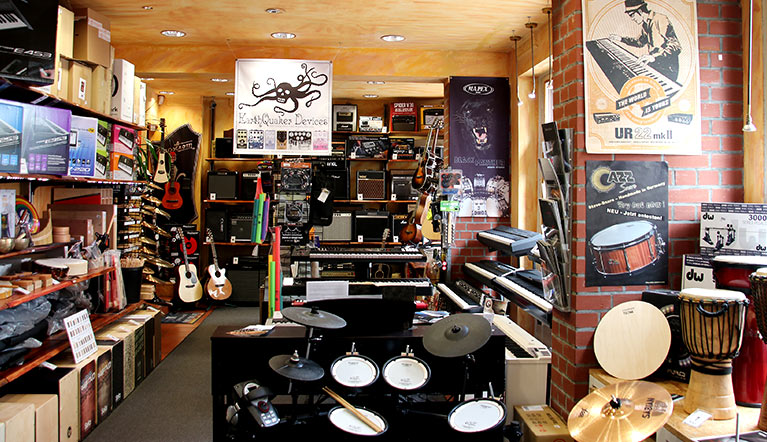
Begin with the problem the band needs to solve. Clear and intelligible vocals are often the first priority. From there, plan a mixer with sufficient inputs, suitable instrument amplification, monitoring and the complete infrastructure of cables, stands and power distribution.
Reproduce vocals, keyboards, modelers and other sources clearly and at a controlled level in the room.
Combine microphones, keyboards, e-drums and playback devices while managing main and monitor mixes.
Dynamic stage microphones are a proven starting point for close-miked vocals in loud rehearsal environments.
Direct vocals, keyboards or e-drums towards the musicians who actually need those signals.
Whether you use a combo, amp head and cabinet or a modeler, the important result is the sound inside the complete band mix.
Sufficient clean reserve and controlled low frequencies help the bass form a solid foundation with the drums.
Not every instrument has to use the same PA. Decide which sources have their own amplifier and which signals are distributed through the mixer. This makes both equipment selection and troubleshooting considerably easier.
Vocals normally need their own amplification path. An additional monitor mix allows singers to hear themselves without unnecessarily increasing the level of the main PA.
A traditional combo can reproduce the guitar directly in the room. Modelers can instead feed an FRFR speaker, stage monitor, PA system or in-ear setup.
A bass combo can cover the rehearsal room by itself. A balanced DI output additionally allows the bass signal to be routed to the mixer or a recording system.
Electronic instruments can be distributed centrally. A stereo keyboard normally occupies two mixer channels when its stereo image is to be retained.
A guitar amplifier may sound impressive by itself and still be too dominant, too bass-heavy or too aggressive in the full arrangement. Establish drums and bass as the rhythmic foundation, add guitars and keyboards and then position the vocals clearly above the arrangement. Monitor mixes are there to improve audibility, not to start another volume competition.
A classic rock band with an acoustic drum kit has different requirements from a band using modelers, e-drums and in-ear monitoring. Plan around the sources that are actually present in your band.
| Band Setup | Basic Equipment | Useful Expansion | Main Consideration |
|---|---|---|---|
| Rock Band with Acoustic Drums | Vocal PA, mixer, microphones, guitar amps and bass amplification | Stage monitors, hearing protection and recording | Vocals need enough clarity and headroom beside the naturally high drum level |
| Band with E-Drums & Modelers | Larger mixer plus active PA or full-range monitoring | Several aux mixes or in-ear monitoring | Overall rehearsal level can be controlled particularly well |
| Acoustic / Songwriter Band | Microphones, DI boxes, mixer and compact PA | Monitor, effects and recording device | Several acoustic sources are brought together in one central mix |
| Rehearsal Room with Recording | Enough inputs, microphones and headphones | Digital mixer or multichannel audio interface | Rehearsal and recording signal paths should be planned together |
Equipment placement changes what the band hears. A guitar combo standing flat on the floor often sends much of its direct sound past the guitarist, while a raised or tilted amplifier can reach the listening position more effectively.
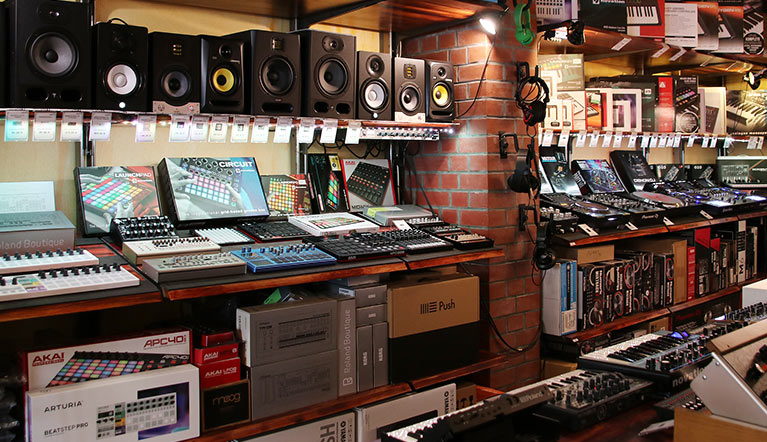
An empty rehearsal room does not have to be completed in one purchase. A sensible order prevents the budget from being spent on secondary equipment while basic signal paths are still missing.
Suitable microphones, XLR cables and a vocal PA form the most important shared foundation for many bands.
Count every source used today and leave extra channels for additional singers, keyboards, e-drums or playback.
Choose guitar and bass amplification around the band style and real rehearsal level rather than maximum output specifications alone.
Musicians who cannot hear themselves often turn up. Dedicated monitor mixes address the actual problem more effectively.
Microphone stands, spare cables, DI boxes, power distribution and organised cable paths make the setup reliable.
Hearing protection should remain available in the rehearsal room. Recordings additionally make it easier to assess arrangements and band balance objectively.
These examples cover different routes from a compact first band system to an expanded rehearsal-room setup. Current prices, availability, specifications and variants can be found on the linked English product pages.
Complete and compact solutions for vocals, electronic instruments and general band playback.
Choose between straightforward analogue operation, flexible digital mixing and consoles with integrated recording functions.
Practical for vocals, keyboards, e-drums and separate monitor mixes without increasing the entire rehearsal level.
Compare classic guitar amplifiers and flexible digital solutions according to sound, rehearsal volume and monitoring requirements.
A bass system should provide enough clean reserve while keeping the low-frequency range controlled inside the room.
Robust dynamic handheld microphones are widely used for regular rehearsals and stage vocals.
Balanced signal routing and suitable hearing protection belong to the practical basics of a well-equipped band room.
Correct cable lengths, spare connections and stable microphone stands reduce avoidable interruptions during everyday rehearsals.
Match the number of simultaneous recording inputs to the sources you want to capture at the same time.
A rehearsal recording reveals details that are easy to overlook while playing. You can assess whether a chorus really becomes larger, whether one guitar dominates, whether the vocals remain clear and whether transitions are played together.
A simple stereo recording can be sufficient for checking arrangements, overall balance, timing and song structure after the rehearsal.
If individual instruments need to be processed later, they require separate recording channels. A digital mixer with recording functions can be particularly practical when the signals already meet in the mixer.
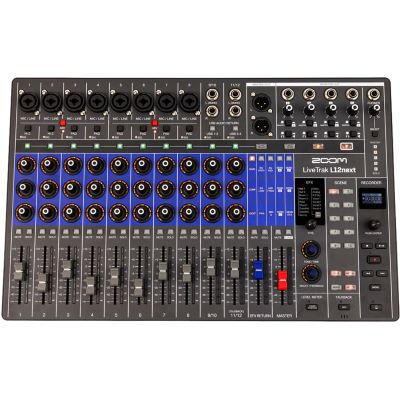
Many rehearsal problems are caused by placement, routing and planning rather than by insufficient maximum output.
If an instrument cannot be heard properly, first check positioning, frequency balance and monitoring instead of automatically adding more level.
Two vocal microphones plus a stereo keyboard already occupy four channels. Leave capacity for future expansion from the start.
A monitor should reach the musician directly. Poor positioning increases the required level and can also increase feedback risk.
Raising or tilting an amplifier directs more of its sound towards the guitarist's ears and can reduce the amount of overall volume required.
Faulty or excessively short cables waste rehearsal time. Useful lengths, spare cables and clear labelling belong in the basic setup.
Keyboards, acoustic instruments, basses and modelers can benefit from a clean balanced connection to the mixer.
Regular rehearsals with acoustic drums and amplifiers can generate high sound levels. Suitable hearing protection should always be within reach.
Even a simple recording makes overall balance, timing, transitions and arrangement much easier to evaluate objectively.
Direct access to selected manufacturer pages in the English Musikhaus Korn shop.












PA, mixer, microphones, monitoring, instrument amplification and recording equipment need to work together. Pay particular attention to enough connections, compatible signal paths and sensible expansion options for the future.
A typical band needs its instruments, suitable guitar and bass amplification, a vocal solution consisting of microphones, mixer and PA, as well as XLR cables and microphone stands. Depending on the lineup, useful additions include stage monitors, DI boxes, keyboard or e-drum amplification, hearing protection and recording equipment.
There is no single useful wattage that fits every band. Room size, the natural level of an acoustic drum kit, the number of amplified sources, loudspeaker efficiency and placement all matter. The PA should provide enough clean reserve for intelligible vocals at the band's actual rehearsal level.
Once several microphones or electronic instruments share the same PA, a mixer becomes extremely useful. It controls input levels, EQ and effects and, depending on the model, can also provide separate monitor mixes and recording functions.
Count every input that is used at the same time. Two vocal microphones require two channels and a stereo keyboard normally needs another two. E-drums, acoustic instruments and additional singers increase the requirement. Leaving two to four spare channels makes future expansion easier.
No. Traditional guitar and bass amplifiers can reproduce those instruments directly in the room. Modelers, preamps and DI outputs can alternatively feed the mixer. The best approach depends on the band's monitoring concept and preferred workflow.
Active loudspeakers contain their amplifier inside the enclosure and are straightforward for many band rooms. Passive systems use separate power amplification and can be useful for larger or permanently installed systems.
Stage monitors are easy to integrate and can serve several musicians. In-ear monitoring allows more individual mixes and can reduce room volume, but it requires sufficient monitor outputs and more deliberate signal routing.
Dynamic handheld microphones are a common choice for band rehearsals because they are designed for close vocal distances and regular stage use. Polar pattern, voice character and handling should still be considered when choosing a specific model.
Avoid directing loudspeakers and monitors unnecessarily into sensitive areas of the microphones. Close microphone technique, controlled gain settings, appropriate monitor levels and careful positioning can all improve gain before feedback.
A stereo recording is sufficient for a simple reference recording. If individual instruments should be processed later, several separate recording channels are required. Digital mixers with recording functions or multichannel audio interfaces are typical solutions.
Compare combos, amp heads, cabinets, modeling and direct-to-PA solutions in a complete band context.
Make keyboards, stage pianos and synthesizers reliably audible in a band rehearsal room.
Compare headphones, drum monitors and PA solutions for different rehearsal and stage situations.
Understand microphone types, polar patterns and practical requirements for different vocal applications.
Combine interfaces, microphones, headphones and room acoustics for better band recordings.
Select loudspeakers, mixers, monitoring, microphones and accessories as one complete sound system.
A useful rehearsal-room setup is created by the interaction of all musicians. Guitar and bass amplifiers, acoustic or electronic drums, vocal microphones, mixer and PA do not have to be selected for maximum size or maximum output. What matters is that every important signal has a clear position in the overall band mix.
Modern rehearsal rooms can also integrate electronic instruments, modeling amplifiers, digital mixers and recording solutions. E-drums, keyboards and guitar modelers can be routed through a mixer, PA or stage monitor, while a digital mixer can simultaneously provide several monitor mixes and recording functions.
Cables, DI boxes, microphone stands, spare leads and hearing protection may appear less spectacular than the larger devices, but they have a major influence on daily reliability. Plan the complete route from the instrument or microphone to the loudspeaker or the musician's ear so that the system can later be expanded in a controlled way.
Choose an instrument, build a studio, amplify a band or prepare equipment for stage and events. The central Musikhaus Korn guide connects the major topics with suitable specialist guides, product groups and products.