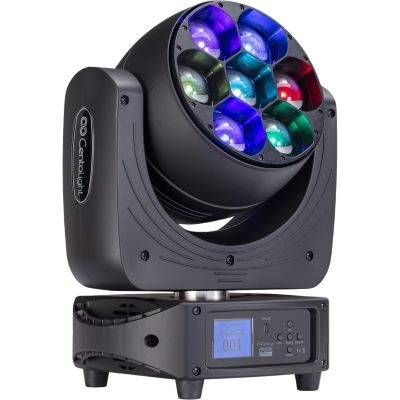
Wash Moving Head
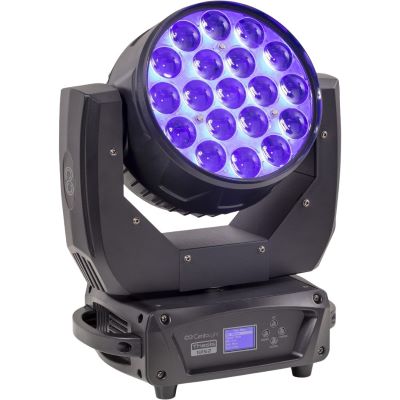
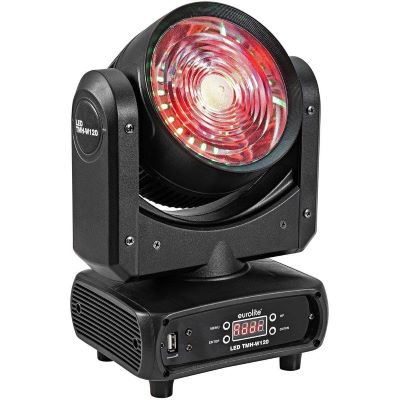
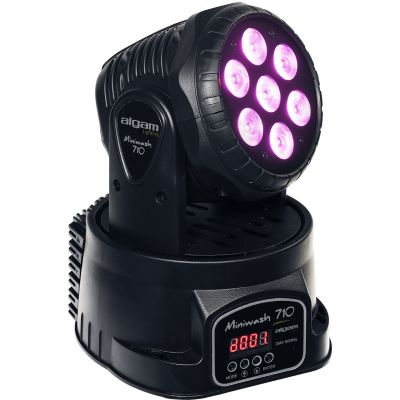
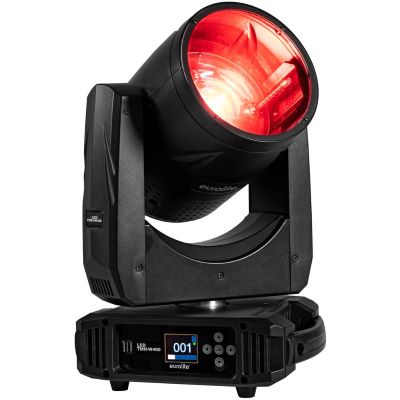
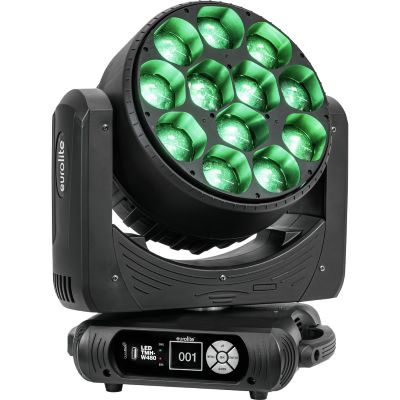
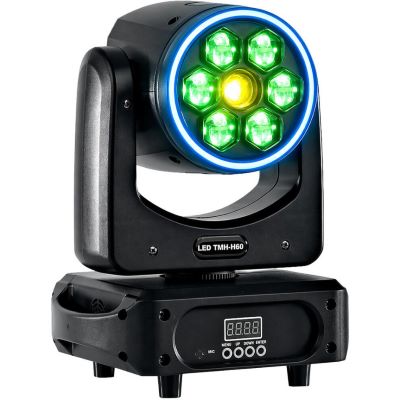
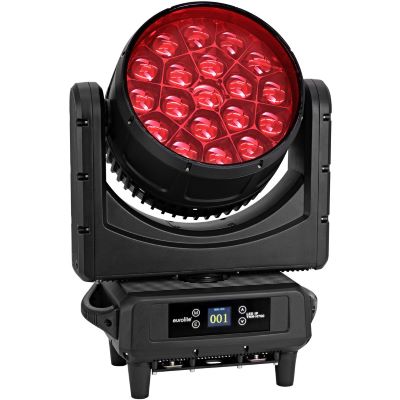
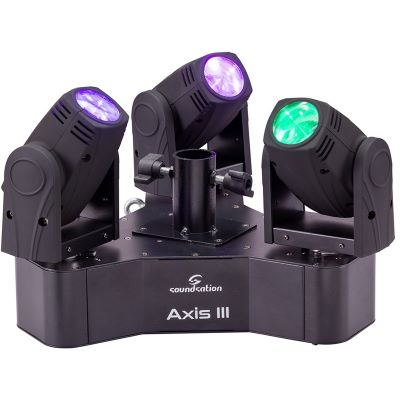
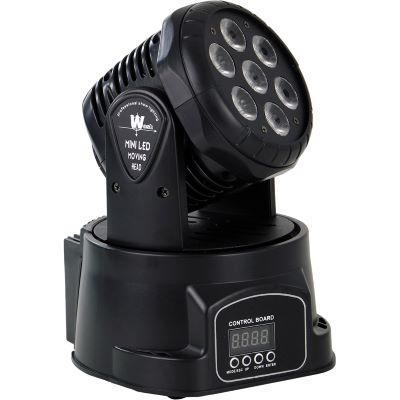
Wash models create broad, soft areas of colour. They are suitable for moving backlight, stage backgrounds and changing colour atmospheres.

Wash, spot, beam or hybrid? Moving heads move light around the room using motorised Pan and Tilt and are among the most versatile tools in modern stage and show lighting. The design determines whether a fixture creates broad moving colour, sharply projected patterns, extremely narrow beams or several lighting effects within one unit.

Do not begin with wattage or the number of DMX channels. Decide first what should happen visually on stage. A moving area of colour requires a different optical system from a sharply projected gobo or an extremely narrow beam.
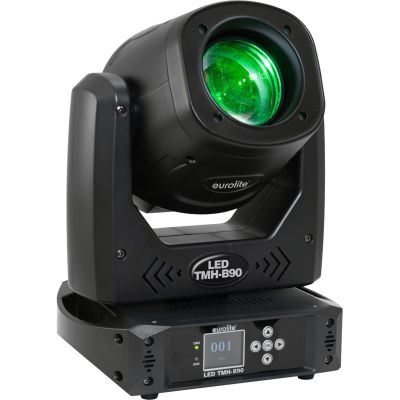
Wash models create broad, soft areas of colour. They are suitable for moving backlight, stage backgrounds and changing colour atmospheres.
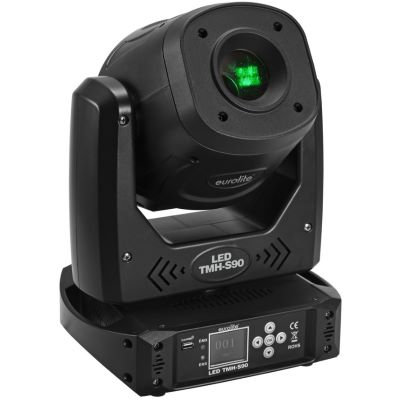
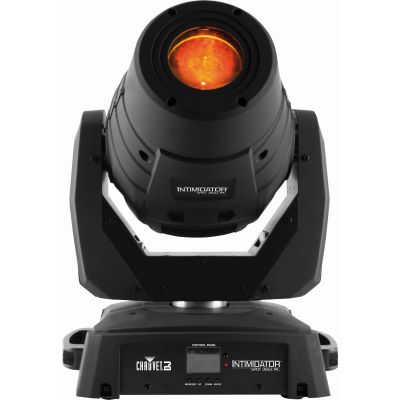
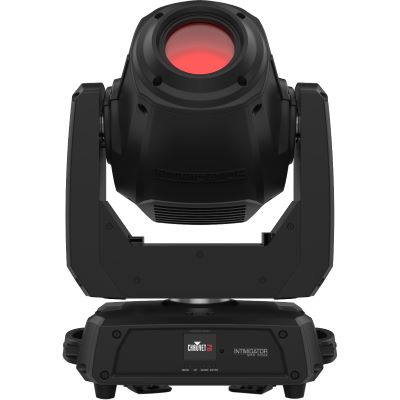
A spot creates a clearly defined light cone. Colour wheels, gobos, focus and prisms make it a versatile show-lighting tool.
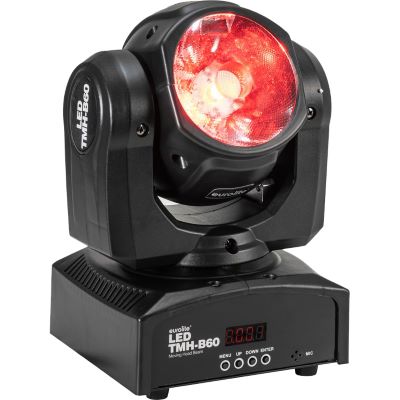
Beam models concentrate their light extremely strongly. With fine haze, they create the familiar narrow rays extending visibly through the entire room.
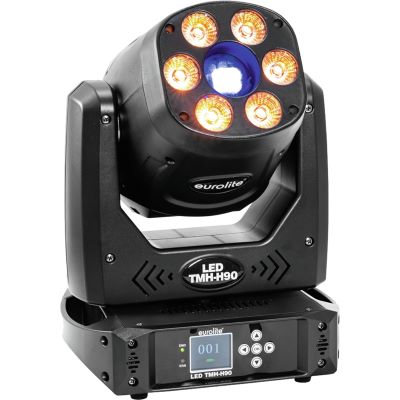
Hybrid fixtures combine functions such as spot and wash or beam, wash and flower effects. They can save space, although programming is often more complex.
Quick decision: choose wash for broad colour, spot for patterns and defined positions, beam for narrow visible rays, and hybrid when several different lighting tasks need to be combined in one fixture.
A wash works in a similar way to a motorised PAR. Several RGBW LEDs mix colours directly and create a comparatively broad light cone.
Motorised zoom greatly increases flexibility: narrow for an accent and wide for a stage or dance floor.
A spot optically concentrates and projects the light. This allows colour wheels, gobos and prisms to be used.
Good focus ensures that patterns remain sharp on walls, floors or within haze.
A beam is optimised for a very small beam angle. A fixture with approximately 2° can create an extremely narrow ray.
Without fine haze, however, you mainly see the illuminated point where that ray finally lands.
Hybrid models can switch between different optical characters or operate several effect systems together.
This is useful where space is limited and for mobile shows designed around only a few fixtures.
Pan is the horizontal rotating movement. Many fixtures reach approximately 540°, while some professional models provide wider or additional movement options.
Tilt is the vertical movement of the head, moving it upwards and downwards or forwards and backwards. Pan and Tilt together define the position of the beam in space.
Finer movement resolution allows very small positioning steps. Slow movements and accurately repeated stage positions therefore appear much smoother than with coarse control.
Fast motors are useful for energetic club shows. During theatre, ballads and slow transitions, however, smooth movement becomes highly visible. Precision and repeatability therefore matter just as much as maximum speed.
Some moving heads detect when the head has been mechanically moved away from its programmed position and automatically return it to the intended location.
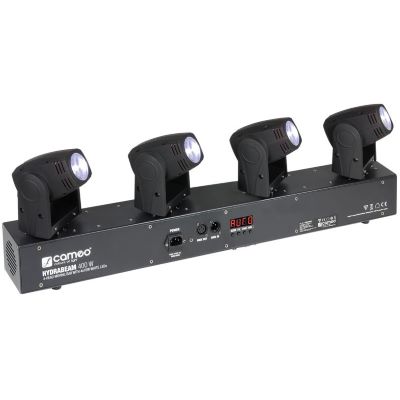
Practical rule for several fixtures: two or four identical moving heads make symmetrical movement, programming, replacement planning and repeatable shows considerably easier.
Gobos are patterns placed in the optical path. Stars, geometric shapes and structures can be projected onto surfaces. Rotating gobos add further animation.
A prism multiplies the beam or gobo projection. A three-facet prism, for example, creates three offset projections from one original image.
Focus sharpens the projection. When projection distances change, motorised focus is considerably more convenient than manual adjustment.
Zoom changes the beam angle. Wash moving heads in particular can use it to move from a concentrated cone to a broad area of colour.
| Type | Light Cone | Typical Functions | Especially Suitable For |
|---|---|---|---|
| Wash | Broad and soft | RGBW, zoom, pixel control | Band, stage, backlighting |
| Spot | Defined | Gobo, focus, colour wheel, prism | Show, theatre, DJ |
| Beam | Extremely narrow | Beam, strobe, colour | Club, haze, large spatial effects |
| Hybrid | Variable | Several effect types | Mobile and flexible shows |
No design is fundamentally better: a 2° beam may look spectacular in haze but is the wrong tool if an entire band needs to be illuminated evenly with colour.
Every moving head receives a DMX start address. Depending on the operating mode, it then uses several channels for Pan, Tilt, dimmer, colour, gobo, prism, focus, zoom or internal programmes.
Fewer channels simplify programming and use less DMX address space. Some functions may be combined or offer fewer individual parameters.
Individual pixels, fine movement control and effect parameters receive their own channels. This provides maximum control but requires more programming.
Integrated programmes or music control may be sufficient for small parties. For bands and repeatable shows, DMX provides considerably more control.
Small dimensions and low weight are especially important. Two identical moving heads already provide symmetrical movement and a strong visual effect.
Wash moving heads are useful for moving backlight. Spots can emphasise solos and breaks but should not replace the band's existing front lighting.
Beam and spot fixtures reveal their strengths in combination with haze. Fast movements and compact dimensions are particularly interesting in this environment.
Power reserve, zoom, precise optics, 16-bit movement, RDM, networking options and weather-resistant versions become increasingly important.
The selection includes compact entry-level models, current all-rounders and more powerful solutions for stages, clubs and professional event technology.
From compact RGBW washes to large pixel matrices and high-output zoom fixtures.
Defined light cones, gobos, colour wheels, focus, prisms and zoom create precisely positioned show images.
Concentrated light paths designed to become especially impressive within haze.
Useful where several visual functions need to be combined in a small number of fixtures.
DMX controllers unlock Pan, Tilt, colours, gobos and moving-head effects completely.
Fine haze makes beams and spot-light paths visible and increases the spatial impression.
Optics and movement mechanisms should be protected during regular mobile transport.
For elevated installation, use suitable brackets, trusses and the required secondary safety equipment.
The current selection ranges from compact entry-level fixtures to pixel, zoom, spot, beam and weather-resistant professional moving lights.







A narrow beam creates a strong show effect but cannot replace broad stage illumination.
Optical design and beam angle have a major influence on the actual lighting effect.
Pairs generally create more balanced movement patterns and are easier to programme symmetrically.
Pixel and hybrid fixtures can require many control channels when operated in their extended modes.
In clean air, a beam is mainly visible where it hits another surface rather than throughout the room.
Include weight, transport case, Omega brackets and suitable secondary safety equipment in the plan from the beginning.
A moving head is a motorised lighting fixture. The head is positioned horizontally and vertically so that beams, colours and effects can be moved deliberately through the room.
Wash creates broad areas of colour, spot creates a defined light cone with possible gobos, and beam creates an extremely narrow ray. Hybrid fixtures combine several of these characteristics.
Pan is the horizontal rotating movement and Tilt is the vertical movement of the head. Together, the two values determine where the fixture points.
A gobo is a pattern placed in the optical path. It projects shapes or structures. More advanced spot moving heads may offer interchangeable and rotating gobos.
A prism multiplies the beam or projected image. A single gobo can therefore appear as three or several separate projections.
Motorised zoom changes the beam angle during the show. Depending on the model, the same fixture can therefore switch between a narrow accent and a broad wash.
No. Many models provide automatic programmes, Sound-to-Light and master/slave operation. DMX is considerably more flexible for deliberate movement and repeatable shows.
Two identical fixtures are a sensible starting point for many small shows. Four allow more complex symmetrical lighting images. The correct number depends on stage size and the desired effect rather than a fixed rule.
Not necessarily for wash lighting. Fine haze makes spot and beam light paths considerably more visible. Its use must first be coordinated with the venue and fire-detection system.
A compact RGBW wash is particularly straightforward and versatile. Anyone wanting projected patterns can choose a spot with manageable DMX modes and integrated stand-alone programmes.
Plan broad colour and reliable basic illumination as the foundation underneath moving show lighting.
Compact complete solutions for mobile DJs, bands and smaller events.
Programme Pan, Tilt, colours and effects through DMX so that scenes can be repeated accurately.
Make light paths visible in the air and give beams and spots additional spatial impact.
For broad moving colour, choose wash. If you need gobos and clearly defined projections, choose spot. Narrow visible aerial rays are the domain of beam fixtures, while hybrid models combine several effects. After choosing the type, compare beam angle, zoom, focus, gobos, prisms, movement quality, DMX modes, operating noise, weight and future expandability.
Lighting technology, PA systems, mixers, microphones, DJ equipment, recording and musical instruments: the central Musikhaus Korn guide leads to further buying advice, comparisons and complete setup solutions.