Musikhaus Keks
Welcome!
Our cookies offer you a fast, relaxed and full-featured shopping experience. Some are necessary to operate the website and its functions. Others help us to improve our services. If you agree to this, simply consent to the use of cookies for preferences, statistics and marketing by clicking on "OK". Alternatively, you can deactivate individual cookies under "Customise cookies" or all cookies, except those required for the function of our website, under "Reject all".
Musikhaus Korn Guide

Spot, Wash or Beam? Moving Heads Compared

A Wash colours a stage with broad, soft light. A Spot creates defined light cones, gobos and projections. A Beam concentrates its output into an extremely narrow ray that becomes especially impressive in haze. All three move through Pan and Tilt – but their optics and therefore their actual jobs are fundamentally different.

Spot for gobos & accents Wash for colour & area Beam for narrow aerial effects
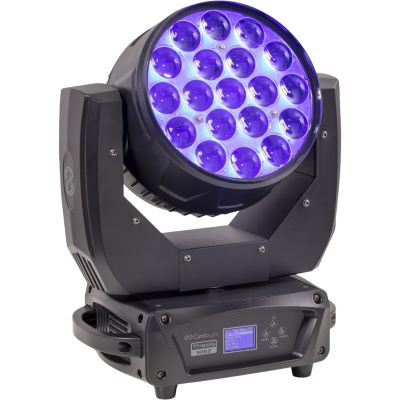
EUROLITE LED TMH-W375 Matrix moving-head wash with 25 RGBW pixels and motorised zoom
Wash = broad · Spot = defined · Beam = extremely narrow
Spot Defined, focused and designed for gobos
Wash Broad, soft and colourful
Beam Extremely narrow and highly visible in haze
Hybrid Combines several lighting characteristics
The desired lighting effect decides

When Do You Need Spot, Wash or Beam?

First decide what the light should actually do. Should it colour people and surfaces, project patterns, or travel visibly through the room as a narrow ray? Once that question is answered, choosing the correct moving-head design becomes much easier.

Gobo, Focus & Projection

Choose Spot

A Spot creates a clearly defined light cone. Gobos, colour wheels, focus and prisms allow you to project patterns, geometric shapes and deliberate accents onto the stage, floor or back wall.

  • For solos and show accents
  • For gobo projections
  • For defined lighting positions
Colour, Area & Backlight

Choose Wash

A Wash moving head works rather like a motorised PAR. It creates broad, soft areas of colour and is ideal for bands, stage backgrounds and moving backlight.

  • For broad areas of colour
  • For band and stage lighting
  • For dynamic backlighting
Narrow Rays & Aerial Effects

Choose Beam

A Beam concentrates its light extremely strongly. Combined with haze, the complete light path becomes visible – ideal for clubs, shows and dramatic geometric movements.

  • For extremely narrow rays
  • For clubs and show lighting
  • Especially effective with haze

In one sentence: Spot projects, Wash illuminates an area, and Beam draws a narrow ray through the room. A Hybrid moving head combines several of these tasks.

The movement is similar – the optics are not

Why Do Spot, Wash and Beam Look So Different?

All three designs move the head horizontally through Pan and vertically through Tilt. The decisive difference lies in the optical system in front of the light source. It determines beam angle, sharpness and which effects the fixture can create.

Beam Geometry

Beam Angle

Wash fixtures often use much larger angles. Beam models can create light cones only a few degrees wide.

Projection

Focus

A Spot needs focus so that gobos and light edges remain sharp at different projection distances.

Flexibility

Zoom

Motorised zoom changes the beam angle via DMX. Wash models in particular become much more versatile on changing stages.

Visibility

Haze

Fine haze makes the path of a light beam visible. The narrower the ray, the stronger this spatial effect appears.

Defined light cones and patterns

What Can a Spot Moving Head Do?

The Spot is the classic projection moving head. A powerful light source is sent through an optical system that may contain a colour wheel, gobos, prism and focus.

This allows a Spot to mark a singer's position, move a defined light cone across a dance floor or project a gobo onto the floor or wall. For bands it works well as show lighting for solos and choruses; DJs gain clearly recognisable movement patterns.

  • Gobos for patterns and structures
  • Motorised focus on more advanced models
  • Prism for multiplying the projected image
  • Colour wheel on models with a white main light source
  • Zoom on more flexible Spot fixtures
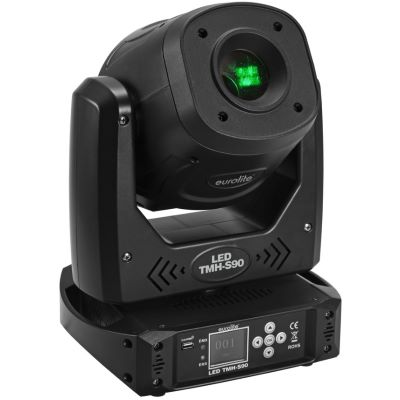
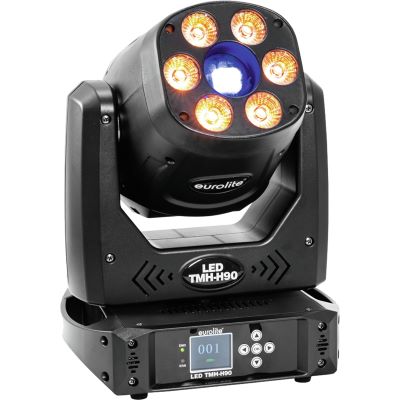
EUROLITE LED TMH-S90 moving-head Spot with gobo wheels, motorised focus and prism
Spot: defined cone · gobo projection · focus · prism

What Is a Gobo?

A gobo is a pattern placed in the light path. It creates a particular shape or structure. Rotating gobos can additionally be turned and, depending on the fixture, their rotation speed can be changed.

What Does a Prism Do?

A prism multiplies the existing light cone or gobo. One projection can therefore become a three-fold, eight-fold or otherwise multiplied pattern.

Spot rule: whenever sharp patterns, focus or accurately defined light positions are important, you are in the classic territory of the Spot moving head.

Moving colour instead of projection

What Makes a Wash Moving Head Different?

Wash moving heads normally do not project sharp gobos. Instead they create homogeneous areas of colour and frequently mix colour directly using RGBW LEDs.

This is particularly useful on stage: during a chorus the head can move upwards, during a verse it can colour the back wall, and during another song it can function as moving side or backlight.

  • Ideal for bands and stage backgrounds
  • Direct RGBW colour mixing is common
  • Creates homogeneous areas of colour
  • Zoom greatly expands the possible applications
  • Pixel control can add further effects
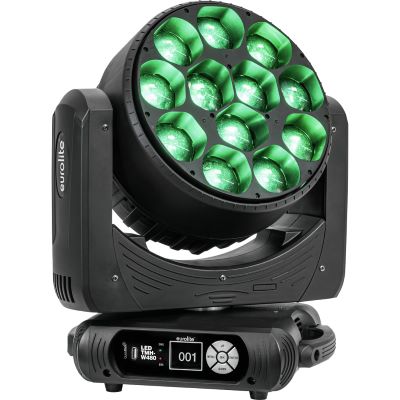
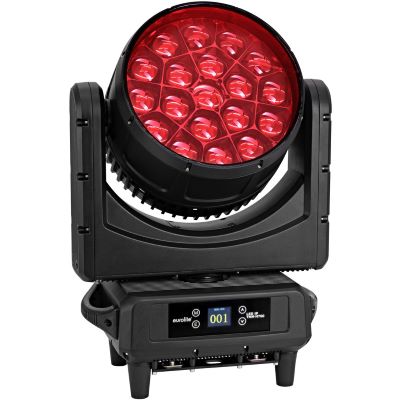
EUROLITE LED TMH-W375 Matrix Wash moving head with 25 controllable RGBW pixels and 2 to 42 degree zoom
Wash: broad colour · homogeneous areas · zoom · pixel effects
Maximum visible ray effect

When Is a Beam Moving Head the Right Choice?

Beam moving heads are designed for extremely narrow light cones. A model with a beam angle of around 2° does not create a broad wash but a tightly concentrated column of light.

This effect depends heavily on haze. In clean air you mainly see the point where the beam hits another surface. In fine haze, the entire line becomes visible, creating strong geometric images above dance floors and across larger stages.

Beam is not front lighting: for faces or even band illumination you still need PARs , Wash fixtures or other broad lighting sources.

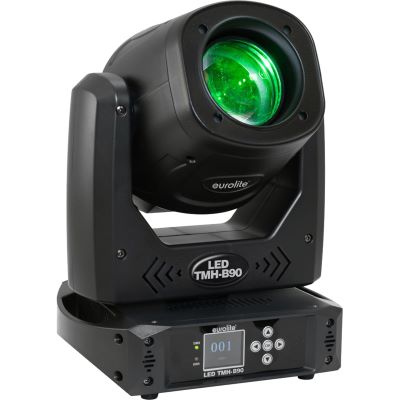
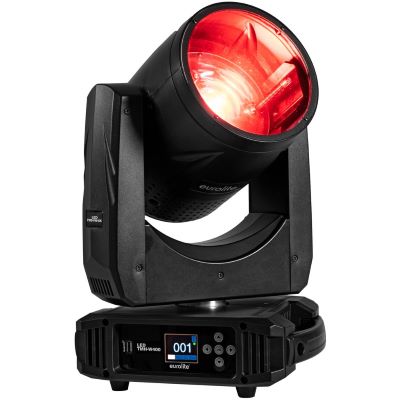
EUROLITE LED TMH-B90 moving-head Beam for narrow aerial light effects in clubs and stage shows
Beam: narrow aerial ray · strongest effect with haze
All differences at a glance

Compare Spot, Wash and Beam Directly

Comparison between Spot, Wash and Beam moving heads
Criterion Spot Wash Beam
Light cone Clearly defined Broad and soft Extremely narrow
Illuminate areas Limited Ideal Unsuitable
Gobos Typical function Usually none Depends on model
Focus Frequently available Usually unnecessary Depends on model
Zoom Common on better models Especially useful Less frequently required
Effect with haze Very good Good Extremely strong
Band lighting Shows & solos Basic & backlighting Additional show effect
DJ & club Very versatile Colour & wash Strong aerial effects
After the fixture type come the technical details

What Should You Check When Buying a Moving Head?

Optics

Beam Angle

A 2° Beam and a 40° Wash perform completely different jobs. Compare beam angle and zoom rather than looking only at the power of the light source.

Movement

Pan, Tilt & 16 Bit

Fine movement resolution is especially important during slow movements. Good repeatability also makes it easier to return accurately to fixed stage positions.

Programming

DMX Channels

Extended modes provide more control but consume more channels. Matrix and pixel fixtures can occupy a significant part of a DMX universe in their largest operating mode.

Environment

Operating Noise

Fan and motor noise matters much more in theatre, gala or acoustic performances than in a loud club.

Mobile Use

Weight & Transport

Two moving heads plus cases, cables and stands can require considerably more transport space than the fixtures themselves suggest.

Weather

Indoor or Outdoor

For rain or unprotected outdoor stages, only use models explicitly intended for the conditions and with a suitable protection rating.

Sorted by typical lighting effect

19 Suitable Moving Heads at Musikhaus Korn

The selection includes compact units, powerful stage models and flexible hybrid systems. The products are grouped according to their typical optical effect.

Plan moving heads as a complete system

DMX, Haze, Cases and Mounting Accessories

Atmosphere

Haze & Fog

Fine haze makes Spot and Beam light paths visible throughout the room.

Transport

Lighting Cases

Protect optics, motors and housings during regular mobile use and transport.

Installation

Stage Construction

Use suitable clamps, truss systems and secondary safety equipment for elevated mounting.

Suitable manufacturer ranges

Moving-Head Brands at Musikhaus Korn

Common buying decisions

Spot, Wash and Beam Explained Simply

Which is better: Spot, Wash or Beam?

None of the three types is fundamentally better. Wash is suitable for broad areas of colour, Spot for gobos and defined light cones, and Beam for extremely narrow visible rays.

Which moving head is suitable for a band?

A Wash moving head is especially versatile for bands because it creates moving backlight and colour moods. Spot fixtures can additionally emphasise solos and choruses.

Which moving head is suitable for a DJ?

Compact Spots and Hybrid fixtures are very flexible for mobile DJs. In clubs, Beam moving heads combined with haze create particularly impressive spatial effects.

Can a Wash moving head project gobos?

Classic Wash models normally do not contain a gobo wheel because their optics are designed for soft areas of colour. Spot or suitable Hybrid models are intended for projections.

Why does a Spot need focus?

Gobos and light edges have to be focused according to projection distance. Motorised focus allows this adjustment to be made directly from the lighting controller.

Why is a Beam so narrow?

Its optical system concentrates as much light as possible into a very small angle. This creates the characteristic intense aerial light ray.

Do Beam moving heads require a hazer?

Not for operation itself, but haze is needed for the typical spatial ray effect. Without haze, you mainly see the illuminated surface at the end of the beam.

What is a Hybrid moving head?

Hybrid models combine several optical characters or effects in one housing, for example Spot and Wash or Beam, Wash and Flower effects.

How many moving heads do I need?

Two identical fixtures are a sensible starting point for many small setups because they allow symmetrical movements. Four fixtures provide more options for groups and more complex stage images.

What should I buy first: PARs or moving heads?

If there is no basic lighting yet, PAR or white-light fixtures are usually more important. Moving heads can then add movement, accents and show effects afterwards.

Plan the complete lighting system

Related Areas Around Moving Heads

Basic Lighting

PAR Spotlights

Add broad colour and reliable basic illumination for stages and events.

Backlight

LED Bars

Create broad backlighting and pixel effects with a compact form factor.

Programming

DMX Control

Programme positions, gobos, colours and movement so they can be reproduced accurately.

Spatial Effects

Haze & Fog

Make Spot and Beam light paths visible and add spatial depth to the lighting show.

The decision summarised

Wash for Area, Spot for Projection, Beam for the Visible Ray

If you want to move colour across musicians, a stage or a back wall, choose Wash. If you need gobos, defined light cones and precise accents, choose Spot. If you want extremely narrow rays travelling visibly through the room, choose Beam. After choosing the design, compare zoom, focus, beam angle, DMX modes, movement quality, weight and the intended venue.

Understand more lighting and event technology

Open the Musikhaus Korn Guide

Lighting technology, PA systems, mixers, microphones, DJ equipment, recording and musical instruments: the central Musikhaus Korn guide leads to further buying advice, comparisons and complete setup solutions.