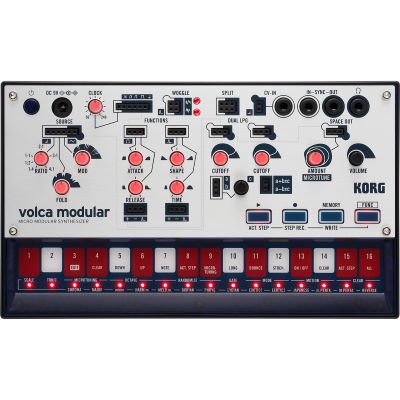
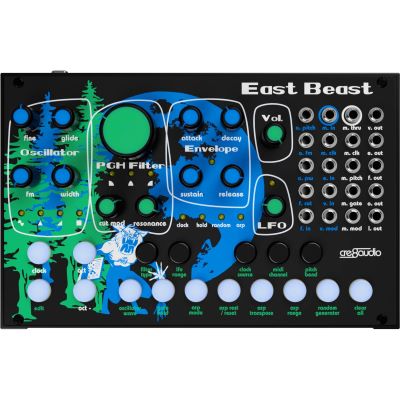
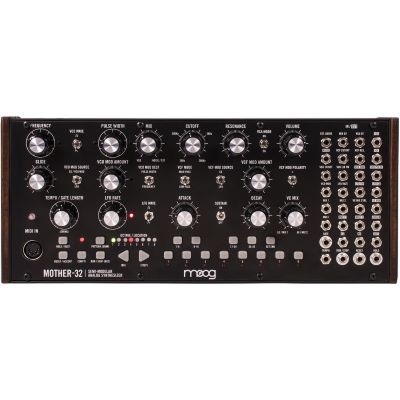
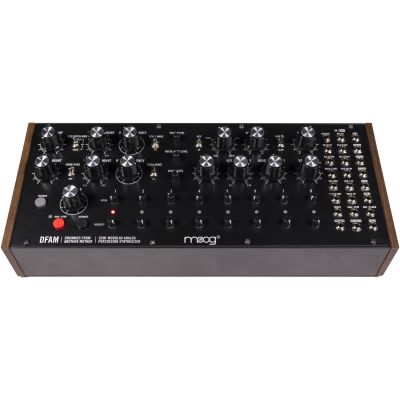
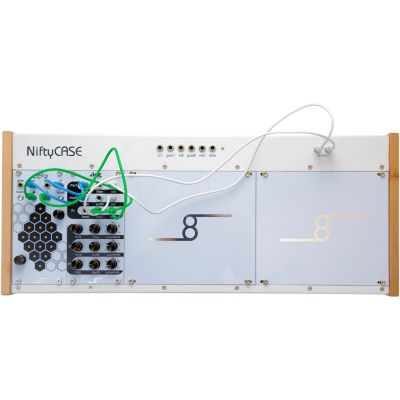
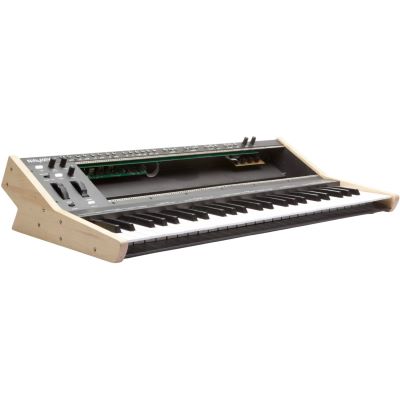
Semi-Modular Synthesizer
The instrument already has a working internal signal path and therefore produces sound without a patch cable. The patchbay then allows you to interrupt, redirect and expand this path.

Patch cables, oscillators, filters and control voltages can make modular synthesis look complicated at first. In practice, however, a modular synthesizer can be understood one function at a time. This guide explains the difference between semi-modular instruments, ready-made Eurorack systems and a completely custom rack and shows which building blocks you need for your first playable patch.
Your first decision is not which oscillator sounds most exciting. Decide how much of the system you want to build yourself from the beginning.
The instrument already has a working internal signal path and therefore produces sound without a patch cable. The patchbay then allows you to interrupt, redirect and expand this path.
Case, power supply and modules are already matched. You learn the real Eurorack signal flow without having to solve every planning question before making your first sound.
You select every function yourself. This gives you maximum freedom but also means you must consider case width, module depth, power consumption and a balanced signal path from the start.
If terms such as VCO, VCA, CV and Gate are still new to you, a semi-modular synthesizer is often the clearest starting point. Expand the system only once you can name the function you repeatedly miss.
A conventional synthesizer also contains oscillators, filters, amplifiers, envelopes and modulation sources. The difference is that many of these connections are internally predetermined. A modular synthesizer separates the individual functions and lets you define the signal path with patch cables.
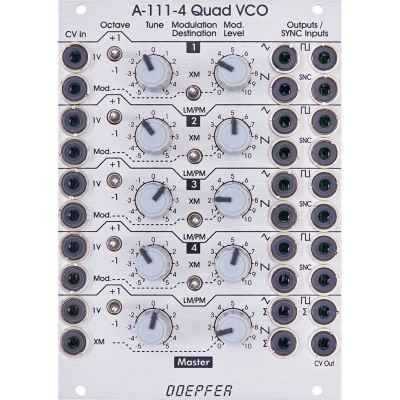
The Voltage Controlled Oscillator generates the basic audio signal. Typical waveforms include sawtooth, square, triangle and sine.
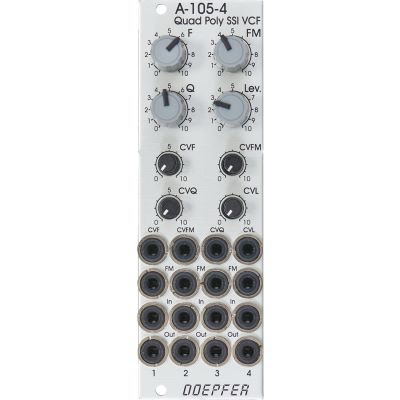
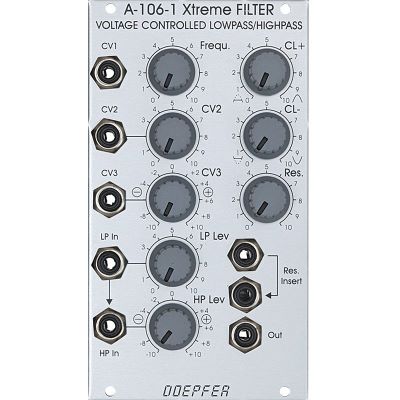
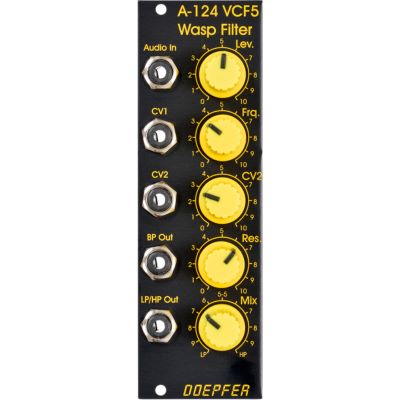
The Voltage Controlled Filter changes the frequency spectrum. A low-pass filter, for example, increasingly removes high-frequency content as its cutoff frequency is lowered.
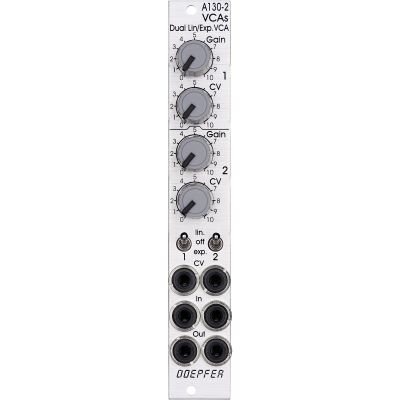
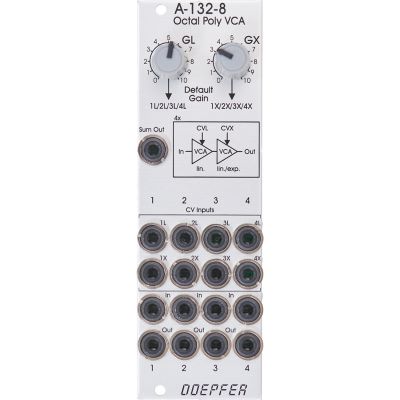
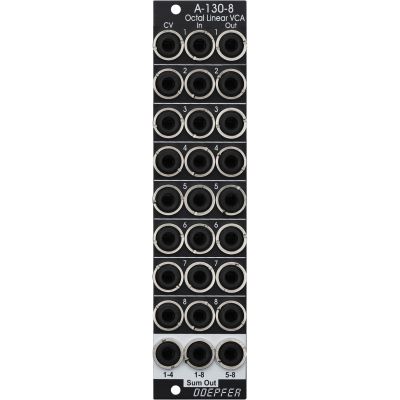
The Voltage Controlled Amplifier controls the level of an audio or modulation signal using a control voltage. A VCA is one of the most important utility functions in a modular system.
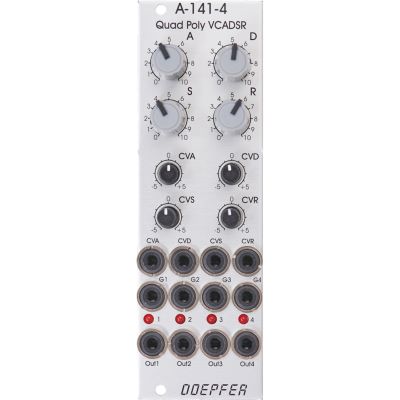
An envelope generates a changing control voltage after a Gate signal. An ADSR envelope divides this movement into Attack, Decay, Sustain and Release.
Audio signals are what you ultimately hear. Control voltages – CV – change parameters such as pitch, cutoff frequency or VCA level.
The same 3.5 mm cable format can be used for both in Eurorack, which is why understanding the function of each jack is more important than the cable itself.
A Gate can remain active for the duration of a note. A Trigger is typically a shorter pulse used to start an event. Clock signals provide regularly recurring timing information for sequencers and other rhythmic functions.
Always check the permitted signal levels and voltage ranges in the documentation of the specific modules.
VCO → VCF → VCA → audio output. An envelope can control the VCA, while an LFO or another modulation source can move the filter cutoff.
A playable modular instrument needs more than exciting sound generators. Utility modules often determine how flexible and musical the complete system becomes.
Generate the raw audio material: classic waveforms, digital oscillators, sample playback or more complex synthesis engines.
Change the harmonic structure, colour and spatial character of the source material.
Control levels, combine signals and make modulation intensity controllable with another CV signal.
Create changing control voltages for level, filter, pitch or other modulation destinations.
Provide repeating or unpredictable modulation for evolving patches and rhythmic changes.
Generate note sequences, rhythmic timing and pitch-correct control voltages.
Duplicate, combine, route or transform signals. These apparently simple functions often make larger patches possible.
Provide mechanical space, mounting rails, suitable power connections and sufficient electrical capacity for the installed modules.
| Criterion | Semi-Modular | Basic Eurorack System | Custom Eurorack |
|---|---|---|---|
| First Sound | Usually without patching | Basic patch required | Build the complete path yourself |
| Learning Curve | Gentle | Medium | Higher |
| Planning Required | Low | Manageable | Extensive |
| Expandability | Via patchbay | Very Good | Maximum |
| Particularly Suitable For | Learning basics and first patches | Practical Eurorack learning | Building a highly individual instrument |
Start with the basic audio path. Only add modulation once you can hear what each individual connection changes.
Connect an audio output of the oscillator to the audio input of the filter. You now have a sound source whose harmonic content can be shaped.
Connect the filter output to the audio input of the VCA. The VCA will later control whether and how loudly the signal passes through.
Connect the Gate signal from the keyboard, sequencer or MIDI/CV interface to the Gate input of the envelope.
Connect the envelope output to the VCA control input. The previously continuous oscillator now becomes a playable note with a defined level contour.
Connect an LFO to the filter cutoff CV input. Adjust the modulation amount and speed. You have now added automatic movement without changing the fundamental audio path.
Eurorack module width is specified in HP (Horizontal Pitch), also commonly referred to as TE in German-language specifications. One HP equals 5.08 mm.
The width alone is not enough. Check the module depth, the available installation depth of the case and whether connectors or busboards reduce the usable space behind certain positions.
Every power rail must remain within the capacity specified by the case manufacturer. Add the requirements of the individual modules and plan reserve instead of using the supply at its theoretical maximum.
Also check how many busboard headers are available. An empty section of rail is of little use when no suitable power connection remains.
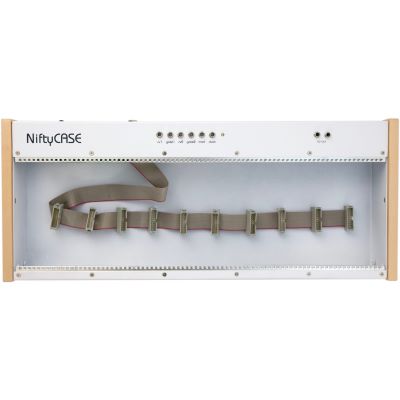
Add all module widths and deliberately leave some room for future utilities or the function you discover is missing.
Cases differ significantly in depth, especially above busboards and power connectors.
Compare each module's documented power requirements with the capacities specified for the case.
A completely full first rack leaves no room for the utility module you may soon discover you need.
Switch the case off completely and disconnect it from the mains before installing or removing modules. Connect the ribbon cable only in the orientation and to the connector specified in the documentation of both the module and the case. Never guess the orientation from cable colour alone. Work on the power supply itself belongs in qualified professional hands.
A MIDI-to-CV/Gate interface converts notes into control voltages for pitch and Gate information for triggering envelopes.
A sequencer generates repeating or evolving pitch, Gate, Trigger and modulation patterns without requiring a traditional keyboard.
A DAW can control the modular system through MIDI/CV conversion or compatible USB/MIDI hardware and synchronise sequencers to the project tempo.
Modular systems do not need to be played conventionally. Random voltages, clock divisions and logic can create evolving structures that partially generate themselves.
The selection follows the learning path of the guide: start with semi-modular instruments or a case, build a balanced core voice, then add modulation, routing, sequencing, sampling and effects where they solve a specific musical task.
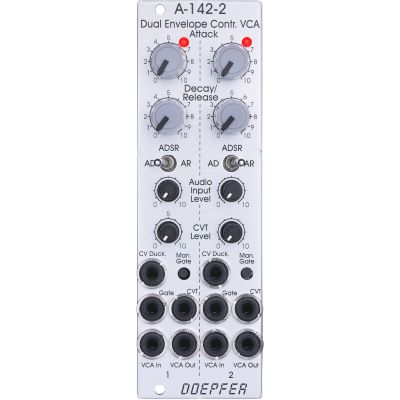





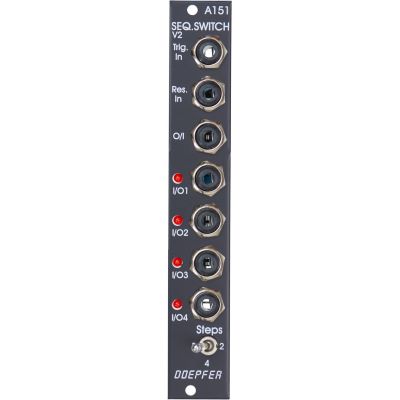
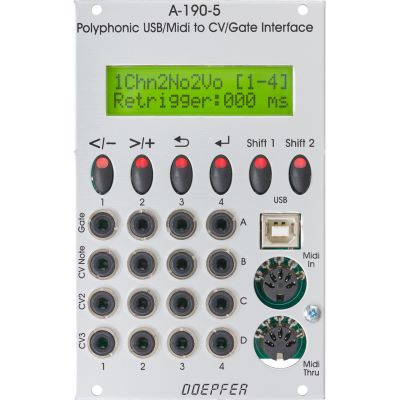

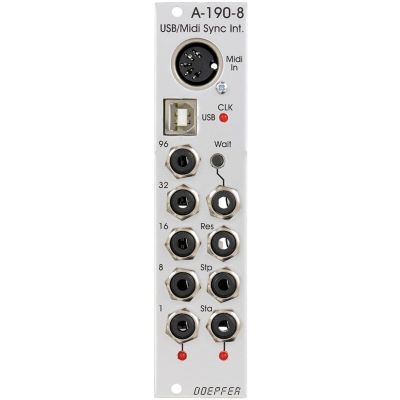
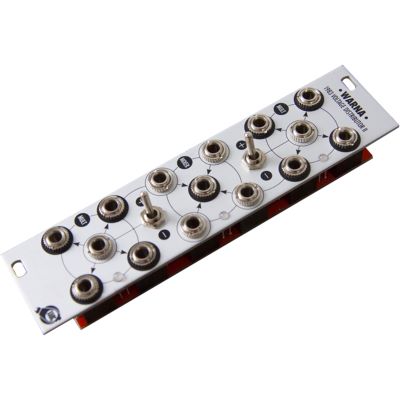
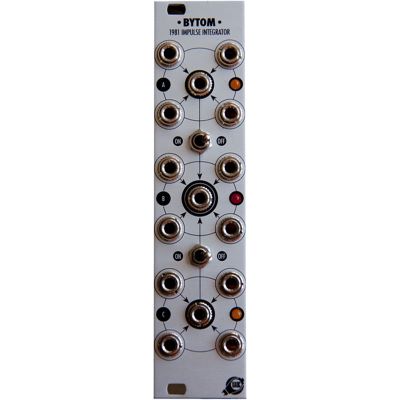
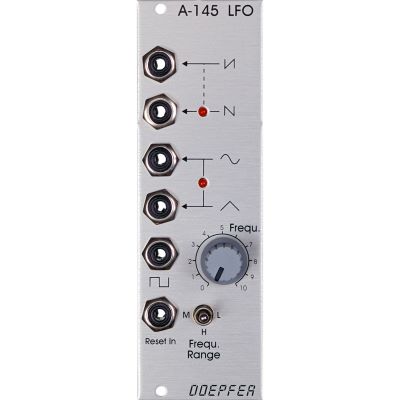


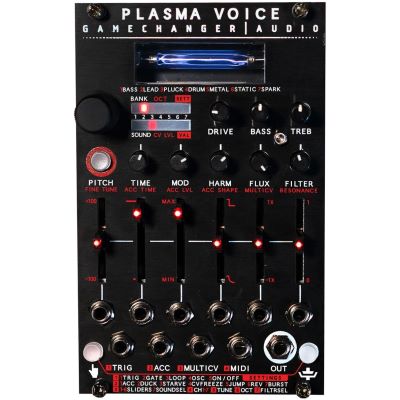
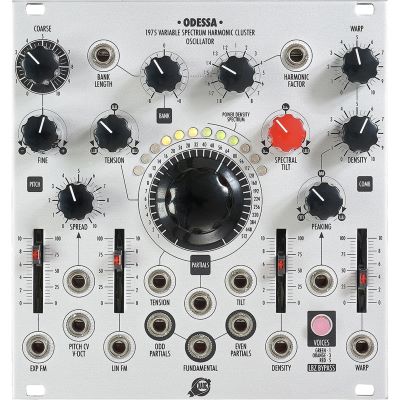
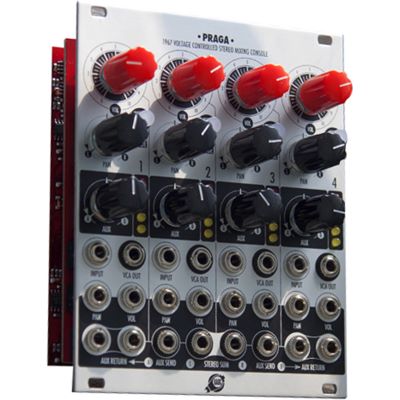
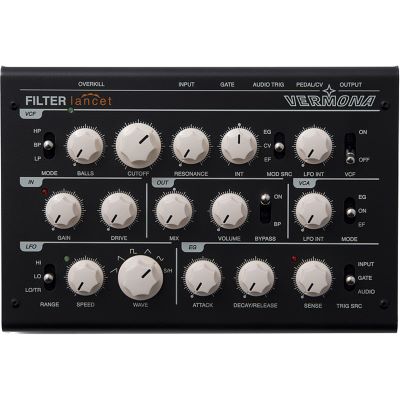
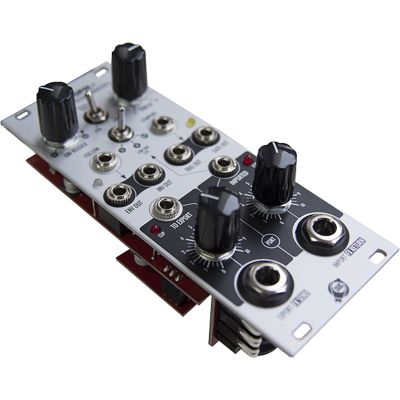
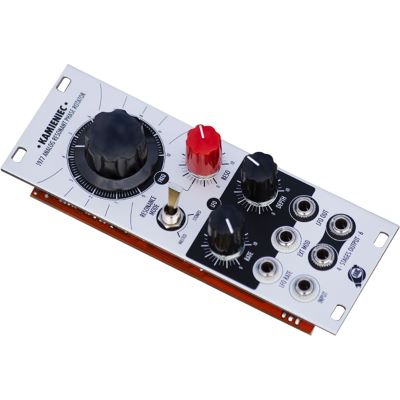
A small selection of different lengths and colours is sufficient at first. Colours can help distinguish audio, pitch, clock and modulation paths visually.
Suitable components and spare parts support maintenance, installation and expansion of synthesizer systems.
Combine a keyboard with a MIDI/CV interface or the MIDI functionality already integrated into a semi-modular synthesizer or Eurorack case.
Stands, power solutions, cases and other accessories help integrate modular and semi-modular hardware into studio, stage and mobile setups.
Before connecting a modular output directly to an audio interface, mixer, effect or another line-level device, check the documented input and output levels. Use suitable level adaptation or dedicated interface modules where required.
Without VCAs, envelopes, mixers and utilities, several impressive oscillators can remain surprisingly inflexible.
Leave both physical space and power reserve. Your first patches will quickly show which additional utility function is actually missing.
A VCA does not only control audible volume. It can also make modulation depth itself voltage-controlled.
A module that fits into the remaining HP still needs suitable installation depth, a free power connector and sufficient capacity on the required supply rails.
Learn a small system thoroughly. Buy the next module when you repeatedly encounter the same missing function.
Photograph useful patches and note important clock, pitch and modulation settings. This makes complex ideas easier to reconstruct later.





Yes. Semi-modular synthesizers and well-balanced basic systems make it possible to learn one function at a time. Start with a small number of modules and understand their signal flow before expanding the system.
At minimum you need a suitable powered case, a sound source, level control, modulation and a way to control the system. Depending on the concept, filters, envelopes, sequencers, mixers and effects can also be part of the first setup.
A semi-modular synthesizer contains a predetermined internal signal path and can usually create sound without patch cables. A Eurorack system consists of individually selected modules whose connections and signal path are created by the user.
A VCA makes the level of a signal controllable by a control voltage. It can create the level contour of a note but can also control modulation depth or other control signals.
Yes. If the modular system does not already provide a MIDI input, a MIDI-to-CV/Gate interface can convert note information into pitch CV and Gate signals.
There is no universally perfect size. Plan enough space for a balanced basic system plus some reserve. In addition to HP, check module depth, power capacity and the number of available busboard connections.
Yes. MIDI-to-CV/Gate interfaces can provide note and synchronisation control. Audio can be recorded through a suitable signal path, taking the potentially different modular and line-level operating levels into account.
Buy the function your existing patches repeatedly lack. A second VCA, mixer, LFO, multiple or envelope is often more useful than another complex sound generator.
A small selection of different lengths is enough for a first compact system. Different colours can make audio, modulation, clock and pitch paths much easier to understand visually.
A modular synthesizer becomes much easier to understand when you stop thinking in terms of a wall of patch cables and instead follow individual functions. A basic subtractive patch consists of a sound source such as a VCO, a filter, a VCA and an envelope. CV, Gate, Trigger and Clock signals then control and synchronise these modules.
Semi-modular synthesizers are particularly useful for a first step because their internal signal path already works. You can play the instrument immediately and then learn what individual patch connections do. A ready-made Eurorack system goes one step further and teaches the fully patchable architecture without requiring you to select every first module independently.
If you build your own Eurorack, plan the complete system rather than individual exciting modules. Case width, installation depth, power capacity, busboard connections, VCAs, envelopes, mixers and utility functions are just as important as oscillators and filters.
Add modules according to missing musical functions. If you repeatedly need another modulation source, buy an LFO. If several signals need controlled levels, add a VCA or mixer. If the computer should play the rack, add MIDI/CV integration. This function-driven approach keeps a modular system understandable and turns expansion into a deliberate musical decision.
Discover further Musikhaus Korn guides covering synthesizers, MIDI, music software, audio interfaces, studio monitors, headphones and complete recording and production setups.