PA Loudspeakers
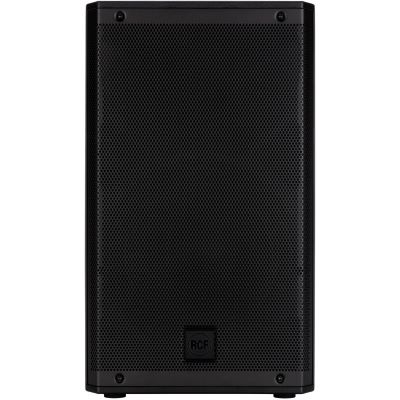
Reproduce vocals, instruments and complete mixes clearly and in a controlled way for the audience.

From the microphone to the PA, from personal monitoring to the lighting show: many individual components need to work together reliably on stage. This guide shows you how to combine mixer, loudspeakers, subwoofers, wireless technology, monitoring, lighting, cables, power distribution and transport into a practical live system.
The decisive factor is not the quantity of equipment, but a complete and logically structured signal path. Start with the sources on stage, then plan mixing and sound reinforcement and finally add monitoring, lighting, power distribution, safety and transport.
Reproduce vocals, instruments and complete mixes clearly and in a controlled way for the audience.
Manage inputs, sound processing, effects, the main mix and separate monitoring paths.
Capture vocals, speech and instruments with wired or wireless microphone systems.
Hear your own voice, instrument and band mix independently from the audience PA.
Combine front light, coloured washes, effects and moving light in one controllable system.
Plan modular stage surfaces, suitable legs, stairs and other components as one coordinated construction.
Distribute power in an organised way and route audio, lighting and power cables safely across the stage.
Protect sensitive equipment, preconfigure recurring setups and make transport and setup more efficient.
Once you understand the signal flow, you can calculate mixer channels, connections and accessories much more reliably.
Vocals are miked, keyboards provide line-level signals and electric guitars enter the system via an amplifier, microphone, DI box or modeler.
Signals are routed to the mixer according to their level and connection type. Balanced connections are particularly common for longer stage runs.
The mixer creates the main mix and separate monitor mixes. Digital consoles combine many of these functions in one device.
Full-range loudspeakers and subwoofers reproduce the audience mix. Wedges or in-ear systems supply the performers on stage.
Write down every microphone, every instrument and every stereo source with its own channel. Then add the required monitor paths and outputs. This quickly shows how large the mixer needs to be and which cables, DI boxes, stageboxes or wireless systems are still missing.
The required technology changes considerably depending on the number of musicians, room, volume, instrumentation and desired freedom of movement.
| Application | Core Equipment | Monitoring | Expansion |
|---|---|---|---|
| Singer-Songwriter | 2-channel setup, microphone and compact active PA | Main PA or small monitor | DI box, wireless system and lighting |
| Acoustic Band | Mixer, several microphones / DI boxes and two full-range loudspeakers | 1–2 monitor paths | Subwoofer, wireless technology and recording |
| Rock & Pop Band | Larger mixer, PA, microphones and subwoofer | Several wedges or in-ear systems | Lighting control, stagebox and cases |
| Modelers & E-Drums | Digital mixer and full-range PA | In-ear monitoring is particularly flexible | Several individual aux mixes |
Monitoring answers a different question from the PA: what does each individual musician need to hear in order to control timing, intonation and dynamics confidently?
A wedge directs the monitor mix towards the musician. This is straightforward and does not require earpieces. At the same time, the acoustic level on stage rises and microphones can pick up part of the monitor signal.
In-ear monitoring sends the mix directly to the ear. Several individually controlled mixes can make stage volume considerably easier to manage. Additional ambience signals or microphones can be useful for a more natural sense of space.
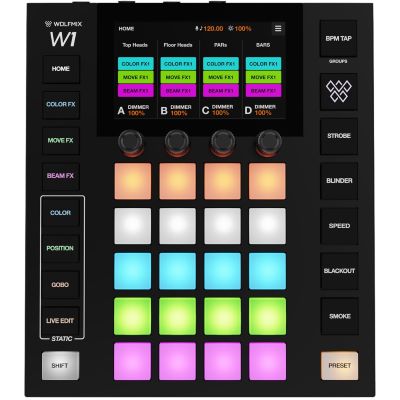
A useful lighting show does not begin with as many effects as possible. Musicians and faces should be visible first. Coloured washes then create depth and atmosphere, while moving heads, bars, strobes and other effects can emphasise selected moments.
Audio, lighting, network and power lines exist simultaneously on a stage. Good planning therefore not only makes setup easier, but also helps protect people and equipment.
Route cables together where possible and keep them outside walking areas. Suitable cable bridges can protect unavoidable crossings.
Define power requirements, distribution and connection routes before setup. Extensive electrical installations belong in qualified hands.
Consider load capacity, surface conditions and manufacturer instructions. Suspended lighting requires appropriate mounting and safety equipment.
Stage surfaces, stairs, railings and truss systems must be treated as related structural components and used only as intended.
The selection is deliberately organised by task. First decide which system you need and then compare individual models. Detailed specifications and included accessories can be found directly on the respective English product pages.
Full-range loudspeakers for vocals, instruments, playback and complete live mixes.
Particularly relevant for kick drum, bass, electronic music and larger sound-reinforcement tasks.
Main mix, monitor paths, effects, dynamics and, depending on the model, recording functions in one central system.
Suitable for lead vocals, backing vocals, presentations and performances requiring greater freedom of movement.
Personal monitoring from a classic active wedge to a wireless in-ear system.
From compact PAR fixtures to standalone controllers for repeatable stage lighting and programmed shows.
The smaller components often determine whether a setup works quickly, safely and reliably.
Use the English manufacturer pages to explore further series for PA, mixing, microphones, wireless systems, monitoring, lighting, stands and stage infrastructure.










An input list prevents stereo keyboards, additional vocals or wireless channels from unexpectedly running out of mixer inputs.
Audience sound and personal monitoring have different objectives and should be planned separately.
Speech and small acoustic setups do not automatically require a subwoofer. Music style and application determine whether additional low-frequency extension is useful.
Several wireless systems need to be planned together. Check frequency ranges and system compatibility before the performance.
Do not improvise fixture mounting. Load capacity, mounting points and suitable secondary safety devices belong together.
Crossing cables and walkways increase the risk of trip hazards and damaged connectors.
Spare XLR and instrument cables, adapters, batteries and basic tools can save a performance.
Cases and racks not only protect the equipment but can also make recurring setup and teardown considerably faster.
Typical equipment includes microphones or DI signals, a mixing console, an appropriate PA, monitoring, cables and stands. Depending on the event, subwoofers, wireless systems, in-ear monitoring, lighting, cases, power distribution and additional stage equipment may also be needed.
No. At smaller performances, guitar and bass amplifiers can provide part of the room sound directly. At larger or more controlled productions, instruments are often miked or connected to the mixer using a DI box or modeler.
Active loudspeakers already contain their power amplifiers and are therefore particularly straightforward for many mobile systems. Passive systems separate amplifier and loudspeaker and can suit appropriately planned modular or permanently installed sound systems.
Count every microphone, instrument and stereo source used simultaneously. Leave some spare inputs afterwards. Enough output paths for wedges or individual in-ear mixes are just as important.
Not automatically. Wedges are straightforward and easy for changing musicians to use. In-ear monitoring allows more individual mixes and greater control over stage volume. The right solution depends on the band, mixer, stage and workflow.
A subwoofer becomes useful when kick drum, bass, electronic music or other low-frequency signals need more reserve and extension. A good full-range PA can already be sufficient for speech and smaller acoustic performances.
Wireless microphones are especially useful when performers need considerable freedom of movement, for presentations or for performances without a microphone cable. When several wireless systems are used, their frequencies and systems must be planned together.
First provide enough light for the artists to be clearly visible. LED PAR or wash fixtures are versatile for this purpose. Moving heads, strobes and other effects are later additions for movement and show elements.
A DMX controller centrally controls compatible lighting fixtures and effects. Depending on the device, brightness, colours, movements, scenes and timing can be programmed or controlled live.
DI boxes help adapt suitable instrument or line signals to professional mixer inputs. They are commonly used with keyboards, acoustic instruments and certain bass setups, for example.
At minimum, spare XLR and instrument cables, adapters, batteries or rechargeable batteries and important power supplies are useful. Particularly critical systems can also justify a second signal path.
Repeatable cable plans, labelled cables, preconfigured racks, appropriate cases and a fixed input list save time. The fewer decisions that need to be made again during setup, the sooner soundcheck can begin.
Plan combo, stack, modeler, PA signal and monitoring together.
Compare keyboard amplifiers, stage monitors and active full-range PA solutions.
Connect mono, stereo, drum monitors and larger sound systems correctly.
Compare dynamic, condenser and wireless solutions according to the voice and stage application.
Compare clip microphones, microphones on stands and wireless systems for wind instruments.
Calculate channels, preamps and monitor paths for multitrack band recording.
Professional stage equipment consists of several connected systems. Microphones, instruments and wireless links provide the input signals. The mixer manages levels, sound processing and routing. Active PA loudspeakers or an appropriately designed passive system cover the audience, while stage monitors or in-ear systems provide musicians with their own mixes. Subwoofers are added where additional low-frequency reproduction is genuinely required for the music and event.
The visual side of the performance exists alongside the audio system. LED fixtures provide front and wash lighting, while DMX controllers combine several devices into a repeatable show. Cable routes, power distribution, stands, stage platforms and safety equipment need to be planned just as carefully as microphones and loudspeakers. Cases and racks protect equipment during transport and can make recurring setups considerably faster.
Do not begin with a single flagship product. First write an input list, define the size and type of event, decide how many monitor paths are required and clarify how sound, lighting and power will be transported and installed. PA, mixer, microphones, wireless systems, monitoring, lighting equipment and accessories can then be selected as one compatible live system.
Instruments, home studio, DJ technology, rehearsal room and event equipment: the central Musikhaus Korn guide connects buying advice, product categories, accessories and complete setups.