♫
Learn an Instrument
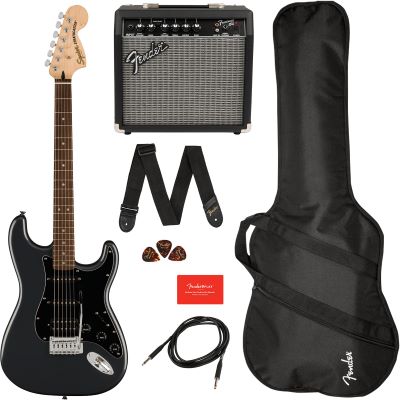
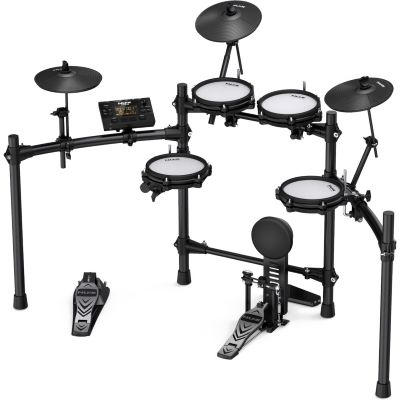
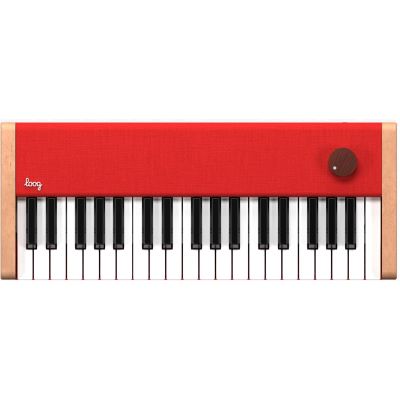
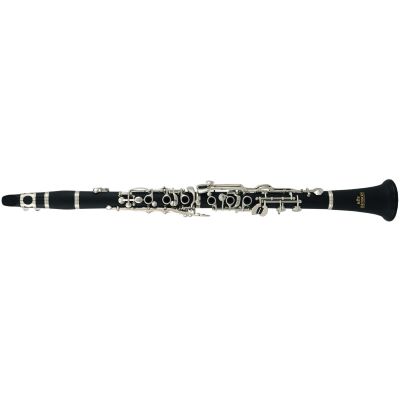
Choose guitars, keyboards, wind, string, drum and percussion instruments according to your musical goal and preferred playing feel.

Which instrument suits you? What do you need for your first home studio, a reliable DJ setup or a complete event? The Musikhaus Korn guide takes you from your initial idea through clear comparisons to a well-matched, expandable setup.
The Musikhaus Korn guide is the central knowledge hub for musical instruments, studio and recording, DJ equipment and event technology. Instead of simply listing product categories, it starts with one question: what do you want to do?
You may be looking for your first instrument, want to record vocals, start DJing, amplify a band or plan lighting for an event. Each project requires different components. At the same time, connections, dimensions, performance, room, transport and later expansion all need to work together.
This central page therefore combines clear explanations with specialist guides, suitable shop categories, selected products and Musikhaus Korn brand worlds. You can begin with a topic world, a concrete project, your level of experience, a product type or a specific question.
Begin with your project. Each route takes you to explanations, product categories and components that together create a functioning setup.
Choose guitars, keyboards, wind, string, drum and percussion instruments according to your musical goal and preferred playing feel.
Determine the right guitar type, suitable size and a sensible basic setup for your first steps.
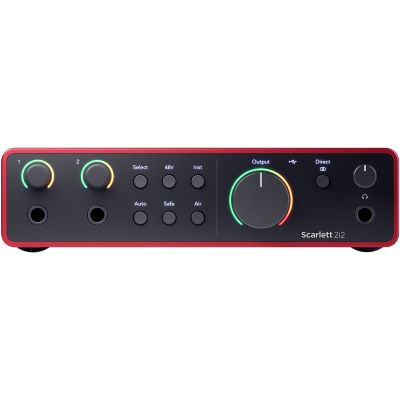
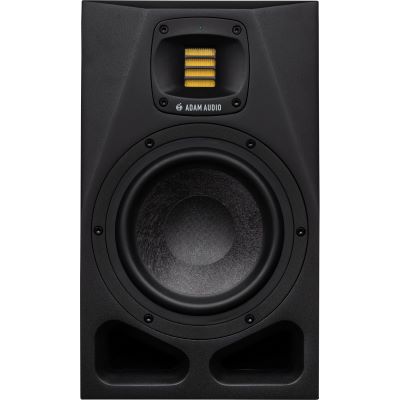
Consider the audio interface, microphone, headphones, monitors and room as one connected recording system.
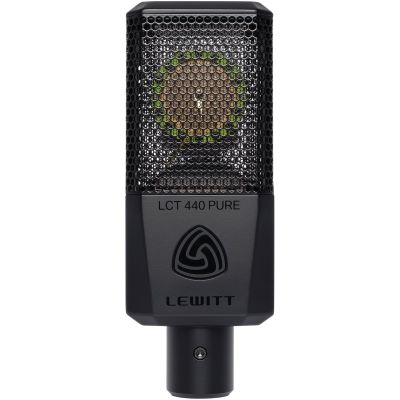
Combine a suitable microphone, stand, pop filter, interface and monitoring solution for speech or vocals.
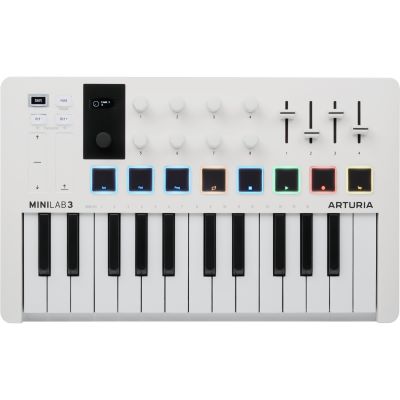
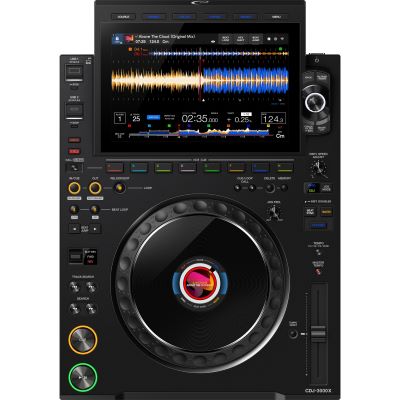
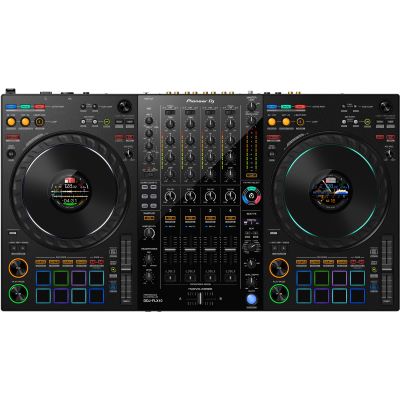
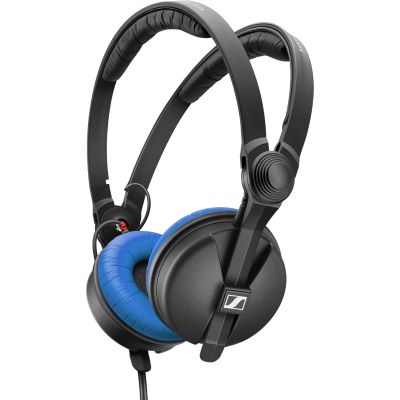
Compare controllers, standalone systems, mixers, headphones and speaker solutions for your preferred workflow.
Plan the mixer, PA speakers, monitors, microphones, stands and cabling as one complete sound system.
Choose equipment according to event type, guest count, area, location and required operating time.
Coordinate PAR fixtures, moving heads, controllers, stands, cables and safety equipment.
Choose cases, racks and bags according to the device, required protection and how the equipment will be transported.
Narrow down suitable additions according to application, product features and the equipment you already use.
The current guide world is especially extensive in the guitar section. These pages answer concrete questions about getting started, instrument size and musical styles and connect directly to suitable instruments and accessories.
Central starting point for classical, acoustic and electric guitars as well as basses, amplifiers, effects and accessories.
Help with choosing a first instrument, determining the right size and putting together a complete basic setup.
Combine body design, playing feel, tonal goal and music style into a clear and understandable choice.
Compare strings, neck width, volume, tone and typical applications of the three most important guitar types.
Guidance on 1/2, 3/4, 7/8 and 4/4 instruments based on body height, arm length and playing comfort.
Understand pickups, body designs and characteristic sounds for rock, blues, metal, funk and other styles.
Narrow down products according to selected features and reach suitable models within the shop range more efficiently.
Each world combines basic knowledge with concrete applications, suitable product groups and the components required for a complete system.
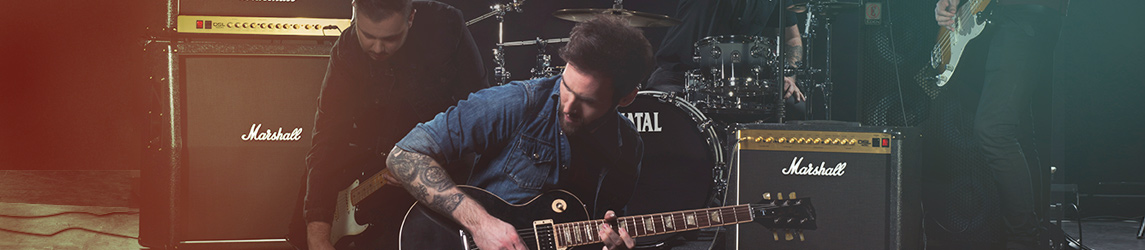
Body size, playing feel, tonal preference and music style are more important than a long list of technical specifications. Discover guitars and basses, drums and percussion, keyboards, wind instruments, string instruments and the accessories required for each.
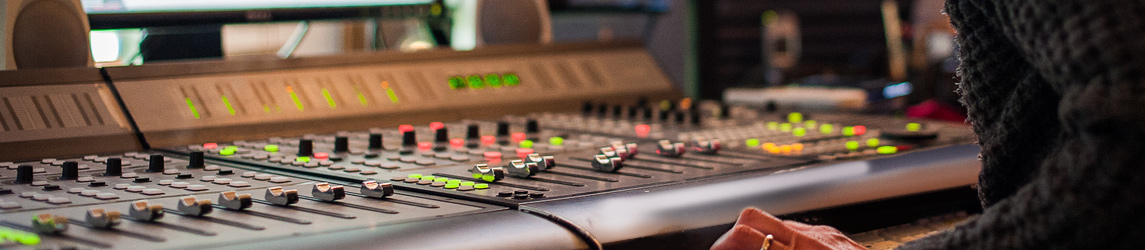
A good recording setup depends on what you want to record, how many signals are present at the same time and the room you work in. Audio interface, microphone, monitoring, MIDI, software and acoustics should therefore be considered together.
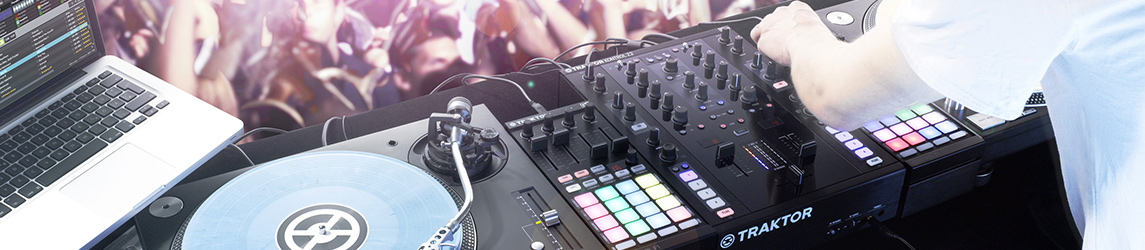
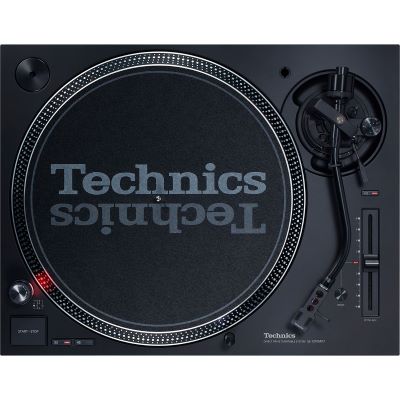
Bedroom DJs, mobile DJs, vinyl DJs and club DJs require different solutions. Important factors include software, number of decks, inputs and outputs, operating concept, mobility and connections to headphones, monitors and PA.
Weddings, band concerts, schools, churches, presentations and open-air events all have different requirements. PA, microphones, monitoring, lighting, stage equipment, power, safety and transport need to suit the area, audience size and operating time.
A suitable setup does not begin with a brand or a particular feature. It begins with the application and ends with checked, compatible connections.
Decide what you want to play, record, mix or amplify and how much experience is already available.
Apartment, studio, rehearsal room, club or outdoor use influence volume, dimensions, power, acoustics and transport.
Inputs, outputs, signal types, power supply, software support and physical dimensions need to work together.
Cables, stands, bags, cases, mounts and spare capacity turn the main product into a setup that remains useful over time.
First determine which signals are created, how they are transmitted and where they should ultimately be heard or seen. A microphone, for example, needs a suitable input; passive speakers require appropriate amplification; an electric guitar needs a suitable connection and amplification system.
Plan enough inputs and outputs, the correct cable types and a suitable power supply. Additional capacity is useful when more instruments, microphones, lighting fixtures or playback sources may be added later.
The overview shows typical core components. Depending on room size, audience size and quality requirements, additional components may be useful.
| Project | Typical Core Components | Suitable Starting Point |
|---|---|---|
| Learn an Instrument | Instrument, bag, tuning aid, stand and learning accessories | Musical Instruments |
| Set Up a Home Studio | Computer, audio interface, microphone, headphones or monitors | Recording & Studio |
| Record a Podcast | Speech microphone, interface, headphones, stand and pop filter | Studio Microphones |
| Build a DJ Setup | Controller or players, mixer, headphones and monitoring | DJ Equipment |
| Amplify a Band | Mixer, PA, monitors, microphones, stands and cabling | PA Equipment |
| Equip an Event | Sound, lighting, stage, power distribution, safety and transport | Event Equipment |
| Control a Light Show | Fixtures, DMX control, stands, cables and safety equipment | Light & Show |
| Transport Equipment | Suitable case, rack, padding, wheels and labelling | Racks & Cases |
These examples represent typical main components. Detailed specifications, included accessories and available variants are shown on the individual product pages.
Musikhaus Korn brand worlds bring together products from the same manufacturer so that product ranges, model families and applications can be compared more easily.










A good setup does not only need to be selected. It also has to be assembled, transported, maintained and adapted when requirements change.
See, compare and discuss instruments and equipment in person with specialist support.
Support with maintenance, troubleshooting and repair of instruments and technical equipment.
Use musical instruments, sound, lighting and event equipment for temporary projects and productions.
Tailor-made transport solutions for sensitive, unusual or professionally used equipment.
The Musikhaus Korn guide connects musical instruments, studio and recording equipment, DJ technology and event equipment with the questions that arise before a purchase. Beginners receive clear starting points, experienced musicians can expand existing setups and event planners can approach complete technical systems step by step.
Use the existing guitar guides or enter directly through one of the four major product worlds. When making your choice, do not consider only the main product: connections, suitable accessories, transport, maintenance and later expansion are all part of a coherent setup.
Start again at the top and choose your route by project, guide or topic world.